
Fire Sprinkler Installation
A fire sprinkler system is one of the few life-safety systems designed to take action on its own, without waiting for a person to notice a fire, pull a station, or call for help. Individual sprinkler heads react to heat at the point of the fire, releasing water only where it's needed rather than throughout the entire building, which controls or extinguishes a fire in its earliest stages and buys occupants time to get out safely.
Request A Quote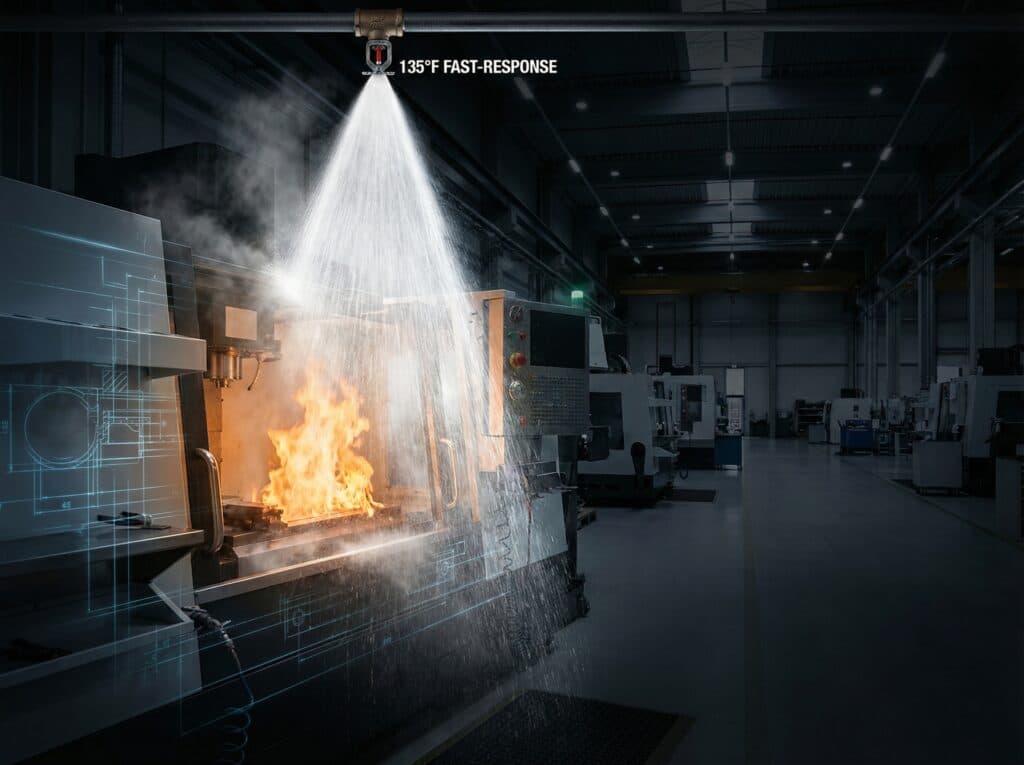
The code behind it
Installation is governed by NFPA 13, the Standard for the Installation of Sprinkler Systems, which sets requirements for pipe sizing, water supply, hydraulic calculations, and head spacing based on the hazard classification of the space being protected. A warehouse storing combustible materials, a hospital patient wing, and an open-plan office all present different fuel loads and occupant profiles, so the same code produces different system designs depending on how the building is actually used.
Inspection & maintenance
Once installed, ongoing inspection, testing, and maintenance falls under NFPA 25, a separate standard covering water-based fire protection systems after they're in service. NFPA 25 lays out a tiered schedule — routine visual checks on a short cycle, fuller system tests on a longer one, and a periodic internal inspection of the piping itself — because a closed valve, a corroded pipe, or a gradual obstruction can all silently defeat a system that looks fine from the outside.
Why it matters
Because a sprinkler system is only useful if it activates correctly and delivers enough water when it's needed, design, installation, and maintenance have to work together as one continuous process rather than three separate transactions. A well-designed system that's never tested, or a well-maintained system designed for the wrong hazard class, both leave a building exposed in ways that aren't visible until there's an actual fire.
How We Work
Inspect & Assess
We start by walking your building, reviewing existing systems, and identifying what current code requires for your occupancy.
Design & Install
Our team designs a system around your building and installs it to code, coordinating with your schedule and any other trades on site.
Maintain & Monitor
Ongoing inspection, testing, and service keep your system compliant and ready to perform long after installation day.
Where We Work
Fire Sprinkler Installation is available nationwide. Find your state below, then your city, for local service details.