
Fire Extinguisher Service
Portable fire extinguishers are a building's first line of defense — the tool an occupant reaches for in the first moments of a small, contained fire, before it grows beyond what a single device can handle. Because they're meant to be used by anyone on site, not just trained responders, having the right type of extinguisher in the right place, in working condition, matters as much as having one at all.
Request A Quote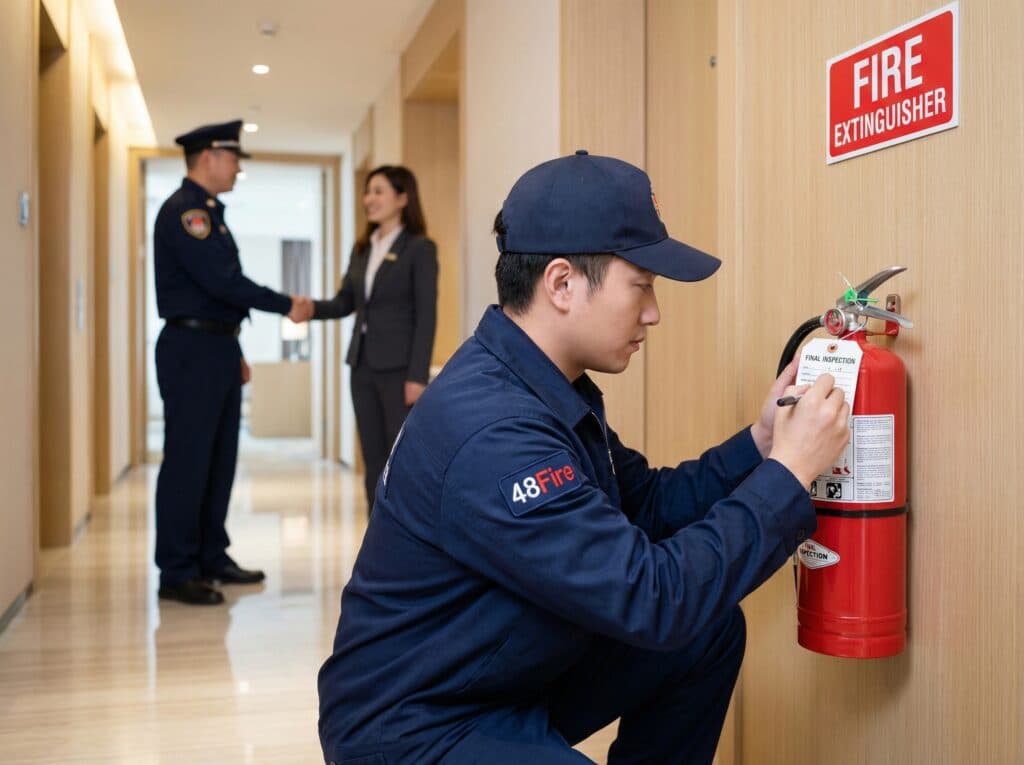
The code behind it
NFPA 10, the Standard for Portable Fire Extinguishers, governs selection, placement, and spacing based on the type of hazard present — ordinary combustibles, flammable liquids, electrical equipment, and commercial kitchen grease fires each call for a different extinguisher rating, and mismatching the device to the hazard can make an extinguisher ineffective or even dangerous to use. Travel distance requirements in the code also determine how many units a given floor plan needs and where they have to be mounted.
Service intervals
Extinguishers need attention on more than one timescale: a monthly visual check to confirm the unit is present, uncompromised, and shows the correct pressure; an annual maintenance inspection performed by a qualified servicer that goes deeper than a visual check; and periodic hydrostatic testing of the cylinder itself, on a cycle that depends on the extinguisher type. Each layer catches a different kind of problem, from a missing unit to a slow pressure leak to a cylinder that's no longer safe to pressurize.
Why it matters
An extinguisher that hasn't been checked recently is a liability disguised as a safety feature — it looks present and ready on a wall bracket right up until someone pulls the pin and finds out otherwise. Routine service, current inspection tags, and accurate placement records are what turn a fire extinguisher from a checkbox into something a building can actually rely on.
How We Work
Inspect & Assess
We start by walking your building, reviewing existing systems, and identifying what current code requires for your occupancy.
Design & Install
Our team designs a system around your building and installs it to code, coordinating with your schedule and any other trades on site.
Maintain & Monitor
Ongoing inspection, testing, and service keep your system compliant and ready to perform long after installation day.
Where We Work
Fire Extinguisher Service is available nationwide. Find your state below, then your city, for local service details.