Fire Safety Training
Equipment alone doesn't make a building fire-safe — the people inside it need to know what to do in the first minute of an emergency, before any outside responder can arrive. Fire safety training closes that gap, covering prevention, early response, and safe evacuation so staff aren't encountering fire procedures for the first time during an actual fire.
Request A Quote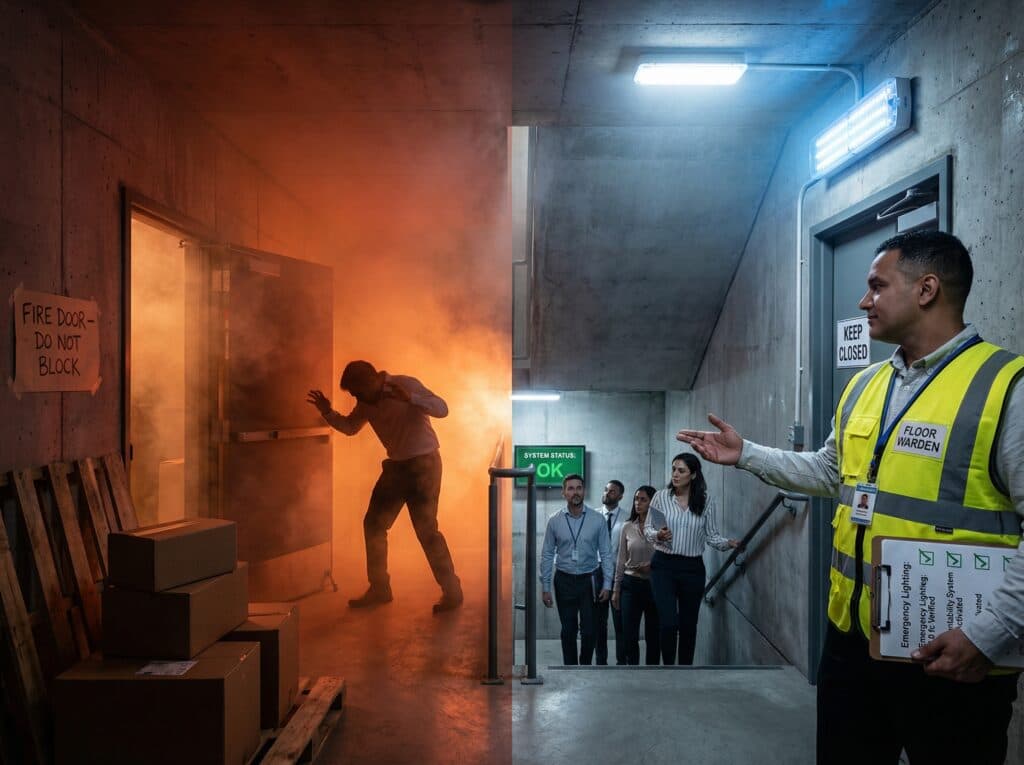
What training covers
Effective training typically covers how to recognize and reduce everyday fire hazards, how and when to use a portable extinguisher versus when to evacuate instead, and each person's specific role during an evacuation — whether that's a general employee following an exit route, a floor warden confirming their area is clear, or a manager coordinating with first responders on arrival. General industry practice, reflected in OSHA's expectations for workplaces that keep portable extinguishers available for employee use, is that staff who may be expected to use one should be trained on how.
Built around your building
Training works best when it's specific to the building it's protecting — the actual exit routes, the actual extinguisher locations, the actual assembly point — rather than a generic slideshow disconnected from the space people work in every day. Hands-on components, like operating a live or simulated extinguisher, tend to build the kind of muscle memory that a purely verbal briefing doesn't.
Keeping it current
Because staff turn over and memory fades, training isn't a one-time event; it's most effective on a recurring schedule that matches how often a workforce actually changes. A building with well-maintained fire protection systems and untrained occupants is still exposed in a way that equipment alone can't fix — training is what makes sure people and systems are both ready at the same time.
How We Work
Inspect & Assess
We start by walking your building, reviewing existing systems, and identifying what current code requires for your occupancy.
Design & Install
Our team designs a system around your building and installs it to code, coordinating with your schedule and any other trades on site.
Maintain & Monitor
Ongoing inspection, testing, and service keep your system compliant and ready to perform long after installation day.
Where We Work
Fire Safety Training is available nationwide. Find your state below, then your city, for local service details.