
How a Simple Retrofit Reduced Fire Response Time by 60%
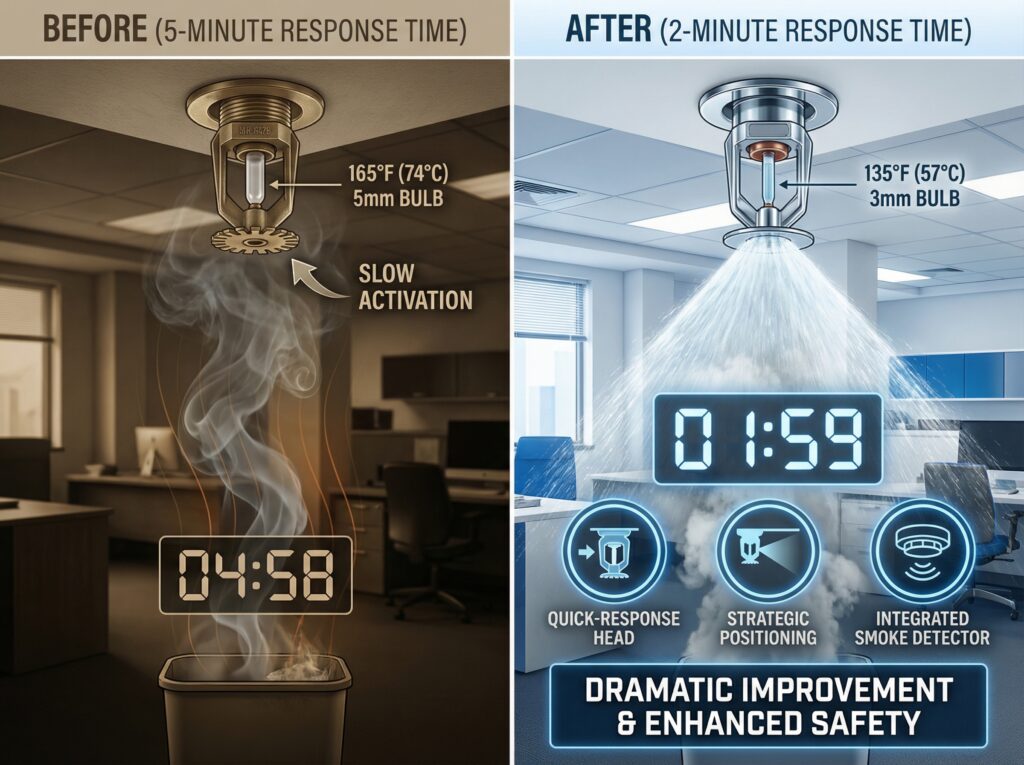
Targeted fire sprinkler retrofits delivered dramatic performance improvements at a fraction of replacement cost. This office building achieved a 60% faster response time through three strategic upgrades: fast-response sprinkler heads, relocated heads, and smoke detection integration. The $87,000 retrofit investment avoided a $480,000 full replacement cost while improving fire protection performance. Insurance premium reductions provide a 4.7-year payback with additional benefits including reduced fire risk.
What Most Contractors Miss in NFPA-Compliant Sprinkler Installs
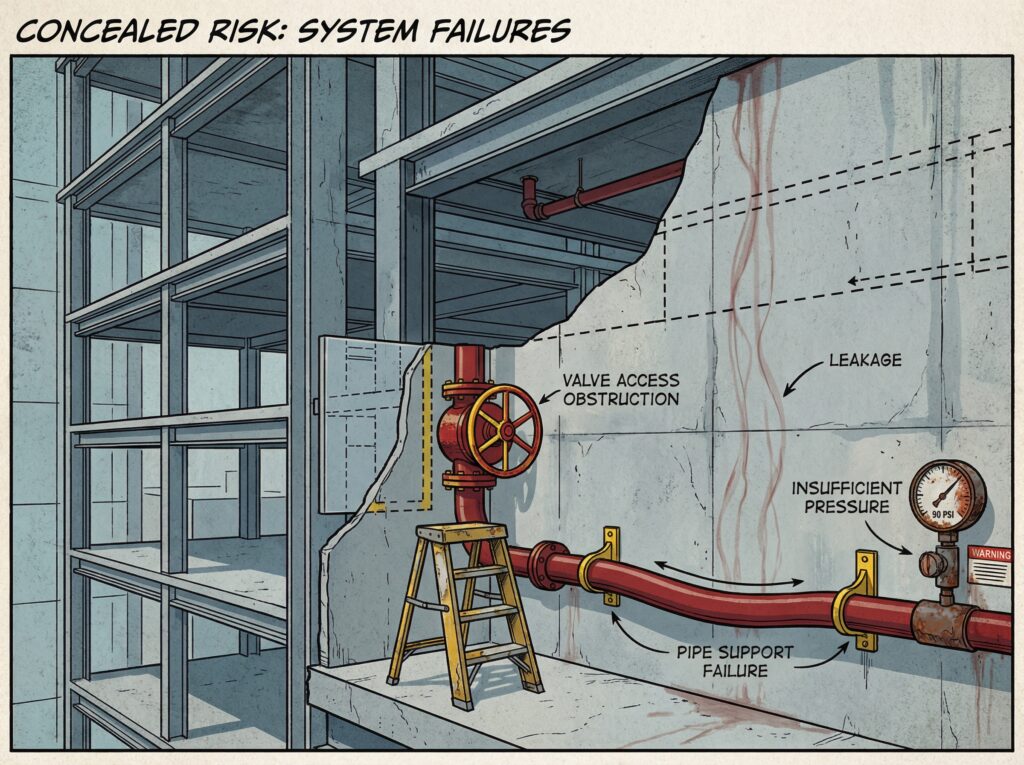
Most contractors miss critical NFPA compliance details, such as exceeding the 90% water supply design limit and using maximum sprinkler head spacing without accounting for obstructions. Other common oversights include incomplete documentation, inaccessible control valves, and failing to verify fire alarm integration. These mistakes lead to failed inspections, expensive rework, and unreliable systems. 48Fire prevents these issues through engineering-based installation and rigorous testing, ensuring systems remain reliable for 20+ years.
One System, Total Protection: Tested in 3,000+ Facilities
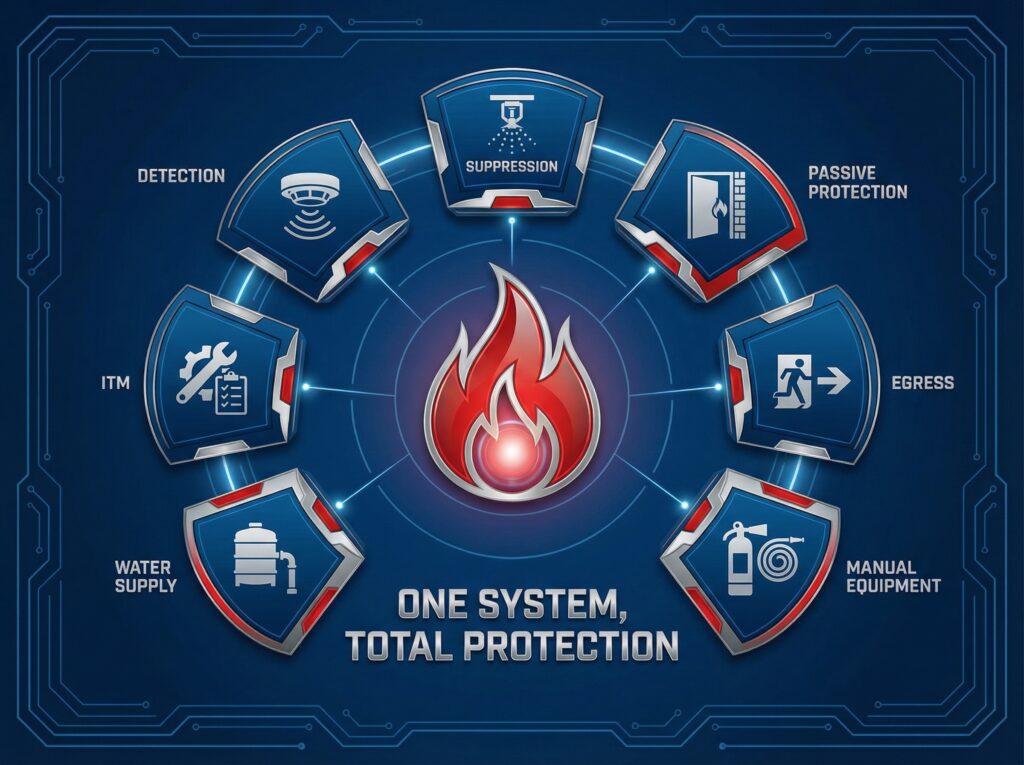
Total fire protection requires seven integrated components working as one system. Facilities with complete, integrated systems experience a 96% fire control rate when systems activate and 78% less property damage. The seven components are: Fire Detection, Fire Suppression, Passive Fire Protection, Emergency Egress, Fire Extinguishers and Manual Equipment, Fire Pumps and Water Supply, and Inspection, Testing, and Maintenance (ITM). Integration between components is critical for system reliability during actual emergencies.
The Fire Protection Plan That Cut Insurance Premiums by 20%

The Fire Protection Plan cut the annual insurance premium from $127,000 to $101,600, yielding $25,400 in annual savings. The key difference was not new equipment, but documentation proving the facility’s low fire risk. This 5-part plan emphasizes System Documentation, ITM Compliance Records, Emergency Procedures, Training, and Management Accountability. Insurance underwriters reward documentation of continuous compliance, transforming 80 hours of work into significant annual savings.
How Proper Sprinkler Design Prevented a $5M Facility Loss
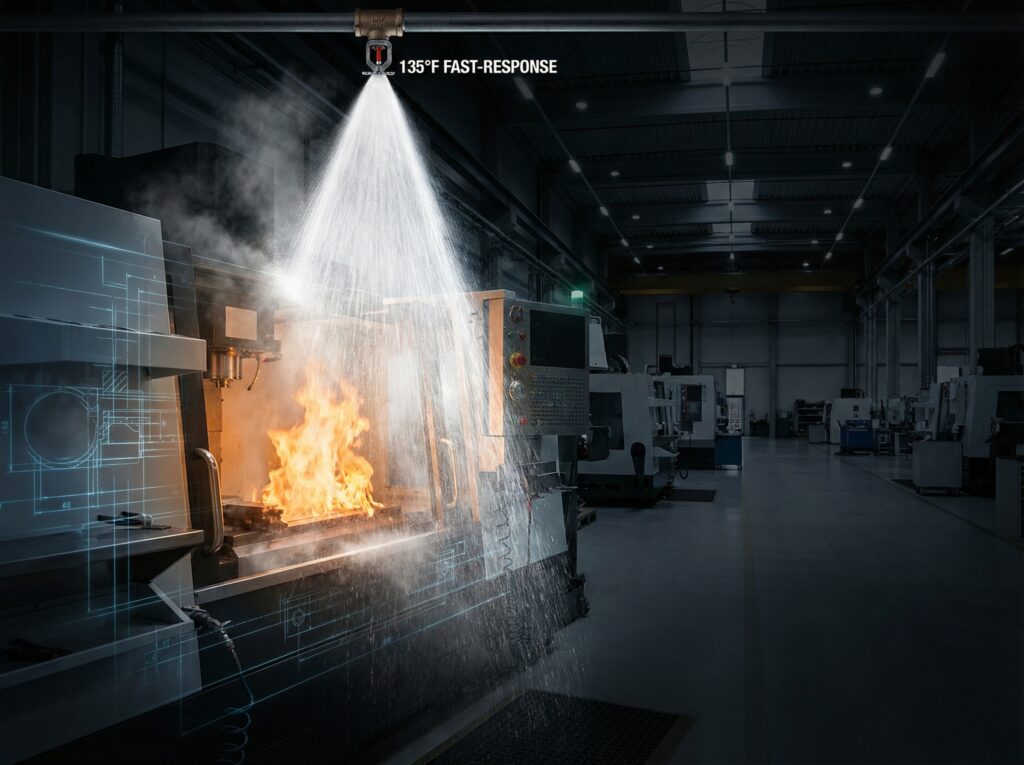
A hydraulic line ruptured, spraying fluid onto a 900°F surface. Total estimated loss was $5.2 million, but the actual loss was only $187,000. The difference was a fire protection layout designed for specific manufacturing hazards, not generic code compliance. Minimum standards fail to account for unique risks like pressurized hydraulic systems and flammable cutting fluids. Enhanced design—with reduced spacing, increased water density, and fast-response heads—prevented catastrophic spread. This $60,000 investment yielded an 8,355% return by preventing over $5 million in damage.