
The ROI of Installing an Automatic Fire Sprinkler System
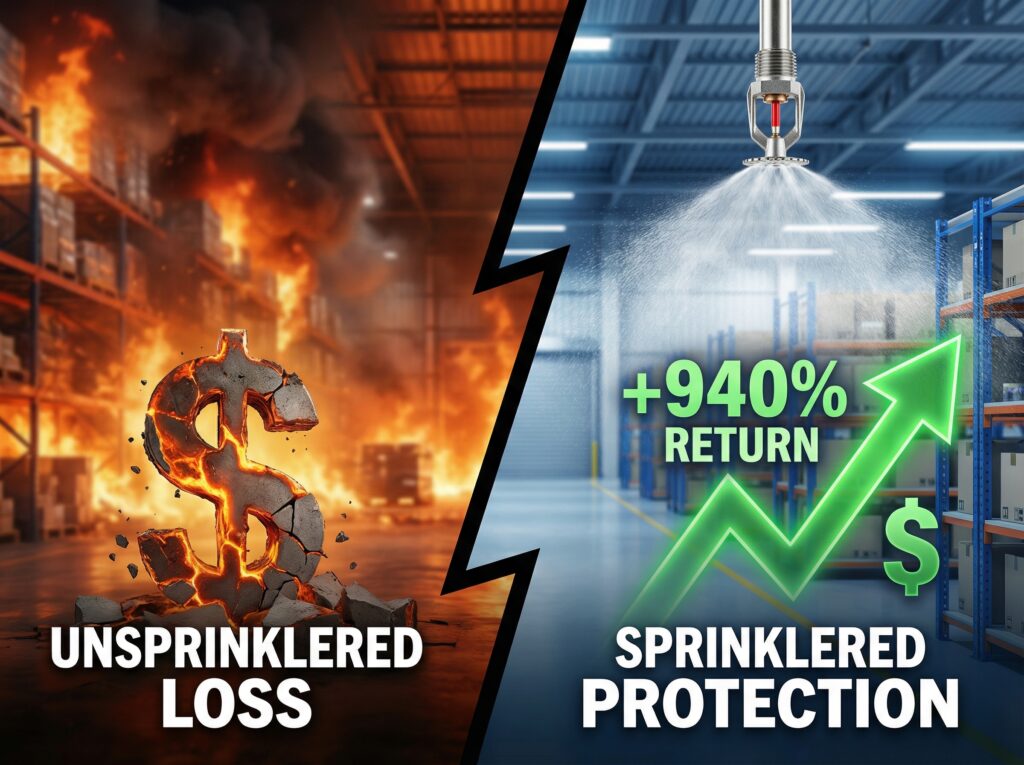
Automatic fire sprinkler system installation costs range from $2-$14 per square foot. Returns come from five categories: insurance premium reduction (15-40% savings), loss prevention, reduced deductibles, tenant attraction, and regulatory compliance. A complete 30-year ROI analysis for a manufacturing facility shows $6.2M in total benefits versus a $596,000 investment, yielding a 940% ROI with a 4.3-year payback when considering insurance and expected loss prevention. Fire sprinklers rank among the best ROI safety investments.
The Hidden Maintenance Mistake Many Skip in Fire Sprinkler Systems
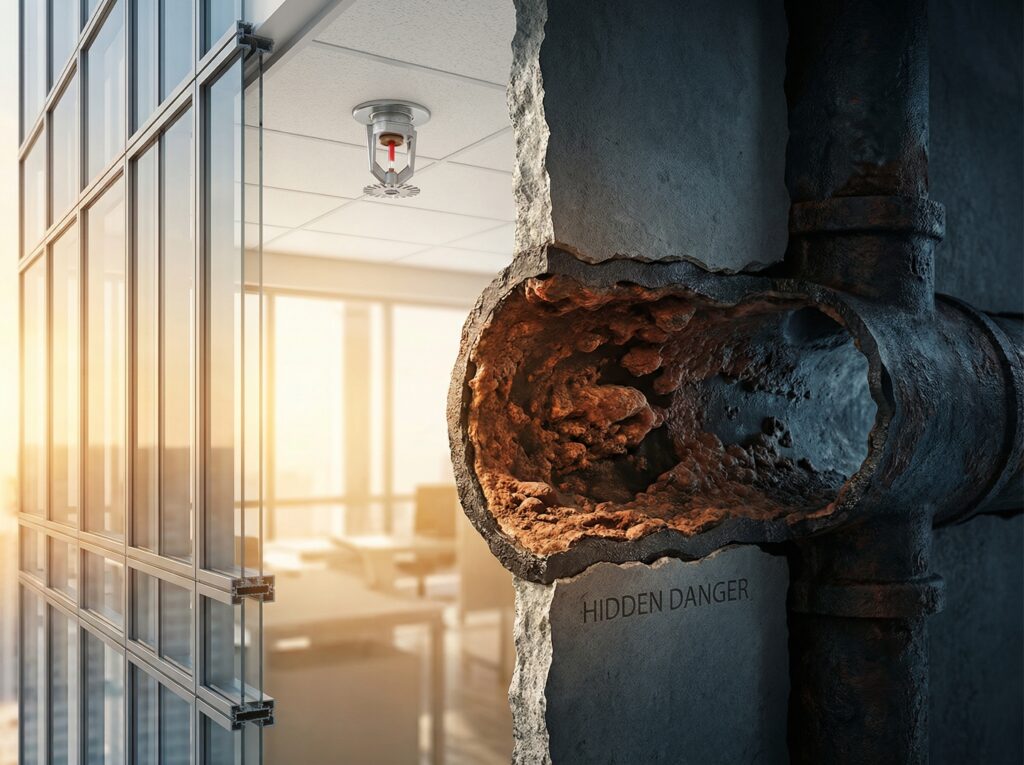
The hidden maintenance mistake: skipping internal pipe obstruction investigation required every 5 years by NFPA 25 Section 14.2.1. This oversight causes more sprinkler system failures than any other maintenance gap because pipe interior degradation happens invisibly while external appearance remains normal. Real-world investigations reveal extensive problems, such as diameter reduction and corrosion. Investigation costs $2,000-$5,000 and prevents millions in potential loss from system failure during an actual fire.
From Code Violations to Compliance: A Sprinkler System Case Study
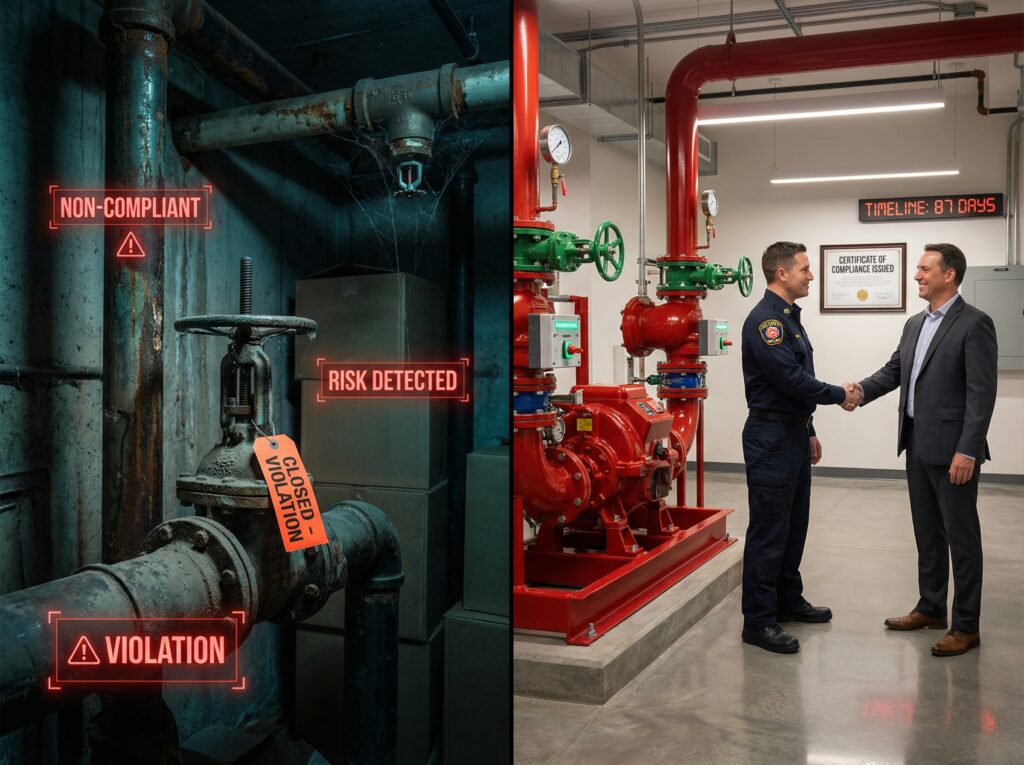
Code violations in fire protection systems typically stem from building modifications without system updates, missing documentation, integration failures, and deferred maintenance. This case study showed full remediation of 23 violations in 87 days for a total cost of $178,800. Proactive compliance via annual audits ($3,000–$8,000) and comprehensive Inspection, Testing, and Maintenance (ITM) programs ($8,000–$15,000 annually) prevents expensive emergency remediation. Final re-inspection verified compliance, leading to a Certificate of Compliance.
Inside a Commercial Fire Sprinkler Retrofit That Passed NFPA Audit
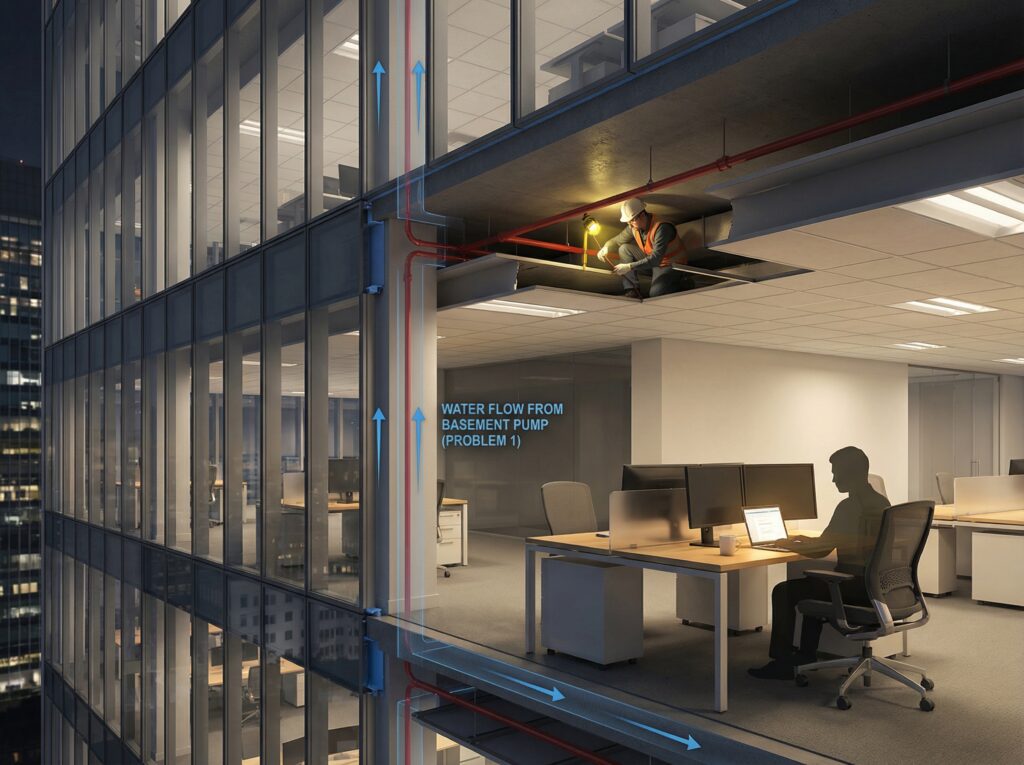
When a 12-story office building required a full sprinkler system installation within 24 months, 48Fire delivered the complex retrofit two months ahead of schedule without tenant evacuation. By using a phased, floor-by-floor approach and working primarily off-hours (7:00 PM – 5:00 AM), the project achieved 100% tenant retention. Rigorous upfront engineering, including a fire pump solution saving $215,000, and disciplined communication were key to successfully modernizing the 50-year-old structure. The project passed the NFPA audit with distinction.
How Fire Sprinkler Installation Can Reduce Property Loss by Up to 97%
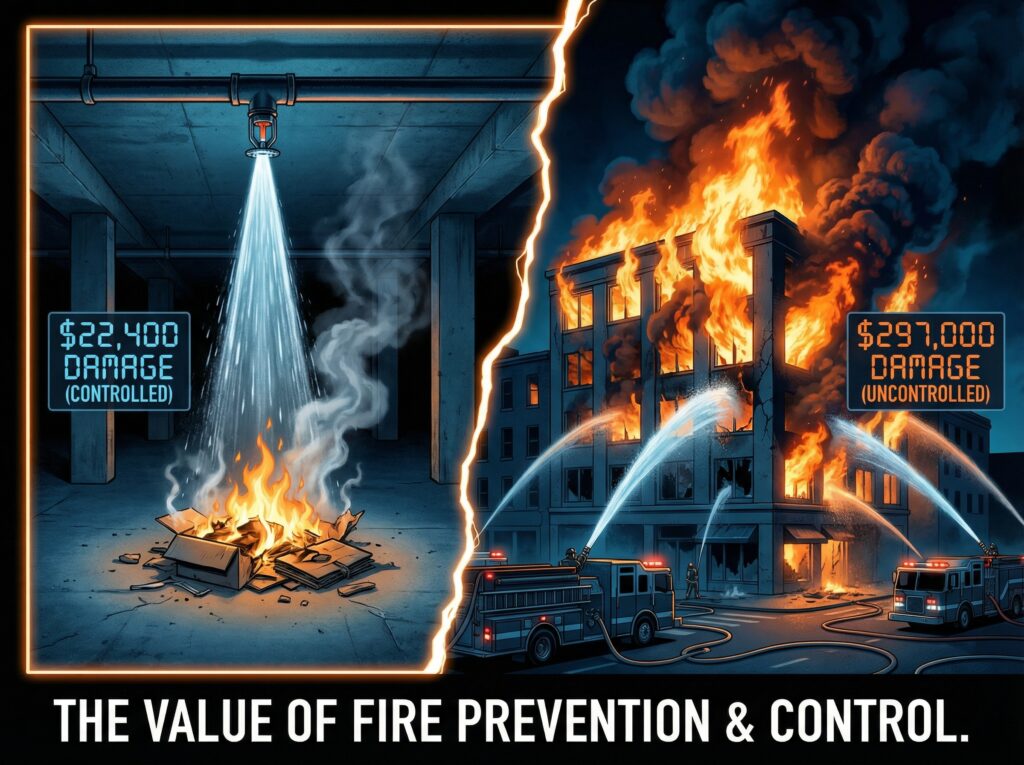
48Fire’s database analysis of 4,287 fire events found a 96% fire control rate with sprinkler systems, resulting in a 92.5% average loss reduction compared to unsprinklered buildings. Average property damage was significantly lower ($22,400 vs. $297,000). Effectiveness stems from rapid activation (1-4 minutes), targeted water application (1-4 heads), and heat control. Beyond property damage, sprinklers reduce business interruption by 94% and prevent casualties. Proper design, installation, and maintenance are crucial for optimal performance and realizing the high ROI.
How Proper Testing Saved a Manufacturing Plant from Closure
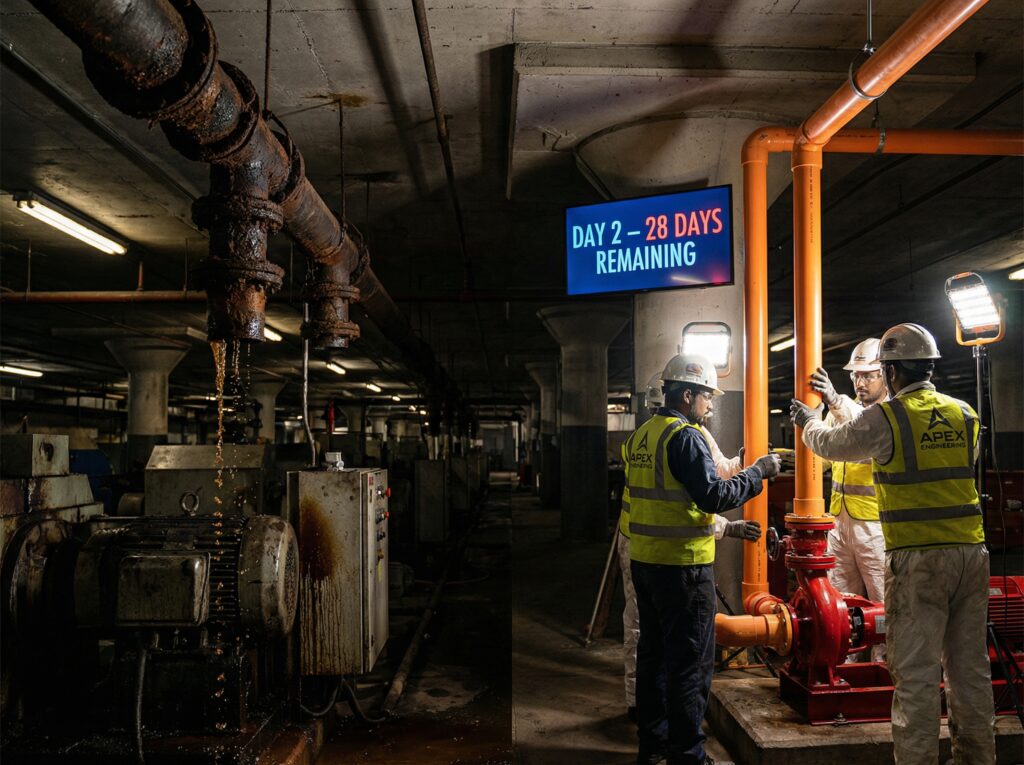
Insurance demanded correction of critical fire protection deficiencies within 30 days, risking 250 jobs and $18M in production. For 35 years, annual visual inspections had “passed,” but comprehensive testing revealed severe failures. The central issue was assuming systems worked based only on visual checks, which failed to detect hidden problems like the fire pump operating at 45% capacity and 20-35% pipe corrosion. Comprehensive testing was essential to prevent catastrophic loss.
How We Completed 200 Fire Sprinkler Installs Without Delays
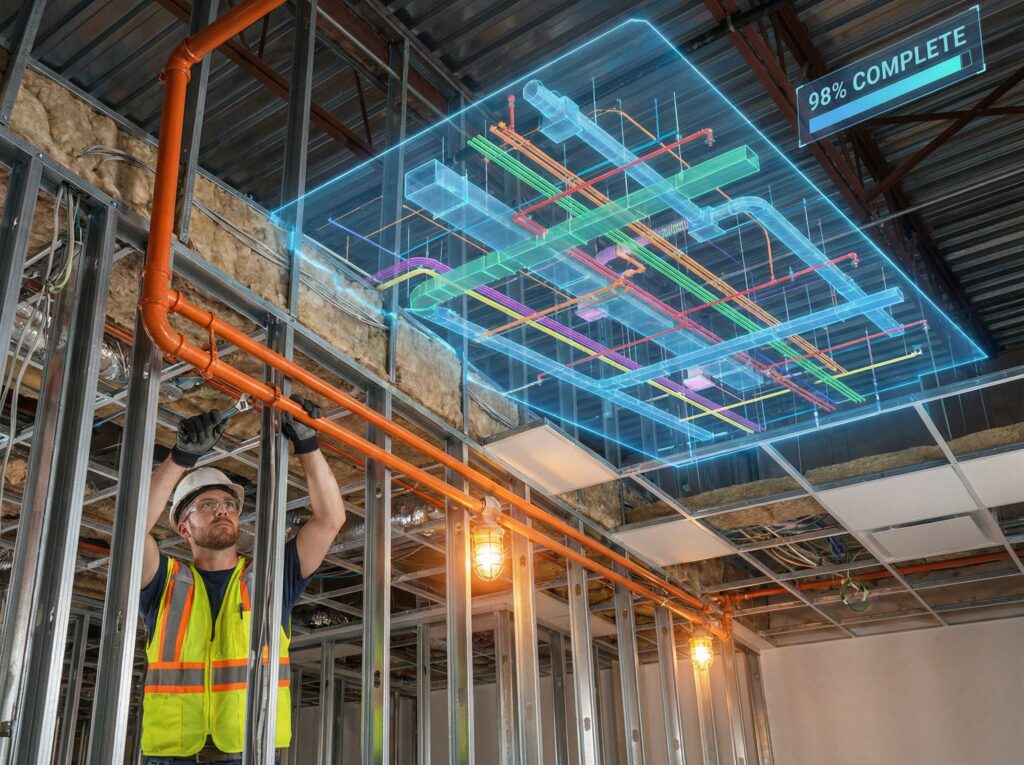
48Fire achieved 200 consecutive fire sprinkler installations on schedule by implementing systematic front-loaded planning, starting six weeks before mobilization. Key strategies include design verification and materials procurement before installation, eliminating “unforeseen conditions.” The company uses robust trade coordination protocols—like pre-construction meetings and shared 3D models—to prevent conflicts. Furthermore, quality verification and early permit application eliminate rework and inspection delays. This results in 98% schedule accuracy, zero material delays, and zero failed final inspections.
The Fire Protection System That Never Failed an Inspection
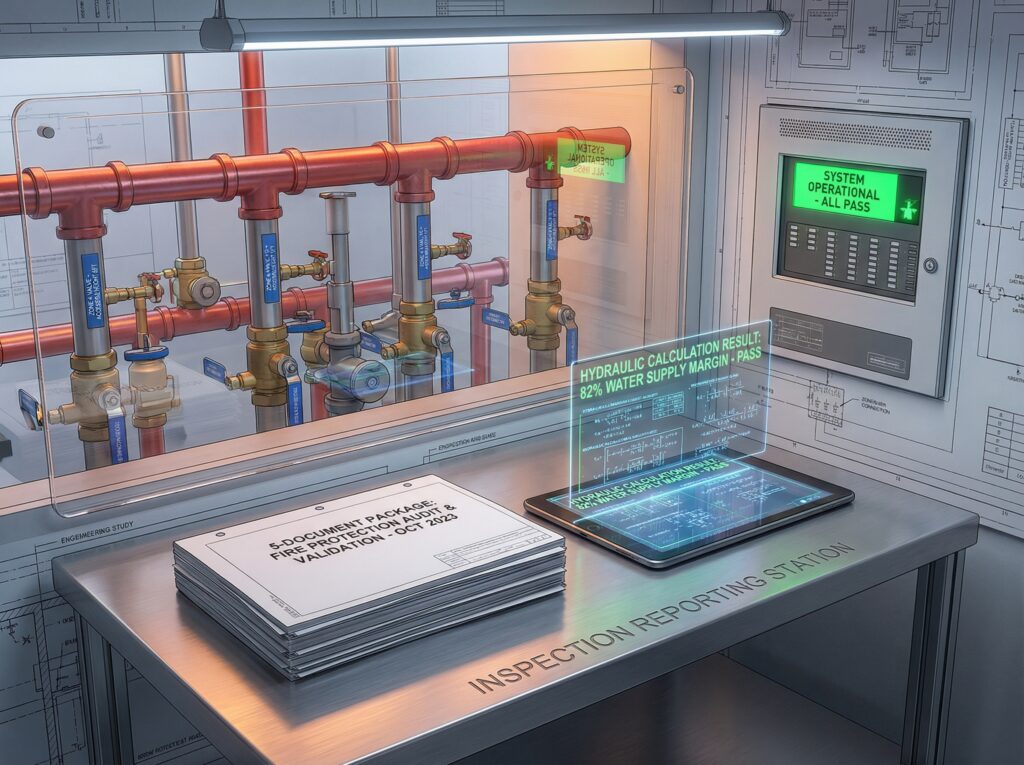
The Perfect Inspection Playbook boasts a track record of 500+ installations, 2,200+ inspections, and zero failures, proving systematic design and documentation work. The core system relies on a 5-Document Package—including the Design Basis Report and Hydraulic Calculation Package—and three key design elements: conservative margins, accessible/labeled components, and integration documentation. This comprehensive approach ensures systems don’t just meet code but exceed expectations, leading to a 90-95% better first-pass rate compared to the industry average.
Real Results: 99.7% Uptime on Fire Protection Systems
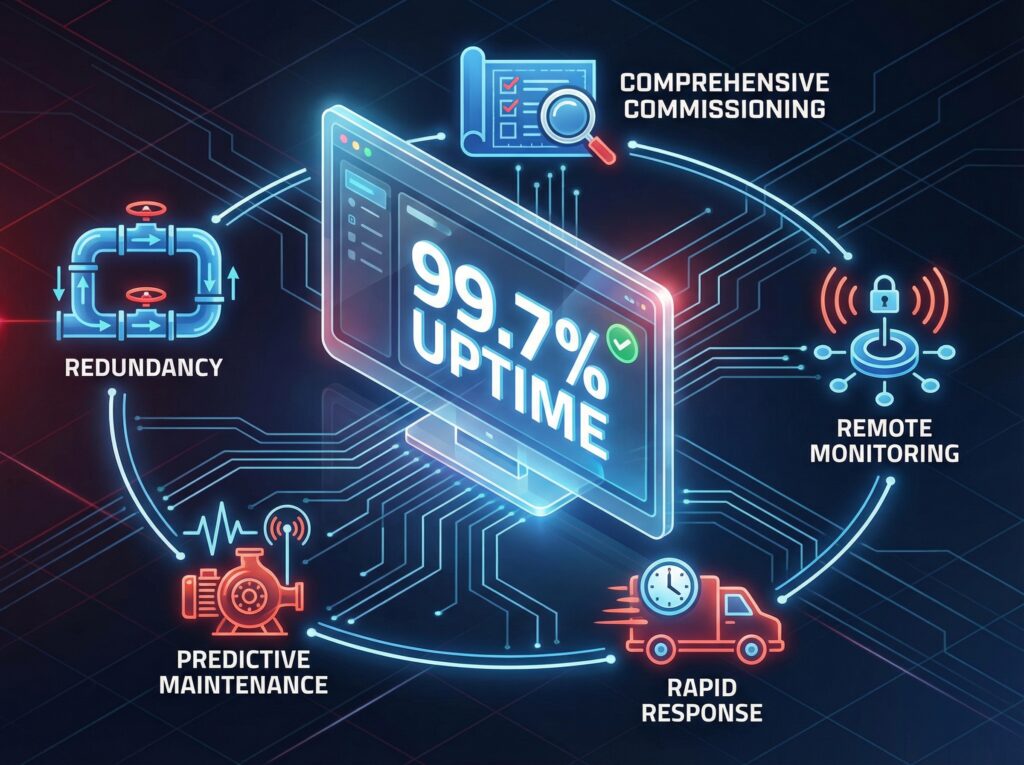
48Fire achieves 99.7% uptime across over 3,000 commercial fire protection systems, dramatically reducing the industry average of 12-18 days of annual downtime to just 26 hours. This reliability is built on five core strategies: redundant component design, predictive maintenance programs, rapid response protocols, comprehensive commissioning, and remote system monitoring. This proactive approach ensures that 90% of downtime is planned, minimizing emergency disruptions and providing significant cost savings and property protection value.
5 Proven Fire Sprinkler Designs that Passed Every Audit
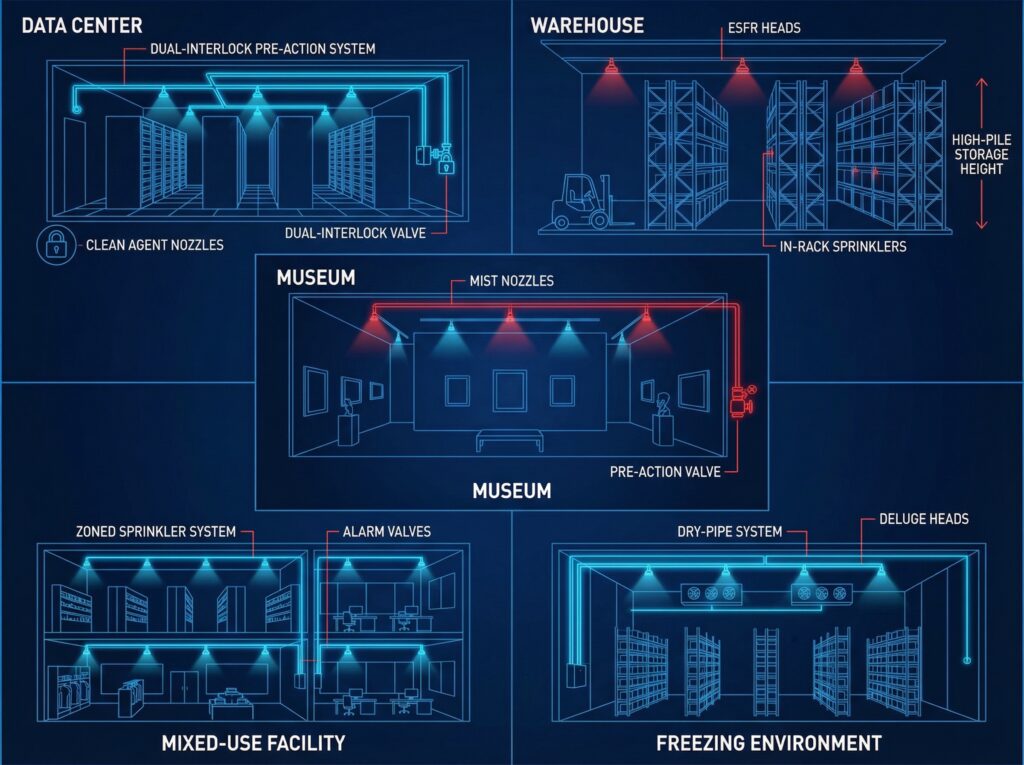
Five fire sprinkler design approaches consistently pass audits: zoned hazard systems for mixed-use facilities, high-pile storage grids with ESFR and in-rack sprinklers, dual-interlock pre-action for data centers, clean agent hybrids for irreplaceable materials, and monitored dry pipe systems for freezing environments. Success factors include comprehensive documentation, engineering justification, proper testing records, verified system integration, and maintenance history. Design selection involves systematic hazard analysis and engineering calculations to ensure the design matches application requirements.