
The Simple Inspection Step That Avoids $10K Fines

Monthly fire extinguisher inspections are mandatory, taking less than two minutes per unit, yet skipping this simple step costs facilities an average of $15,625 in OSHA penalties. OSHA regulation 1910.157 and NFPA 10 require documented monthly visual inspections at 30-day intervals. This ensures operational readiness, catching issues like pressure loss or damage before they become failures or violations. The financial case for systematic inspections is clear: the annual cost ($60–$120 per extinguisher) is vastly outweighed by the $15,625 minimum serious violation penalty.
What a $25 Extinguisher Error Cost a Manufacturing Plant
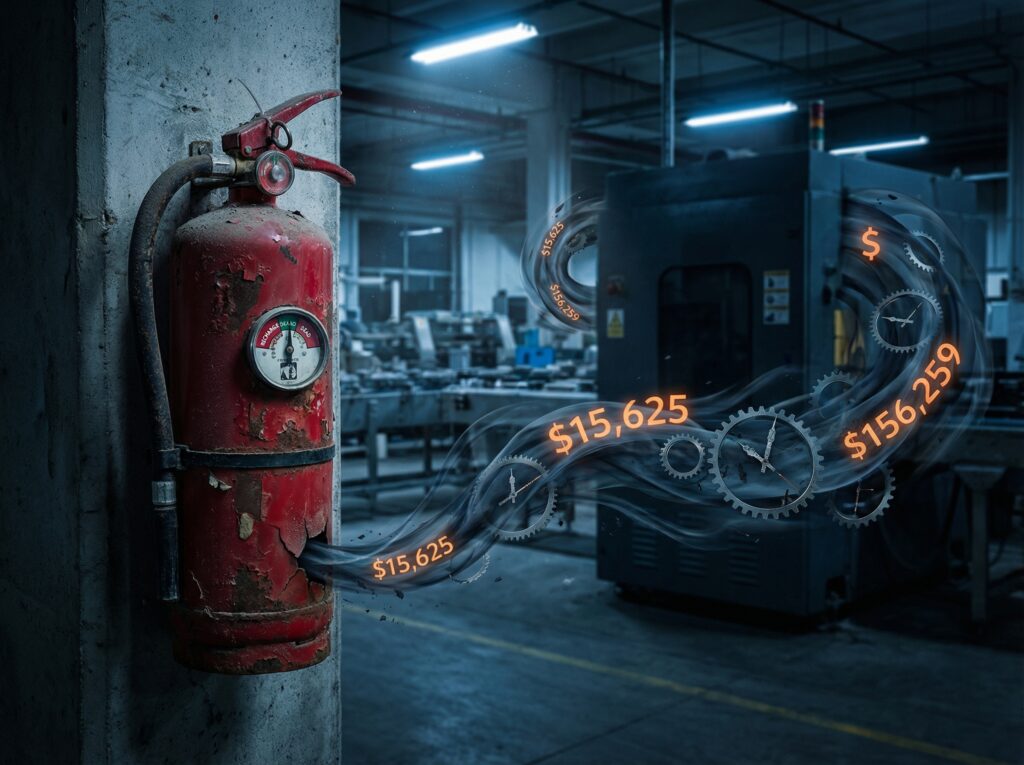
A manufacturing facility’s decision to defer fire extinguisher maintenance can cascade into devastating costs far beyond the price of routine service. Skipping basic maintenance risks exponentially higher expenses from OSHA violations starting at $15,625, operational shutdowns costing thousands per hour, insurance complications, and catastrophic fire damage. Systematic programs, like those from 48Fire, prevent these consequences. Annual professional service typically costs $3,750-$7,500 for 50 extinguishers, an investment that prevents fines and downtime, ensuring genuine fire protection readiness.
How One Hotel Passed Fire Inspections with Zero Violations
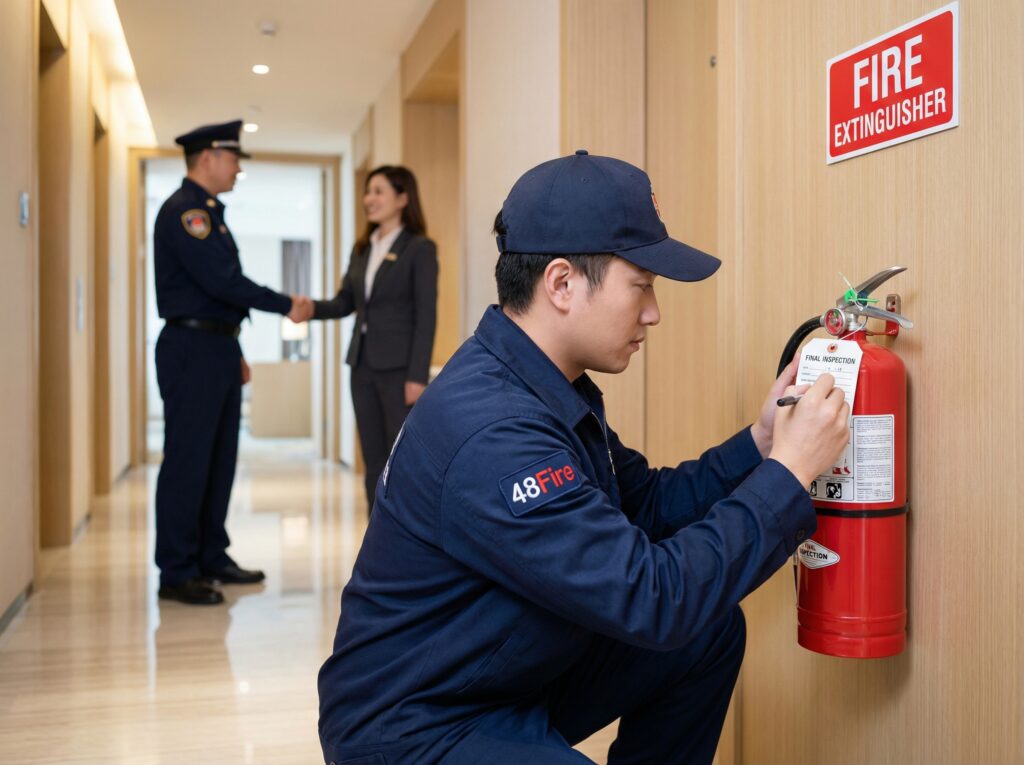
Imagine a midsize hotel achieving what many property managers consider nearly impossible: passing a comprehensive fire safety inspection with zero violations. This happens when properties implement systematic fire extinguisher service and maintenance, transforming compliance from reactive to proactive. What makes the difference: Monthly inspections, professional annual maintenance, strategic placement, complete recordkeeping, and staff training. This approach offers a roadmap for any commercial property to turn fire safety from a headache into a competitive advantage by partnering with a dependable service provider like 48Fire.
How a Fire Extinguisher Maintenance Program Supported a Successful Audit

Systematic fire extinguisher maintenance programs transform facilities from being unprepared (Documentation Gap or Service Gap) into a Comprehensive Program (Category 3). Auditors examine EQUIPMENT (physical condition), DOCUMENTATION (records), and PROCEDURES (systematic approach). Complete documentation, including monthly inspection records, annual maintenance proof, and testing records, is crucial. Proactive maintenance prevents costly OSHA and Fire Marshal violations, ensuring audit success and regulatory compliance through reliable equipment and complete, accessible documentation.
What Property Managers Should Know About Portable Extinguisher Service

Property managers must comply with three regulatory layers: OSHA, NFPA 10, and Local Fire Code. Maintaining portable fire extinguishers requires monthly inspections and annual maintenance by certified technicians. Proper service and complete documentation are crucial to minimize liability from direct negligence, contract breach, and insurance non-compliance. Digital inventory and documentation, such as offered by 48Fire, are essential for compliance and efficient multi-property management, ensuring tenant safety and owner protection.
How Routine Extinguisher Testing Supports Fire Safety Compliance

Hydrostatic testing is mandatory for fire safety compliance, verifying a fire extinguisher’s pressure vessel integrity and structural safety—something visual inspections cannot do. NFPA 10 requires periodic testing (5 or 12 years, depending on type) to detect issues like internal corrosion or stress fractures. This routine testing is crucial for regulatory adherence (NFPA/OSHA), reducing liability exposure, satisfying insurance requirements, and ensuring unsafe equipment is condemned and replaced, thereby maintaining operational safety.
The Fire Protection Role of a Rechargeable Extinguisher Program
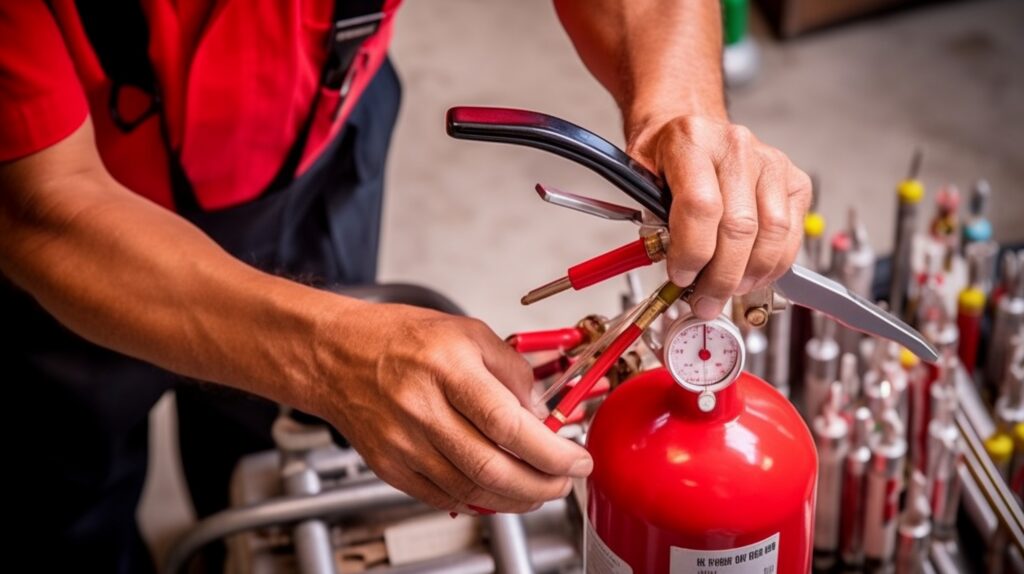
Rechargeable extinguishers transform commercial fire protection from single-use devices into long-term assets, providing sustained readiness over a 15-20 year lifecycle, compared to 6-10 years for disposable units. Rechargeability enables compliance with NFPA 10 requirements like internal examinations and hydrostatic testing, ensuring verified safety. Furthermore, rechargeable programs offer rapid restoration after discharge (1-2 days vs. 3-8 days for disposable) and significantly reduce environmental waste, optimizing both emergency response and environmental responsibility.
How Monthly Fire Extinguisher Checks Improve Workplace Safety
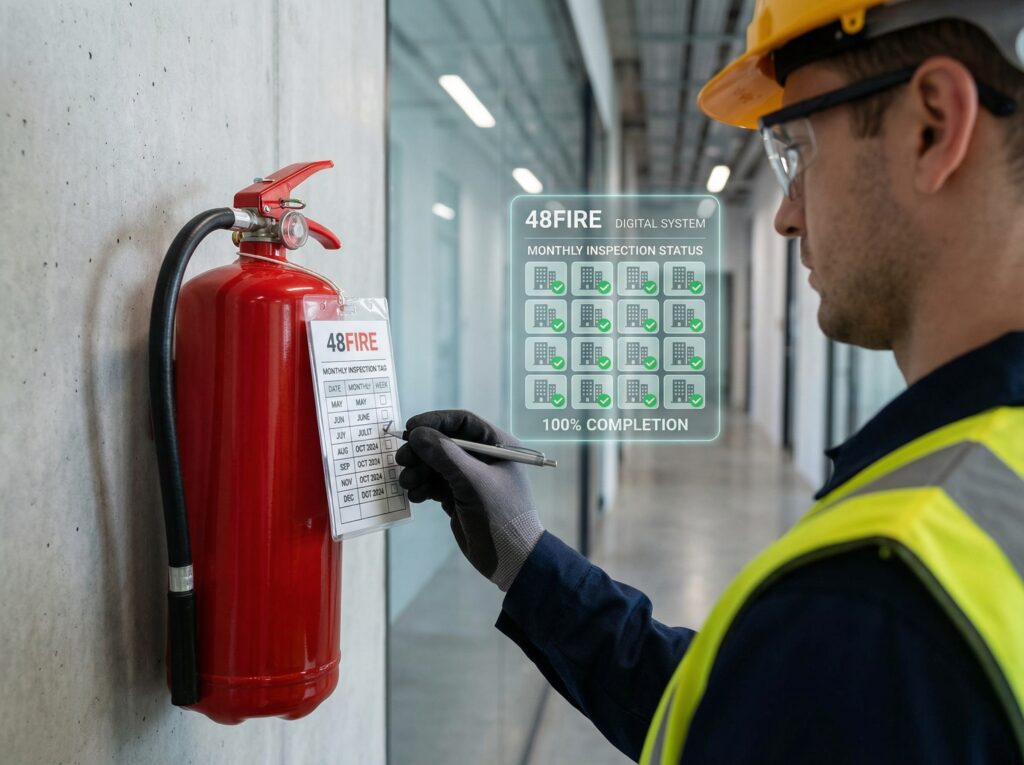
Fire extinguisher inspection tags serve as evidence of regulatory compliance and a continuous safety verification system. Documented monthly checks ensure equipment reliability, verifying location, pressure, and physical condition. This systematic approach detects issues like slow pressure loss approximately 11 months earlier than annual checks alone. Visible, current inspection tags boost employee confidence, signaling that safety equipment is actively maintained and reliable, thereby strengthening workplace safety culture and audit readiness.
Fire Extinguisher Maintenance Best Practices for Commercial Buildings

Fire extinguisher maintenance operates on a predictable lifecycle, enabling optimized timing and reliability. Best practices include systematic monthly inspections (NFPA 10 Section 7.2) using a digital checklist across eight criteria. Annual professional maintenance (NFPA 10 Section 7.3) ensures maximum value, including mandatory recharge situations. Additionally, a six-year internal examination is required for many stored-pressure units. Proactive fire extinguisher recharge and comprehensive digital documentation (Best Practice 7) ensure continuous compliance and equipment reliability for commercial buildings.
Why Proper Extinguisher Placement Is Key for Effective Fire Protection
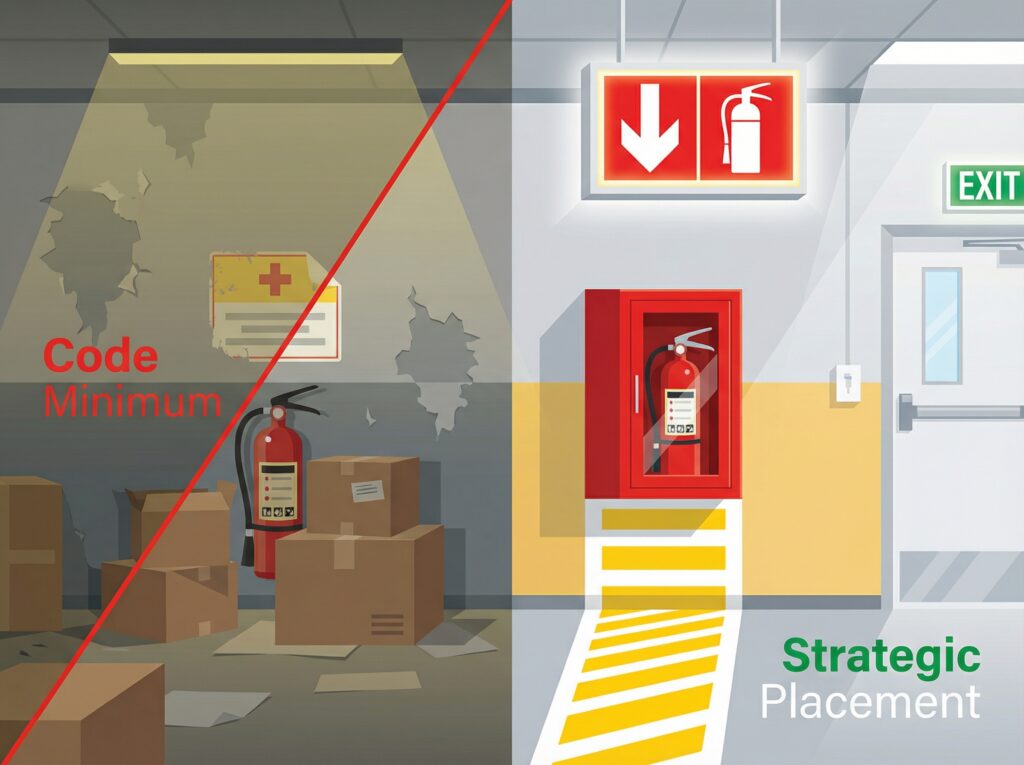
Effective fire protection requires strategic optimization beyond NFPA 10’s minimums. Extinguisher placement addresses three dimensions: Legal Compliance (code requirements), Operational Accessibility (visibility and intuitive location), and Strategic Effectiveness (hazard proximity and egress route alignment). Most facilities address only Dimension 1. Proper placement is essential, enhancing fire protection by reducing response time 35-50% and improving equipment location speed by 60%. Comprehensive fire protection requires all three dimensions.