
How Fire Extinguisher Service Strengthened Fire Protection in a Facility

Fire protection operates as a system, not a collection of independent components. Fire extinguishers function as one layer within a comprehensive fire protection services framework, which includes five layers: Detection/alarm systems, suppression equipment, passive protection, emergency response procedures, and maintenance/inspection programs. Weakness in any layer compromises the entire system. Professional services enhance facilities by systematically integrating the fire extinguisher program with these other protection layers, ensuring a strong, cohesive defense that exceeds code minimums.
The Fire Extinguisher Inspection That Helped a Business Meet NFPA 10
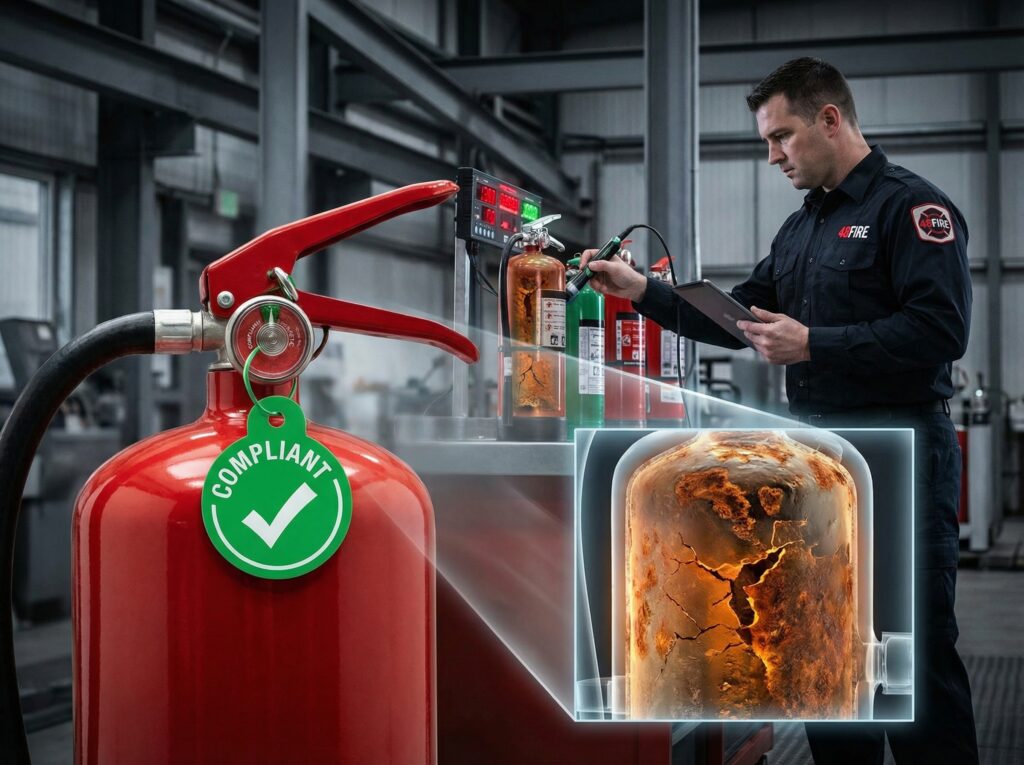
A commercial facility’s self-assessment indicated NFPA 10 compliance, but a professional inspection by 48Fire revealed 83% non-compliance across critical sections like equipment selection, annual maintenance, and testing. Systematic correction addressed major gaps, including replacing wrong extinguisher types, implementing certified maintenance, and establishing hydrostatic testing for 40 overdue units. The transformation resulted in 100% NFPA 10 compliance, leading to a successful audit and a 6% insurance premium reduction, demonstrating the value of professional inspection services.
The Hidden ROI of Proper Fire Extinguisher Maintenance
Professional fire extinguisher maintenance ROI is found in avoided costs, prevented incidents, and eliminated risks. Service companies like 48Fire deliver quantifiable returns across five distinct categories: Equipment Life Extension, Emergency Prevention, Regulatory Compliance, Insurance Optimization, and Operational Continuity. For a typical 100-unit facility, the total annual returns range from $6,700 to $40,350, yielding an average ROI of 50-200% annually on an investment of approximately $7,200.
How Monthly Extinguisher Checks Saved a Client $25K
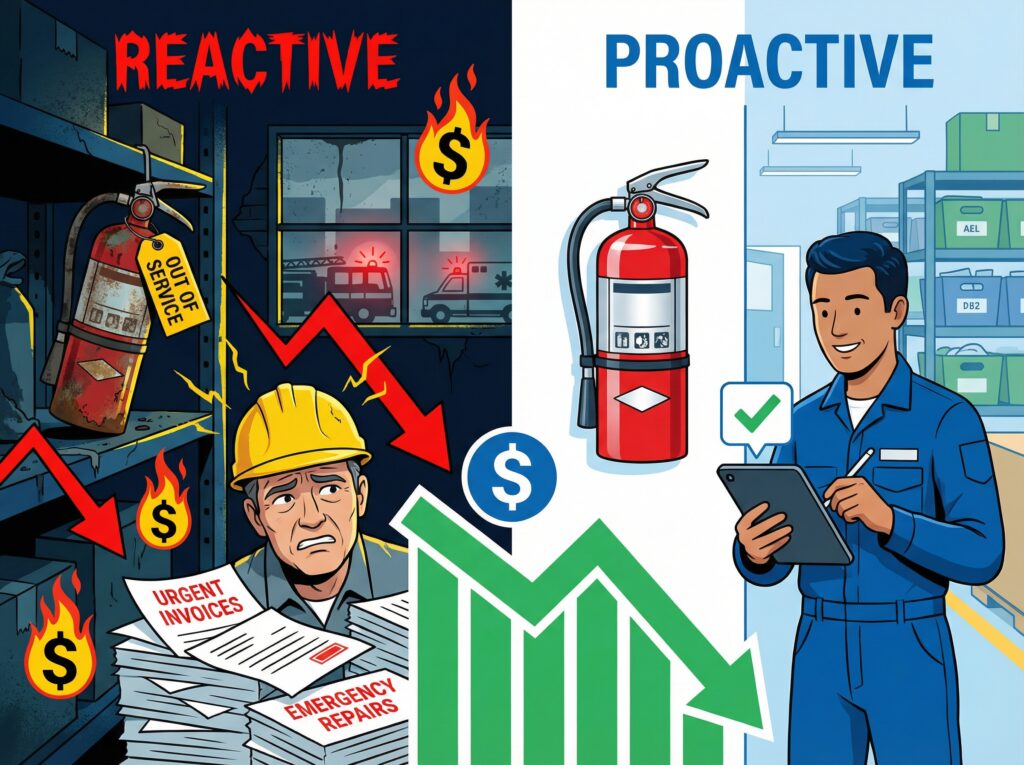
Systematic monthly checks significantly reduce the total fire extinguisher inspection cost, contrary to the belief that minimal effort is economical. A reactive approach in one facility led to $26,485 in first-year costs due to undetected failures, emergency premiums, and audit penalties. By implementing systematic monthly checks, the annual cost dropped to $1,620, resulting in $24,865 in first-year savings. This proactive method prevents expensive emergency failures and ensures continuous compliance, extending equipment life by 5-7 years.
From Fines to Fully Compliant: One Plant’s Fire Fix
Third-quarter OSHA inspection cited four serious fire extinguisher violations at a manufacturing facility, leading to $64,524 in initial penalties and a 22% insurance premium increase. The systematic correction, managed over 60 days, included immediate hazard mitigation and comprehensive maintenance/testing. A follow-up inspection verified full compliance, reducing penalties to $38,714 and securing an ongoing annual savings of $15,360 through insurance optimization and violation prevention. The total correction investment was recovered in 6.6 years.
The Inspection Checklist That Passes Every Fire Code Review

The difference between compliance and citations often lies in documentation quality. NFPA 10 Section 7.2.1 mandates fire extinguishers be inspected at approximately 30-day intervals, checking eight criteria, including location, accessibility, pressure, and seals. Crucially, Section 7.2.2 requires manual or electronic records to provide evidence that these inspections have been performed. Missing months or incomplete documentation resulted in a $1,200 penalty for one facility, highlighting the importance of systematic documentation.
How Proper Documentation Prevented a Failed Safety Audit

The text highlights the critical importance of proper documentation in safety audits. Facility A failed its fire protection assessment due to inadequate, inconsistent records and missing service documentation, resulting in $8,500-$12,000 in correction costs. In contrast, Facility B passed with commendation by providing immediate, comprehensive digital access to 12 months of inspection history and technician credentials, demonstrating NFPA 10 and OSHA 1910.157 compliance. Comprehensive checklists prevent violations and ensure audit success.
What Every Facility Should Know About Expired Extinguishers
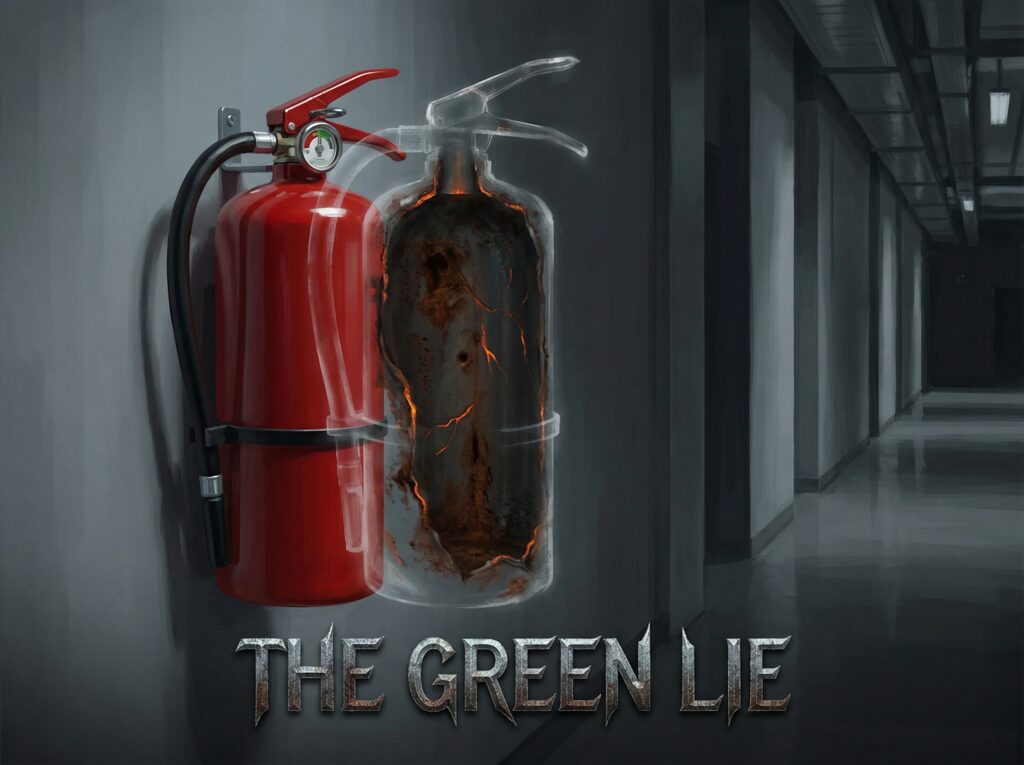
Fire extinguishers do not have traditional expiration dates, but they require mandatory hydrostatic testing intervals per NFPA 10 Table 8.3.1 (e.g., 5 years for water/CO2, 12 years for dry chemical). Annual maintenance is separate from this testing, which verifies pressure vessel structural integrity and safety. Failed units must be destroyed and replaced. Ignoring these deadlines leads to regulatory citations, insurance complications, and safety risks. Systematic testing and budget planning are essential.
Why Businesses Choose Certified Fire Extinguisher Inspectors
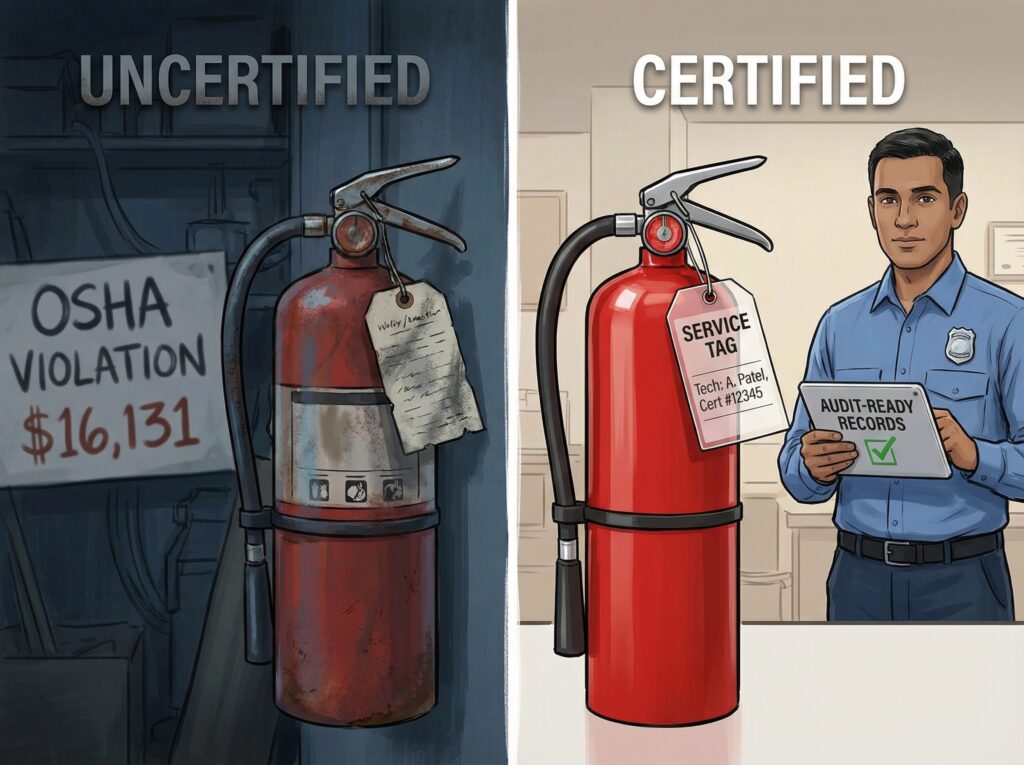
Businesses must choose certified fire extinguisher inspectors for crucial regulatory compliance and liability protection. Certification ensures standardized training, ongoing education, and professional accountability, which “experience” alone lacks. Certified inspection documentation satisfies OSHA and Fire Marshal requirements, preventing violations (e.g., a $16,131 OSHA penalty). It also secures insurance claim processing and optimizes premium rates. Certified service mitigates risk exposure, demonstrating due diligence and technical competency against potential regulatory fines and litigation.
How Routine Testing Cut Fire Equipment Costs by 25%

Routine annual fire inspection programs, like the one implemented with 48Fire, significantly cut fire equipment costs. A manufacturing facility saw a 25.4% reduction, saving $14,200 over three years. Systematic inspection shifts expenses from unpredictable reactive costs (emergency replacements, regulatory penalties) to planned routine service. This proactive approach ensures regulatory compliance, extends equipment life by 5-7 years, and optimizes insurance premiums, leading to a typical ROI of 168-576%.