Facility managers oversee buildings. That responsibility includes fire protection. But most facility managers haven’t received formal fire safety training specific to their role. The gap between responsibility and preparation creates risk.
48Fire Protection developed a specialized fire safety training course for facility managers. The course isn’t generic compliance training. It’s role-specific training addressing what facility managers actually need to know and do to manage fire protection in commercial facilities.
—
The Manager Knowledge Gap: What Facility Managers Don’t Know
Before fire safety training, facility managers typically understood:
- General building systems
- Maintenance scheduling
- Operational procedures
- Budget management
But lacked specific knowledge about:
- Fire protection system design and function
- Code requirements and compliance
- Emergency response procedures
- Staff coordination during emergencies
- Documentation and audit readiness
This knowledge gap isn’t from lack of intelligence or effort. It’s from lack of specialized training. Fire protection is a specialized domain. Facility managers need specialized knowledge.
—
The Training Course Structure: Role-Specific Learning
48Fire Protection developed a comprehensive facility manager fire safety training course addressing core competency areas:
Module 1: Fire Protection Systems Knowledge
Learning Outcome: Facility managers understand what systems exist, what they do, and how they work together.
Course Content:
- Fire alarm systems: Detection, notification, activation
- Sprinkler systems: Water supply, flow, activation, testing requirements
- Emergency lighting: NFPA 101 requirements (1.0 foot-candle minimum illumination in exit routes), backup battery systems, 90-minute duration specifications, maintenance responsibility
- Fire suppression systems: Types, locations, testing procedures
- Fire doors and compartmentalization: How fire containment works
- System integration: How systems work together during emergencies
Learning Activities:
- Facility system walkthroughs
- System component identification
- Documentation review
- Testing procedure observation
Knowledge Verification:
After Module 1, facility managers could:
- Identify all fire protection systems in their facility
- Explain each system’s function and activation method
- Understand backup systems (battery duration, automatic operation)
- Know testing and maintenance requirements
- Explain system integration to staff and emergency responders
Module 2: Fire Code Requirements and Compliance
Learning Outcome: Facility managers understand applicable codes and how to demonstrate compliance.
Course Content:
- NFPA standards overview (NFPA 101 Life Safety Code, NFPA 72 Fire Alarm Code)
- Local fire codes and amendments
- Exit requirements: Width, illumination (1.0+ foot-candles minimum), marking, accessibility
- Emergency lighting standards: Illumination levels, battery backup, testing frequency
- Occupancy-specific requirements
- Documentation requirements for regulatory agencies
- Audit preparation and evidence organization
Learning Activities:
- Code review exercises
- Compliance gap assessment
- Audit readiness document preparation
- Emergency lighting standard application
Knowledge Verification:
After Module 2, facility managers could:
- Identify applicable fire codes
- Assess facility compliance against requirements
- Document compliance evidence
- Identify compliance gaps requiring correction
- Prepare for regulatory inspection or insurance audit
Module 3: Facility Assessment and Documentation
Learning Outcome: Facility managers establish baseline facility fire protection status and maintain accurate documentation.
Course Content:
- Comprehensive facility assessment methodology
- System inventory documentation
- Compliance assessment procedures
- Fire hazard identification
- Risk prioritization framework
- Documentation organization and maintenance
- Audit preparation protocols
- Emergency responder information packets
Learning Activities:
- Facility assessment practice
- Documentation template completion
- Prioritization exercise
- Audit scenario simulation
Knowledge Verification:
After Module 3, facility managers could:
- Conduct comprehensive facility fire safety assessment
- Document systems and compliance status
- Organize documentation for regulatory and insurance reviews
- Prepare facility information for emergency responders
- Create prioritized improvement plan
Module 4: Emergency Response Leadership
Learning Outcome: Facility managers understand their decision-making role during fire emergencies.
Course Content:
- Emergency response procedures and decision points
- Evacuation authorization and direction
- Occupant accountability coordination
- Staff assignment and communication
- Coordination with emergency responders
- Post-emergency procedures and documentation
- Crisis communication
Learning Activities:
- Emergency scenario simulations
- Decision-making exercises
- Communication practice
- Coordination drills
Knowledge Verification:
After Module 4, facility managers could:
- Make clear emergency response decisions
- Direct and coordinate evacuation
- Manage staff during emergency
- Coordinate with emergency responders
- Document emergency response
Module 5: Emergency Lighting and Life Safety Systems
Learning Outcome: Facility managers understand emergency lighting as critical life safety system and can ensure ongoing functionality.
Course Content:
- NFPA 101 emergency lighting requirements: 1.0 foot-candle minimum illumination
- Illumination measurement and verification
- Backup battery systems: Specifications, testing, maintenance, replacement
- 90-minute minimum duration requirement and verification
- Load testing procedures and frequency
- Occupant confidence and evacuation capability
- System maintenance responsibility and schedule
- Coordination with electricians and maintenance staff
Learning Activities:
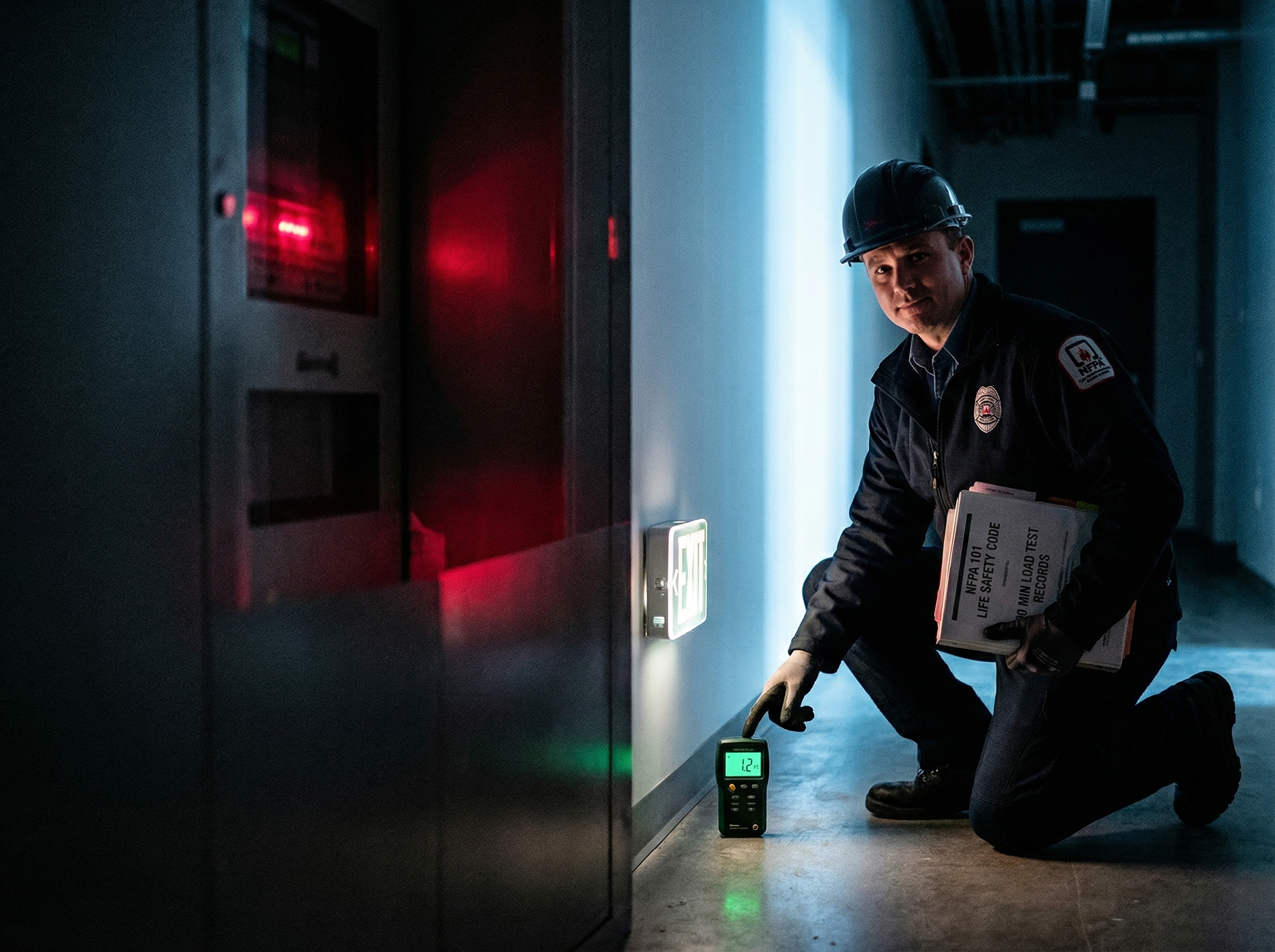
- Emergency lighting measurement practice (foot-candle meters)
- Backup battery load testing observation
- Maintenance schedule development
- Staff communication and coordination
Knowledge Verification:
After Module 5, facility managers could:
- Verify emergency lighting meets code minimum (1.0+ foot-candles)
- Understand backup battery specifications and limitations
- Schedule and oversee load testing
- Communicate with maintenance staff about system needs
- Ensure emergency lighting system functionality
—
What Facility Managers Gain: Competency Development Outcomes
Completion of the fire safety training course resulted in facility managers demonstrating:
System Mastery
- Before: “We have fire systems somewhere”
- After: “System A does X, System B does Y, they work together like this”
Code Competency
- Before: “I think we comply”
- After: “Here’s what code requires, here’s our documentation proving compliance”
Assessment Capability
- Before: “No idea if everything is working”
- After: “I’ve assessed the facility and documented status”
Emergency Leadership
- Before: “Not sure what I’d do in an emergency”
- After: “I know my role, decision points, and coordination procedures”
Emergency Lighting Expertise
- Before: “There are lights that come on when power goes out”
- After: “Emergency lighting provides 1.0+ foot-candle illumination, backup batteries maintain 90 minutes, annual load testing verifies functionality”
—
Facility Manager Learning in Practice: Pre-Training vs. Post-Training
Audit Scenario: Before Training
Inspector asks facility manager: “Can you explain your fire alarm system?”
Response: “Uh, it detects fires and sounds an alarm. We have someone maintain it.”
Inspector: “When was it last tested? What are the activation zones? What’s the notification method?”
Response: (Uncertain) “I’m not sure. Let me call the maintenance person.”
Audit Scenario: After Training
Inspector asks facility manager: “Can you explain your fire alarm system?”
Response: “We have a monitored fire alarm with detection devices in these zones [explains zones]. The alarm sounds at 90+ decibels. When activated, occupants receive notification through [explains method]. We conduct annual testing. Here’s the testing documentation [provides organized records].”
Inspector: “Good. What about emergency lighting?”
Response: “Emergency lighting provides 1.0+ foot-candle illumination throughout exit routes. We have backup batteries with 90-minute minimum duration. I can show you our load testing records [demonstrates recent measurements proving 1.1-1.4 foot-candles, showing compliance]. We’ve scheduled battery replacement in [timeframe]. Here’s our maintenance documentation.”
—
Facility Manager Competency: Audit Preparation and Success
Facility managers who completed fire safety training demonstrated enhanced audit readiness:
Audit Preparation
- Facility assessment completed: Systems documented, compliance verified
- Documentation organized: Inspection records, testing documentation, maintenance logs
- Emergency procedures documented: Response procedures recorded, staff assignments clear
- Emergency lighting verification: Measurements documented (1.1-1.4 foot-candles), battery load testing completed
Audit Performance
- Direct answers to inspector questions
- Documentation provided immediately
- System knowledge demonstrated
- Compliance evidence presented
- Emergency lighting specifications explained and verified
- Maintenance schedule shown
Audit Outcome
- Inspectors noted manager competency
- Minimal inspector questions needed (manager answered proactively)
- All requested documentation provided
- No compliance gaps identified
- Audit efficiency improved
Insurance Review
- Risk profile assessment positive (manager demonstrates knowledge and control)
- Documentation reviewed and approved
- Premium considerations: Competent management recognized
- Facility classification maintained or improved
—
The Certification Benefit: Recognition of Competency
Upon course completion, facility managers receive certification indicating:
- Completion of role-specific fire safety training
- Demonstrated competency in fire protection systems, codes, assessment, emergency response, and emergency lighting standards
- Accountability: Certified manager has formal responsibility for facility fire protection
- Insurance recognition: Certification demonstrates manager qualifications
- Regulatory recognition: Documentation proves manager training and competency
Certification benefits facility managers professionally and benefits facilities by establishing management accountability.
—
Facility Managers After Fire Safety Training Courses
Fire safety training courses transform facility managers from uncertain to competent. From “I think we’re okay” to “I know we’re compliant and here’s the documentation proving it.”
The transformation isn’t magic. It’s systematic knowledge development through role-specific training addressing what facility managers actually need to know and do.
—
48Fire Protection: Facility Manager Fire Safety Training
48Fire Protection delivers specialized fire safety training for facility managers addressing:
System Mastery
- Fire alarm, sprinkler, emergency lighting systems
- System function and integration
- Testing and maintenance requirements
Code Knowledge
- NFPA and local fire code requirements
- Compliance assessment procedures
- Documentation requirements
Facility Assessment
- Comprehensive assessment methodology
- Documentation and organization
- Prioritization and planning
Emergency Leadership
- Emergency response procedures
- Decision-making framework
- Staff coordination
Emergency Lighting Expertise
- NFPA 101 standards (1.0+ foot-candles minimum)
- Backup battery specifications (90-minute duration)
- Load testing and maintenance procedures
- Occupant safety and evacuation capability
Training results in facility managers who understand fire protection systems, know applicable codes, can assess compliance, prepare for emergencies, and manage emergency lighting systems with confidence.
—
[Contact 48Fire Protection] to enroll facility managers in specialized fire safety training courses. Develop competent fire protection managers who understand systems, know codes, prepare for audits, respond to emergencies, and ensure emergency lighting system reliability. Transform facility managers from uncertain to certified and competent.
Competent facility managers strengthen facility fire protection. Training creates competence.
—
The difference between managing by uncertainty and managing by knowledge is training. Fire safety certification demonstrates that difference.