How Routine Recharges Saved a Restaurant from Closure
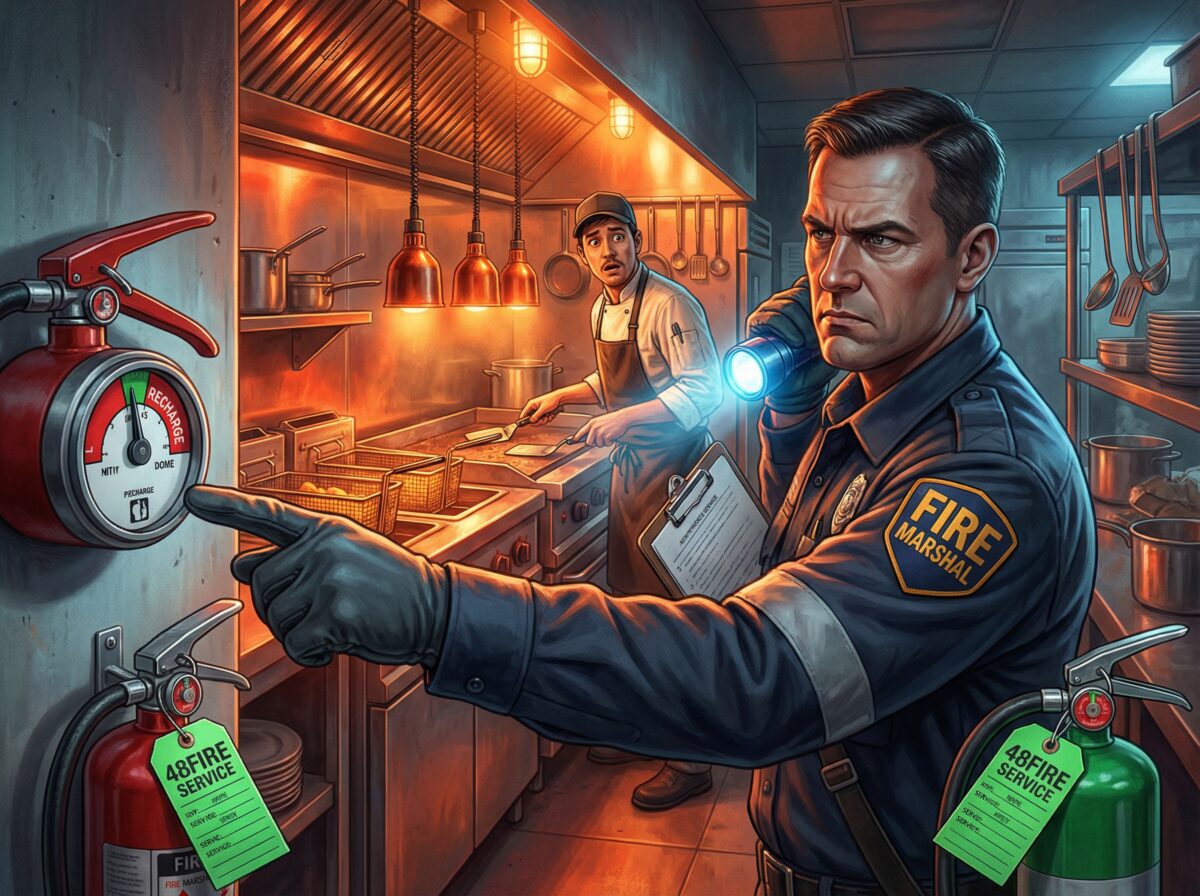
Three non-functional fire extinguishers. One unannounced inspection. Zero days to fix it.
Restaurant fire safety isn’t negotiable. Fire marshals arrive without warning, test equipment on the spot, and issue immediate closure orders when critical violations appear. The difference between passing and shutting down often comes down to something deceptively simple: whether fire extinguishers actually work when tested.
Most restaurant managers assume their fire extinguishers are fine. The equipment hangs on walls, looks intact, and hasn’t been obviously damaged. But appearances mean nothing when a fire marshal pulls the pin and checks the pressure, or when a kitchen fire breaks out and the extinguisher delivers nothing but a disappointing hiss.
The compliance reality:
Fire extinguisher recharge isn’t optional maintenance you schedule when convenient. NFPA 10 and local fire codes mandate immediate recharge after any use, when pressure drops, or during scheduled six-year maintenance intervals. Restaurants that treat recharge as “we’ll get to it eventually” discover the consequences during inspections—or worse, during actual fires.
Here’s what systematic fire extinguisher recharge actually prevents, and why restaurants can’t afford to skip it.
—
Restaurant Kitchens: Where Fire Safety Gets Complicated
Walk into any commercial kitchen during dinner service. Open flames from ranges, 375-degree oil in deep fryers, electrical equipment running at capacity, staff moving quickly under pressure. Fire doesn’t just happen here—it waits for the inevitable moment when something goes wrong.
NFPA data confirms what fire departments already know: restaurants catch fire more frequently than almost any other commercial property type. The combination of ignition sources, fuel, and human factors creates persistent risk that only systematic fire protection controls.
The Fire Hazards That Actually Matter
Cooking oil ignition. Heat oil past its smoke point and it auto-ignites. Commercial fryers regularly reach temperatures where this becomes possible. Once burning, oil fires spread rapidly and can’t be extinguished with water—water actually makes them worse by carrying burning oil across surfaces.
Grease accumulation pathways. Cooking creates grease-laden vapor that exhaust systems capture. Over time, grease deposits build up in hoods, ducts, and fans. A small fire can travel through these pathways, spreading flames into concealed spaces where suppression becomes nearly impossible.
Equipment electrical failures. Commercial kitchens run enormous electrical loads. Refrigeration, ventilation, lighting, cooking equipment—all operating simultaneously. Electrical malfunctions ignite nearby combustibles, creating fires that start hidden and spread before detection.
Unattended cooking. During busy service, multiple dishes cook simultaneously. Staff multitask. The split-second a cook steps away from a sauté pan is exactly when oil overheats and ignites. These incidents happen daily in commercial kitchens nationwide.
These hazards explain why fire codes impose strict requirements on restaurant fire protection—requirements that include specific extinguisher types, placement standards, and mandatory maintenance including fire extinguisher recharge.
48Fire works specifically with restaurant operators to address these unique fire safety challenges through equipment selection, placement, and systematic maintenance that keeps pace with commercial kitchen realities.
What Fire Codes Actually Require
Fire protection in restaurants isn’t generic. Codes specify different requirements than offices, retail stores, or warehouses.
Automatic suppression above cooking equipment. Commercial ranges, fryers, griddles, and broilers require automatic wet chemical suppression systems. These activate when temperatures exceed safe limits, discharging chemical agents designed specifically for cooking oil fires.
Class K portable extinguishers. Kitchen areas need Class K wet chemical portable extinguishers within 50 feet of cooking equipment. These extinguishers use the same potassium-based agents as automatic systems, creating barriers between oxygen and burning oil.
ABC extinguishers for general areas. Dining rooms, storage areas, and server stations require multipurpose ABC dry chemical extinguishers for ordinary combustibles, flammable liquids, and electrical fires.
Professional maintenance documentation. All fire protection equipment requires annual professional service by certified technicians, with complete documentation available during inspections. Monthly visual inspections add another layer of required verification.
Immediate recharge after use. Any extinguisher discharge—even partial—triggers mandatory professional fire extinguisher recharge before the unit returns to service.
Fire marshals verify all of this during unannounced inspections. Equipment that looks fine but tests as non-functional triggers immediate violations.
—
What “Recharge” Actually Means (And Why It Matters)
Fire extinguisher recharge is precise technical work, not maintenance staff refilling a container.
When Recharge Becomes Mandatory
NFPA 10 specifies exact conditions requiring professional fire extinguisher recharge.
After any discharge. Pull the pin, squeeze the handle, and discharge stops—that extinguisher needs complete recharge regardless of how briefly it operated. Partial discharge doesn’t mean partial recharge. The unit gets fully emptied, inspected, refilled, and repressurized.
When pressure drops. Gauges outside the green “operable” zone indicate pressure loss. This happens through normal seal degradation over time, or from impact damage, or temperature extremes. Low pressure means unreliable function during fires.
During six-year maintenance. Stored pressure extinguishers undergo internal examination every six years. This requires complete emptying, internal inspection, component replacement if needed, then full recharge.
After hydrostatic testing. Units passing pressure vessel testing need complete recharge before returning to service.
Skipping any of these mandatory recharge triggers leaves non-functional equipment in place—equipment that appears normal but fails during actual use.
The Actual Recharge Process
Professional fire extinguisher recharge follows strict procedures that untrained personnel cannot replicate.
Complete discharge. The entire extinguisher empties. “Topping off” or partial refills violate NFPA standards and create unreliable equipment.
Internal examination. With the agent removed, technicians inspect the shell interior for corrosion, cracks, or degradation invisible from outside. Problems identified here often require extinguisher replacement rather than recharge.
Component testing. Valves, hoses, seals, and discharge mechanisms get tested individually. Worn or damaged parts get replaced with manufacturer-approved components.
Proper agent installation. The extinguisher receives exactly the type and quantity of agent specified by the manufacturer. Class K units get wet chemical. ABC units get dry chemical. CO2 units get carbon dioxide. Wrong agents or incorrect quantities create equipment that won’t function properly.
Pressurization to specification. Stored pressure units receive nitrogen or CO2 pressurization matching manufacturer specifications exactly. Over-pressurization creates rupture risk. Under-pressurization means inadequate discharge.
Leak verification. After pressurization, technicians confirm the unit holds pressure without leakage over time.
Seal and tag installation. Fresh tamper seals install along with safety pins. Service tags attach showing recharge date and technician certification.
This complete process ensures recharged extinguishers function identically to new units during emergencies.
48Fire operates certified recharge facilities with factory-authorized equipment for all major extinguisher brands and types, ensuring restaurant equipment receives proper service.
—
The Scenario: When Unreported Use Creates Violations
Picture this sequence unfolding over six months at a busy Italian restaurant.
The Incidents Nobody Reports
Month One: Line cook extinguishes a small grease flare-up on a range using the Class K extinguisher. Fire out, crisis over. The cook replaces the extinguisher on its wall bracket and continues service. Management never hears about it.
Month Three: New server, curious about fire safety equipment, pulls the pin on an ABC extinguisher in the server station and briefly squeezes the handle before realizing the mistake. Embarrassed, the server replaces it without mentioning the incident.
Month Five: Delivery truck backs into the building, bumping a wall-mounted extinguisher near the loading door. The unit falls, hitting concrete and damaging the pressure gauge. Receiving staff rehang it, assuming it’s fine.
None of these incidents involve malice. Staff handle what they perceive as minor issues and move on. But now three extinguishers sit on walls appearing normal while actually non-functional.
The Inspection That Discovers Everything
The restaurant participates in 48Fire’s monthly inspection program. On the scheduled date, a certified technician arrives and systematically checks every extinguisher.
Class K unit near fryers: Technician notes broken tamper seal immediately. Pressure check confirms discharge. Unit removed for recharge, temporary replacement installed.
ABC extinguisher in server station: Broken seal visible. Pressure reading shows partial discharge. Removed for recharge, temporary unit placed.
Damaged unit at loading door: Physical inspection reveals bent gauge assembly, questionable pressure integrity. Removed for evaluation and likely replacement.
48Fire technician provides functional temporary extinguishers matching the removed units’ ratings and types. The restaurant maintains full fire protection without interruption. Documentation updates immediately, showing discovered issues and corrective actions taken.
Service happens seamlessly. Kitchen staff barely notice the technician working. Within 48 hours, recharged extinguishers return with fresh seals, verified pressure, and updated service tags.
What Would Have Happened Otherwise
Without monthly inspections and immediate fire extinguisher recharge response, those three non-functional extinguishers would have remained in place until the fire marshal’s unannounced visit.
Fire marshals test equipment. They pull extinguishers off walls, check pressure gauges, verify seals, and often discharge units to confirm function. Three non-functional extinguishers in a high-risk commercial kitchen would trigger immediate violations.
The likely outcome:
Fire marshal issues immediate closure order until violations correct. Restaurant can’t operate until all extinguishers are recharged or replaced and reinspection confirms compliance.
During lunch service. With reservations booked. With perishable inventory prepped. With staff scheduled and customers arriving.
The closure lasts minimum one full day—time to arrange emergency fire extinguisher recharge, complete service, schedule reinspection, and pass verification. More likely two or three days depending on inspector availability.
Lost revenue: $5,000-8,000 daily. Wasted food: $500-1,000. Staff wages for shifts that don’t happen: $800-1,200. Reinspection fees: $200-500. Potential fines: $1,000-5,000.
Total cost: $15,000-25,000 for a preventable compliance failure.
Instead, systematic monthly inspections with immediate fire extinguisher recharge kept the restaurant operational, compliant, and protected without drama or disruption.
—
Why Restaurants Can’t Use Reactive Approaches
Commercial kitchens present unique challenges that make reactive fire extinguisher recharge particularly risky.
Equipment Actually Gets Used
Restaurant fire extinguishers see more actual use than those in most commercial environments. Small cooking fires happen. Staff respond. Extinguishers discharge.
Unlike office buildings where extinguishers might hang untouched for years, restaurant units actively participate in fire suppression. Each use requires immediate professional recharge.
The problem: busy kitchen staff often handle small fires, extinguish them successfully, and move on without formal incident reports. The used extinguisher goes back on the wall looking normal.
Without systematic inspection programs, these unreported uses remain undetected until the next scheduled service—potentially months away. During that period, the restaurant operates with non-functional equipment.
Proactive monthly inspections catch unreported use within 30 days maximum, triggering immediate fire extinguisher recharge.
Staff Turnover Creates Knowledge Gaps
Restaurant industry turnover averages around 70% annually. New employees receive basic safety training but may not fully understand fire extinguisher protocols.
Accidental discharge happens. Improper handling occurs. Curious employees test equipment inappropriately. Without robust inspection programs compensating for these human factors, problems accumulate undetected.
Environmental Factors Accelerate Degradation
Commercial kitchen environments are harsh. Heat from cooking equipment, moisture from dishwashing and cleaning, grease vapors, temperature swings, constant vibration from ventilation systems, exposure to cleaning chemicals.
Fire extinguishers in these conditions lose pressure faster than units in climate-controlled offices. Corrosion develops more quickly. Seals deteriorate sooner.
Regular inspection with ready access to fire extinguisher recharge services ensures environmental impacts don’t compromise equipment when fires actually occur.
48Fire designs restaurant fire protection programs accounting for these operational realities, with inspection frequencies and service responses matching commercial kitchen needs.
—
The Math: Prevention Costs vs. Closure Costs
Financial analysis removes any ambiguity about fire extinguisher recharge program value.
What Closure Actually Costs
Mid-size restaurant: $5,000 daily revenue during unexpected closure.
Day one closure:
- Lost revenue: $5,000
- Scheduled staff wages: $1,000
- Wasted perishable inventory: $500
- Subtotal: $6,500
Day two closure (waiting for reinspection):
- Additional lost revenue: $5,000
- Additional staff costs: $1,000
- Subtotal: $6,000
Additional expenses:
- Emergency fire extinguisher recharge services: $500-1,000
- Reinspection fees: $200-500
- Potential violation fines: $1,000-5,000
Total closure cost: $14,200-19,000
This doesn’t account for reputation damage, negative reviews mentioning closure, lost regular customers who find alternative restaurants during the shutdown, or long-term revenue impacts.
What Prevention Actually Costs
Comprehensive restaurant fire extinguisher program through 48Fire including monthly inspections, immediate recharge when needed, annual maintenance, and 24/7 emergency response:
Annual program cost: $1,500-3,000 depending on restaurant size and equipment quantity.
Cost comparison:
- Prevention: $1,500-3,000 annually
- Single closure incident: $14,200-19,000
Even if closure risk only materializes once every five years, prevention costs one-quarter of potential losses.
The financial case is definitive: systematic fire extinguisher recharge programs cost dramatically less than closure violations while providing genuine fire protection.
—
Restaurant-Specific Recharge Requirements
Different extinguisher types in food service environments have different recharge triggers.
Class K Extinguishers (Critical Kitchen Equipment)
Wet chemical units designed for cooking oil fires require fire extinguisher recharge:
After any use whatsoever. Even momentary discharge requires complete professional recharge. These cannot be partially refilled or “topped off.”
Every six years. During mandatory internal examination, units undergo complete emptying and recharge regardless of use history.
When pressure drops. Units showing gauge readings outside specifications need immediate service.
Class K extinguishers represent the most critical fire protection in restaurant kitchens. 48Fire prioritizes these units for immediate recharge and temporary replacement when service is needed.
ABC Dry Chemical Extinguishers (General Areas)
Multipurpose units in dining rooms, storage, and service areas require recharge:
After use or tampering. Broken seals indicate discharge requiring service.
During six-year maintenance. Internal examination includes emptying and recharge.
When pressure is lost. Gauges outside green zone trigger recharge need.
After twelve-year hydrostatic testing. Pressure vessel testing requires subsequent recharge.
CO2 Extinguishers (Electrical Equipment Areas)
Carbon dioxide units near electrical panels require recharge:
After any discharge. CO2 release requires professional refill.
When weight drops below specification. CO2 extinguishers use weight rather than pressure gauges—low weight indicates recharge need.
After five-year hydrostatic testing. Testing requires subsequent refill.
48Fire tracks all these requirements automatically for restaurant clients, scheduling fire extinguisher recharge before deadlines and notifying managers when service approaches.
—
How Professional Recharge Programs Actually Work
Effective restaurant fire extinguisher recharge integrates with overall fire safety maintenance.
Monthly Inspection Creates Early Detection
48Fire technicians inspect all restaurant extinguishers monthly, checking:
- Pressure gauge readings on all units with gauges
- Weight verification on CO2 units
- Tamper seal integrity
- Physical condition including corrosion, damage, wear
- Accessibility and proper mounting
- Correct placement for hazard types
Any unit showing discharge, pressure loss, damage, or other problems gets immediately removed for recharge or replacement.
Immediate Temporary Replacement Maintains Protection
Critical operational detail: restaurants never operate without required fire protection.
48Fire technicians carry temporary extinguishers on service vehicles. When units are removed for recharge, identical temporary units install immediately, maintaining code compliance and fire protection without interruption.
Temporary units meet all specifications for type, rating, placement, and accessibility. They’re not placeholders—they’re fully functional equipment providing genuine protection during recharge periods.
Certified Service Facilities Handle Recharge
Removed extinguishers go to 48Fire certified service facilities equipped for professional fire extinguisher recharge following all NFPA 10 procedures.
Standard service completes within 24-48 hours. Rush service is available when restaurant operational needs require faster turnaround.
Complete Documentation Returns with Equipment
Recharged extinguishers return with:
- Fresh tamper seals and safety pins installed
- Updated service tags showing recharge date and technician certification
- Pressure verification confirming proper charge
- Updated maintenance records for compliance files
- Photographs documenting completed work
All documentation integrates into restaurant compliance systems, creating the inspection history fire marshals verify during audits.
Digital Compliance Tracking Provides Visibility
48Fire clients access digital dashboards showing:
- All extinguisher locations, types, and ratings
- Last inspection dates and findings
- Last recharge dates and service performed
- Upcoming service deadlines
- Complete historical records
Management can pull these records instantly during fire marshal inspections, demonstrating systematic compliance immediately.
—
Common Restaurant Recharge Mistakes
Restaurants managing fire extinguisher recharge internally often encounter these problems.
Delaying Recharge After Known Use
Kitchen staff extinguish a small fire and replace the used extinguisher on the wall, intending to report it later. The shift gets busy. The report never happens.
The discharged extinguisher remains in place through the next service, the next day, the next week. When the next small fire occurs, employees grab non-functional equipment.
48Fire’s monthly inspections catch unreported use within 30 days maximum, automatically triggering immediate recharge.
Attempting DIY Recharge
Some restaurants purchase refill kits online or attempt self-service to reduce costs.
This violates NFPA 10 completely. Improperly recharged extinguishers create liability exceeding any cost savings. Fire marshals identifying DIY recharge issue citations for non-compliant equipment.
Professional fire extinguisher recharge requires certified technicians, specialized equipment, manufacturer-approved agents, and proper procedures. No shortcuts exist.
Using Calendar-Based Rather Than Condition-Based Service
Restaurants sometimes schedule fire extinguisher recharge on fixed intervals—annually, for example—regardless of actual equipment condition.
Recharge isn’t preventive maintenance like oil changes. It’s corrective service triggered by specific conditions: use, pressure loss, scheduled maintenance, or hydrostatic testing.
Systematic inspection programs identify actual recharge needs when they occur.
Ignoring Low Pressure Readings
Staff notice pressure gauges in yellow or red zones but assume equipment is “close enough” to functional.
Gauges outside green operable ranges indicate units that won’t discharge properly during fires. These require immediate fire extinguisher recharge, not deferred service until convenient.
48Fire inspection documentation captures pressure readings and automatically flags units requiring service.
Operating Without Temporary Coverage
Restaurants remove extinguishers for recharge without installing temporary replacements, leaving facilities without required protection.
This violates fire codes and creates enormous liability if fires occur during gap periods. Fire marshals discovering missing equipment during these windows issue immediate violations.
—
Integration with Automatic Suppression Systems
Restaurant fire extinguisher recharge programs should coordinate with kitchen suppression system maintenance.
Combined Service Advantages
48Fire provides both portable extinguisher service and automatic suppression system maintenance in unified programs.
Unified scheduling. Portable and automatic systems inspect simultaneously, minimizing operational disruption.
Complete compliance. Single provider ensures all restaurant fire protection meets requirements without vendor coordination gaps.
Cost efficiency. Combined service programs typically cost less than separate vendor contracts.
Simplified documentation. One compliance system covers all fire protection equipment.
Suppression System Recharge Requirements
Automatic wet chemical systems also require recharge after activation or during maintenance.
System recharge involves:
- Tank removal and transport to service facility
- Complete emptying and internal cleaning
- Wet chemical agent replacement with manufacturer-approved product
- Pressurization verification
- Nozzle and piping inspection
- Fusible link replacement
- Complete system testing before return to service
48Fire coordinates suppression system recharge with portable extinguisher service during planned kitchen downtime, maximizing efficiency.
—
Staff Training on Reporting Extinguisher Use
Restaurant fire safety requires clear procedures ensuring extinguisher use always gets reported.
Establishing Clear Protocols
Visible instructions. Post signage near each extinguisher: “If this extinguisher is used for any reason, immediately notify management and call [fire safety provider].”
No-fault reporting culture. Staff must understand that reporting extinguisher use never results in discipline. Fear of consequences guarantees unreported incidents.
24/7 contact information. Provide all staff with immediate access to 48Fire’s emergency response line for fire extinguisher recharge needs.
Manager verification responsibility. Designate shift managers for daily extinguisher visual checks confirming intact seals and proper placement.
Training Content Requirements
Regular staff training should cover:
Appropriate use situations. Small, contained fires in early stages only. Large fires, spreading fires, or fires blocking exits require immediate evacuation and fire department notification.
PASS technique. Pull pin, Aim at base, Squeeze handle, Sweep side to side.
Mandatory reporting. Any extinguisher use requires immediate management notification and professional fire extinguisher recharge before return to service.
Pressure gauge interpretation. Staff should recognize that gauges outside green zones indicate service needs.
48Fire provides complimentary staff training as part of comprehensive restaurant fire safety programs.
—
Emergency Recharge Services
Restaurant fire safety occasionally requires emergency fire extinguisher recharge outside normal hours.
Emergency Service Triggers
After-hours fire incidents. Small fires during late service that staff extinguish using portable extinguishers.
Weekend discoveries. Managers finding discharged or damaged units on weekends before Monday opening.
Pre-inspection emergencies. Discovering compliance problems hours before scheduled fire marshal visits.
Accidental discharge. Equipment moves or facility work causing unintentional extinguisher activation.
48Fire provides 24/7 emergency fire extinguisher recharge response. Emergency technicians carry common extinguisher types for immediate temporary placement while used units undergo service.
Emergency Response Protocol
Immediate contact. Restaurant calls 48Fire emergency line describing the situation.
Rapid dispatch. Emergency technician responds with temporary extinguishers appropriate for the situation.
On-site assessment. Technician evaluates issues, removes affected units, installs temporary equipment meeting all code requirements.
Priority service. Removed extinguishers receive expedited recharge, typically completing within 12-24 hours.
Documented return. Recharged units return with complete service documentation.
Emergency response ensures restaurants never operate without required fire protection, even during unexpected equipment failures.
—
Long-Term Value Beyond Compliance
Proactive fire extinguisher recharge programs provide benefits extending beyond avoiding violations.
Equipment Life Extension
Properly maintained and promptly recharged extinguishers last significantly longer than neglected equipment.
Regular internal inspections during recharge identify corrosion or degradation early. Addressing issues prevents complete equipment failure requiring expensive replacement.
Systematic maintenance extends average extinguisher life from 5-7 years (reactive programs) to 12-15 years (proactive programs).
Insurance Considerations
Restaurant insurance carriers review fire safety programs during underwriting and renewal.
Documented systematic fire extinguisher recharge records demonstrate risk management commitment. Comprehensive maintenance reduces claim frequency, positively impacting premiums and coverage.
Operational Continuity Protection
The largest benefit comes from avoided closures and interruptions.
Single closure violation prevented saves tens of thousands in lost revenue, wasted inventory, and reputation damage. Systematic fire extinguisher recharge programs eliminate these catastrophic events.
48Fire clients operate confidently knowing fire safety compliance won’t unexpectedly shut down their businesses.
—
Complete Restaurant Fire Safety Integration
Fire extinguisher recharge represents one component of comprehensive restaurant fire protection.
48Fire provides integrated restaurant fire safety including:
Portable fire extinguisher service. Monthly inspections, immediate recharge when needed, annual maintenance, hydrostatic testing.
Automatic suppression systems. Kitchen hood system inspection, maintenance, and recharge following NFPA 17A.
Fire alarm systems. Detection and notification testing and maintenance meeting NFPA 72.
Emergency lighting. Monthly and annual egress lighting and exit sign testing.
Hood cleaning coordination. Integration with exhaust system cleaning services ensuring complete kitchen fire protection.
Unified compliance portals show all equipment status, service history, and upcoming deadlines across all fire protection systems.
—
Starting With Professional Assessment
Restaurants don’t need to wait for violations to implement proper fire extinguisher recharge programs.
48Fire provides complimentary restaurant fire safety assessments:
- Complete current equipment documentation
- Immediate compliance gap identification
- Verification that all extinguishers are properly charged
- Appropriate service program recommendations
- Accurate cost projections for systematic maintenance
Assessments create baseline compliance understanding and improvement roadmaps.
From there, 48Fire implements monthly inspection programs with immediate fire extinguisher recharge response, ensuring continuous compliance without operational disruption.
—
Protecting Your Business Investment
Restaurant owners invest capital, time, and personal commitment building their businesses. Preventable fire safety violations shouldn’t threaten everything they’ve built.
Systematic fire extinguisher recharge programs through 48Fire prevent closure violations while ensuring genuine fire protection for employees and customers.
The investment is modest compared to potential closure losses. The operational continuity is invaluable—knowing your restaurant maintains full compliance with certified fire safety systems ready to protect people and property.
48Fire serves restaurants, commercial kitchens, hospitality operations, and food service facilities across the United States. Certified technicians understand restaurant fire code requirements and provide responsive service matching food service operational demands.
Talk to an Expert! Contact 48Fire at [/contact-us](/contact-us) to schedule a restaurant fire safety assessment. Our certified technicians will evaluate your current fire extinguisher program, identify recharge needs, and implement systematic service keeping your restaurant compliant, protected, and operational.
—
Frequently Asked Questions
When do restaurant fire extinguishers need recharge?
Fire extinguisher recharge is required immediately after any use (even partial discharge), when pressure gauges read outside the operable green zone, during six-year internal maintenance, and after hydrostatic testing. Restaurant Class K extinguishers commonly need recharge due to cooking fire incidents.
How long does fire extinguisher recharge take?
Professional recharge typically requires 24-48 hours including transport, complete discharge, internal inspection, agent replacement, pressurization, testing, and documentation. 48Fire provides temporary extinguishers immediately so restaurants maintain required fire protection during recharge periods.
Can restaurants recharge fire extinguishers themselves?
No. NFPA 10 requires fire extinguisher recharge be performed by certified technicians with proper equipment, manufacturer-approved agents, and appropriate training. DIY recharge violates standards and creates liability. Fire marshals cite restaurants attempting self-service.
What happens if a fire extinguisher is used but not recharged?
Discharged extinguishers appear normal but won’t function during subsequent fires. This creates extreme life-safety risk and compliance violations. Fire marshals testing extinguishers during inspections discover unreported use, potentially leading to closure orders for non-functional equipment in high-risk environments.
How much does restaurant fire extinguisher recharge cost?
Individual recharge costs approximately $15-75 depending on extinguisher type, size, and agent. Class K wet chemical recharge typically costs more than ABC dry chemical. Emergency after-hours service may carry premium rates. Systematic programs through 48Fire include recharge as needed within monthly service contracts.
Do Class K extinguishers require special recharge procedures?
Yes. Class K wet chemical extinguishers use specialized potassium-based agents designed for cooking oil fires. Recharge requires proper wet chemical agent, specific pressure specifications, and technician training on Class K systems. Generic dry chemical cannot substitute for proper Class K agent.
What documentation do fire marshals require for fire extinguisher recharge?
Inspectors verify service tags on each extinguisher showing recharge date and technician information. They also review maintenance logs documenting complete recharge history. Missing documentation can trigger violations even when equipment is functional. 48Fire provides complete digital and physical documentation meeting all inspection requirements.
Can restaurants operate during fire extinguisher recharge?
Yes, when temporary extinguishers are properly placed. 48Fire provides immediate temporary units meeting all code requirements for type, rating, and placement. Restaurants maintain continuous operation and fire protection while permanent equipment undergoes recharge.
—