The Audit Challenge: Different Stakeholders, Different Expectations
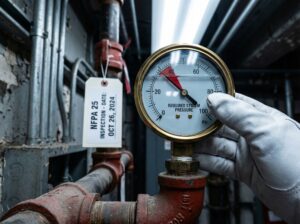
A commercial facility scheduled a fire protection audit. The facility had systems in place. Systems were maintained. But auditors evaluate more than equipment—they evaluate whether occupants know how to respond in emergencies and whether staff understand their roles.
The facility faced a stakeholder reality: Fire safety systems work only if people know how to use them. A sprinkler system without occupants who know evacuation procedures is incomplete. Emergency lighting without staff trained to direct occupants is equipment without purpose. Fire doors without staff understanding their critical role are walls with a hidden function.
The facility’s fire safety training program didn’t just prepare for the audit. It transformed how three different stakeholder groups—occupants, staff, and emergency responders—could actually rely on the fire protection systems during an emergency.
—
Stakeholder 1: Occupants—From Uncertain to Confident
What Occupants Need to Know:
- Where are emergency exits?
- What does alarm activation sound like?
- Where should they go?
- What happens if primary exits are blocked?
- How long do emergency lights stay on?
Before Comprehensive Training:
The facility had occupants. Most had never participated in a fire drill. Some didn’t know where the nearest emergency exit was. Some thought fire exits were blocked. Some had no idea evacuation routes existed.
When auditors asked occupants basic questions (“Where’s the emergency exit from this floor?”), answers were vague or incorrect. Occupants felt uncertain about emergency procedures.
The Training Intervention:
48Fire Protection helped develop a comprehensive occupant fire safety training program including:
Session 1: Facility Orientation
- Tour of all emergency exits (location, accessibility, pathway clarity)
- Identification of assembly points (where occupants gather after evacuation)
- Explanation of evacuation routes specific to each floor
- Discussion of what emergency lighting means and how to use it as guidance
Session 2: Alarm Recognition
- Audio playback of actual fire alarm sound
- Explanation of what different alarm types mean (continuous alarm = evacuate)
- Practice distinguishing fire alarm from other building alarms
- Clear instruction: “Any alarm you hear, exit immediately”
Session 3: Emergency Lighting in Practice
- Explanation of NFPA 101 emergency lighting requirements (1.0 foot-candle minimum illumination)
- Demonstration of how emergency lighting activates during power loss
- Instruction on using emergency lighting as navigation guide during evacuation
- Emphasis: “These lights stay on for 90 minutes minimum. Follow them to exits.”
Session 4: Evacuation Procedures
- Clear procedures for different scenarios (fire on floor, smoke in stairwell, blocked exits)
- Role of floor wardens (staff who direct occupant flow)
- Accountability procedures (how to confirm all occupants evacuated)
After Comprehensive Training:
Same auditor questions to occupants: “Where’s the nearest emergency exit?”
Answers: Confident, specific, accurate. Occupants could describe routes. Occupants understood alarm sounds. Occupants knew what emergency lighting meant.
Auditor assessment: “Occupants understand emergency procedures and are confident in evacuation response.”
Impact for Occupants: Transformed from uncertain (“I’m not sure what to do”) to confident (“I know exactly what to do”).
—
Stakeholder 2: Staff—From Role Confusion to Clear Accountability
What Staff Need to Know:
- What’s my specific role during emergency?
- Who’s my supervisor? Who do I report to?
- Am I responsible for evacuating occupants or just myself?
- How do I use the emergency lighting to guide occupants?
- What happens at the assembly point?
Before Comprehensive Training:
The facility had staff. Some understood emergency roles. Many didn’t. Some thought facility security handled everything. Some thought their only responsibility was themselves.
Floor wardens (staff designated to help direct evacuation) had titles but no training. They didn’t know evacuation procedures. They didn’t understand the flow management system. They didn’t know how to account for occupants.
The Training Intervention:
48Fire Protection developed role-specific training:
General Staff Training:
- Clear statement of roles: “During emergency, your role is to evacuate immediately and help others”
- Explanation of floor wardens and their authority
- Instructions on using emergency lighting as guidance (trust the 1.0+ foot-candle illumination)
- Assembly point procedures and accountability importance
Floor Warden Training (Intensive):
48Fire Protection conducted specialized floor warden training addressing:
Emergency Procedures:
- Evacuation sequence (who leaves first, how flow moves)
- Use of emergency lighting to guide occupant movement (emergency lighting provides minimum 1.0 foot-candle illumination—sufficient for safe navigation)
- Management of occupants with mobility limitations
- Communication with emergency responders
Accountability Systems:
- How floor wardens account for all occupants at assembly point
- Procedures for reporting missing occupants to emergency responders
- Documentation of who evacuated and when
Fire Door Awareness:
- Understanding that fire doors automatically close to contain fire
- Not propping fire doors open
- Understanding fire doors protect escape routes
- Maintenance responsibility for fire door seals and closing mechanisms
Emergency Lighting Reliance:
- Understanding that emergency lighting (1.0 foot-candle minimum) provides safe evacuation visibility
- Not turning off emergency lighting
- Understanding backup battery systems keep lighting functional for 90 minutes
- Confidence that lighting will guide occupants to exits
After Comprehensive Training:
Auditors observed floor warden procedures during audit. Floor wardens demonstrated:
- Clear understanding of evacuation procedures
- Ability to guide occupant flow
- Accountability tracking methods
- Communication with supervisors
Auditor assessment: “Staff understand roles and procedures. Floor wardens demonstrate competence.”
Impact for Staff: Transformed from unclear responsibility (“I’m not sure what I’m supposed to do”) to clear accountability (“Here’s exactly what I do and why it matters”).
—
Stakeholder 3: Emergency Responders—From Uncertain Facility Knowledge to Verified Procedures
What Emergency Responders Need to Know:
- How many occupants are in the facility?
- What are evacuation procedures?
- Where’s the emergency assembly point?
- Are emergency lighting systems functional? (They rely on lights during dark/smoky conditions)
- What’s the facility’s floor plan?
Before Comprehensive Training:
The facility had emergency plans. Emergency responders had a copy. But procedures hadn’t been tested with actual occupants and staff. Emergency responders didn’t know if procedures would actually work when called.
The Training Intervention:
48Fire Protection worked with facility and emergency responder coordination:
Coordinated Fire Drill:
A full-facility fire drill was conducted with 48Fire Protection observation:
Drill Components:
- Facility activates fire alarm
- Occupants evacuate using normal procedures
- Staff and floor wardens guide evacuation
- Occupants assemble at designated assembly point
- Floor wardens account for all occupants
- Facility reports to emergency dispatcher that evacuation complete
- Emergency responders arrive and verify procedures work as described
Emergency Lighting Verification:
- During drill, backup emergency lighting systems tested
- Illumination measurements confirmed (1.0+ foot-candle minimum maintained)
- Staff observed occupants successfully using emergency lighting to navigate
- Backup battery systems demonstrated to keep lighting functional throughout evacuation
Floor Plan and Procedures Verification:
- Emergency responders observed actual evacuation
- Responders verified procedures matched documentation
- Responders confirmed assembly point location and capacity
- Responders reviewed floor plans and confirmed accuracy
After Coordinated Training:
Emergency responders received documentation:
- Verified evacuation procedures (tested in drill)
- Confirmed occupancy count (verified in drill)
- Confirmed assembly point procedures (observed in drill)
- Verified emergency lighting functionality (tested in drill, measured during evacuation)
- Accurate floor plans (confirmed during drill)
Emergency responders can now respond with confidence that they understand facility layout and evacuation procedures will work as designed.
Responder assessment: “Facility has trained occupants and staff. Procedures are documented and verified. Evacuation will work effectively.”
Impact for Emergency Responders: Transformed from uncertain (“I don’t know how this facility will evacuate”) to confident (“I know exactly how this facility will evacuate”).
—
The Audit Result: Three Stakeholders, One Outcome
The facility’s fire protection audit came three months after comprehensive fire safety training implementation.
Audit Observations:
Occupant Assessment: Occupants demonstrated understanding of emergency procedures. When auditors asked random occupants questions, answers were confident and accurate.
Staff Assessment: Staff demonstrated clear understanding of emergency roles. Floor wardens demonstrated competent evacuation direction. Staff understood the role of emergency lighting in guiding safe evacuation.
Emergency Response Readiness: Documentation of verified evacuation procedures and confirmed emergency lighting functionality demonstrated facility was prepared for actual emergency response.
System Integration: Emergency lighting systems (measured at 1.1-1.4 foot-candles, exceeding 1.0 minimum requirement) were observed being relied upon during evacuation as occupants navigated using illuminated pathways.
Audit Result: PASSED – First Attempt, No Citations
The facility passed its fire protection audit on the first attempt with no citations or corrective actions required.
—
What the Training Actually Accomplished
The facility’s fire safety training program created three critical outcomes:
Outcome 1: System Functionality Verification
Before training, fire safety systems existed. But occupants didn’t use them. Staff didn’t understand them. Emergency responders didn’t know if they’d work.
After training, fire safety systems were verified functional through actual occupant use:
- Emergency exits: Occupants confirmed they found and used them
- Emergency lighting: Occupants confirmed they used 1.0+ foot-candle illumination to navigate
- Fire doors: Staff confirmed they understood doors’ critical role in containing fire
- Evacuation procedures: Verified through coordinated fire drill with emergency responders
Outcome 2: Stakeholder Confidence
- Occupants: Confident they know what to do
- Staff: Clear about roles and accountability
- Emergency responders: Confident procedures will work as designed
- Facility management: Documented proof of preparedness
Outcome 3: Audit Readiness
The facility wasn’t just compliant. It demonstrated actual fire safety competence:
- Occupants who understand procedures
- Staff who can execute procedures
- Systems verified to work in actual evacuation scenarios
- Documentation proving all three stakeholder groups understand their role
—
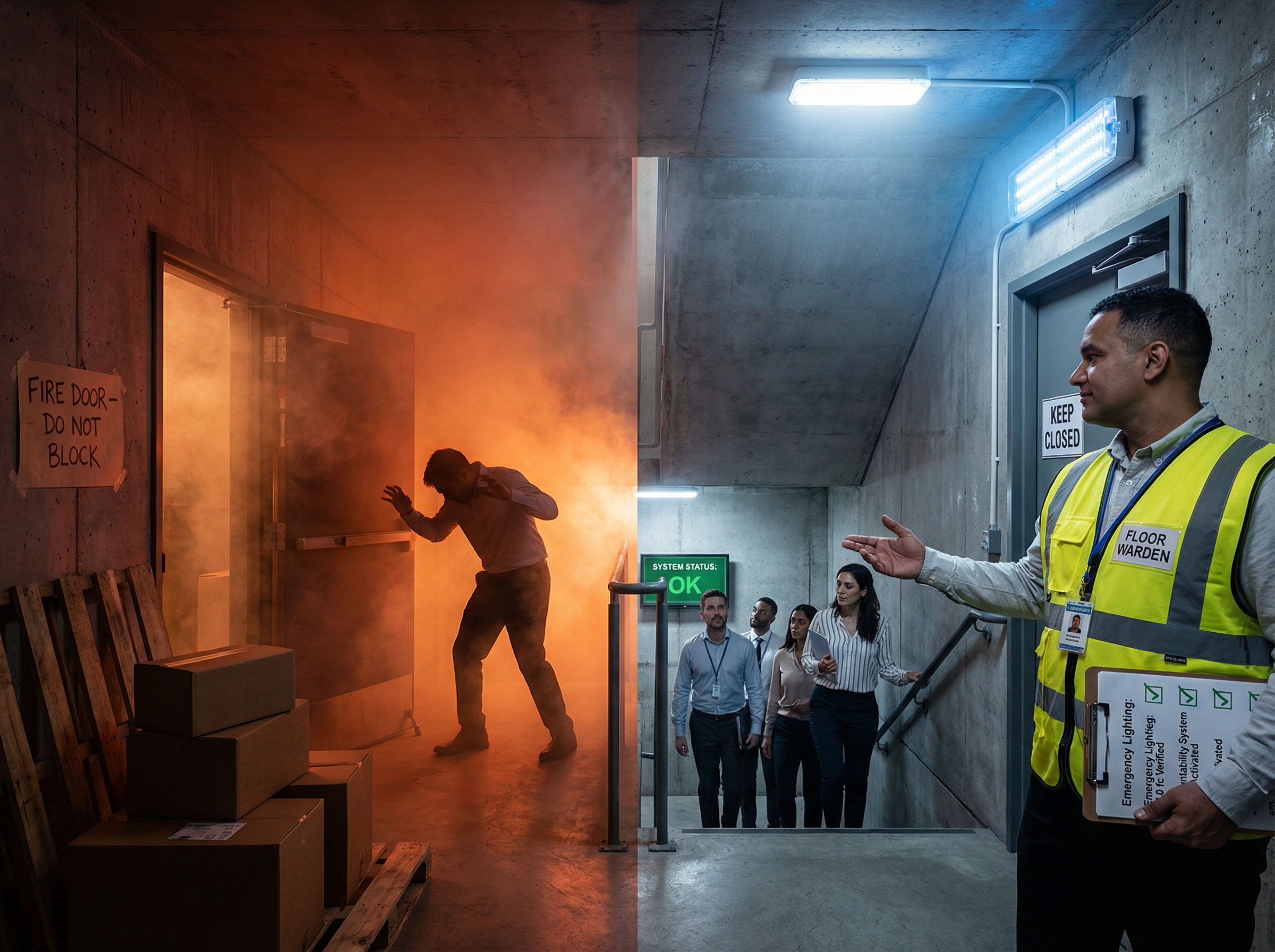
The Difference Between Trained and Untrained Facilities
Untrained Facility During Fire Protection Audit:
Auditors ask occupants: “What do you do if fire alarm sounds?”
Answers vary. Some unsure. Some incorrect.
Auditors observe staff: “Who manages evacuation?”
Confusion. Unclear roles. No demonstrated competence.
Auditors review procedures: “Have these been tested?”
No coordinated drills. No verification procedures work.
Audit result: Conditional pass with required corrective actions and training mandates.
Trained Facility During Fire Protection Audit:
Auditors ask occupants: “What do you do if fire alarm sounds?”
Answers consistent, confident, correct. Occupants know evacuation routes.
Auditors observe staff: “Who manages evacuation?”
Clear roles demonstrated. Floor wardens competent. Procedures executed smoothly.
Auditors review procedures: “Have these been tested?”
Coordinated drill completed. Emergency responders verified procedures work.
Audit result: Unconditional pass with no corrective actions required.
—
Fire Safety Training as System Integration Tool
Fire safety training does something that equipment alone cannot: it integrates all stakeholders into the fire protection system.
Emergency lighting (1.0+ foot-candle minimum) guides occupants only if occupants know to look for and follow the lighting. Training creates that knowledge.
Fire doors contain fire only if staff understand their role and don’t prop them open. Training creates that understanding.
Evacuation procedures work only if occupants and staff execute them correctly. Training ensures correct execution.
Fire protection systems without trained occupants and staff are incomplete. Fire safety training completes the system by activating the human element.
—
48Fire Protection: Training as Audit Preparation
48Fire Protection helps facilities prepare for fire protection audits through comprehensive fire safety training programs that address all stakeholder groups:
Occupant Training:
- Facility orientation and emergency exit locations
- Alarm recognition and evacuation triggers
- Emergency lighting understanding and navigation
- Assembly procedures and accountability
Staff Training:
- Role clarity and evacuation responsibilities
- Floor warden procedures (if applicable)
- Emergency communication protocols
- Fire door importance and proper operation
Emergency Responder Coordination:
- Coordinated fire drill with emergency department
- Procedure verification and documentation
- Facility plan confirmation
- Emergency lighting functionality testing
Result: Facility demonstrating actual fire safety competence, not just equipment compliance.
—
Fire Safety Training as Audit Success Strategy
The facility’s fire protection audit passed on the first attempt because training completed what systems alone could not accomplish. Equipment provides protection capability. Training ensures people can execute that protection effectively.
48Fire Protection helps facilities prepare for fire protection audits through comprehensive fire safety training programs that integrate all stakeholder groups—occupants, staff, and emergency responders—into the fire protection system.
Our training programs address:
- Occupant understanding of emergency procedures and evacuation routes
- Staff role clarity and accountability during emergencies
- Emergency responder coordination and procedure verification
- Emergency lighting functionality and backup system reliability
- Fire door importance and proper operation procedures
The result: Facilities that don’t just pass fire protection audits. They demonstrate actual emergency response competence through trained, confident stakeholders who understand their role in the fire protection system.
[Contact 48Fire Protection] today to discuss comprehensive fire safety training programs that prepare your facility for successful fire protection audit. We’ll train occupants, develop staff procedures, coordinate with emergency responders, and ensure your facility demonstrates actual fire safety competence.
Your facility’s fire protection systems are only as effective as the people who use them.