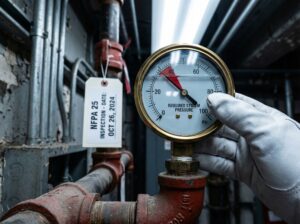
Startling reality checks don’t just catch attention—they save lives. In 2023, the United States faced 1,389,000 fires that claimed 3,670 civilian lives and injured 13,350 people, with 89 U.S. firefighter fatalities attributed to fire events. Those numbers are more than statistics; they’re a reminder that a facility’s safety culture, training, and preparedness can spell the difference between a controlled incident and a catastrophe. For facility managers, building owners, and safety directors, fire protection compliance and well-structured Emergency Action Plans (EAPs) are not optional add-ons—they are essential operating requirements that protect people, property, and business continuity. This article provides a comprehensive, practical guide to understanding and implementing Fire Protection Compliance and Emergency Action Plans, with a clear path to regulatory alignment, operational readiness, and measurable risk reduction.
Key idea: Compliance isn’t just about ticking boxes. It’s about creating a resilient safety posture that guides people through emergencies and minimizes damage when the unthinkable happens.
The Regulatory Landscape: What compliance truly requires
Two critical OSHA requirements shape the backbone of fire-related workplace safety programs: Emergency Action Plans and Fire Prevention Plans. Both require written, accessible documentation, employee involvement, and ongoing review. They’re designed to standardize how a site detects, communicates, evacuates, and mitigates fire hazards.
Emergency Action Plans (EAPs)
- OSHA requires a written EAP when mandated by a standard, kept at the workplace, accessible to employees, and covering minimum elements such as procedures for reporting emergencies, evacuation, and the type of evacuation and exit-route assignments. This ensures that when a fire or other emergency occurs, everyone understands what to do, who to follow, and where to move. See the regulation and guidance here: [OSHA Emergency Action Plans] [osha.gov].
Fire Prevention Plans (FPPs)
- OSHA also requires a written Fire Prevention Plan, with minimum elements like listing major fire hazards, procedures for handling and storing hazardous materials, ignition-source controls, and designated responsible individuals. The plan must be communicated to and reviewed with employees. See the regulation here: [OSHA Fire Prevention Plans] [osha.gov].
The broader picture
- Beyond compliance, these plans are part of a holistic safety system. They support incident command, reduce response times, and create a traceable record of ongoing safety improvements. For additional context on the scale of fire risk and the rationale for robust planning, the National Safety Council’s Injury Facts resource provides compelling fire-related statistics: [Fire-related fatalities and injuries] [injuryfacts.nsc.org].
A practical map of the regulatory requirements
The following table summarizes the core elements you’ll typically find covered in EAPs and FPPs, aligned with OSHA expectations. It’s a quick-reference guide you can circulate to your safety team and facility managers.
| Regulation | Core requirement | Typical minimum elements |
|---|---|---|
| 29 CFR 1910.38 Emergency Action Plans | Written, kept at the workplace, accessible to employees | Procedures for reporting emergencies, evacuation procedures, type of evacuation, exit-route assignments, designated evacuation responsibilities, names/positions of responsible persons, alarm and communication procedures, training, and drills |
| 29 CFR 1910.39 Fire Prevention Plans | Written plan detailing fire hazards and controls | Major fire hazards; handling/storage procedures for hazardous materials; ignition-source controls; designated responsible individuals; information and training; plan review with employees |
- These elements are not merely “box-ticking.” They should be tailored to the specifics of your site: occupancy type, fire hazards, layout, occupancy density, presence of hazardous materials, and the capabilities of your local emergency services.
Pro tip: A well-designed EAP or FPP isn’t only for emergencies—it’s a living document that guides everyday safety decisions, from material storage to housekeeping and ignition-source controls.
—
Fire Protection Compliance and Emergency Action Plans: fundamentals and why they matter
Compliance is a discipline that blends policy, process, people, and proof. It’s about turning tacit safety culture into explicit, repeatable actions that can be audited and improved over time. The payoff is tangible: faster, more predictable responses; clearer roles; and a reduction in both the likelihood and consequences of a fire event.
Key components of a robust compliance program include:
- Policy alignment: The organization’s safety policy clearly commits to protecting workers, customers, and operations from fire risks.
- Systematic hazard assessment: A formal process for identifying fire hazards, evaluating risk, and applying controls.
- Written plans: EAP and FPP documented, accessible, and reviewed with employees.
- Roles and training: Clear assignments (e.g., fire warden/evacuation leader) and ongoing training.
- Drills and exercises: Regular, documented drills that test both procedures and communication systems.
- Documentation and records: Versioned plans, drill logs, inspection reports, and corrective actions.
- Continuous improvement: Regular reviews and updates in response to changes in occupancy, materials, processes, or regulations.
The human element: roles, responsibilities, and culture
- Leadership commitment: Safety leadership sets the tone and provides resources for training, drills, and plan maintenance.
- Employee involvement: Frontline workers must understand the plans and participate in drills; their feedback is essential for practical improvements.
- Coordination with external responders: Local fire departments and emergency services should be familiar with site layouts, access routes, and critical hazards.
The consequences of non-compliance
- Legal and financial risks: OSHA penalties and potential civil liabilities in event of a fire-related injury or fatality.
- Operational disruption: Evacuation delays, misinformation, and asset loss.
- Reputational impact: Stakeholders expect responsible safety management, especially in regulated sectors.
—
Delving into Emergency Action Plans (EAPs)
An Emergency Action Plan is the operational playbook for how a site will respond to emergencies, with an emphasis on quickly and safely evacuating people when required. The plan consists of several essential elements that help ensure a structured, repeatable response.
Core elements of an EAP
- Identification of emergencies covered by the plan (e.g., fires, chemical releases, severe weather if it affects egress).
- Procedures for reporting emergencies (who to call, what information to provide, how to communicate to employees).
- Evacuation procedures: Clear instructions on evacuation methods, including the type of evacuation (simultaneous, phased), and the order and routing for evacuations.
- Exit-route assignments: Detailed maps showing path-of-evacuation routes, exits, and assembly points.
- Procedures for employees who stay to operate critical operations or assist with the evacuation of others.
- Procedures for accounting for all employees after evacuation.
- Training requirements: Frequency and scope of training for new hires and ongoing refreshers.
- Drills: Schedule, scope, and evaluation process for drills.
Practical implementation: steps you can take now
1. Assemble an EAP team that includes a facility manager, safety officer, security, human resources, and a representative from operations.
2. Map all exit routes, door configurations, stairwells, and assembly points. Ensure routes are accessible to persons with disabilities.
3. Define reporting mechanisms: emergency numbers, building alarms, mass notification methods, and how information is relayed to everyone on site.
4. Create a clear chain of command: who leads evacuation, who communicates with occupants, who accounts for attendees, and who coordinates with responders.
5. Develop evacuation diagrams and signage that align with local building codes and NFPA standards (see NFPA resources for best practices).
6. Draft the EAP document and place it where it is clearly visible and accessible (and maintain digital copies for remote workers or multi-site facilities).
7. Train employees and conduct drills: include demonstrations of alarm activation, proper use of exit routes, and headcounts at assembly points.
8. Review and revise: schedule annual reviews or after-action improvements following drills or real incidents.
A sample EAP outline (for reference)
- Purpose and scope
- Roles and responsibilities
- Alarm notification procedures
- Evacuation procedures and routes
- Accounting for personnel
- Special precautions for high-risk areas or employees with disabilities
- Re-entry procedures once cleared
- Training and drills schedule
- Plan review and change management
- Appendix: floor plans, contact lists, and external responders
OSHA guidance underscores that the EAP must be accessible and that the plan’s minimum elements include the type of evacuation and exit-route assignments. See [OSHA Emergency Action Plans] for specifics. [osha.gov]
The EAP in practice: common scenarios
- Scenario A: A single-floor warehouse with dense shelving and ignition sources from forklift activity.
- Scenario B: A multi-story office building with stairs and elevator considerations.
- Scenario C: A manufacturing plant with hazardous materials and hot work processes.
In each case, the EAP should be tailored to the environment, clearly documenting the evacuation routes, assembly points, and the roles of supervisors, safety staff, and facility managers. Drills should test various scenarios to ensure that employees know how to respond not only to fire alarms but also to potential hazardous material releases or power outages that affect egress.
—
Delving into Fire Prevention Plans (FPPs)
The Fire Prevention Plan is the other half of the compliance equation. It focuses on identifying and controlling ignition sources, safe handling of materials, and overall fire hazard reduction. The FPP is not a static document; it must be updated whenever processes, materials, or hazards change.
Core elements of an FPP
- A narrative description of the facility and its operations, including a clear hazard assessment.
- Identification of major fire hazards (e.g., flammable liquids, combustible dust, energized equipment).
- Procedures for handling and storing hazardous materials, including MSDS/SDS availability and appropriate containment.
- Control measures for ignition sources (e.g., hot work permits, static electricity controls, housekeeping standards).
- Designated responsible individuals for each major hazard or area.
- Employee training on hazard recognition and prevention measures.
- Regular inspections and maintenance of housekeeping, control of ignition sources, and storage practices.
- Coordination with contractors and visitors regarding fire hazards and prevention measures.
- Plan review and revision procedures.
How to implement an effective FPP
1. Conduct a comprehensive hazard inventory: catalog all ignition sources, fuel sources, oxidizers, and potential heat sources.
2. Assess storage and handling practices: ensure compatibility of materials, appropriate containment, and separation of incompatible substances.
3. Implement ignition-source controls: hot-work permits, equipment maintenance, grounding/bonding, and spark/lint control in areas with dust or fibers.
4. Establish housekeeping standards: keep work areas clean and free of accumulations that can contribute to rapid fire spread.
5. Assign ownership: designate responsible individuals for each hazard category, with clear authority to enforce controls.
6. Provide training: ensure employees understand hazards, controls, and reporting procedures for near-misses and incidents.
7. Conduct routine inspections: verify that storage areas, signage, extinguishers, and electrical systems are compliant and functional.
8. Review and update: revise the plan when processes change, new hazards are introduced, or after an incident.
The significance of a well-crafted FPP
A robust FPP reduces the likelihood of ignition and ensures that when a fire risk is identified, there are clear controls and accountability. It complements the EAP by ensuring that the physical environment and the people who operate within it are prepared to prevent and manage fires.
For additional context on fire risk and prevention practices, NFPA standards provide a framework for best practices in fire safety and hazard prevention. See [NFPA] for broader guidance and references to specific codes such as NFPA 101 Life Safety Code and NFPA 13 for fire suppression systems. [nfpa.org]
—
The interplay between EAPs and FPPs: a unified safety strategy
EAPs and FPPs are two sides of the same safety coin. The EAP ensures people know how to respond when fire or related emergencies occur, while the FPP reduces the probability that such events will escalate into serious incidents. A unified approach yields:
- Consistent decision-making: When everyone uses the same decision framework, response times improve and confusion reduces.
- Clear accountability: Defined roles ensure tasks such as alarm activation, evacuation leadership, and safe shutdowns are performed without delay.
- Improved training outcomes: Training can be built around both documents, reinforcing not only what to do in an emergency but also how to prevent fires in the first place.
- Efficient audits and updates: A single, integrated documentation base simplifies regulatory reviews, internal audits, and continuous improvement.
—
Implementation roadmap: turning compliance into practice
Bringing EAPs and FPPs from paper to practice requires deliberate planning, cross-functional collaboration, and a commitment to continuous improvement. Here’s a practical, phased approach you can adopt:
Phase 1: Gap analysis and leadership alignment
- Appoint a Compliance Lead (or EAP/FPP Coordinator) with cross-functional support.
- Inventory current plans and supporting documents; identify gaps against OSHA requirements and best practices.
- Align the safety program with corporate risk management, insurance, and operations teams.
Phase 2: Hazard identification and risk assessment
- Conduct a comprehensive site walk-through with the safety team to identify fire hazards, ignition sources, storage hazards, and egress adequacy.
- Map all occupancies, ladder usage, equipment locations, electrical panels, and hazardous material storage areas.
- Prioritize hazards by risk level, potential impact, and likelihood of ignition.
Phase 3: Document development and integration
- Draft or update the EAP to reflect site-specific evacuation routes, alarm systems, assembly points, incident command structures, and accountability procedures.
- Draft or update the FPP with hazard inventories, material handling procedures, and ignition-source controls.
- Create clear, user-friendly diagrams and quick-reference cards for shift supervisors and front-line workers.
Phase 4: Training and drills
- Implement a structured training program for all employees on both EAP and FPP elements.
- Schedule drills that test diverse scenarios (fire alarm activation, blocked exits, hazmat release, power outage during evacuation, etc.).
- Debrief after drills to capture improvement opportunities and update plans accordingly.
Phase 5: Documentation, maintenance, and audits
- Maintain version-controlled documents with visible revision dates.
- Track training completion, drill outcomes, and corrective actions.
- Establish annual (or more frequent) reviews and update cycles, especially after facility changes or incident events.
Phase 6: Continuous improvement and external coordination
- Use internal audits and third-party reviews to benchmark against industry standards.
- Coordinate with local fire departments to review access and site plans, and to facilitate pre-incident planning.
—
Training, drills, and maintaining readiness
Training and drills are the living heartbeat of compliance. Without regular practice, even the most well-crafted EAP and FPP will become a dusty binder rather than a practical safety tool.
Training best practices
- Onboarding training: New hires should receive a concise overview of EAP and FPP procedures during orientation.
- Refresher training: Periodic refresher sessions (quarterly or semi-annual) to reinforce procedures and update changes.
- Role-based training: Fire wardens, supervisors, and facilities teams receive specialized training tailored to their responsibilities.
- Multi-hazard drills: Include scenarios beyond fires (e.g., chemical spills) to reflect real-world complexities.
- Language and accessibility: Ensure training materials accommodate non-native speakers and employees with disabilities.
Drill design and evaluation
- Variability: Vary the time of day, staffing levels, and scenario specifics to test robustness.
- Documentation: Record drill dates, participants, duration, deviations, and corrective actions.
- After-action reviews: Conduct debriefs to identify gaps and opportunities for improvement.
Documentation management
- Maintain an accessible, version-controlled repository for EAPs, FPPs, diagrams, training records, and drill reports.
- Use a simple indexing system for quick retrieval during an incident.
Accessibility and inclusivity
- Ensure evacuation diagrams are visible and easy to understand, with clear indicators for primary and secondary routes.
- Provide accommodations and communication methods for employees who may require assistance.
—
Common pitfalls and how to avoid them
Even with strong intent, facilities commonly stumble on implementation. Here are frequent pitfalls and practical remedies:
- Pitfall: Plans sit on a shelf rather than on walls and in digital formats accessible to all employees.
- Remedy: Publish printed copies in high-visibility locations and maintain digital versions accessible to all staff and contractors.
- Pitfall: Plans are not updated after changes in occupancy, processes, or materials.
- Remedy: Institute a change-management protocol that triggers plan reviews whenever there’s a remodel, new equipment, or a new chemical.
- Pitfall: Inadequate shelter-in-place or egress considerations for disabled workers.
- Remedy: Include alternative routes and designated assistants, and provide accessible signage and alarm options.
- Pitfall: Drills that are perfunctory or not documented.
- Remedy: Treat drills as a learning exercise with clear objectives, checklists, and after-action reporting.
- Pitfall: Inadequate coordination with contractors or visitors.
- Remedy: Include contractor onboarding briefings and site-specific safety instructions in both EAP and FPP.
—
The role of technology in compliance
Technology can streamline compliance, improve accessibility, and support rapid decision-making during emergencies.
- Digital EAP and FPP repositories: Cloud-based platforms allow version control, access control, and real-time updates accessible from any location.
- Live drills and debriefs: Mobile apps can facilitate drill checklists, time-stamped debrief notes, and corrective action tracking.
- Mapping and signage tools: Software can generate floor plans, escape routes, and signage that meet local building codes and NFPA standards.
- Incident management integration: Linking EAP triggers with notification systems, alarms, and emergency response teams can reduce response times.
- Data analytics: Use drill results and incident trends to drive continuous improvement and targeted training.
—
The business case: why investing in compliance pays off
- Risk reduction: Systematic hazard assessment and preventive controls minimize the chance of a major incident.
- Operational resilience: Effective evacuation and incident response preserve business continuity and protect critical assets.
- Regulatory alignment: Proactive compliance reduces the likelihood of penalties and supports smoother inspections.
- Insurance and stakeholder confidence: Demonstrated compliance can positively influence insurance terms and stakeholder trust.
Quantitative and qualitative benefits often compound over time as safety culture strengthens, drills yield actionable insights, and documentation supports governance and accountability.
—
48Fire Protection: our approach to Fire Protection Compliance and Emergency Action Plans
As a dedicated fire protection services partner, 48Fire Protection helps organizations design, implement, and maintain compliant Emergency Action Plans and Fire Prevention Plans. Our approach blends regulatory expertise, field experience, and practical, site-specific solutions.
What we offer
- EAP and FPP development and customization: We tailor plans to your occupancy, processes, and local regulations, ensuring alignment with OSHA requirements and best practices.
- Hazard assessments and risk mitigation: Comprehensive site surveys identify ignition sources, storage hazards, and egress constraints, with clear control strategies and owner assignments.
- Training and drills: We design role-based training programs and run practice drills to validate plans and drive continuous improvement.
- Documentation management: Version-controlled plan documents, diagrams, signage, and drill records that are easy to access for leadership, supervisors, and frontline staff.
- Plan reviews and updates: Regularly scheduled reviews triggered by changes in operations, staffing, or facilities, ensuring ongoing regulatory alignment.
- Coordination with authorities: We liaise with local fire departments and authorities to ensure site plans reflect local response capabilities and access considerations.
- NFPA standards alignment: Our practitioners stay current with NFPA codes and guidance to integrate industry best practices into your plans.
- Ongoing support and audits: We provide periodic audits, remediation planning, and refresher training to maintain compliance and readiness.
Why choose 48Fire Protection for your compliance journey?
- Depth of expertise: Our team combines regulatory knowledge with practical field experience across industries, including manufacturing, warehousing, healthcare, and commercial facilities.
- Customization: We don’t offer one-size-fits-all templates. We tailor EAPs and FPPs to your site’s unique layout, occupancies, hazards, and operations.
- Actionable deliverables: You’ll receive clear, implementable plans, diagrams, and checklists that your safety teams can use immediately.
- End-to-end support: From initial hazard assessment through drills, documentation management, and annual reviews, we’re with you every step of the way.
If you’re looking to establish or elevate your Fire Protection Compliance and Emergency Action Plans, 48Fire Protection provides services designed to meet regulatory requirements and drive real-world safety improvements.
—
Case study vignette: applying the framework in a multi-occupancy facility
A mid-sized manufacturing campus with multiple buildings—office space, a workshop floor, and a chemical storage area—presented a complex safety challenge. The facility had some ad hoc safety practices, but no cohesive EAP or unified FPP. Through a structured engagement, 48Fire Protection helped the site:
- Completed a comprehensive hazard assessment and identified critical ignition sources, flammable liquids, and dust-related hazards in the workshop.
- Created a site-wide EAP with building-specific evacuation routes, room-by-room occupancy counts, and assembly points aligned to egress paths and stairwells.
- Built a Fire Prevention Plan that specified handling and storage procedures for hazmat materials, ignition-source controls, and a schedule for equipment maintenance.
- Implemented role-based training and a schedule of quarterly drills to test different scenarios (including a hazmat release and a power outage).
- Established a centralized documentation hub with version control and change-tracking, making it easier to maintain compliance and support audits.
The outcome: improved evacuation times, clearer roles, and a demonstrable reduction in fire risk, with a well-documented trail of improvements that supported insurance and regulatory reviews.
—
Quick references and further reading
- OSHA Emergency Action Plans: [OSHA Emergency Action Plans] [osha.gov]
- OSHA Fire Prevention Plans: [OSHA Fire Prevention Plans][osha.gov]
- Fire-related fatalities and injuries (NSC Injury Facts): [Fire-related fatalities and injuries] [injuryfacts.nsc.org]
- NFPA: [NFPA Official Website](codes and standards guidance) [nfpa.org]
—
Putting it all together: your path to compliant, practical fire protection
If you’re a facility manager, safety director, or building owner, the path to robust Fire Protection Compliance and Emergency Action Plans involves people, process, and documentation. It’s about designing plans that reflect real-world operations, training teams effectively, and keeping records that stand up to audits and inspections. Remember:
- Start with a truthful risk assessment: Identify hazards, ignition sources, and vulnerable occupants. Your EAP and FPP should reflect these realities.
- Write plans that are actionable and accessible: Ensure employees can find, understand, and apply the plans—both in print and digital formats.
- Train, drill, and review: Build muscle memory through drills and refreshers, and update plans as operations evolve.
- Maintain documentation with discipline: Version control and organized records support compliance, audits, and continuous improvement.
- Engage partners: When appropriate, bring in a trusted fire protection partner to provide expertise, training, and an external perspective on your plan’s effectiveness.
—
Final thoughts
Fire protection compliance isn’t about nostalgia for “best practice.” It’s about creating resilient facilities where people know what to do, how to do it, and who to listen to when the unthinkable occurs. The combination of Emergency Action Plans and Fire Prevention Plans, guided by OSHA requirements and NFPA best practices, provides a practical, auditable framework. And because risk and complexity vary by facility, a tailored approach—delivered by experienced professionals who understand both the regulatory landscape and the realities of your operations—delivers the strongest, most defensible safety posture.
If you’d like to discuss how to elevate your Fire Protection Compliance and Emergency Action Plans, our team at 48Fire Protection is ready to help. From risk assessment to plan development, drills, and ongoing maintenance, we bring clarity, practicality, and measurable safety outcomes to every project.