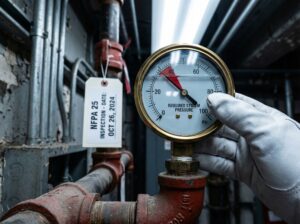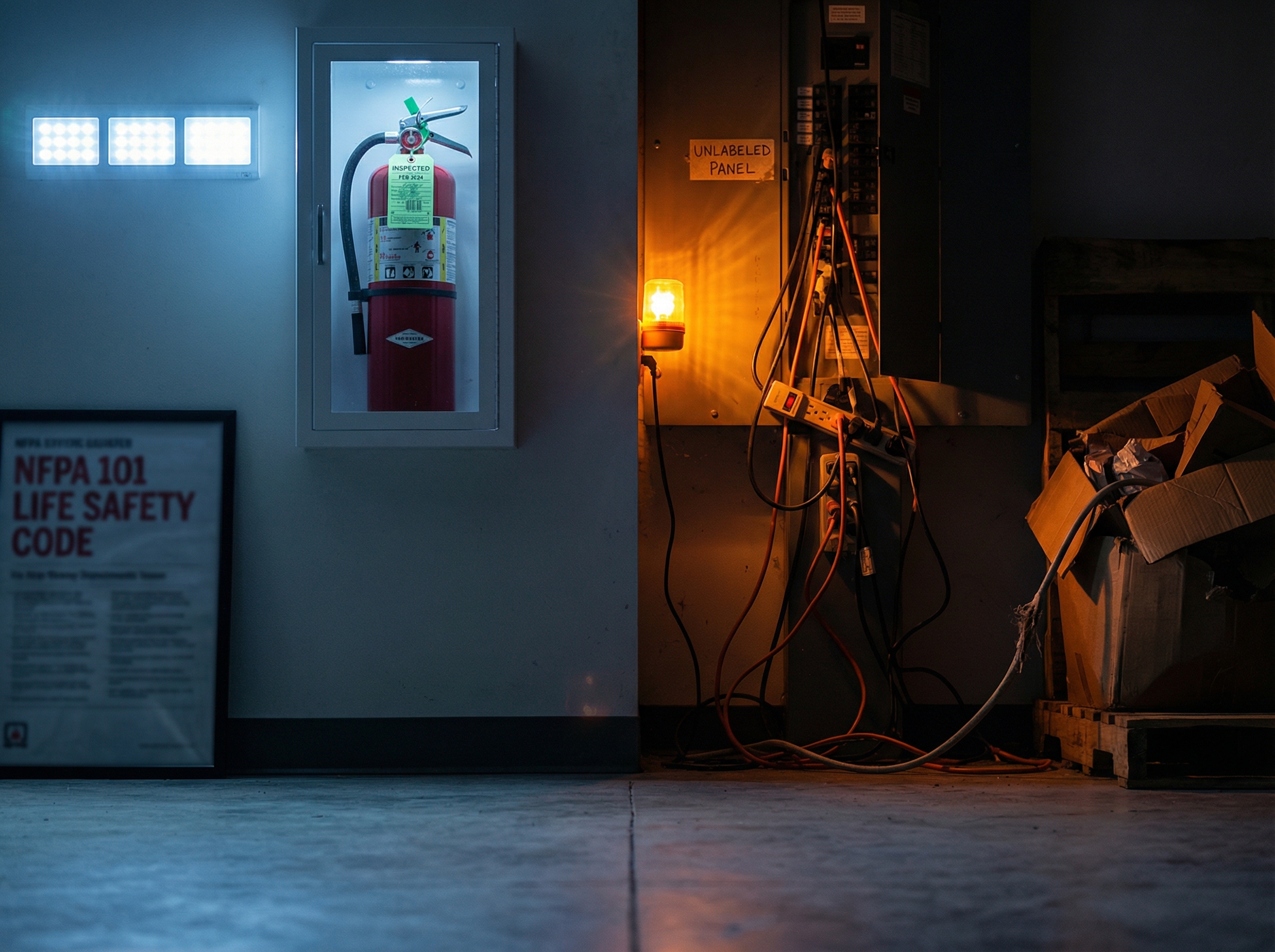
Opening a remodeling project, a new tenant move-in, or simply daily operations can feel routine—until the fire marshal knocks on the door with an inspection notice. For facility managers, building owners, and safety officers, an upcoming inspection can spark questions: What counts as a violation? What standards will be enforced? How can we demonstrate readiness without shutting down operations for days?
This article takes you behind the scenes of a fire marshal inspection. We’ll walk through the life-safety framework inspectors rely on, deconstruct a practical, field-tested Fire Marshal Inspection Checklist, and translate code language into actionable steps you can take today. You’ll learn what inspectors look for, how to prepare, and how to respond if you uncover gaps. By the end, you’ll have a solid map for achieving and maintaining building fire code compliance—reducing risk, saving time, and protecting lives.
—
A Scenario: You’re Ready, But the Inspector Is Looking for More
Imagine you’re the facilities manager at a midsize commercial complex. Your team has kept systems in good working order, annual inspections up to date, and your egress routes clear. Then a letter arrives: a fire marshal inspection is scheduled for next week. You’ve got the equipment and the documentation, but you worry you might miss something under the pressure of an unplanned site visit.
What happens next is not a mystery if you know the game plan inspectors use. Fire marshals evaluate life safety and property protection, focusing on the reliability of means of egress, the operational status of life-safety systems, and the ability to manage hazards. The process is designed to be predictable, repeatable, and enforceable—so that building occupants are protected and building owners know what to expect. In many jurisdictions, these expectations are codified in NFPA standards and adopted into local codes and procedures. The following sections translate those expectations into a practical framework you can apply year-round.
—
Why Fire Marshal Inspections Matter
- Life safety is the primary objective. The means of egress, fire safety systems, and occupant safety measures are inspected to ensure that, in a fire event, people can exit safely and responders can access the building.
- Consistency across jurisdictions. While every AHJ (Authority Having Jurisdiction) may tailor enforcement, most state and local inspections rely on core NFPA standards and state amendments. This creates a consistent baseline for building fire code compliance, while allowing for regional nuances.
- Proactive risk reduction. Identifying gaps before an inspection helps you implement fixes that reduce the risk of citations, fines, service interruptions, or worse—loss of life in an emergency.
To ground these ideas in real-world practice, consider how several state and local agencies frame inspections and readiness:
- Texas SFMO uses NFPA 101 Life Safety Code and NFPA 1 Fire Code as its standards of inspection, with enforcement aligned to the 2021 NFPA 101 and NFPA 1 editions (effective Sept 1, 2023). This informs what inspectors will expect in Texas facilities. For more detail, see the SFMO notices page: [Texas SFMO notices].
- Texas SFMO also notes that fire safety inspections are conducted under NFPA 101/NFPA 1, with inspection requests submitted online and coordinated through the local AHJ. See [Texas fire safety inspections] for the process and requirements.
- In Nevada, the State Fire Marshal provides dedicated checklists (e.g., Fire Alarm Checklist, Plans Submittal Checklist) as part of its inspection workflow, illustrating typical focus areas during fire code inspections. Visit [Nevada Checklists] for details.
- California’s Office of the State Fire Marshal publishes Information Bulletins on evolving fire safety topics, signaling ongoing updates that inspectors may enforce (for example, 2025 bulletins like A2L Refrigerants in Ambulatory Care Facilities). See [California Information Bulletins].
- West Virginia’s SFMO provides online inspection request forms for various occupancies and publishes general guidelines, reflecting standardized inspection processes and expectations. See [WV Fire-Life-Safety-Inspections].
These examples underscore a common theme: inspections are anchored in recognized life-safety codes, but the exact requirements can be shaped by state and local adoption. The core, however, remains constant: the safety of occupants and the reliability of essential systems.
—
The Core Code Foundation: NFPA 101 and NFPA 1
Across many jurisdictions, NFPA standards are the backbone of fire safety regulation. Two pillars you’ll encounter repeatedly are NFPA 101, Life Safety Code, and NFPA 1, Fire Code. Together they address:
- Means of egress design, maintenance, and operation
- Fire protection features (sprinkler systems, alarms, detection)
- Occupant safety features (emergency lighting, exit signage, audible/visual alarms)
- Special hazards and occupancies (hazardous materials, high-pile storage, hazardous processes)
- Fire department access and fire-fighting capabilities
In our field experience, the practical takeaway is simple: ensure life safety systems are functional, doors and egress paths are unobstructed, and documentation demonstrates ongoing compliance with these standards.
Important note: jurisdictional adoption can lag or advance with updates. Inspectors will often reference the specific edition recognized by the AHJ (e.g., the 2021 NFPA 101/NFPA 1 in Texas). Always confirm the current adopted edition for your building with your AHJ before preparing for an inspection.
—
Fire Marshal Inspection Checklist: A Practical, Field-Ready Guide
Below is a thorough, field-proven checklist you can use to audit readiness. It’s organized by system and area, with explicit items inspectors tend to verify. Use this checklist year-round to keep your building in a state of readiness, not just on inspection day.
[ ] Clear and accessible means of egress
- All exit doors operable from the egress side; doors not propped open or blocked
- Corridors and exit paths free from obstructions, storage, or equipment
- Exit signage visible from travel distances and properly illuminated
[ ] Fire alarm and detection systems
- Fire alarm panels accessible, with recent test and maintenance records
- Initiating devices (pull stations, detectors) tested and documented
- Notification devices (horns/strobes) functional and audible/visible throughout occupancy
[ ] Automatic sprinkler and suppression systems
- Sprinkler heads unobstructed; verification of obstruction inspection logs
- Supervisory and supervisory/auxiliary signaling functional
- Valves and risers accessible; backflow prevention devices tested as required
[ ] Emergency lighting and egress illumination
- Emergency lighting fixtures tested; battery power verified
- Routes illuminated, including at stairways and exits
- Naturally lit egress paths and backup lighting considerations documented
[ ] Portable fire extinguishers
- Extinguishers present, accessible, and within service intervals
- Pressure gauge readings adequate; inspection tags current
- Hose lines or wheeled units available where required by occupancy
[ ] Means of access for emergency responders
- Fire lanes kept clear; hydrants and access points unobstructed
- Key boxes and access control are compatible with fire department operations
[ ] Fire-resistance-rated walls, doors, and partitions
- Fire doors self-close and latch; no hold-open devices without release mechanisms
- Intumescent seals intact; doors not wedged or blocked
[ ] Kitchen fire suppression and other special systems
- Kitchen hoods and extinguishing systems serviced; clean agent or wet chemical systems operational
- Clean agent systems documented and compliant with local requirements
[ ] Electrical safety and housekeeping
- Electrical panels accessible; cords and outlets in good repair
- No exposed wiring; electrical rooms free of unnecessary combustibles
[ ] Hazardous materials and storage
- Hazardous materials stored per code; compatible cabinets and segregation
- Spills and leaks controlled; labeling legible and up-to-date
[ ] Building occupancy and egress calculations
- Occupant loads posted and used for limiting egress, lighting, and detection
- Temporary alterations documented and reviewed for safe occupancy
[ ] Emergency action plans and drills
- EAPs available to occupants; employees trained per schedule
- Drills conducted and records maintained; post-drill critique documented
[ ] Plans, permits, and documentation
- Current building plans, fire protection system designs, and permit history on file
- System test reports, inspection reports, and maintenance contracts readily accessible
[ ] Signage, alarms, and visibility
- Directional signage for exits; visibility maintained in all lighting conditions
- Fire door and sprinkler system labels legible and current
[ ] Administrative readiness
- AHJ contact information available; inspection appointment logistics arranged
- Any prior deficiencies closed or re-inspected as required
How to use this checklist:
- Copy this checklist into your facility management software or a printed log
- Use “Yes/No” responses with notes for each item
- Attach supporting documents (maintenance logs, service reports, test results) to each item when possible
- Tag outstanding items with responsible party and estimated completion dates
Rationale behind the checklist:
- The items reflect common life-safety concerns observed across jurisdictions
- The focus is on both active (systems) and passive (egress paths, doors) safety elements
- The aim is not to “pass” a single inspection but to maintain a consistent state of readiness that reduces risk over time
To give the checklist real-world grounding, consider how different states approach the inspection workflow and documentation:
- In Nevada, the State Fire Marshal provides detailed checklists (e.g., Fire Alarm Checklist, Plans Submittal Checklist) that illustrate common focus areas during inspections. See the Nevada checklists page for examples: [Nevada Checklists].
- California’s Information Bulletins signal that inspectors stay current with evolving topics, which can affect what you’re asked to demonstrate—staying up-to-date is essential. See [California Information Bulletins].
- Texas SFMO’s adoption of NFPA 101 and NFPA 1 editions informs the scope of inspection criteria in that state, especially the 2021 editions referenced by the notices. See [Texas SFMO Notices] and [Texas Fire Safety Inspections].
- West Virginia’s online inspection request forms and guidelines illustrate a standard process many facilities will encounter: [WV Fire-Life-Safety-Inspections].
If you want a condensed version suitable for quick use during a site walkthrough, you can convert this into a single-page “Fire Marshal Inspection Snapshot” with the most-punctual items (egress, egress lighting, exit signage, fire alarm status, accessible extinguishers, and plan/permit accessibility). The goal is a practical, actionable guide that you or your team can keep in a binder or digital file and reference at any time.
—
Documentation and Records: What to Have Ready
A hallmark of professional readiness is organization. Inspectors don’t just look at equipment; they want verifiable evidence that systems are being maintained, tested, and inspected on schedule. Gather and organize the following categories of documents in advance of a scheduled inspection, and maintain them in a consistent, accessible format.
System-specific logs and test reports
- Fire alarm system: maintenance logs, functional test results, detector sensitivity tests
- Sprinkler system: hydrostatic tests, pressure test reports, annual inspections
- Kitchen hood suppression: test and service reports, last clean, and system status
- Emergency lighting: monthly/quarterly tests, battery backup checks
- Fire extinguishers: annual inspections, hydrostatic tests, maintenance tags
Plans and permits
- Current floor plans showing egress paths, occupant load, and life-safety system locations
- Archived permit applications, approvals, and variances (if any)
- Fire code amendments adopted by the AHJ that affect your building
Maintenance and service contracts
- Service provider contact information, service level agreements, and response times
- Scheduled maintenance calendars and proof of on-time service
Training and procedures
- Employee safety training records, including fire drills and EAP (Emergency Action Plans) acknowledgement
- Occupant notification procedures and signage compliance
Occupancy and life-safety data
- Maximum occupancy load, staged occupancies during construction or renovation
- Personnel counts for high-occupancy areas (assembly spaces, medical facilities, etc.)
Evidence of ongoing improvements
- Corrective action plans from previous inspections
- Documentation showing timely closure of prior deficiencies
How to organize these records:
- Create a standardized file structure by system (Alarm, Suppression, Egress, Electrical) with subfolders for plans, tests, maintenance, and training
- Maintain a digital copy with scan quality that’s searchable (PDF/A is a common archival format)
- Include a summary sheet that lists the last inspection date, next due date, and any open items with responsible parties
Why this matters:
- It keeps the inspection focused and efficient
- It demonstrates due diligence and proactive maintenance to the inspector
- It reduces the risk of citations by exposing gaps before the inspector sees them
Citations and regional practices reinforce this approach:
- Nevada’s checklists underscore the importance of having full, organized documentation as part of the inspection workflow: [Nevada Checklists].
- California Information Bulletins highlight that ongoing updates may affect required documentation (stay current with bulletins like A2L refrigerants in ambulatory care facilities): [California Information Bulletins].
- Texas references show the connection between documentation, AHJ coordination, and NFPA-based standards: [Texas Fire Safety Inspections] and [Texas SFMO Notices].
- West Virginia’s established process emphasizes online inspection requests and general guidelines, which include the need for ready information: [WV Fire-Life-Safety-Inspections].
—
The Inspection Process: From Scheduling to Follow-Up
Understanding the typical lifecycle can help you plan and execute a successful inspection. While processes vary by AHJ, most inspections follow a common pattern:
1) Pre-inspection coordination
- Confirm the date and time with the AHJ
- Identify the scope of the inspection (which systems and areas will be reviewed)
- Gather and prepare the documentation described above
- Notify building occupants or tenants about the planned inspection to minimize disruptions
2) On-site walkthrough
- The fire marshal and supporting staff conduct a physical tour of the building and systems
- Inspectors verify that egress paths remain unobstructed, exit doors function properly, and life-safety systems are operational
- The AHJ may request access to mechanical rooms, electrical spaces, and storage areas to inspect equipment and documentation
- The inspector notes deficiencies and may issue citations or require immediate remediation for safety-critical items
3) Post-inspection reporting
- A formal inspection report is issued, listing findings, violations, and required corrective actions
- A timeline is established for addressing deficiencies; a re-inspection may be scheduled if necessary
- The building owner or manager submits documentation of corrective actions and re-inspection results
4) Corrective action and re-inspection
- Repairs, replacements, or procedural changes are implemented
- The AHJ may perform a follow-up inspection or request verification documentation
- Final confirmation of compliance is issued once all items are resolved
5) Ongoing compliance and re-inspection cycles
- Many jurisdictions require periodic inspections and ongoing maintenance to remain in good standing
- Agencies often publish updated information bulletins or code amendments, so periodic training and updates to procedures are essential
To manage this process efficiently, consider adopting a standard operating procedure (SOP) that maps your internal workflow to the inspector’s expectations, including checkpoint dates, responsible parties, and escalation paths.
Regional variations to watch for:
- California Information Bulletins indicate inspectors stay current with evolving topics, so you should watch for updates that could affect documentation or testing requirements: [California Information Bulletins].
- Texas-based references emphasize online inspection requests and AHJ coordination, with enforcement tied to NFPA 101 and NFPA 1 editions: [Texas Fire Safety Inspections] and [Texas SFMO Notices].
- Nevada’s focus on checklists demonstrates how detailed inspection expectations can be: [Nevada Checklists].
- West Virginia’s framework for online requests and guidelines shows the accessibility and structure of many state programs: [WV Fire-Life-Safety-Inspections].
—
Common Findings and How to Fix Them
Even well-run buildings can encounter recurring gaps. Knowing what inspectors tend to flag can help you implement proactive fixes before an inspection. Below are some typical findings, grouped by category, with practical remediation steps.
Obstructed egress paths
- Cause: Storage in corridors, equipment blocking doors, temporary obstructions
- Fix: Reorganize spaces, enforce storage policies, and perform monthly corridor checks as part of a maintenance routine
Inoperable exits and doors
- Cause: Doors that fail to latch, doors held open, or doors blocked by devices
- Fix: Repair doors promptly, ensure doors are self-latching in the closed position, and remove unauthorized door holds
Nonfunctional life-safety systems
- Cause: Faulty alarms, detectors, or sprinklers; disconnected panels
- Fix: Schedule a licensed service for a comprehensive diagnostic, address faults, and maintain a remediation log
Inadequate or missing signage
- Cause: Faded exit signs, blocked visibility, or outdated occupancy information
- Fix: Replace signage as needed; verify illumination of exit signage and ensure visibility under all lighting conditions
Poor housekeeping and hazardous storage
- Cause: Combustible items near ignition sources or in fire-rated cabinets not maintained
- Fix: Enforce a clean-desk or clean-workspace policy; move combustibles away from ignition risks; label and store materials per code
Lack of documentation or inaccessible records
- Cause: Scattered or outdated records; lack of a central repository
- Fix: Centralize documents, implement a document control system, and set up automatic reminders for annual tests and inspections
Non-compliant or outdated procedures
- Cause: EAPs not updated for current occupancy or building changes
- Fix: Update emergency action plans; train staff on changes; conduct drills to verify readiness
Smart tips from the field:
- Start with the critical life-safety elements first: egress, alarm and detection, and suppression systems. Fixing critical issues early increases overall readiness and reduces risk.
- Maintain a living, accessible log of inspections, tests, maintenance, and training. It’s easier to respond to the AHJ with a clear, up-to-date narrative of your readiness.
Citations and regional nuance:
- California Information Bulletins emphasize ongoing updates that inspectors may enforce—so monitor bulletins to stay ahead of changes: [California Information Bulletins].
- Nevada checklists illustrate how focused inspection criteria can be; aligning your pre-inspection work with these checklists helps anticipate questions: [Nevada Checklists].
- Texas references show how observers rely on NFPA-based standards in conjunction with AHJ coordination: [Texas Fire Safety Inspections] and [Texas SFMO Notices].
- West Virginia’s model emphasizes streamlined access to inspection services via online forms and clear guidelines: [WV Fire-Life-Safety-Inspections].
—
Regional Variations: How States Shape Expectation
While NFPA 101 and NFPA 1 provide a universal language for life safety, the way inspections are executed, scheduled, and documented can differ from state to state. Here are some practical takeaways for common regions you might operate in:
California
- Frequent updates through Information Bulletins mean inspectors may review newer topics (e.g., storage of refrigerants, ambulatory care facility fire safety changes). Stay ahead by monitoring bulletins and aligning procedures accordingly: [California Information Bulletins].
Texas
- The Texas SFMO adopts NFPA 101/NFPA 1 and uses online inspection requests coordinated through local AHJs. Expect screenings to reference current NFPA editions (2021 for the stated standard) and leverage digital coordination for scheduling and reporting: [Texas Fire Safety Inspections], [Texas SFMO Notices].
Nevada
- The state fires out checklists (e.g., Fire Alarm Checklist, Plans Submittal Checklist) to guide both the inspector and the facility manager through common focus areas. Expect a structured, checklist-driven approach to verification: [Nevada Checklists].
West Virginia
- A clear, online-accessible process for inspection requests, including general guidelines for different occupancy types. The system emphasizes timely communication and standard procedural expectations: [WV Fire-Life-Safety-Inspections].
If your portfolio spans multiple states, a practical strategy is to build a state-agnostic readiness framework around NFPA 101/NFPA 1 with a separate addendum for state-specific requirements and AHJ nuances. A ready-to-use approach reduces last-minute surprises when the inspector arrives.
—
5-Step Readiness Plan: Turn Inspection Anxiety into Confidence
To translate the theory into action, here’s a simple, repeatable plan you can implement quarterly. This ensures your building remains compliant, reduces the risk of non-compliance, and makes a positive impression during inspections.
1) Inventory and verify
- Confirm system inventories (alarm, sprinkler, extinguishers, emergency lighting)
- Verify that all systems are in service and that maintenance logs are complete and up to date
- Cross-check occupancy data and egress plans
2) Inspect and remediate
- Conduct a guided walkthrough with internal staff or a third-party safety professional
- Prioritize life-safety items: doors, corridors, exits, alarms, and sprinklers
- Address any gaps; document corrective actions with photos and notes
3) Compile and organize
- Gather all required documentation (plans, permits, maintenance records, service reports)
- Ensure records are centralized, accessible, and properly labeled
- Create a single “readiness packet” that can be shown to an inspector on demand
4) Coordinate and communicate
- Schedule pre-inspection calls with the AHJ when possible
- Notify stakeholders (tenants, facility teams) about inspection expectations and accessibility
- Prepare a point-of-contact list for the inspection day
5) Train and drill
- Update Emergency Action Plans (EAPs) and train staff
- Run drills to validate procedures and identify gaps
- Review drill results and implement improvements for the next cycle
Ready-to-use templates you can adapt:
- A one-page “Pre-Inspection Readiness” checklist that summarizes critical items
- A 2-page “Documentation Packet” with all logs, plans, and permits
- A 1-page “Emergency Procedures Card” for building occupants
By adopting this 5-step readiness plan, you shift from reactive problem-solving to proactive risk management, aligning with NFPA-based standards and state guidelines.
—
The 48Fire Protection Section: Our Services to Support Your Readiness
At 48Fire Protection, we partner with building owners, facility managers, and safety teams to prepare for fire marshal inspections and maintain ongoing compliance. Our services are designed to align with NFPA 101, NFPA 1, and state-specific requirements while delivering measurable risk reduction and operational resilience.
Key services we offer to support inspection readiness:
Inspection-ready documentation and records management
- Centralized documentation systems for maintenance logs, test reports, plans, and permits
- Customized readiness packets tailored to your AHJ’s expectations and jurisdictional requirements
Life-safety system design, installation, and integration
- Fire alarm systems, detection, annunciation, and monitoring integration
- Automatic sprinkler systems, backflow prevention, and hydraulic calculations
- Fire suppression and kitchen hood extinguishing systems
Routine testing, inspection, and maintenance (TI&M)
- NFPA-compliant testing frequencies for alarms, detectors, extinguishers, emergency lighting
- Regular verification of egress paths and doors for reliability and compliance
Life-safety code consulting and plan review
- Pre-submission reviews of plans and permits to anticipate AHJ concerns
- Guidance on code interpretation and compliance strategies based on NFPA 101, NFPA 1, and local amendments
Occupant safety and emergency planning
- Emergency Action Plans (EAPs) and occupant notification procedures
- Staff training programs and drill facilitation to validate readiness
AHJ liaison and inspection coordination
- Scheduling, coordination, and representation during inspection days
- Rapid response and remediation support for any cited deficiencies
Regional compliance updates and training
- Proactive updates on new bulletins and code amendments (California, Nevada, Texas, West Virginia examples)
- On-site or virtual training to keep your team current with evolving requirements
Our approach is practical, hands-on, and outcomes-focused. We don’t just tell you what to fix; we help you implement durable, maintainable solutions that stand up to the scrutiny of a fire marshal inspection and protect lives in real emergencies.
If you’d like to explore how these services fit your building’s needs, reach out to us to discuss a tailored readiness plan that aligns with your jurisdiction and occupancy profile.
—
Conclusion: From Preparation to Compliance—and Peace of Mind
Fire marshal inspections are not mere formality; they are a structured, lifesaving process anchored in widely adopted standards and local enforcement. By understanding the core code foundation (NFPA 101 and NFPA 1), applying a comprehensive Fire Marshal Inspection Checklist, and maintaining organized records, you can turn inspection time into a confidence-building moment for your facility, your occupants, and your safety team.
The path to building fire code compliance is ongoing. It requires proactive maintenance, timely documentation, and a readiness mindset that treats safety as a daily discipline rather than a quarterly hurdle. Regional variations will shape the exact process, but the fundamental expectations—clear means of egress, functioning life-safety systems, and documented compliance—remain universal.
Remember: a well-prepared building reduces risk, minimizes disruption, and demonstrates to occupants and regulators alike that you take life safety seriously.
—
Ready to Elevate Your Readiness?
If you’re preparing for a fire marshal inspection or want to improve your ongoing compliance program, 48Fire Protection is here to help. Our team combines technical expertise with practical field experience to deliver solutions that work in real buildings, not just on paper.