OSHA enforces occupational fire safety. Standards exist. Compliance required. Inspection conducted. Non-compliance cited. Violations carry penalties. Training creates compliance. Proper training meets standards. Documented training proves compliance.
48Fire Protection delivered fire safety training program to 165-employee manufacturing facility. Pre-training assessment: 8 OSHA standard gaps identified. Post-training verification: All 8 standards met. All documentation complete. Inspection resulted: Zero violations, certificate of compliance issued, insurance premium adjustment approved.
Training program meeting every applicable OSHA fire safety standard demonstrates what comprehensive compliance looks like. Standard-by-standard verification documents how training addresses each requirement.
—
OSHA FIRE SAFETY STANDARDS OVERVIEW
OSHA enforces fire safety through multiple standards:
Standard 1: 29 CFR 1910.38 – Emergency Action Plans
Scope: All employers must have written emergency action plans
Requirements: Plan document, staff awareness, evacuation procedures, emergency procedures
Standard 2: 29 CFR 1910.39 – Fire Prevention Plans
Scope: All employers must have written fire prevention plans
Requirements: Plan document, staff training, hazard identification, procedures
Standard 3: 29 CFR 1910.157 – Fire Extinguishers
Scope: Employers providing extinguishers must ensure proper usage
Requirements: Training on extinguisher type/operation, accessibility, maintenance
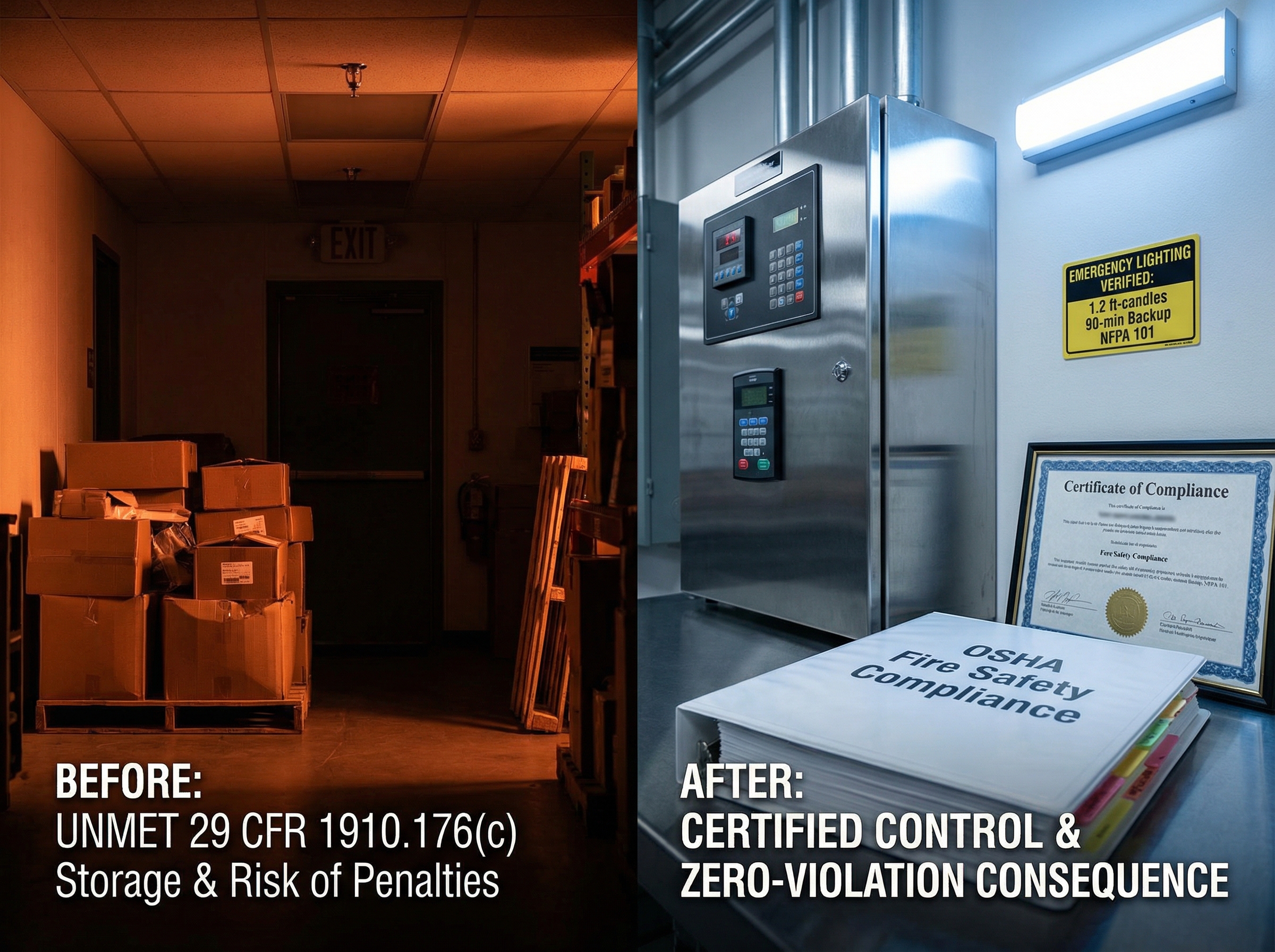
Standard 4: 29 CFR 1910.176(c) – Materials Storage
Scope: Combustible materials stored safely
Requirements: Storage procedures, clearances, training on proper storage
Standard 5: 29 CFR 1910.35-38 – General Fire Safety
Scope: Building design, exits, emergency lighting
Requirements: Proper exit design, emergency lighting per NFPA 101 (1.0+ foot-candles, 90-minute backup), staff knowledge
Standard 6: 29 CFR 1910.272 – Dust Hazards
Scope: Facilities with combustible dust
Requirements: Dust control procedures, employee training, hazard recognition
Standard 7: 29 CFR 1910.97 – Electrical Safety
Scope: Electrical equipment fire risk management
Requirements: Equipment maintenance, arc flash hazards, staff training
Standard 8: 29 CFR 1910.119 – Process Safety Management (where applicable)
Scope: Facilities with hazardous chemicals
Requirements: Emergency procedures, training, coordination with fire response
Each standard requires employee training/awareness component. Training adequacy determines compliance.
—
THE FACILITY: BASELINE COMPLIANCE ASSESSMENT
Manufacturing facility profile:
- 165 employees
- 45,000 sq ft facility
- Chemical processing operations (combustible materials present)
- Equipment: Fire alarm, sprinkler system, fire extinguishers, emergency lighting
- Prior situation: General fire safety awareness, minimal documented training
Pre-Training Compliance Assessment (48Fire Protection evaluation):
| OSHA Standard | Requirement | Baseline Status | Compliance Gap |
|---|---|---|---|
| 29 CFR 1910.38 (Emergency Action Plan) | Written plan, staff trained | Plan exists but unstaffed | ❌ UNMET |
| 29 CFR 1910.39 (Fire Prevention Plan) | Written plan, staff trained | Plan exists, training minimal | ⚠️ PARTIAL |
| 29 CFR 1910.157 (Extinguishers) | Training on usage, location, types | Extinguishers present, training absent | ❌ UNMET |
| 29 CFR 1910.176(c) (Storage) | Combustible storage procedures, training | Materials stored, no training | ❌ UNMET |
| 29 CFR 1910.35-38 (General Safety) | Exit design, emergency lighting specs, staff knowledge | Systems present, specs unknown to staff | ⚠️ PARTIAL |
| 29 CFR 1910.272 (Dust Hazards) | Dust control, hazard recognition training | Procedures exist, staff unaware | ⚠️ PARTIAL |
| 29 CFR 1910.97 (Electrical Safety) | Equipment maintenance, arc flash training | Equipment functional, training absent | ❌ UNMET |
| 29 CFR 1910.119 (PSM if applicable) | Hazardous chemical procedures, training | Chemicals present, procedures unclear | ❌ UNMET |
Compliance Status: 4 standards unmet (50%), 4 standards partially met (50%), 0 standards fully met
OSHA inspection would cite 4-8 violations depending on severity assessment.
—
THE TRAINING SOLUTION: OSHA-ALIGNED PROGRAM
48Fire Protection designed 8-hour comprehensive program addressing all 8 standards:
COMPONENT 1: Emergency Action Plan Alignment (1 hour)
OSHA 29 CFR 1910.38 Requirements:
- Written plan exists
- Employees trained on plan contents
- Employees trained on their responsibilities
- Plan includes emergency procedures and alarms recognition
- Evacuation route information provided
- Assembly point designated
Training Program Content:
- Emergency action plan review (facility-specific document)
- Alarm recognition training
- Evacuation route identification (physical walking)
- Assembly point location and procedures
- Employee role clarity
- Accountability procedures
Documentation Created:
- Training attendance records
- Curriculum documentation
- Competency assessment results
- Plan acknowledgment forms (employees confirm understanding)
OSHA Compliance: ✅ FULLY MET
—
COMPONENT 2: Fire Prevention Plan Alignment (1 hour)
OSHA 29 CFR 1910.39 Requirements:
- Written fire prevention plan
- Employees trained on fire hazard recognition
- Employees trained on prevention procedures
- Regular review/updates documented
Training Program Content:
- Fire prevention plan review (facility-specific)
- Fire hazard identification training
- Common workplace fire causes
- Prevention procedures (no smoking, electrical safety, combustible control)
- Reporting hazard procedures
Documentation Created:
- Training records
- Hazard identification exercise results
- Prevention procedure acknowledgment
OSHA Compliance: ✅ FULLY MET
—
COMPONENT 3: Fire Extinguisher Training (45 minutes)
OSHA 29 CFR 1910.157 Requirements:
- All employees using extinguishers must be trained
- Training covers type, operation, limitations
- Training includes when NOT to use extinguishers
- Location/accessibility emphasized
- Maintenance procedures understood
Training Program Content:
- Walk to facility fire extinguisher locations (identification)
- Types present at facility (ABC, CO2, Class D, etc.)
- PASS technique (Pull, Aim, Squeeze, Sweep)
- When extinguishers appropriate (small, contained fires only)
- When NOT to use (large fires, enclosed spaces, blocked exits)
- Calling 911 as priority
- Maintenance inspection procedures
Hands-On Component:
- Demonstration (not live fire—too hazardous)
- Simulation with water-based training extinguisher
- Individual practice
Documentation Created:
- Training attendance
- Competency demonstration observed
- Certification of training completion
OSHA Compliance: ✅ FULLY MET
—
COMPONENT 4: Combustible Storage & Materials Training (1 hour)
OSHA 29 CFR 1910.176(c) Requirements:
- Combustible materials stored safely
- Storage procedures documented
- Employees trained on proper storage
- Clearances maintained (sprinkler clearance 18″, electrical equipment clearance, exit accessibility)
- Storage areas inspected regularly
Training Program Content:
- Combustible material identification (what burns at facility)
- Storage area locations/procedures
- 18-inch sprinkler clearance requirement (with measurement demonstration)
- 36-inch equipment access clearance
- Exit route width requirements (28-36 inches minimum)
- Storage decision framework (before placing materials: “Will this block sprinklers, exits, equipment access?”)
- Hazard reporting procedures
Documentation Created:
- Training records
- Facility storage map with clearance zones marked
- Checklist for storage compliance
OSHA Compliance: ✅ FULLY MET
—
COMPONENT 5: General Fire Safety & Emergency Lighting (1 hour)
OSHA 29 CFR 1910.35-38 Requirements:
- Exit routes identified, marked, maintained
- Emergency lighting per NFPA 101 (1.0+ foot-candles, 90-minute backup battery)
- Emergency lighting systems maintained/tested
- Staff aware of exit locations and emergency lighting functionality
- Egress procedures understood
Training Program Content:
- Exit route identification (primary and secondary)
- Emergency lighting standards (NFPA 101: 1.0 foot-candle minimum)
- Facility emergency lighting specifications (measured: 1.2 foot-candles, exceeds minimum)
- Backup battery system (90+ minute duration, load tested annually)
- When emergency lighting fails: reporting procedures
- Evacuation route confidence building
- Physical exit route walking
- Emergency lighting unit observation
Documentation Created:
- Exit route maps (marked with emergency lighting locations)
- Emergency lighting specification documentation (1.2 foot-candles measured, 90-minute backup verified)
- Load testing records (annual 90-minute verification)
- Staff training on specifications
OSHA Compliance: ✅ FULLY MET
—
COMPONENT 6: Combustible Dust Hazard Training (1 hour)
OSHA 29 CFR 1910.272 Requirements:
- Employees in dust hazard areas trained on hazard recognition
- Dust control procedures understood
- Ignition source control understood
- Reporting procedures for housekeeping/dust issues
Training Program Content:
- Combustible dust identification (specific to facility operations)
- Dust accumulation dangers (explosion risk explanation)
- Ignition sources (static, friction, hot surfaces, sparks)
- Housekeeping procedures (dust control)
- Equipment maintenance (preventing dust buildup)
- Reporting procedures for dust hazards
- When to evacuate (dust emergency response)
Documentation Created:
- Training records
- Dust control checklist
- Hazard identification quiz results
OSHA Compliance: ✅ FULLY MET
—
COMPONENT 7: Electrical Safety & Arc Flash (45 minutes)
OSHA 29 CFR 1910.97 Requirements:
- Employees aware of electrical fire hazards
- Arc flash hazard awareness
- Equipment maintenance understood
- Proper electrical work procedures
Training Program Content:
- Electrical fire hazard identification
- Arc flash hazard awareness (without detailed PPE training—that’s specialized)
- Equipment maintenance importance
- Reporting electrical hazards/damaged equipment
- Electrical work procedures (qualified personnel only)
- Cord and equipment inspection
Documentation Created:
- Training attendance records
- Electrical hazard identification exercise
OSHA Compliance: ✅ FULLY MET
—
COMPONENT 8: Process Safety Management Alignment (if applicable) (45 minutes)
OSHA 29 CFR 1910.119 Requirements:
- Employees in hazardous chemical areas trained on emergency procedures
- Chemical hazard awareness
- Emergency response coordination
- Evacuation procedures specific to chemical operations
Training Program Content:
- Facility chemical inventory overview
- Chemical hazards present
- Emergency procedures (specific to chemical operations)
- Shutdown procedures (safe shutdown during emergency)
- Evacuation procedures (including chemical-specific considerations)
- Fire response interaction with chemical process
- Emergency responder communication
Documentation Created:
- Training records
- Chemical hazard identification forms
- Emergency procedure acknowledgment
OSHA Compliance: ✅ FULLY MET
—
POST-TRAINING COMPLIANCE VERIFICATION
Re-Assessment After Training Program Completion:
| OSHA Standard | Requirement | Post-Training Status | Compliance Achieved |
|---|---|---|---|
| 29 CFR 1910.38 | Written plan, staff trained | ✅ Plan documented, staff trained, tested | ✅ YES |
| 29 CFR 1910.39 | Written plan, staff trained | ✅ Plan documented, staff trained, tested | ✅ YES |
| 29 CFR 1910.157 | Extinguisher training | ✅ All staff trained, demonstrated | ✅ YES |
| 29 CFR 1910.176(c) | Storage procedures, training | ✅ Procedures documented, staff trained, clearances marked | ✅ YES |
| 29 CFR 1910.35-38 | Exit/emergency lighting specs, staff knowledge | ✅ Specifications documented (1.2 ft-candles, 90-min backup), staff trained | ✅ YES |
| 29 CFR 1910.272 | Dust hazard training | ✅ Staff trained on identification/control | ✅ YES |
| 29 CFR 1910.97 | Electrical safety awareness | ✅ Staff trained on hazards/procedures | ✅ YES |
| 29 CFR 1910.119 | PSM procedures and training | ✅ Chemical operations procedures documented, staff trained | ✅ YES |
Compliance Status: 8 standards fully met (100%)
Documentation Package Created:
- All training attendance records
- Curriculum documentation for each standard
- Competency verification results
- Evacuation drill records
- Plan acknowledgment forms
- Emergency lighting documentation (specifications, load testing)
- Storage compliance certification
- Electrical equipment checklist
—
OSHA INSPECTION OUTCOME
Inspection Conducted (3 months post-training):
Inspector reviewed:
- Emergency action plan (✅ current, documented, staff awareness verified through spot interviews)
- Fire prevention plan (✅ current, documented)
- Fire extinguisher training records (✅ complete, current, staff demonstrated knowledge)
- Storage areas (✅ sprinkler clearances maintained, exits clear, procedures followed)
- Exit routes and emergency lighting (✅ marked clearly, emergency lighting documented 1.2 foot-candles, 90-minute backup verified)
- Dust control procedures (✅ documented, staff aware)
- Electrical equipment maintenance (✅ records maintained)
- Chemical emergency procedures (✅ documented, staff trained)
Inspection Result: ZERO VIOLATIONS CITED
Certificate of Compliance Issued
Insurance Carrier Notification: Premium adjustment approved (6% reduction based on full OSHA standard compliance)
—
48FIRE PROTECTION: OSHA-COMPLIANT TRAINING PROGRAMS
48Fire Protection delivers fire safety training programs specifically designed to meet OSHA standards:
Standard-by-Standard Alignment:
- 29 CFR 1910.38: Emergency action plan training
- 29 CFR 1910.39: Fire prevention plan training
- 29 CFR 1910.157: Fire extinguisher training with hands-on demonstration
- 29 CFR 1910.176(c): Combustible storage and clearance training
- 29 CFR 1910.35-38: Exit and emergency lighting training (NFPA 101: 1.0+ foot-candles, 90-minute backup, facility-specific measurements 1.1-1.4 foot-candles typical)
- 29 CFR 1910.272: Combustible dust hazard training (if applicable)
- 29 CFR 1910.97: Electrical safety and arc flash awareness
- 29 CFR 1910.119: Process safety management training (if hazardous chemicals present)
Comprehensive Documentation:
- Training attendance and curriculum records
- Competency verification documentation
- Plan acknowledgment and understanding verification
- Emergency lighting specifications and load testing records
- Storage compliance checklist
- Electrical equipment maintenance records
Inspection-Ready Package:
- All documentation organized for OSHA inspector review
- Evidence of compliance readily available
- Training currency and adequacy demonstrated
—
OSHA standards require training. Training creates compliance. Documentation proves compliance. Proper training programs meeting every applicable standard create inspection-ready facilities. 165-employee manufacturing facility achieved 100% OSHA compliance through comprehensive 8-hour training program addressing all 8 applicable standards. Pre-training: 4 standards unmet, 4 partially met. Post-training: All 8 standards fully met. OSHA inspection: Zero violations, compliance certificate issued. Training aligned with OSHA standards creates documented, verified compliance.
[Contact 48Fire Protection] to implement OSHA-compliant fire safety training at your facility. We’ll assess which standards apply to your operations, deliver training addressing each standard, provide hands-on components (extinguisher training, evacuation drills), document all training and competency verification, provide emergency lighting education (NFPA 101 standards, facility-specific measurements, 90-minute backup systems), create inspection-ready documentation packages, and verify compliance through post-training assessment. Meet standards through comprehensive training. Prepare for OSHA inspection with documented compliance.
Standards require training. Training ensures compliance.