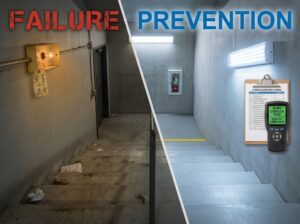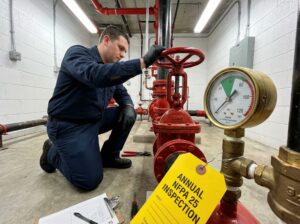
A facility manager’s worst nightmare isn’t a fire—it’s finding out that the system designed to save lives and protect assets is not compliant. In many buildings, routine maintenance gaps, missed inspections, and simple installation errors turn a life-safety system into a liability. This article dives deep into the most common fire sprinkler system violations, explains why they occur, and provides practical steps to prevent them. We’ll blend real-world data, code references, and field-tested best practices to help you move from risk to compliance.
—
Opening scenario: a quiet morning turns into a compliance alarm
Jake, facilities supervisor at a mid-size manufacturing campus, starts his day with the usual coffee and a quick tour. The sprinkler room looks neat, the windows reflect morning light off polished pipes, and nothing seems amiss—until a routine compliance notice pops up. A city inspector flagged multiple issues during a random inspection: corroded valve handles that hadn’t been exercised in years, a missing escutcheon around a concealed sprinkler head, a non-functional flow switch, and a backflow preventer with a leaky seal. The notice also noted that several sprinkler heads were painted—a classic “look but don’t touch” violation that hides a problem rather than fixes it.
The inspector’s report isn’t just a list of “observations.” Each item represents either a potential failure point in an emergency or a trap for the building owner who tries to cut corners to save money. The penalties can include costly re-inspections, mandatory remediation, and even temporary shutdowns of water supply to the system in critical areas, all of which threaten life safety and business continuity. Jake realizes three truths in that moment:
- The difference between a compliant system and a violation is a matter of life and property survival in a fire event.
- Most violations are repeatable, avoidable mistakes tied to maintenance schedules, documentation, and clear ownership of the system.
- Proactive management—regular testing, transparent recordkeeping, and training—turns risk into a controlled process with measurable benefits.
This scenario captures the essence of why we must talk about common fire sprinkler violations: they’re often symptoms of deeper organizational gaps rather than single “bad apples.” By understanding the root causes, building a robust prevention plan, and aligning activities with recognized standards, facilities can consistently meet code requirements and operate with confidence when the alarm sounds.
—
Why violations matter: risks, costs, and real-world impact
Before we dive into the specific violations, it’s important to frame the stakes. Fire sprinkler systems, when properly maintained and tested, dramatically reduce loss of life and property from fires. However, when maintenance lags or inspections aren’t completed on schedule, even the best-designed systems underperform.
- NFPA’s U.S. Experience with Sprinklers shows sprinklers operate in about 92-93% of structure fires large enough to activate them and are effective about 97% of the time when properly maintained. The most common failure causes are human factors, such as the system being shut off. This statistic underscores the primacy of ongoing human-driven maintenance, monitoring, and governance in achieving intended performance. [NFPA: U.S. Experience with Sprinklers]
- Deficiencies documented in practice—such as corroded components, missing escutcheons, non-functional flow switches, and damage or painting on sprinklers—are frequently preventable through disciplined inspection, testing, and maintenance programs. The NFSA’s write-up on NFPA 25 deficiencies highlights these recurring issues and provides Annex A guidance to prevent mislabeling observations as deficiencies. [NFSA: NFPA 25 Deficiencies]
- Compliance gaps aren’t limited to one jurisdiction. In 2024, Wake County, North Carolina, inspectors cited more than 1,700 fire-safety violations across roughly 250 inspections in schools, with about 25% of inspected facilities having expired or missing sprinkler inspections. This real-world example demonstrates how quickly violations accumulate and the operational impact on safety and regulatory standing. [Wake County fire safety violations story]
- For anyone responsible for a building’s safety, the overarching message is clear: routine, documented maintenance that aligns with recognized standards reduces failure modes and improves outcomes in real fires. Standards-based maintenance is not optional; it’s integral to life-safety performance. For reference, NFPA outlines the standard framework for inspection, testing, and maintenance of water-based systems, and many violations arise when organizations diverge from or misunderstand these requirements. [NFPA 25 Deficiency references and standard scope]
—
A practical taxonomy: what counts as a violation?
To organize our discussion, let’s define how violations typically present themselves in the field. The following categories cover the most common issues inspectors flag during annual, semi-annual, or special inspections.
- Deficiency vs Observation: An observation isn’t automatically a deficiency. Annex A in NFPA 25 provides guidance to differentiate mislabeling observations from actual deficiencies. Practically, a deficiency is a clear inability of the system to perform as designed or required by code. [NFPA 25 Deficiencies guidance]
- Component corrosion and deterioration: Corroded valves, damaged or painted sprinklers, corroded piping, or corroded backflow preventers compromise reliability and can trigger leakage or failure during demand.
- Modal failures in signaling: Non-functional flow switches, tamper switches, bells, or alarm devices compromise the system’s ability to alert occupants and emergency responders.
- Physical obstructions and damage: Gutters, cabinetry, or storage items blocking sprinkler heads, as well as painting or physical damage to sprinkler heads, reduce spray pattern and effectiveness.
- Escutcheon gaps and mislabeling: Missing or damaged escutcheons around concealed sprinklers can mislead about head location and hinder verification during inspections.
- Hydraulic and design misalignments: Outdated hydraulic calculations or modifications without proper reanalysis lead to inadequate water supply or improper distribution.
- Maintenance documentation gaps: Missing or incomplete service reports, test records, or inspection certificates impede traceability and compliance.
Table: Common violation categories and representative examples
| Category | Typical Violations | Why it matters for life safety |
|---|---|---|
| Corrosion and physical damage | Corroded valves, damaged/painted sprinkler heads, corroded backflow preventers | Risk of leakage, head failure, and compromised water supply |
| Detection and signaling | Flow switches not functioning, tamper switches not wired or damaged | Delayed alarms, slower emergency response |
| Physical installation issues | Missing escutcheons, heads painted, sprinklers blocked by stored materials | Obstructed spray patterns and incorrect head coverage |
| Hydraulic and design issues | Outdated hydraulic calculations, inadequate water supply, improper zoning | Inaccurate demand and distribution; higher risk during fire events |
| Documentation gaps | Missing inspection/test records, certificates not up to date | Inability to demonstrate compliance and timely maintenance history |
—
The 8 most common fire sprinkler violations (and how they arise)
Below is a detailed look at the violations you’re most likely to encounter, why they happen, and what it costs you if not addressed quickly.
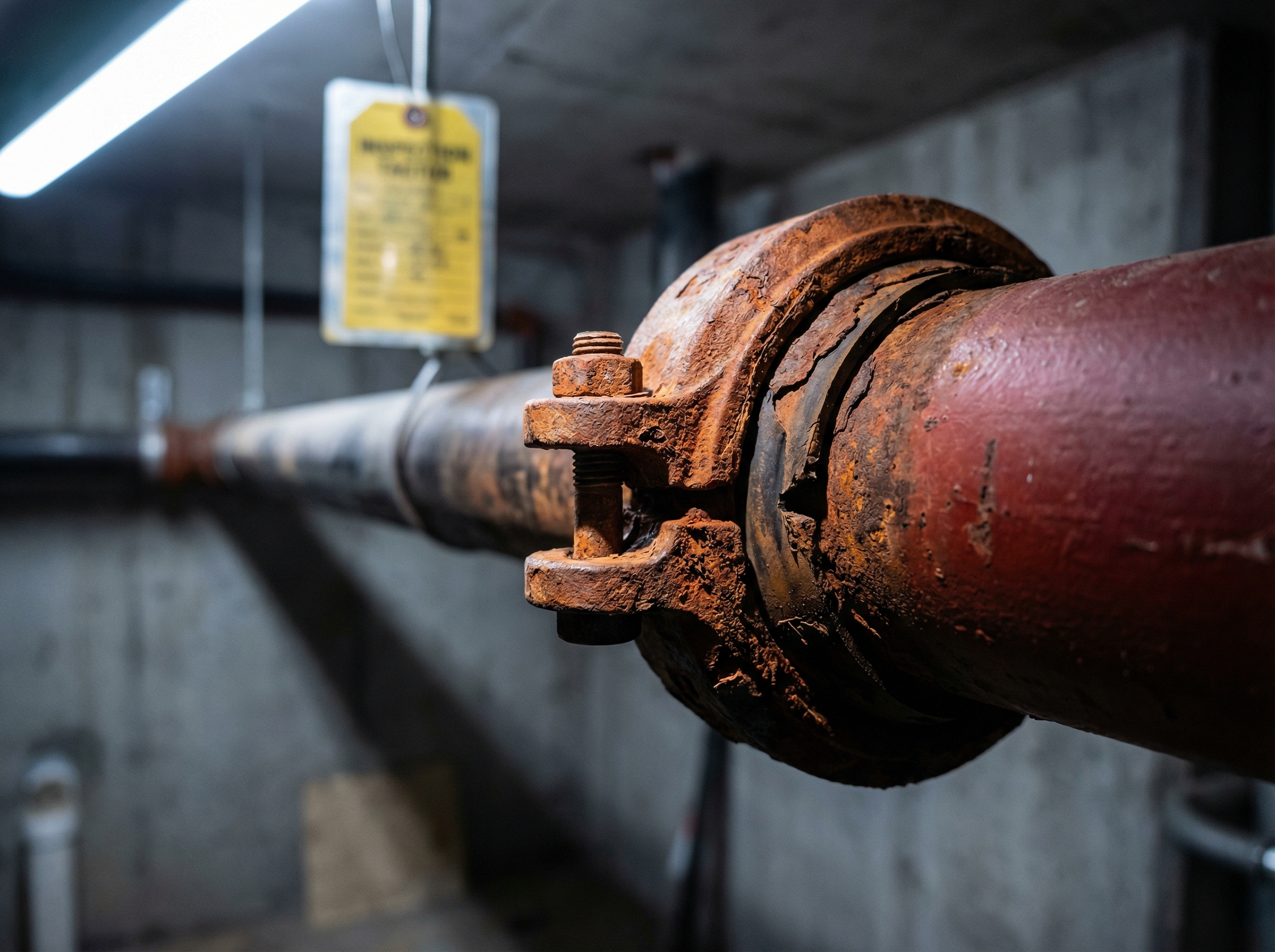
1) Corroded or damaged components (valves, pipes, and sprinklers)
- What inspectors see: corroded valves, rust at joints, leaking seals, and sprinklers with visible damage or corrosion.
- Why it happens: aging systems, exposure to moisture, improper temperature control, or previous repairs that didn’t include proper corrosion protection.
- Impact on life safety: reduced reliability, potential for sprinkler head leakage, and structural damage to piping can escalate risk during a fire.
Pro tip: Establish a corrosion control plan that includes regular valve exercising, painting-free zones for sprinklers, and corrosion-inhibiting coatings where appropriate. NFPA standards emphasize ongoing maintenance and inspection, and deficiencies in corrosion control are common sources of violations. [NFPA corrosion and inspection considerations] (general reference; see NFPA 25 for specifics)
2) Non-functional flow and alarm devices
- What inspectors see: flow switches that do not change state when water flows, alarm check valves that fail to signal, or wiring faults that disconnect alarms.
- Why it happens: improper wiring, failed battery-powered devices, or lack of testing and calibration during routine maintenance.
- Impact: delayed fire notification, slower activation of suppression, and higher risk to occupants.
Pro tip: Schedule functional testing of all signaling devices during regular inspections and verify that the control panel signals correspond to actual water flow. Attach a maintenance log and cross-train staff to identify partial faults before they escalate. The NFSA’s notes on NFPA 25 deficiencies highlight missing or non-functional flow switches as a recurring issue. [NFSA: NFPA 25 Deficiencies]
3) Painting or coating sprinkler heads
- What inspectors see: paint or other coatings on sprinkler heads that can impede heat transfer and obscure the red color coding.
- Why it happens: attempts to cosmetically “hide” heads during renovations, lack of awareness about the effect of coatings on performance.
- Impact: delayed activation, misidentification during inspections, and compromised spray patterns.
Pro tip: Never paint sprinkler heads. If a head must be protected or identified, use non-spray coatings and approved labeling methods that do not cover the head or its heat-responsive element. Keep a strict policy to preserve the head’s temperature-sensitive components.
4) Missing escutcheons or mislabeling around concealed heads
- What inspectors see: missing escutcheon plates or gaps around concealed sprinklers that reveal misalignment or misplacement.
- Why it happens: cost-saving shortcuts during ceiling work or poor coordination with construction trades.
- Impact: reduced protection accuracy, potential mechanical interference with the sprinkler head, and challenges in verifying the location of concealed heads.
Pro tip: Inspectors view escutcheons as a basic enclosure requirement. Maintain a stock of escutcheon plates, ensure proper seating, and confirm compatibility with the concealed head type used in the building. Annex A guidance in NFPA 25 helps prevent mislabeling observations as deficiencies. [NFPA 25 Annex A guidance]()
5) Inadequate clearance and obstructions
- What inspectors see: stored items, HVAC ductwork, light fixtures, or other equipment blocking spray patterns or physically obstructing sprinkler heads.
- Why it happens: poor housekeeping, space constraints, or changes in use that were not reflected in the system’s documentation.
- Impact: degraded performance, especially in areas with obstructions where water distribution is essential for controlling a fire.
Pro tip: Implement a “clearance policy” for sprinkler zones, including visible markings on ceilings to prevent new obstructions and periodic audits of storage practices. This is a common-sense living practice in addition to a code requirement.
6) Painted or damaged sprinklers
- What inspectors see: heads with paint, corrosion, or physical damage that may affect heat absorption and spray pattern.
- Why it happens: ongoing maintenance neglect or replacement parts not matched to the original design, sometimes due to DIY repairs.
- Impact: compromised discharge pattern and delayed activation.
Pro tip: Use a centralized replacement program for sprinklers, ensuring that any replacements match the original model, temperature rating, and spray characteristics. Documentation should note the replacement date and part numbers.
7) Hydraulics not updated after modifications
- What inspectors see: unchanged hydraulic calculations after a change in occupancy, layout, or water supply; mismatched hydraulic data and actual system performance.
- Why it happens: changes in building uses, retrofits, or partial upgrades without reanalysis.
- Impact: insufficient water supply for sprinkler demand during a fire, increasing risk of system failure.
Pro tip: Treat every major modification as a trigger for re-calculation and re-testing. Keep a delta log showing exactly what changed, why, and how the hydraulic model was updated. NFPA 25 calls for accurate documentation of system performance and testing to reflect actual conditions.
8) Documentation gaps and inconsistent testing
- What inspectors see: missing test reports, failed or skipped inspections, or records that do not align with field conditions.
- Why it happens: fragmented responsibilities, lack of a centralized maintenance program, or fear of administrative overhead.
- Impact: forced re-inspections, penalties, and a patchwork of inconsistent data that undermines trust in the system’s reliability.
Pro tip: Build a centralized, timestamped maintenance log (digital preferred) that ties together inspection dates, test results, corrective actions, and the responsible party. Align the log with NFPA 25 requirements for inspection, testing, and maintenance to demonstrate continuous compliance.
—
Why violations cluster around maintenance and governance
The pattern you’ll notice across all the violations is that many stem from two root causes: inconsistent maintenance practices and weak governance over the system’s lifecycle. In many buildings, maintenance staff perform routine checks, but without a formal plan, clear ownership, and a documented process, tasks fall through the cracks. A few concrete drivers of violations include:
- Lack of a formal preventive maintenance (PM) program for water-based fire protection systems.
- Inadequate training for facilities personnel on NFPA 25 requirements and local code specifics.
- Insufficient recordkeeping or “paper-only” records that don’t reflect actual field conditions.
- Changes to occupancy, equipment, or interior finishes without revalidating hydraulic calculations or water supply adequacy.
- Fragmented responsibilities between construction teams, maintenance crews, and safety/compliance staff.
The Wake County case study is a vivid reminder: even facilities that operate in a regulated environment can accumulate violations if inspections aren’t treated as a continuous process rather than a periodic burden. The path to avoiding similar outcomes lies in shifting from a reactive mindset to a proactive, process-driven approach. [Wake County fire safety violations story]
—
The regulatory backbone: what codes and standards apply
For most property types, the central standard governing inspection, testing, and maintenance of water-based fire protection systems is NFPA 25: Standard for the Inspection, Testing, and Maintenance of Water-Based Fire Protection Systems. This standard provides the framework for routine testing, component checks, maintenance intervals, and recordkeeping that help prevent violations from becoming life-safety events. The standard emphasizes:
- Regular inspection of all components (valves, backflow preventers, pumps, alarms, and detectors).
- Functional testing of active components (pumps, controllers, flow switches, and alarm devices).
- Corrective action and documentation for any deficiencies found.
- Proper documentation to demonstrate compliance and readiness for occupancy.
The NFSA article on NFPA 25 deficiencies highlights common failure points (e.g., corroded valves, missing escutcheons, non-functional flow switches) and advises how Annex A guidance can prevent mislabeling observations as deficiencies. [NFSA: NFPA 25 Deficiencies]
For those who want to dig deeper into the standard’s scope and modern practice, the NFPA maintains detailed references and current code language across its codes and standards catalog. Keeping up with NFPA 25’s latest edition and its amendments is essential for minimizing violations and ensuring life-safety performance. [NFPA 25 Standard details]
—
How to prevent violations: a practical playbook
Preventing violations requires a disciplined, documented program rather than ad-hoc maintenance. Below is a practical, field-tested playbook you can implement today.
1) Establish a formal PM program for all life-safety systems
- Create a centralized maintenance calendar that includes NFPA 25-required inspections, functional tests, and hydrostatic tests.
- Define roles and responsibilities (who is the owner for each system section, who signs off on deficiencies, who coordinates with inspectors).
- Schedule annual, semi-annual, and quarterly tasks with clear pass/fail criteria.
2) Maintain comprehensive, auditable documentation
- Maintain a digital log that captures dates, personnel, test results, and corrective actions.
- Attach photographs, calibration data, and replacement part numbers to each record.
- Ensure that records can be retrieved quickly for regulatory review or insurance audits.
3) Train staff and build awareness
- Provide baseline NFPA 25 training for facilities personnel and annual refreshers.
- Train contractors and on-site teams to recognize common deficiencies and to report them promptly.
- Create a simple, internal escalation path for any identified issue.
4) Use checklists and standardized reporting
- Implement pre-inspection checklists to ensure critical items are reviewed consistently.
- Use post-inspection reports that clearly distinguish observations from confirmed deficiencies, guided by Annex A (as applicable).
- Require a corrective action plan with target completion dates for every deficiency.
5) Tie compliance to operations and maintenance budgets
- Allocate budget for replacement parts, corrosion protection, component upgrades, and training.
- Include “compliance-ready” buffer in capital planning to cover unexpected deficiencies uncovered during inspections.
6) Plan for change management
- Treat any building modification (renovation, reconfiguration, new equipment) as a trigger for re-assessing hydraulic calculations and water supply adequacy.
- Reconcile changes with the existing fire protection system design and re-certify all affected components.
—
Step-by-step inspection and testing protocol (a practical guide)
A structured process helps avoid missing critical steps and ensures consistency across inspections. Here is a concise, practical protocol you can implement:
1) Pre-inspection preparation
- Review last inspection report and deficiency list.
- Verify access to all sprinkler rooms, risers, and controlled zones.
- Confirm that test hoses, flow test apparatus, and test gauges are available and calibrated.
2) Visual and mechanical checks
- Inspect all sprinkler heads for corrosion, damage, and obstruction.
- Check escutcheons, brackets, and hangers for secure installation.
- Inspect valves, gaskets, and throttling devices for leakage or self-closure on-demand valves.
3) Alarm and signaling verification
- Test alarm devices, flow switches, and supervisory signals.
- Confirm that annunciators and building management system (BMS) interfaces reflect proper status.
4) Hydraulics and water supply
- Review hydraulic calculations and verify water supply pressure and flow requirements.
- Confirm pump operation and priming, teed-off lines, and backflow preventer operation.
5) Documentation and labeling
- Ensure tags, labels, and circuit maps are accurate and up to date.
- Attach test reports and corrective actions to the system’s record.
6) Corrective actions
- For any deficiency, assign responsibility, set deadlines, and track progress.
- Schedule retesting after remediation to confirm issue resolution.
7) Post-inspection debrief
- Review findings with stakeholders, including facilities leadership and safety personnel.
- Update maintenance plans based on findings and recommended improvements.
8) Regulatory submission
- Prepare the inspection report for submission to the authority having jurisdiction (AHJ) if required.
- Ensure compliance evidence is accessible for audits or insurance reviews.
—
A real-world data point: Wake County’s 1,700 violations
The Wake County story provides a sobering example of what can happen when routine protections lapse. Inspectors identified more than 1,700 fire-safety violations across about 250 inspections in 2024, with roughly a quarter of inspected schools showing expired or missing sprinkler inspections. This case illustrates how violations accumulate when inspections aren’t integrated into ongoing operations and maintenance. It also highlights the potential for broader regulatory, safety, and operational consequences in education facilities. [Wake County fire safety violations story]
—
Quantifying the benefits of compliance
Investing in a robust, compliant sprinkler program isn’t merely about avoiding penalties. It’s about reducing risk, protecting people, and ensuring business continuity. The benefits include:
- Improved life-safety performance in fire events, driven by reliable sprinkler activation and timely alarms.
- Reduced downtime and business disruption due to fewer violations and re-inspections.
- Enhanced insurance outcomes and potential premium stability due to demonstrable risk mitigation.
- Clearer accountability and traceability for maintenance actions, which strengthens regulatory and corporate governance.
The data from NFPA’s sprinklers statistics reinforces that proper maintenance directly improves effectiveness. When the system is properly maintained, activation rates and effectiveness are high; when human factors or shutdowns occur, performance degrades. This makes maintenance discipline not optional but essential for a high-performing fire protection program. [NFPA: U.S. Experience with Sprinklers]
—
A closer look at the code and compliance landscape
- NFPA 25 is the go-to standard for inspection, testing, and maintenance of water-based fire protection systems. It defines what to test, how often to test, and what records to maintain. Staying aligned with NFPA 25 reduces the risk of mislabeling observations and helps ensure that the system remains reliable under fire conditions. [NFPA 25 Standard details]
- The Annex A guidance within NFPA 25 helps prevent mislabeling observations as deficiencies, which is a common source of confusion during audits and inspections. This distinction matters because it shapes corrective action planning and resource allocation. [NFSA: NFPA 25 Deficiencies]
- Ongoing vigilance is essential. Data points from NFPA and practical field experience show that deficiencies most often involve human factors and maintenance gaps, emphasizing the need for strong governance and documentation. [NFPA: U.S. Experience with Sprinklers]
- Real-world enforcement and compliance scenarios, such as those observed in Wake County, illustrate the consequences of under-investment in maintenance and inspections. [Wake County fire safety violations story]
—
48Fire Protection: relevant services to close the compliance gap
Near the end of this article, it’s important to connect the theory of compliance with practical, end-to-end support. 48Fire Protection offers a comprehensive suite of services designed to help you achieve and sustain code-compliant, high-performance fire sprinkler systems.
- Comprehensive inspections and testing: Regular, code-driven inspections and functional testing of water-based fire protection systems, including hydraulic verification and valve exercising.
- Maintenance programs and preventive maintenance (PM): Development of customized PM schedules aligned with NFPA 25 requirements, with clear ownership assignments and escalation paths.
- Documentation and reporting: Centralized, auditable maintenance logs that compile test results, corrective actions, and commissioning records, ready for AHJ reviews and insurance audits.
- System modifications and upgrades: Design consulting and modernization services that address aging components, corrosion control, and updated hydraulic calculations following system changes.
- Backflow and water supply assurance: Thorough testing and maintenance of backflow preventers, pumps, and water supply components to ensure reliable fire-water delivery.
- Training and governance: NFPA 25-compliant training for facilities staff and contractor partners, plus internal governance frameworks to sustain compliance over time.
- Emergency readiness planning: Scenario-based drills and response planning to ensure occupant safety and smooth operations under fire conditions.
If you’re facing recurring violations, or you want to build a forward-looking program that minimizes risk, reach out to 48Fire Protection for an assessment. Our approach is systematic, standards-driven, and outcomes-focused, designed to translate compliance into real-world reliability.
—
Putting it all together: a practical executive summary
- Violations in fire sprinkler systems are common and preventable with disciplined governance, rigorous maintenance, and robust documentation.
- The most frequent violations involve corrosion, non-functional signaling devices, damaged or painted sprinklers, missing escutcheons, obstructions, and outdated hydraulic data.
- The regulatory backbone—primarily NFPA 25—emphasizes inspection, testing, and maintenance, along with a thorough and auditable documentation trail.
- Real-world incidents, such as Wake County’s findings, show the cost and complexity of non-compliance and the benefits of a proactive program.
- A structured prevention plan—comprising a formal PM program, standardized reporting, staff training, and change-management discipline—drives better safety, performance, and regulatory outcomes.
- 48Fire Protection stands ready to help you implement, manage, and validate a compliant, resilient sprinkler system through a full spectrum of services.
—
References
- NFPA: U.S. Experience with Sprinklers. Sprinklers operate in about 92-93% of structure fires large enough to activate them and are effective about 97% of the time when properly maintained; the most common failure causes are human factors, such as the system being shut off. [NFPA: U.S. Experience with Sprinklers]
- NFSA: NFPA 25 Deficiencies. Common deficiencies contractors should report include corroded valves, missing escutcheons, non-functional flow switches, and damaged or painted sprinklers, with Annex A guidance (Table A.3.3.8) to prevent mislabeling observations as deficiencies. [NFSA: NFPA 25 Deficiencies]
- Wake County, NC: 1,700 fire safety violations: Wake County schools cited for failing to inspect fire alarms, sprinklers. In 2024, Wake County inspectors identified over 1,700 violations across about 250 inspections, including about 25% of inspected schools with expired or missing sprinkler inspections. [Wake County fire safety violations story]
- NFPA 25 (Standard for the Inspection, Testing, and Maintenance of Water-Based Fire Protection Systems). [NFPA 25 Standard details]
—