
Fire Extinguisher Inspection Frequency: What U.S. Codes Require
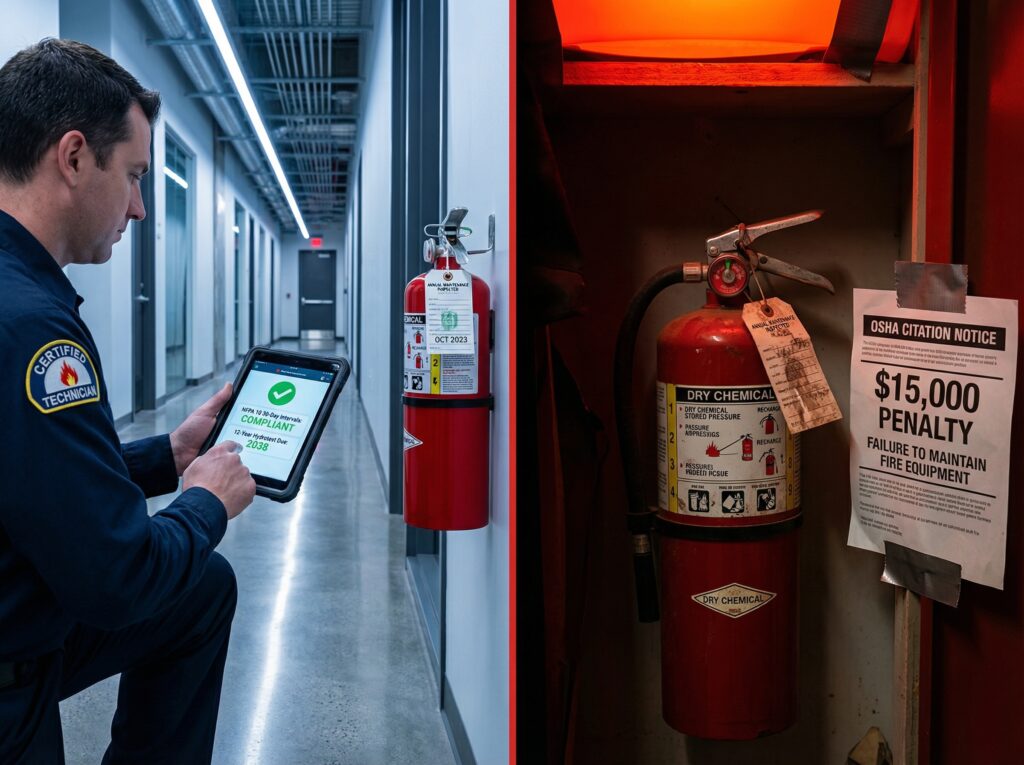
Fire extinguisher code compliance relies on OSHA, NFPA 10, and local codes. OSHA mandates monthly visual inspections and annual maintenance. NFPA 10 specifies inspections at approximately 30-day intervals and maintenance not exceeding 12 months. Crucially, NFPA 10 also mandates six-year internal examinations for some types, and hydrostatic testing every 5 or 12 years. Compliance requires tracking these multiple frequencies—monthly, annual, six-year, and periodic testing—and always implementing the most stringent local requirements to prevent violations.
Fire Protection Planning During Renovations
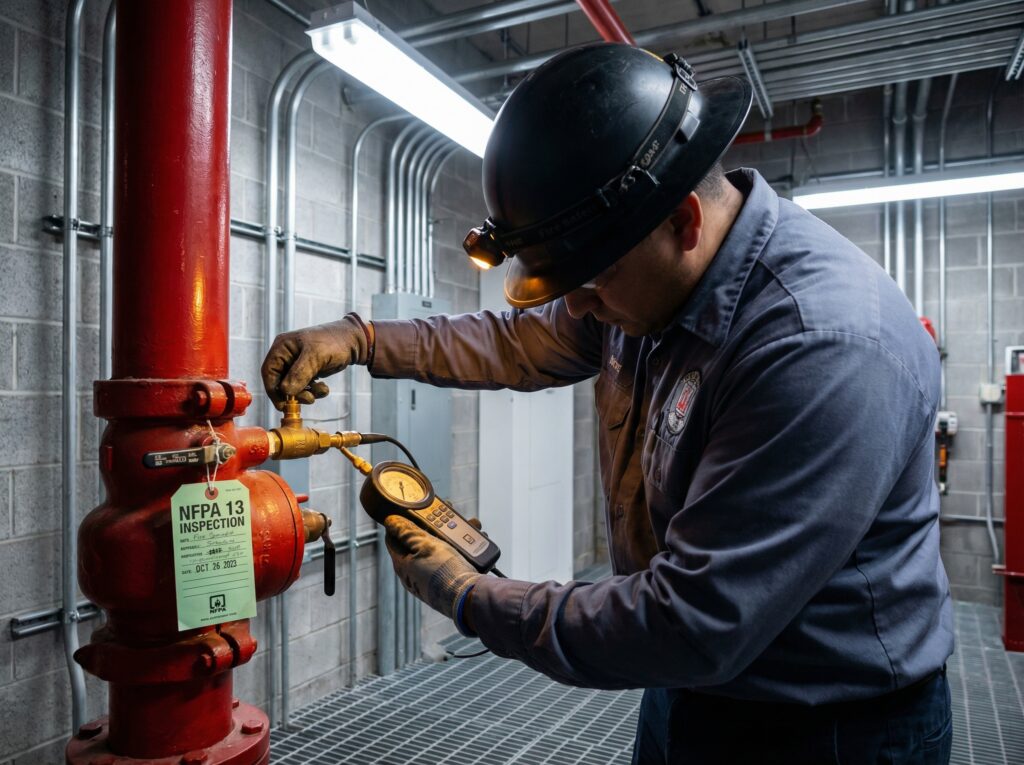
Renovations heighten fire risk if not properly planned. Construction introduces ignition sources, altered egress, and debris that can fuel a fire risk.
Fire Extinguisher Service Intervals Explained
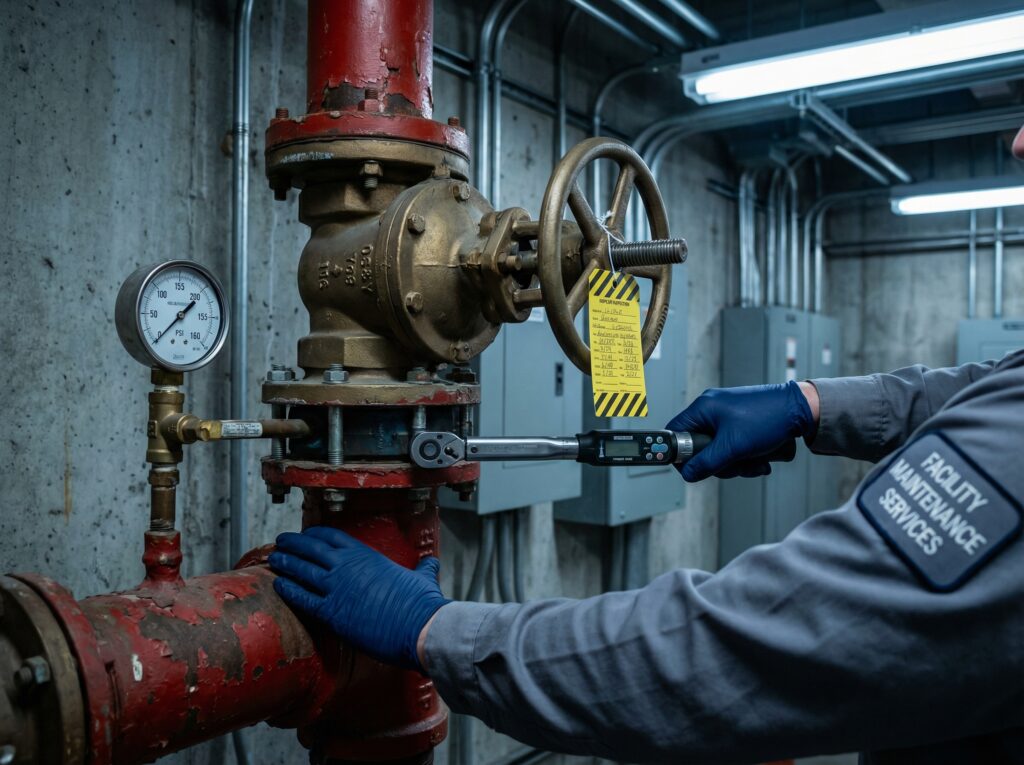
Facility managers can’t treat extinguishers as set-and-forget: inspections, maintenance, and hydrostatic testing must be timed for compliance and readiness
Fire Alarm Systems and Certificate of Occupancy
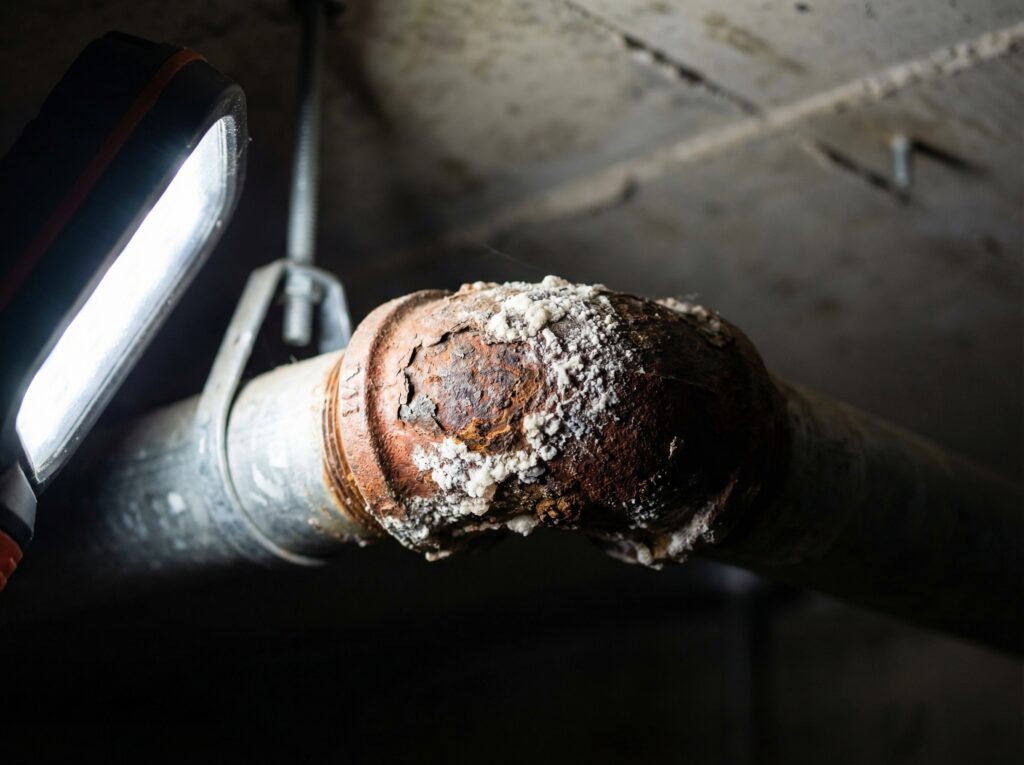
With dates looming, a mid-size office building faces a CO hurdle: fire alarm certification must come before occupancy, delaying tenants until protections align.
How Long You Have to Fix a Fire Code Violation
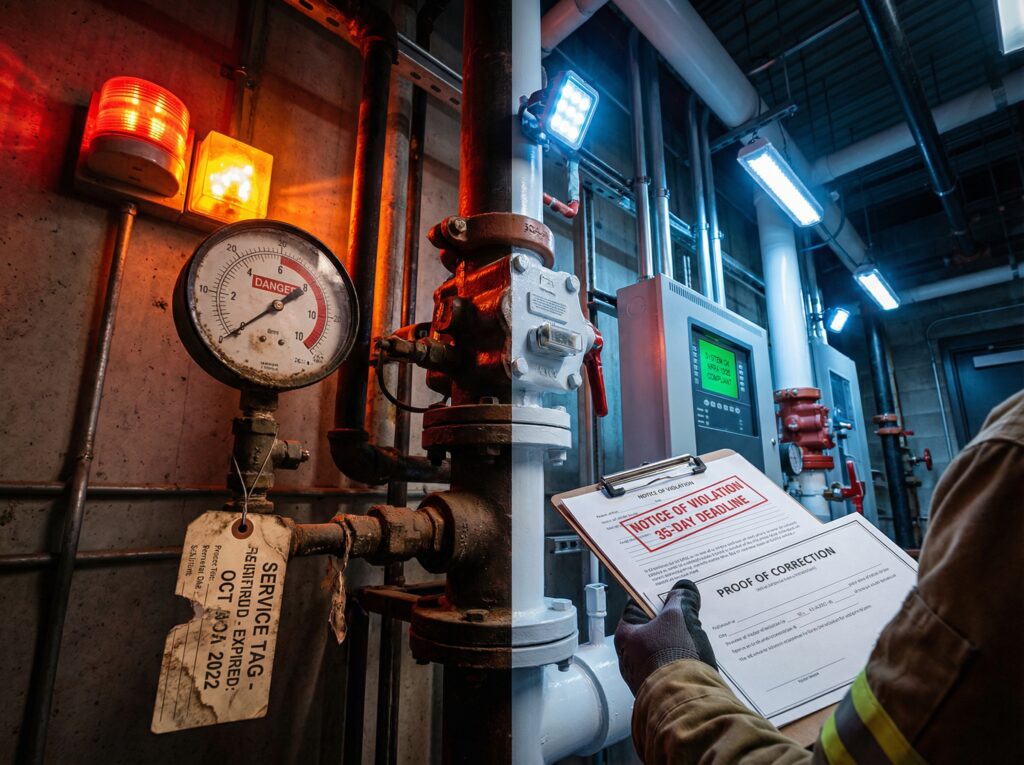
When a fire department notice arrives, your clock starts ticking to fix the violation, with deadlines varying by location, violation type, and hearings.
How Our Onsite Training Raised Inspection Pass Rates 25%
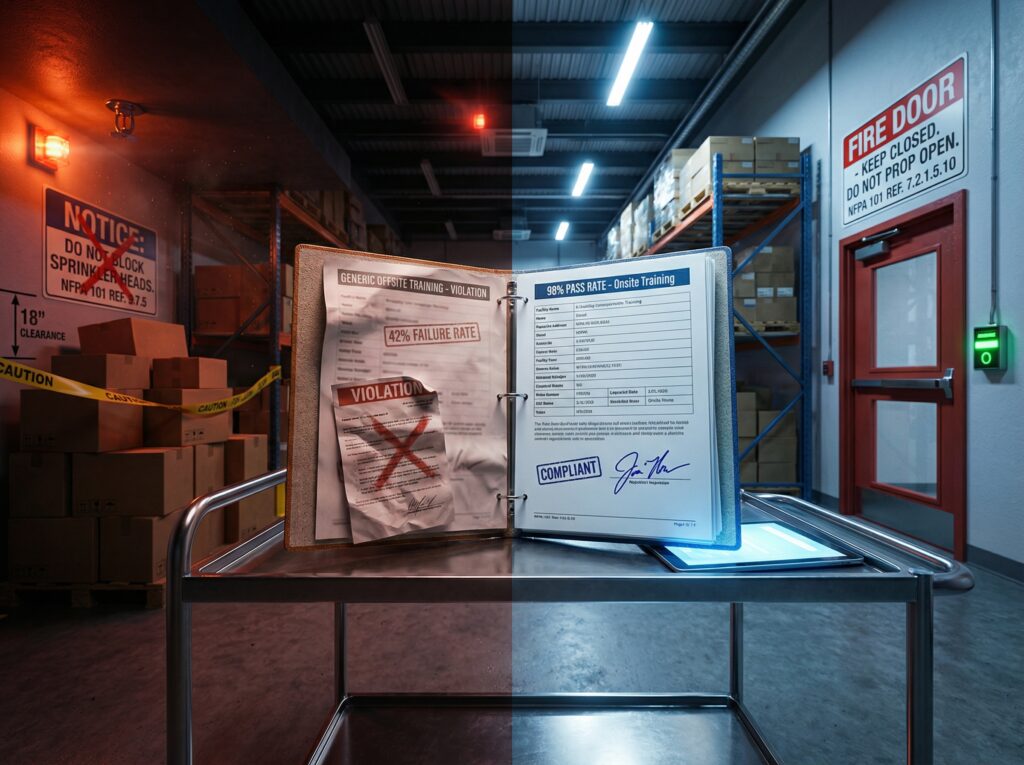
48Fire Protection tracked 60 facilities, comparing offsite and onsite fire safety training. Onsite training facilities passed fire code inspections at a 98% rate, a 25 percentage point advantage over the 73% pass rate for offsite training. This superior outcome stems from six location advantages, including walking actual exit routes, direct observation of emergency lighting, and demonstration of clearance requirements with facility equipment. Onsite delivery creates practical, facility-specific competency, leading to measurably better compliance outcomes, higher inspector confidence, and significant financial returns.
What Every Property Owner Should Know About Exit Signs
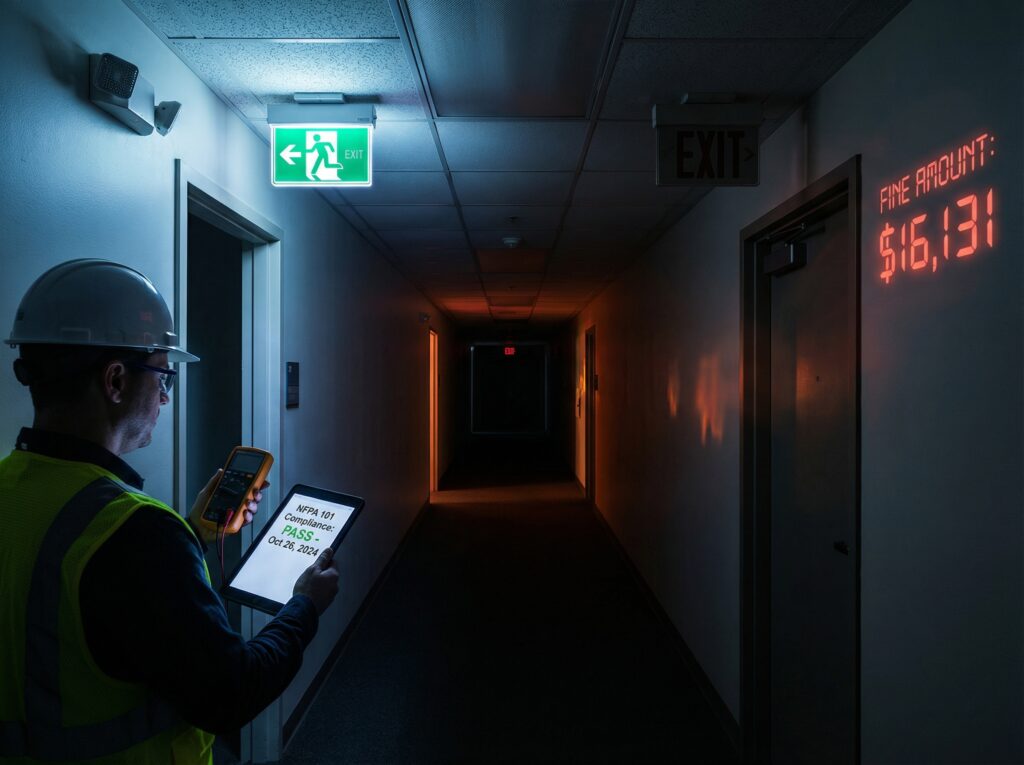
Property owners have a legal, non-delegable responsibility for exit sign compliance under NFPA 101 and OSHA. Requirements mandate marking every exit, directional signs, and maintaining visibility within 100 feet. Signs must use the green running man symbol and provide 90-minute illumination. Compliance involves documented monthly 30-second tests and annual 90-minute comprehensive testing. Failure to maintain records or correct deficiencies creates serious liability exposure, including OSHA fines up to $16,131 per violation and personal injury claims.
What Happens If a Contractor Caused the Violation
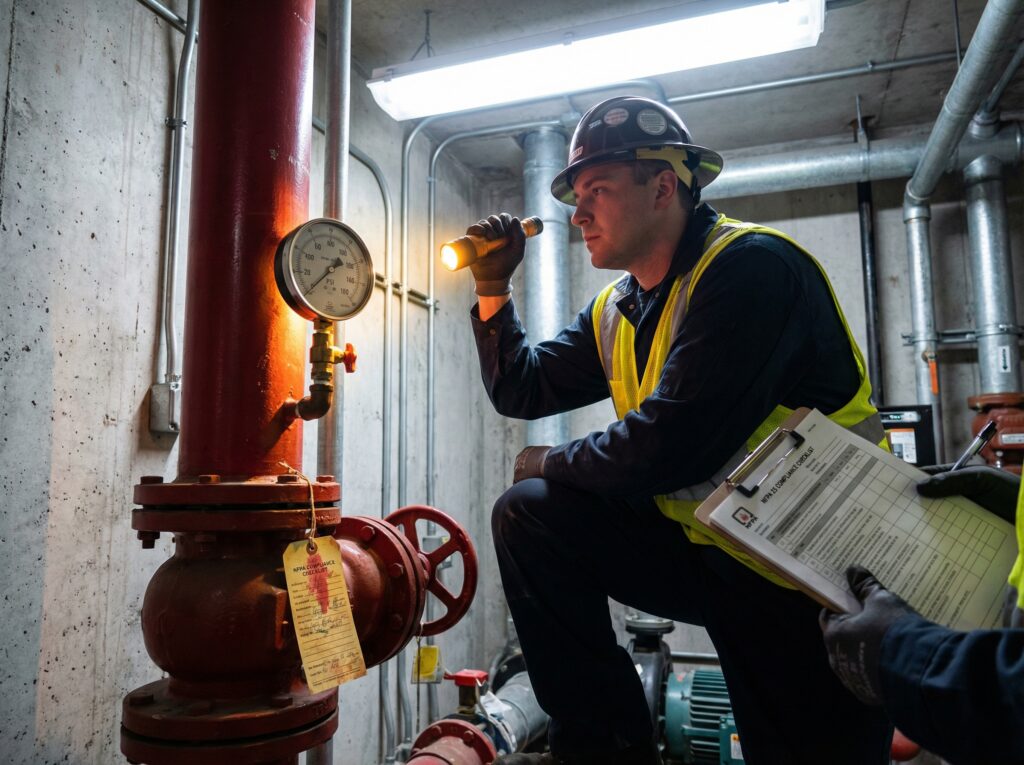
When a contractor causes a building code or safety violation, liability can ripple through penalties and delays, raising safety risks. Learn how owners respond.
4 Common Training Myths That Put Teams at Risk
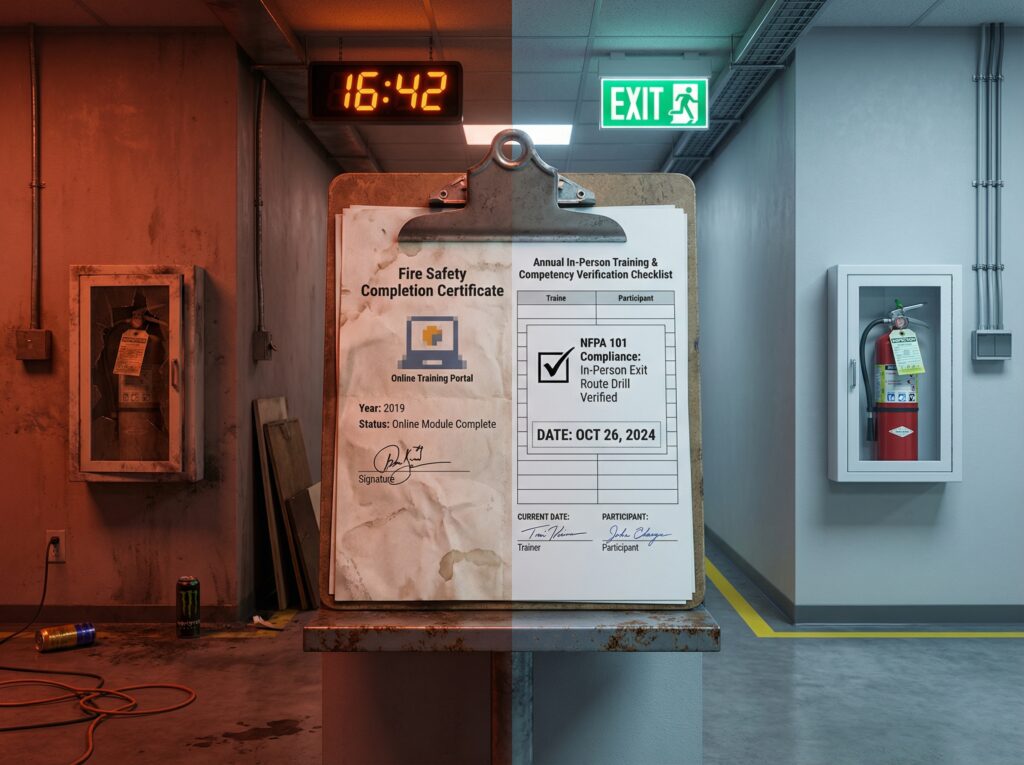
Four common fire safety training myths expose teams to risk by substituting convenience for competency. These myths include believing: 1) Online training satisfies requirements, 2) Training done five years ago is still adequate, 3) Passive watching of videos equals active training, and 4) Training designated Fire Wardens covers all employees. Effective correction requires rejecting these myths and embracing reality: fire safety demands in-person, annual, active, all-employee training. This reality-based investment prevents inspection failures, liability, and emergency response gaps, ensuring compliance and safety.
Why Third-Party Fire System Testing Matters for Fire Protection
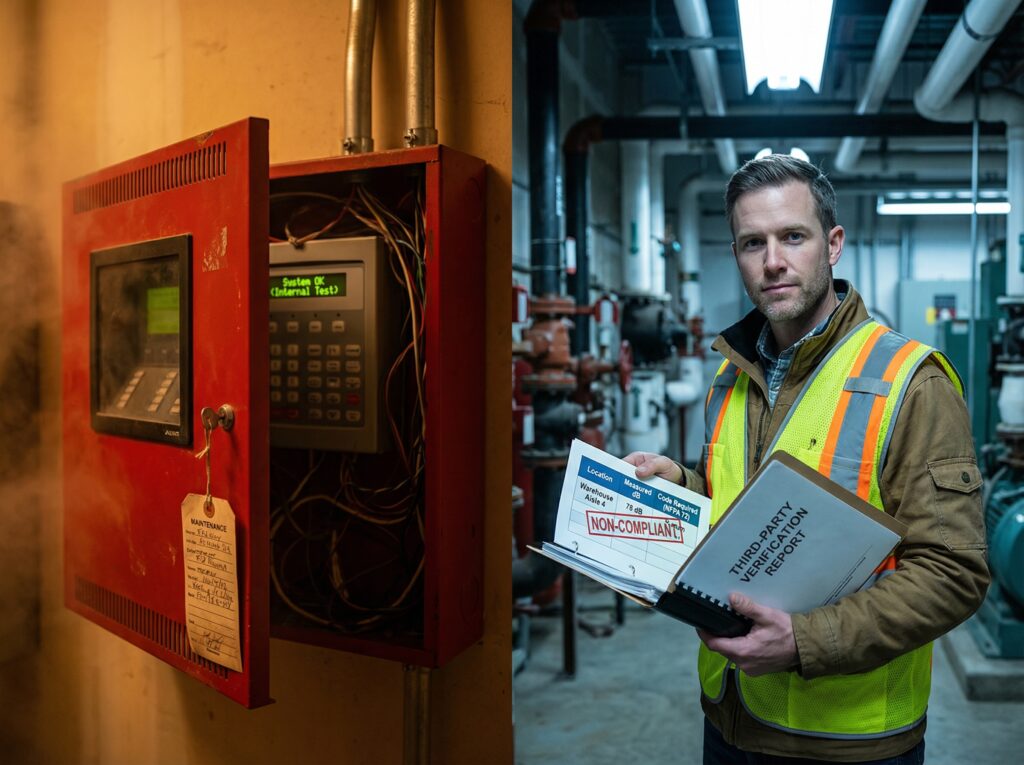
Third-party fire system testing resolves the credibility problem by transforming fire protection from “we say it works” to “an independent third party verified it works.” Operating with no incentive bias, it provides the highest trust level for regulators, insurers, and occupants. Unlike internal maintenance, third-party testing uses professional rigor and precise measurement against specific code requirements. This detailed assessment finds critical compliance gaps—like inadequate fire alarm audibility or low sprinkler pressure—that basic functionality checks miss, providing externally verified evidence of system performance.