
How Smart Monitoring Prevented a Costly Warehouse Fire
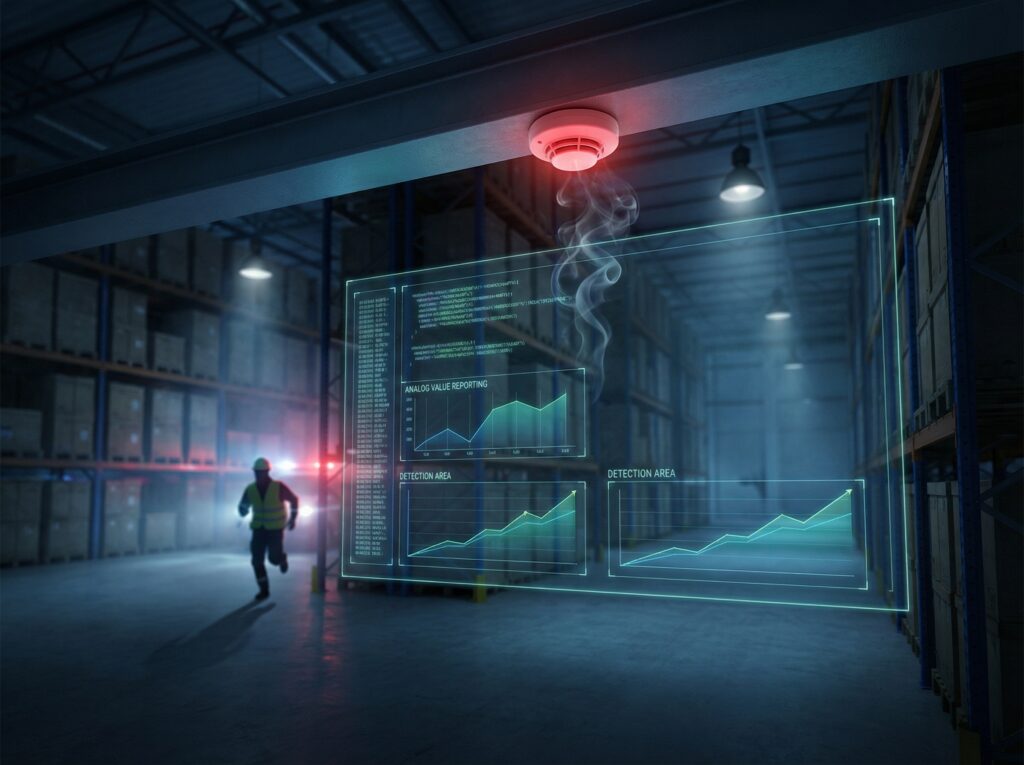
Fire alarm monitoring comes in two categories: standard and advanced. Standard monitoring responds to discrete alarm signals (alarm, trouble, supervisory) only after an alarm threshold is reached, ensuring emergency response for developed fire conditions. Advanced monitoring uses addressable systems that provide continuous data streams, such as real-time smoke density readings and temperature measurements. This allows monitoring station software to identify developing problems and potentially enable early intervention before reaching the full alarm threshold, significantly reducing damage.
Fire Alarm Installation That Slashed Downtime by 45%
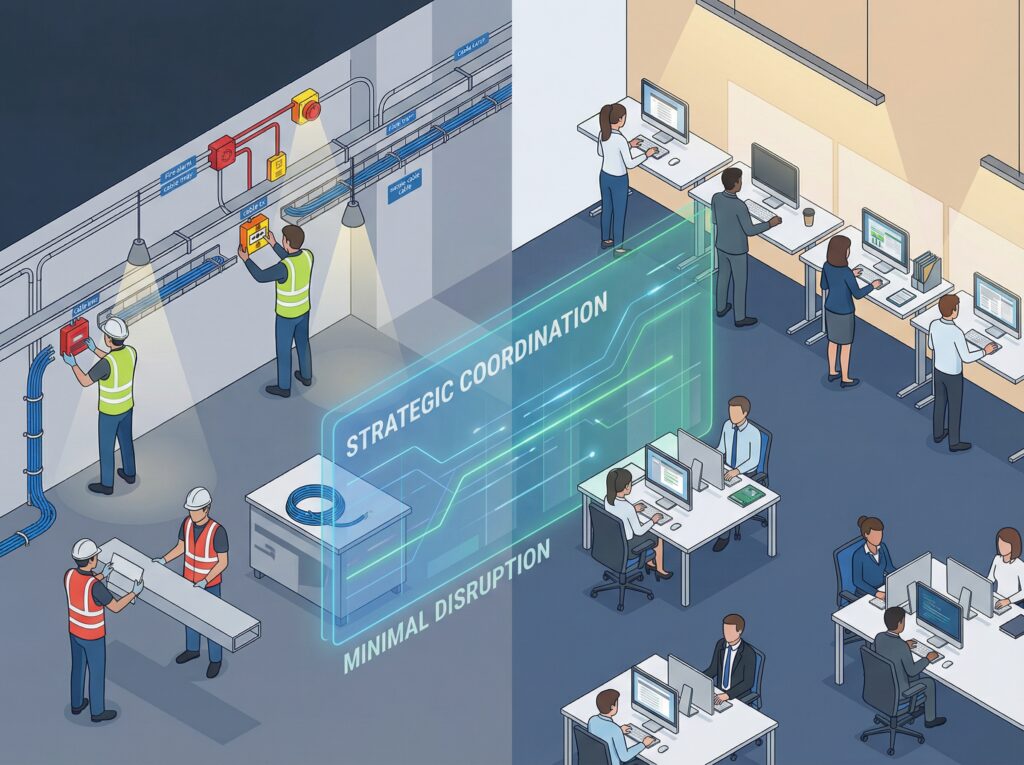
Fire alarm installations disrupt business operations, but planning approach, not installation speed, minimizes downtime. A standard installation for a 15,000 square foot office building might cause 6-8 days of disruption. A strategic approach—using phased installation and off-hours scheduling—might increase total installation time (10-14 days) but drastically reduce business disruption to 3-4 days. This smarter sequencing minimizes operational impact, resulting in a 45-50% reduction in downtime. Installation timing matters more than speed.
What 2,000 Businesses Learned from Alarm Testing Errors
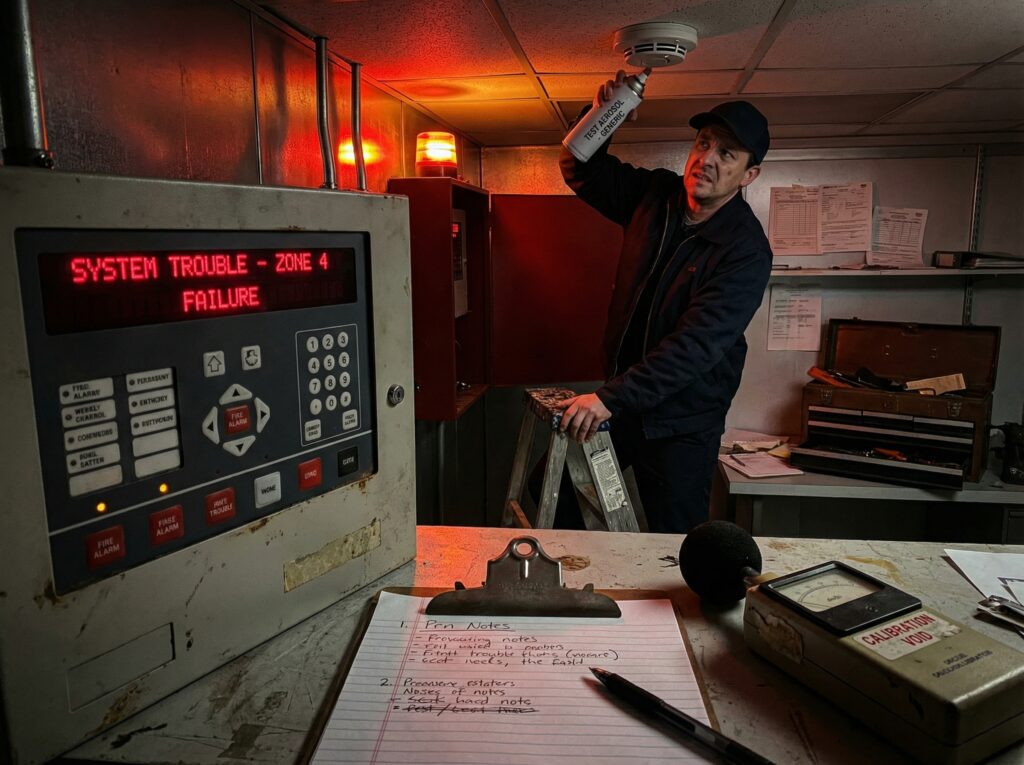
Analysis of fire alarm testing across thousands of commercial buildings reveals consistent, preventable errors. Documentation problems (42% of issues) are the most common, followed by device procedure mistakes (31%), timing and frequency errors (18%), and equipment/tool problems (9%). Preventing these mistakes requires qualified contractors, comprehensive documentation, adequate timeframes, and proper equipment. A systematic approach, including pre-scheduling and immediate deficiency correction, ensures continuous code compliance and reliable fire protection.
The Fire Alarm Setup That Passed Every Code Audit
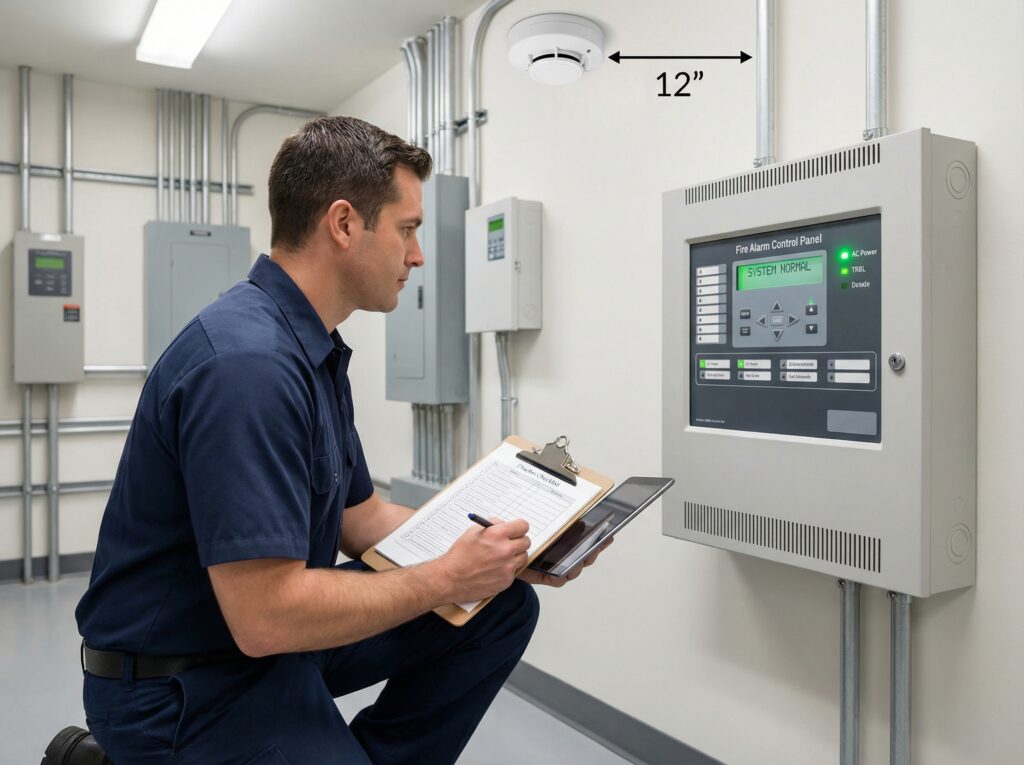
NFPA 72 mandates specific testing schedules for fire alarm systems, requiring monthly visual inspections, semi-annual functional testing, and annual comprehensive inspections by qualified technicians. Common violations include missing documentation, overdue testing, and maintenance deficiencies like dirty detectors. Proactive compliance involves maintaining five years of records, scheduled contractor maintenance, and promptly addressing trouble conditions. Annual testing must also verify proper integration with building systems like HVAC and elevators.
How One Factory Cut False Alarms by 60% in 3 Months
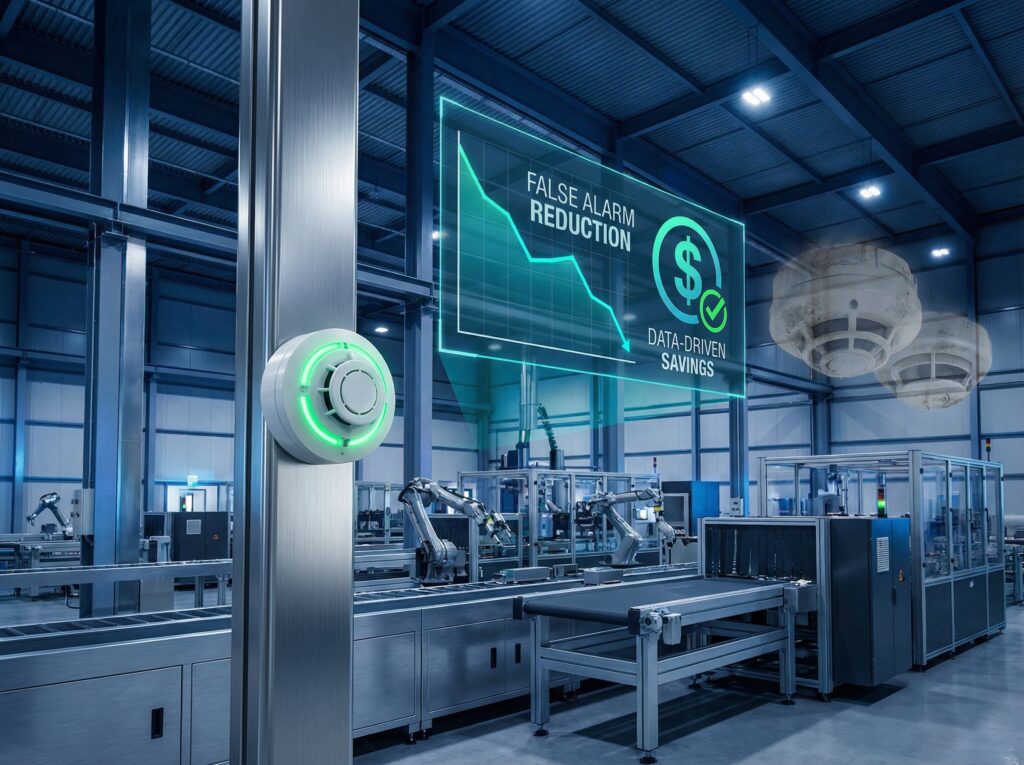
A factory reduced false fire alarms by 60% in 90 days, saving $28,200 annually. The problem, costing $47,000 yearly in fines and downtime, stemmed from moisture, dust, and temperature fluctuations. The solution involved a data-driven approach, targeted upgrades (replacing 48 ionization detectors with multi-sensor types), environmental controls (HVAC dehumidification and dust collection), and establishing strict maintenance protocols. The total investment of $14,200 had a six-month payback period.
The Future of Fire Alarm Systems in Commercial Fire Protection
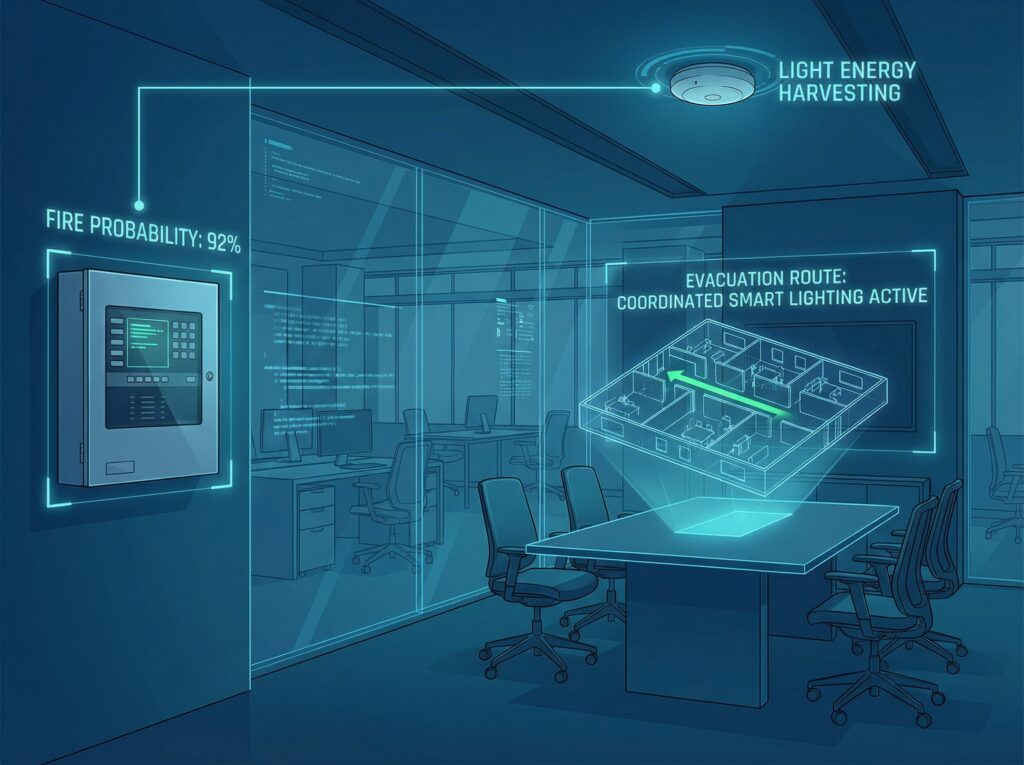
Fire alarm technology is fundamentally changing how commercial buildings detect and respond to fires. The next generation will feature Artificial Intelligence to distinguish real fires from false alarms, Wireless Technology using energy harvesting to eliminate wiring and batteries, and Smart Integration coordinating fire alarms with every building system. These advancements mean commercial fire protection is evolving from a reactive tool into an intelligent, integrated building safety network, promising lower false alarm rates and reduced maintenance costs.
How Cloud-Based Fire Alarm Monitoring Supports Fire Protection Services
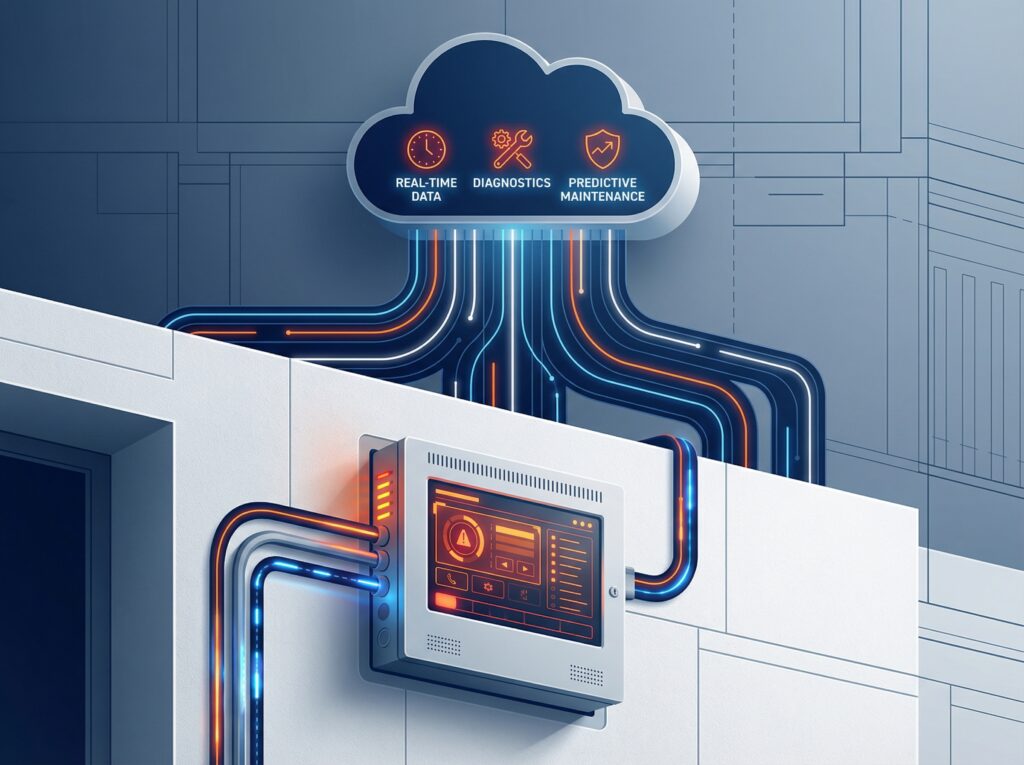
Cloud-based fire alarm monitoring enhances traditional systems by streaming continuous data to cloud servers, providing real-time device status and enabling predictive maintenance. This allows problems to be detected before failures occur, reducing emergency service calls and unplanned downtime. Key benefits include automated compliance documentation, remote diagnostics, and improved system visibility. The technology works alongside UL-listed central station monitoring, focusing on better system management and maintenance. Addressable systems offer the most granular, actionable data.
Fire Alarm Installation Best Practices for Homeowners and Facilities
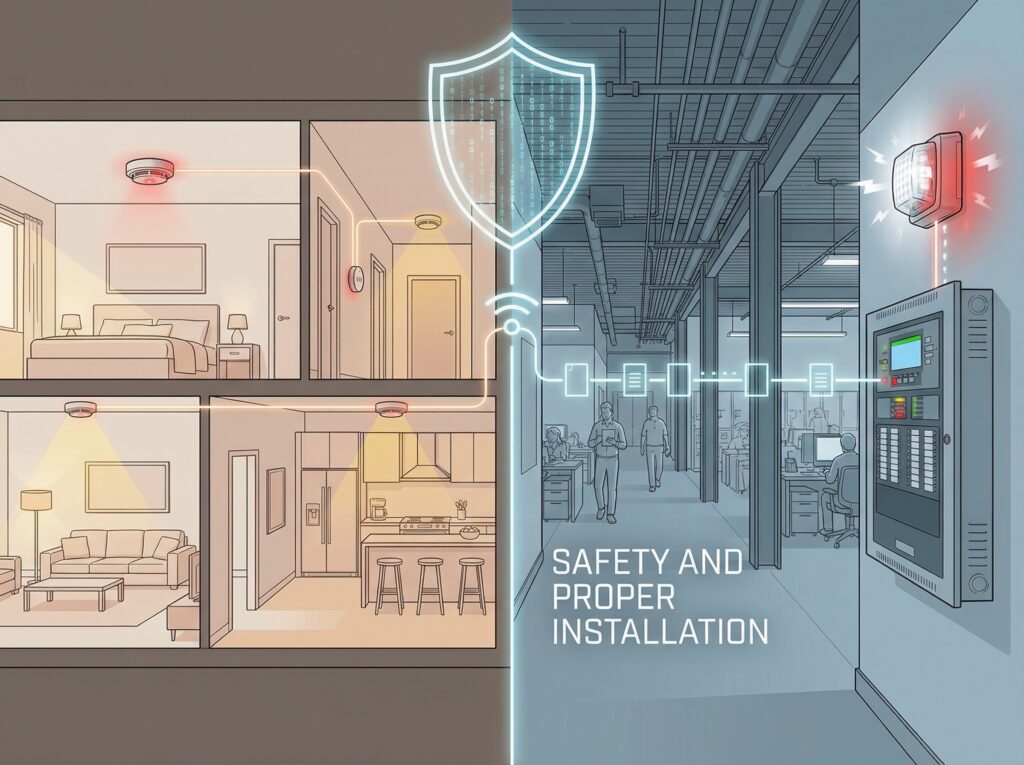
Fire alarm installation is a critical safety investment requiring careful planning, execution, and verification. For all properties, proper installation ensures early detection and prevents catastrophic loss. Systems comprise detection devices (like smoke and heat detectors), notification devices (like horn/strobes), and control panels with backup power. Homeowners must adhere to NFPA standards for placement and interconnection, while commercial properties require professional expertise and strict compliance with codes like NFPA 72 and IBC. Ongoing testing and maintenance are essential for reliable, long-term protection.
How Fire Alarm System Repair Prevented a Potential Shutdown

The fire marshal issued a 72-hour notice to cease operations at a precision manufacturing plant due to critical fire alarm deficiencies. The plant faced a $3+ million loss if shut down. The problem included dead batteries, non-functional notification devices, and a failed monitoring connection. An emergency repair crew worked 36 continuous hours to resolve all five critical violations, ensuring the system passed re-inspection and operations continued without interruption. This $20,000 emergency repair prevented a catastrophic $3.18 million loss.