What a $25 Extinguisher Error Cost a Manufacturing Plant
A manufacturing facility’s decision to defer fire extinguisher maintenance can cascade into devastating costs far beyond the price of routine service. When plants skip basic fire extinguisher maintenance—overlooking monthly inspections, delaying recharges, or using untrained personnel—they risk exponentially higher expenses from OSHA violations starting at $15,625, operational shutdowns costing thousands per hour, insurance complications, and catastrophic fire damage that proper maintenance could have prevented.
The real costs of neglected fire extinguisher maintenance:
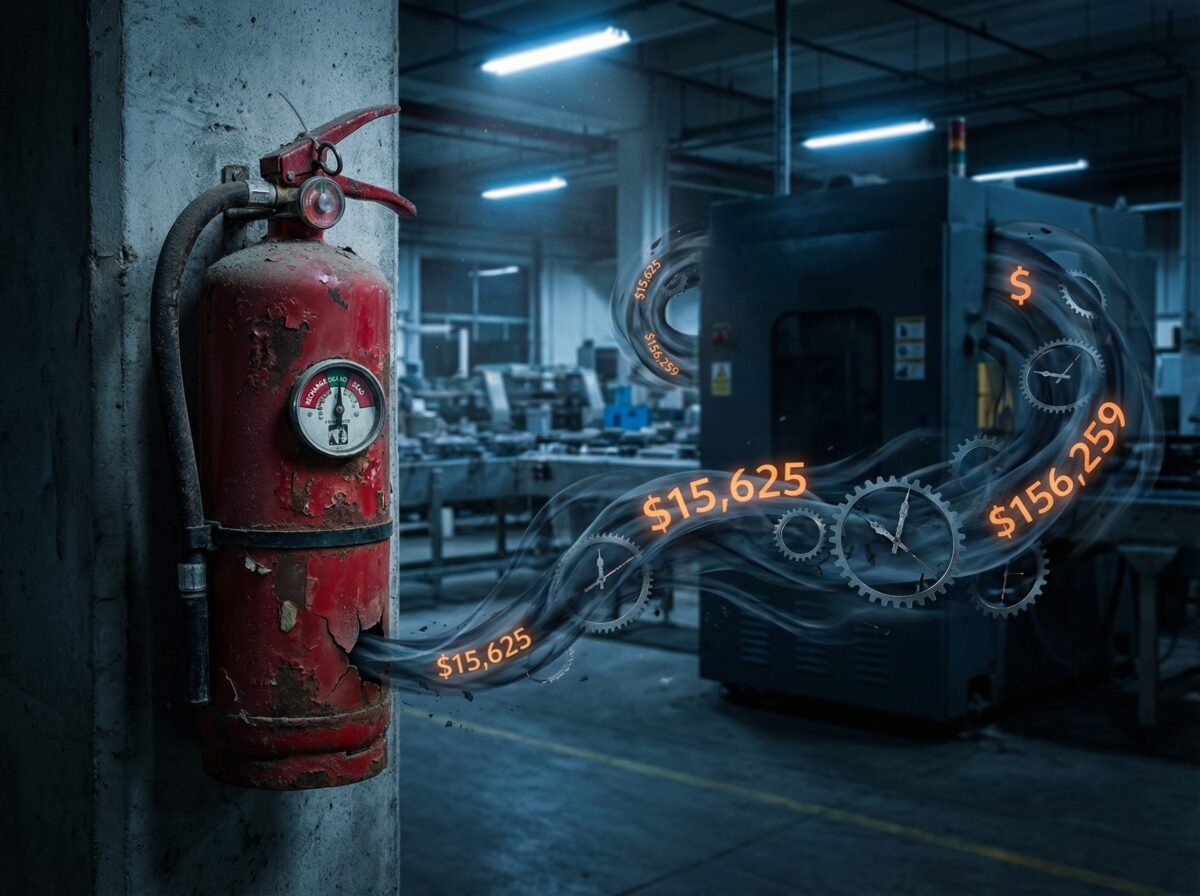
- OSHA penalties: Violations under regulation 1910.157 start at $15,625 per citation and reach $156,259 for willful or repeated offenses
- Failed inspections: Reinspection fees, correction costs, and operational delays during remediation
- Insurance impacts: Premium increases or coverage denials when fire extinguisher maintenance records show gaps
- Production downtime: Hours or days of halted operations during emergency corrections
- Legal liability: Exposure from injuries or property damage when required equipment fails due to inadequate maintenance
This analysis examines how minor fire extinguisher maintenance oversights compound into major financial and operational consequences—and how systematic programs through providers like 48Fire prevent these preventable costs.
—
The $25 Decision That Compounds
Fire extinguisher maintenance involves modest per-unit costs. Monthly visual inspections take minutes. Annual professional service by certified technicians costs significantly less than a single day of production downtime.
Yet when facilities treat fire extinguisher maintenance as optional or defer scheduled service, they create risk exposure that dwarfs the initial savings.
What the Numbers Actually Mean
Monthly inspection cost: Approximately $5-10 per extinguisher for professional visual inspection including documentation.
Annual maintenance cost: Typically $75-150 per extinguisher for complete professional service including internal examination, pressure verification, and certification.
Recharge cost: Usually $15-30 per extinguisher depending on type and agent.
Replacement cost: $50-400 per extinguisher depending on size, type, and rating.
Compare these fire extinguisher maintenance costs to potential consequences when service lapses.
—
Real Consequences of Deferred Maintenance
Manufacturing facilities that skip fire extinguisher maintenance or delay required service face documented, measurable consequences.
OSHA Violations and Fines
OSHA regulation 1910.157 requires employers to provide portable fire extinguishers, ensure they’re maintained in fully charged and operable condition, and conduct regular inspections.
Current OSHA penalty structure:
- Serious violation: $15,625 per violation
- Repeated violation: $156,259 per violation
- Willful violation: $156,259 per violation
- Failure to abate: $15,625 per day beyond correction date
A facility with 50 extinguishers missing fire extinguisher maintenance records could face multiple serious violations during an OSHA inspection. If violations are deemed willful—meaning the employer knew about requirements and consciously disregarded them—penalties multiply.
48Fire helps manufacturing clients maintain complete OSHA compliance through documented monthly inspections and annual fire extinguisher maintenance that satisfy regulatory requirements.
Fire Marshal Citations
Local fire marshals conduct periodic inspections at manufacturing facilities. Fire code violations related to fire extinguisher maintenance trigger citations requiring immediate correction.
Common fire marshal findings include:
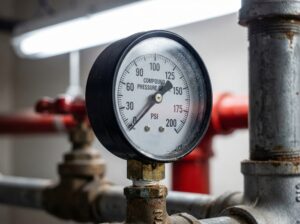
- Extinguishers with pressure gauges outside the operable range
- Missing or expired annual maintenance tags
- Broken tamper seals indicating use without subsequent recharge
- Incorrect extinguisher types for specific hazards present
- Travel distances exceeding NFPA 10 maximums
- Obstructed access to extinguisher locations
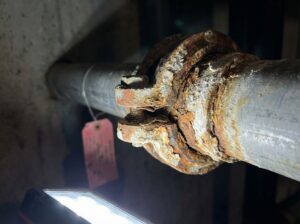
- Corrosion, damage, or other physical defects
Each citation requires reinspection after correction. Facilities typically pay reinspection fees and may face operational restrictions until compliance is verified.
Insurance Complications
Commercial property insurance policies include fire protection requirements. Insurers audit fire safety systems during underwriting and claims investigations.
Documentation gaps create problems:
When facilities cannot produce records of fire extinguisher maintenance—monthly inspections and annual service—insurers may:
- Increase premiums to reflect higher risk exposure
- Reduce coverage limits for fire-related losses
- Deny specific claims if maintenance failures contributed to damage
- Require third-party fire safety audits before renewal
48Fire provides the digital documentation insurers require to verify systematic fire extinguisher maintenance and NFPA 10 compliance.
Production Interruptions
Fire marshal citations can halt production until violations are corrected. Even brief shutdowns carry substantial costs.
Consider a manufacturing operation with $50,000 per hour production value. A four-hour shutdown to address fire extinguisher maintenance violations represents $200,000 in lost production—not including employee wages, contract penalties, or customer relationship impacts.
Emergency fire extinguisher maintenance during shutdowns typically costs premium rates compared to scheduled service.
—
The Hidden Costs of Maintenance Failures
Beyond direct fines and fees, inadequate fire extinguisher maintenance creates operational and legal exposure.
Liability Exposure
OSHA requires employers to provide fire extinguishers for employee use. When facilities fail to maintain extinguishers properly and employees cannot effectively respond to incipient fires, liability risk increases.
If inadequately maintained fire extinguishers contribute to injuries or property damage, facilities face:
- Workers’ compensation claims for employee injuries
- Property damage liability for fire spread that could have been contained
- Third-party liability claims from customers or visitors
- Potential citations for failure to provide safe working conditions
Systematic fire extinguisher maintenance through 48Fire documents that facilities met their duty to provide and maintain appropriate fire protection equipment.
Emergency Response Failures
Fire extinguishers are designed to suppress incipient stage fires—small fires immediately following ignition. NFPA research shows properly used portable extinguishers successfully control approximately 95% of fires they’re applied to during this early stage.
When extinguishers fail due to maintenance neglect, fires that could have been contained with $25 worth of prevention grow into major incidents requiring fire department response.
The costs multiply:
- Property damage from fire spread
- Business interruption during cleanup and restoration
- Equipment replacement and facility repairs
- Environmental remediation if hazardous materials are involved
- Investigation and documentation costs
- Increased insurance premiums following claims
Compliance Program Failures
Manufacturing facilities operating under quality management systems (ISO 9001), environmental management systems (ISO 14001), or safety management systems (ISO 45001) must demonstrate systematic approaches to fire safety.
Missing fire extinguisher maintenance records create nonconformities during certification audits. Facilities risk:
- Audit findings requiring corrective action
- Potential suspension of certifications
- Customer audit failures affecting contracts
- Increased scrutiny in subsequent audits
48Fire integrates fire extinguisher maintenance documentation with facility management systems to support certification requirements.
—
What Systematic Maintenance Actually Costs
Understanding the true cost of fire extinguisher maintenance helps facilities make informed decisions.
Monthly Visual Inspections
NFPA 10 requires visual inspections at minimum 30-day intervals. Professional monthly inspections by 48Fire include:
- Verification that extinguishers are in designated locations and accessible
- Pressure gauge checks confirming proper charge
- Inspection of seals and tamper indicators
- Physical condition assessment for damage or corrosion
- Digital documentation with technician signature and date
Typical cost: $5-10 per extinguisher per month for facilities with service contracts.
Annual cost for 50 extinguishers: $3,000-6,000 including all monthly inspections.
Annual Professional Maintenance
NFPA 10 requires annual fire extinguisher maintenance by certified technicians. 48Fire annual maintenance includes:
- Detailed examination of mechanical parts
- Verification of extinguishing agent condition
- Testing of expelling mechanisms
- Internal examination where applicable
- New tamper seal installation
- Dated service tag attachment
- Complete documentation with certification numbers
Typical cost: $75-150 per extinguisher annually.
Annual cost for 50 extinguishers: $3,750-7,500.
Six-Year and Twelve-Year Service
Stored pressure extinguishers require internal examination every six years. Most extinguisher types require hydrostatic testing every 12 years. 48Fire tracks these long-term fire extinguisher maintenance requirements and schedules service before deadlines.
Typical six-year maintenance cost: $100-200 per extinguisher.
Typical twelve-year hydrostatic test cost: $50-100 per extinguisher.
Total Annual Investment
A facility with 50 extinguishers investing in complete fire extinguisher maintenance through 48Fire typically spends:
- Monthly inspections: $3,000-6,000
- Annual maintenance: $3,750-7,500
- Long-term service (amortized): $500-1,000
Total: $7,250-14,500 annually
This investment prevents OSHA fines starting at $15,625 per violation, fire marshal citations, insurance complications, and the catastrophic costs of fire incidents that proper fire extinguisher maintenance could have prevented.
—
The Compliance Gap: Why Facilities Fall Short
Manufacturing facilities understand fire extinguisher maintenance requirements exist. Why do compliance gaps persist?
Relying on Untrained Staff
Some facilities assign fire extinguisher maintenance tasks to maintenance staff without proper training. NFPA 10 specifies that annual maintenance must be performed by certified technicians with appropriate tools and manufacturer service manuals.
Monthly visual inspections can be performed by trained employees, but facilities must ensure staff understands what to check and how to document findings properly.
48Fire provides staff training alongside professional fire extinguisher maintenance, creating layered compliance.
Inconsistent Scheduling
Monthly inspections at 30-day intervals require consistent scheduling. Facilities using informal reminder systems miss inspection cycles, creating documentation gaps that inspectors identify immediately.
48Fire manages fire extinguisher maintenance scheduling proactively, ensuring no inspection windows are missed.
Inadequate Documentation
Paper-based inspection logs get lost, damaged, or incomplete. During fire marshal inspections or OSHA audits, facilities cannot produce the fire extinguisher maintenance history inspectors require.
48Fire provides digital documentation with cloud backup, creating permanent compliance records accessible during inspections.
Reactive Rather Than Preventive Approach
Some facilities only address fire extinguisher maintenance when inspections are imminent. This reactive approach misses the fundamental purpose—ensuring extinguishers remain operational for actual fire response.
Systematic fire extinguisher maintenance programs through 48Fire shift facilities from reactive compliance to genuine fire protection readiness.
—
Building a Compliant Maintenance Program
Manufacturing facilities can eliminate the risks of deferred fire extinguisher maintenance through systematic programs.
Step 1: Complete Facility Assessment
48Fire starts with comprehensive facility audits documenting:
- Complete inventory of all portable fire extinguishers
- Current condition and compliance status of each unit
- Placement verification against NFPA 10 travel distance requirements
- Hazard analysis confirming appropriate extinguisher types
- Documentation review identifying fire extinguisher maintenance recordkeeping gaps
This assessment establishes baseline compliance and identifies immediate corrections needed.
Step 2: Immediate Corrections
48Fire addresses critical fire extinguisher maintenance issues immediately:
- Replace extinguishers that failed hydrostatic testing or show corrosion
- Recharge units with pressure loss
- Install proper signage and mounting hardware
- Correct placement violations
- Establish proper extinguisher types for specific hazards
Facilities achieve minimum compliance quickly, eliminating the most serious violation risks.
Step 3: Establish Routine Service Schedule
48Fire implements monthly fire extinguisher maintenance inspection programs with fixed schedules. Technicians arrive on predetermined dates, perform visual inspections, and provide same-day digital reports.
Annual maintenance schedules are established months in advance, ensuring every extinguisher receives required service within proper timeframes.
Six-year and twelve-year service milestones are tracked automatically, with advance notifications before deadlines.
Step 4: Integrate Documentation Systems
48Fire provides digital fire extinguisher maintenance documentation that integrates with facility management systems. Compliance records are accessible instantly during inspections or audits.
Documentation includes:
- Complete facility inventory with locations
- Monthly inspection logs with dates and technician signatures
- Annual maintenance records with certification numbers
- Photographs of installations and proper placement
- Service history for each extinguisher
Step 5: Staff Training
48Fire trains facility staff on visual inspection protocols, proper extinguisher use (PASS technique), and when to report issues requiring professional fire extinguisher maintenance.
Trained employees provide interim monitoring between professional inspections, catching problems early.
—
The ROI of Professional Fire Extinguisher Maintenance
Comparing systematic fire extinguisher maintenance costs against potential violation penalties demonstrates clear return on investment.
Cost-Benefit Analysis
Annual investment in complete fire extinguisher maintenance for 50-unit facility:
$7,250-14,500
Single serious OSHA violation penalty:
$15,625
Breakeven: Preventing one serious OSHA violation pays for complete annual fire extinguisher maintenance with margin remaining.
Additional value:
- Eliminated fire marshal reinspection fees
- Avoided insurance premium increases
- Prevented production downtime during emergency corrections
- Reduced liability exposure from equipment failures
- Maintained certification compliance for quality management systems
- Peace of mind that fire protection equipment functions as designed
Real Protection, Not Just Compliance
The fundamental purpose of fire extinguisher maintenance extends beyond avoiding penalties. Properly maintained extinguishers provide the first line of defense against incipient fires.
Manufacturing facilities contain significant fire hazards—electrical equipment, flammable materials, combustible dust, hot work operations. When small fires start, immediately available and functional extinguishers prevent escalation.
The cost of systematic fire extinguisher maintenance through 48Fire represents genuine fire protection investment, not merely compliance expense.
—
Common Fire Extinguisher Maintenance Mistakes
Manufacturing facilities attempting to manage fire extinguisher maintenance internally often make preventable errors.
Mistake 1: Delaying Recharge After Use
Any extinguisher use—even partial discharge—requires immediate professional fire extinguisher maintenance and recharge. Extinguishers cannot be “topped off.” They must be completely recharged following manufacturer specifications.
Facilities that delay recharging leave non-functional extinguishers in place, creating false security and serious compliance violations.
Mistake 2: Ignoring Pressure Gauge Readings
Pressure gauges outside the operable (green) zone indicate the extinguisher requires fire extinguisher maintenance. Some facilities note low pressure during inspections but defer recharging until later.
48Fire addresses pressure issues immediately during monthly inspections, ensuring every extinguisher remains operational.
Mistake 3: Missing Six-Year Requirements
Stored pressure dry chemical extinguishers requiring twelve-year hydrostatic testing must be emptied and subjected to fire extinguisher maintenance procedures every six years. Many facilities overlook this requirement.
48Fire tracks six-year cycles automatically and schedules required fire extinguisher maintenance before deadlines.
Mistake 4: Using Incorrect Extinguisher Types
Manufacturing facilities often contain multiple fire hazards requiring different extinguisher types. Using Class ABC extinguishers everywhere might not address specific hazards like combustible metal operations (Class D) or commercial cooking equipment (Class K).
48Fire conducts hazard analysis during fire extinguisher maintenance assessments and ensures appropriate extinguisher types are properly placed.
Mistake 5: Inadequate Documentation Detail
Monthly inspection logs noting “OK” without specific details fail inspection scrutiny. Proper fire extinguisher maintenance documentation must verify specific checkpoints—pressure gauge reading, seal integrity, physical condition, accessibility.
48Fire provides standardized documentation that satisfies inspector requirements.
—
Fire Extinguisher Maintenance for Specific Manufacturing Hazards
Different manufacturing operations present unique fire hazards requiring specialized fire extinguisher maintenance considerations.
Metalworking and Combustible Metals
Operations involving magnesium, titanium, zirconium, or sodium require Class D extinguishers specifically designed for combustible metal fires. NFPA 10 requires these extinguishers within 75 feet of combustible metal working areas where metal powders, flakes, or shavings are generated at least once every two weeks.
48Fire ensures manufacturing facilities with combustible metal operations have appropriate Class D extinguishers with proper fire extinguisher maintenance programs.
Electrical Equipment and Control Rooms
Areas with substantial electrical equipment require extinguishers rated for Class C (electrical) fires. CO2 extinguishers work well for electrical fires and leave no residue, making them ideal for sensitive electronics.
48Fire places appropriate extinguishers near electrical panels, control rooms, and server equipment with scheduled fire extinguisher maintenance.
Flammable Liquid Storage and Operations
Manufacturing facilities using flammable liquids require Class B extinguishers positioned within 50 feet of hazard areas. Appropriate agents include CO2, dry chemical, or foam depending on specific operations.
48Fire conducts flammable liquid hazard assessments and ensures proper extinguisher coverage with systematic fire extinguisher maintenance.
Spray Booth and Coating Operations
Spray painting and coating operations present combined flammable liquid and electrical hazards. Proper extinguisher selection, placement, and fire extinguisher maintenance is critical.
48Fire works with facilities to ensure spray booth areas have appropriate fire protection coverage meeting NFPA requirements with documented maintenance.
—
Beyond Extinguishers: Integrated Fire Protection
Facilities that establish systematic fire extinguisher maintenance through 48Fire often expand to comprehensive fire protection programs.
Fire Alarm System Maintenance
Manufacturing facilities require operational fire detection and alarm systems. 48Fire provides scheduled testing and maintenance ensuring all devices function properly and meet NFPA 72 requirements.
Fire Sprinkler System Service
Automatic sprinkler systems protect manufacturing facilities from major fire losses. 48Fire conducts inspections, testing, and maintenance following NFPA 25 schedules.
Special Hazard Suppression Systems
Some manufacturing operations require specialized suppression systems—clean agent systems for control rooms, foam systems for flammable liquids, dry chemical systems for spray booths.
48Fire maintains these special hazard systems alongside portable fire extinguisher maintenance, creating integrated fire protection.
Emergency Lighting and Exit Signs
Code-compliant emergency lighting ensures safe egress during fires. 48Fire tests emergency lighting systems monthly and annually, verifying proper function.
—
Maintaining Long-Term Compliance
Facilities that achieve fire extinguisher maintenance compliance through 48Fire maintain it through ongoing partnership.
Monthly inspections never waver from schedule. Any issues discovered trigger immediate fire extinguisher maintenance—no deferrals, no delayed corrections.
Annual fire extinguisher maintenance happens proactively, with appointments scheduled months ahead. Fresh tags, complete documentation, and certified service ensure continuous compliance.
Long-term fire extinguisher maintenance requirements—six-year internal examinations, twelve-year hydrostatic testing—are tracked automatically. 48Fire notifies facilities well before deadlines, eliminating last-minute scrambles.
Staff training continues with annual refreshers and onboarding for new employees. This maintains the safety culture supporting fire extinguisher maintenance compliance.
The result is facilities that view fire extinguisher maintenance not as periodic crisis management but as routine operational excellence.
—
The Real Cost of the $25 Error
The “$25 error” isn’t actually about money—it’s about mindset.
When facilities view fire extinguisher maintenance as discretionary expense rather than essential protection, they make decisions that compound into serious consequences.
Skipping monthly inspections to save $250 creates exposure to $15,625 OSHA violations. Deferring $100 annual fire extinguisher maintenance risks production shutdowns costing thousands per hour. Ignoring $50 recharging needs leaves facilities with non-functional fire protection during emergencies.
The modest investment in systematic fire extinguisher maintenance through 48Fire prevents these cascading consequences while ensuring genuine fire protection readiness.
—
Start Preventing Preventable Costs
Manufacturing facilities don’t need to learn compliance lessons through expensive violations. 48Fire provides certified fire extinguisher maintenance that addresses NFPA 10 and OSHA requirements systematically.
Professional monthly inspections, annual fire extinguisher maintenance by certified technicians, proper documentation, and long-term service tracking eliminate compliance gaps before they become costly problems.
48Fire serves manufacturing facilities, industrial operations, warehouses, and commercial properties across the United States. Local technicians understand regional fire code requirements and industry-specific hazards.
Talk to an Expert! Contact 48Fire at [/contact-us](/contact-us) to schedule a facility assessment. Our certified technicians will evaluate your current fire extinguisher maintenance program, identify compliance gaps, and create a customized service plan that protects your facility from preventable costs while ensuring genuine fire safety.
—
Frequently Asked Questions
What OSHA penalties apply to fire extinguisher maintenance violations?
OSHA violation penalties under regulation 1910.157 range from $15,625 for serious violations to $156,259 for willful or repeated violations. Facilities can face multiple citations if fire extinguisher maintenance lapses affect numerous units or persist across multiple inspection cycles.
How often must manufacturing facilities perform fire extinguisher maintenance?
NFPA 10 requires monthly visual inspections at minimum 30-day intervals and annual professional fire extinguisher maintenance by certified technicians. Additional requirements include six-year internal examinations for certain types and hydrostatic testing every 5-12 years depending on extinguisher type.
Can facility maintenance staff perform fire extinguisher maintenance?
Trained facility staff can perform monthly visual inspections after proper training. However, annual fire extinguisher maintenance, recharging, internal examinations, and hydrostatic testing must be performed by certified technicians with appropriate equipment and training. 48Fire provides both professional service and staff training.
What documentation do OSHA inspectors require for fire extinguisher maintenance?
OSHA inspectors verify that facilities maintain records of monthly inspections and annual fire extinguisher maintenance. Documentation must include inspection dates, findings, corrective actions, and for annual maintenance, technician certification information. 48Fire provides complete digital documentation satisfying OSHA requirements.
What types of fire extinguishers do manufacturing facilities need?
Requirements vary by specific hazards present. Most facilities need Class ABC extinguishers for general areas. Operations with combustible metals require Class D extinguishers. Areas with substantial electrical equipment benefit from CO2 extinguishers. Flammable liquid operations require Class B coverage. 48Fire conducts hazard assessments during fire extinguisher maintenance to determine appropriate types and placement.
How much does fire extinguisher maintenance cost for manufacturing facilities?
Costs depend on facility size, number of extinguishers, and service frequency. Complete fire extinguisher maintenance programs including monthly inspections and annual service typically cost $7,000-15,000 annually for facilities with 50 extinguishers. This investment prevents OSHA fines starting at $15,625 per violation plus operational consequences. Contact 48Fire at [/contact-us](/contact-us) for facility-specific pricing.
What happens if a fire extinguisher fails during an emergency due to poor maintenance?
Extinguisher failures during fires create liability exposure for facilities that failed to perform proper fire extinguisher maintenance. Fires that could have been contained at incipient stage may spread, causing property damage, injuries, and business interruption. Proper fire extinguisher maintenance through 48Fire ensures equipment functions as designed during emergencies.
How long do fire extinguishers last with proper maintenance?
Fire extinguishers typically last 5-15 years with proper fire extinguisher maintenance. However, harsh manufacturing environments—dust, moisture, corrosion, vibration—can shorten service life. Regular fire extinguisher maintenance inspections identify environmental damage requiring earlier replacement. 48Fire monitors extinguisher condition and recommends replacement when physical condition indicates reduced reliability.