The Inspection Process That Strengthened Fire Protection Compliance
When Inspection Becomes Transformation
A commercial facility scheduling a fire protection audit faces a choice: view the inspection as a compliance checkpoint or view it as an opportunity for systematic improvement. One facility chose the second approach.
The result wasn’t just passing an inspection. The result was a comprehensive understanding of fire protection systems, identification of preventive maintenance gaps, documentation of compliance activities, and implementation of systematic processes that will keep the facility compliant for years to come.
This is what happens when an inspection process goes beyond checking boxes and becomes a diagnostic tool for fire prevention and strengthened compliance.
—
The Inspection Process Framework
Fire protection inspections follow a systematic methodology. Understanding this process—and using it strategically—transforms compliance from reactive to predictive.
Stage 1: Pre-Inspection Assessment
Before inspectors arrive, the best-managed facilities conduct their own assessment.
What gets examined:
- Physical facility layout and fire safety system locations
- Current status of fire suppression systems
- Emergency lighting presence and condition
- Exit route configuration and signage
- Fire alarm system setup
- Fire extinguisher placement and maintenance
- Evacuation procedures and drill records
- Documentation of maintenance and testing
Why this matters:
Facilities that understand what inspectors will look for can identify gaps before inspection day. One facility discovered that emergency lighting in stairwells wasn’t providing adequate illumination. Another found that backup battery ages exceeded manufacturer specifications. A third realized evacuation assembly points weren’t clearly marked.
These weren’t violations discovered during inspection. They were identified through understanding the inspection process itself.
Stage 2: Diagnostic Phase (During Inspection)
When inspectors arrive, the inspection becomes a detailed diagnostic examination.
The inspector’s methodology:
- Systematic walkthrough of facility areas
- Testing of fire safety systems (alarms, sprinklers, emergency lighting)
- Verification of maintenance records and documentation
- Assessment of exit routes and evacuation preparedness
- Evaluation of fire protection equipment condition and placement
- Review of training records and evacuation drill documentation
- Identification of any code violations or compliance gaps
The inspection as information gathering:
Rather than viewing violations discovered during inspection as failures, the best facilities view them as insights into areas requiring preventive attention. An inspector finding emergency lighting illumination below code minimums isn’t a problem—it’s actionable information enabling the facility to correct the deficiency and prevent future failures.
One facility experienced this shift in perspective. When inspectors tested emergency lighting and documented that illumination levels were below NFPA 101 minimum (1 foot-candle), the facility didn’t react defensively. It treated the finding as diagnostic information: “Our emergency lighting system is degraded and needs attention.”
Stage 3: Implementation Phase
Inspection findings become the roadmap for preventive maintenance and compliance strengthening.
Converting findings to action:
- Documented deficiencies become priority corrective actions
- Testing results inform maintenance schedules
- Documentation gaps prompt recordkeeping system improvements
- Equipment condition findings drive replacement timelines
One facility identified that emergency lighting backup batteries were beyond manufacturer lifespan. Rather than waiting for batteries to fail, the facility:
- Replaced all backup batteries immediately
- Established a 3-year replacement cycle
- Created preventive maintenance documentation
- Scheduled annual battery load testing
This converted an inspection finding into a preventive maintenance system.
Stage 4: Compliance Strengthening Phase
The final stage of the inspection process is establishing systems to maintain compliance going forward.
What gets established:
- Documented maintenance schedules with verification
- Regular testing protocols for all fire safety systems
- Training programs ensuring employee awareness
- Documentation systems tracking all maintenance activities
- Emergency lighting testing and replacement schedules
- Exit route inspections and signage verification
- Fire suppression system testing and servicing coordination
—
Diagnostic Approach: Identifying Prevention Opportunities
The inspection process functions as a diagnostic tool when facilities understand how to interpret findings.
Electrical and Emergency Lighting Systems
Emergency lighting diagnostics during inspection reveal:
Illumination level testing:
- Measurements showing if 1 foot-candle minimum is met
- Identification of areas with inadequate illumination
- Evidence-based information about lighting system effectiveness
Battery condition assessment:
- Age of backup batteries (often 6+ years in under-maintained facilities)
- Capacity testing showing degraded battery performance
- Load testing revealing actual vs. rated 90-minute duration
Diagnostic interpretation:
An inspector documenting that “emergency lighting batteries tested at 65% capacity” is providing diagnostic information: the batteries are aging and require replacement. A facility interpreting this finding implements battery replacement and establishes preventive maintenance—preventing future failures.
Fire Suppression System Diagnostics
Inspection diagnostics identify suppression system status:
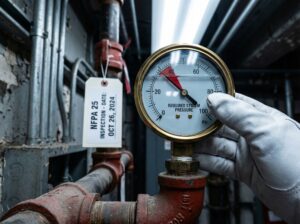
Pressure gauge readings:
- System pressure verification
- Identification of pressure anomalies requiring investigation
- Documentation of test results over time
Testing procedures:
- Sprinkler head responsiveness verification
- Valve operation confirmation
- Backflow prevention device testing
Diagnostic value:
Rather than discovering suppression system failures during actual fires, inspection diagnostics identify maintenance needs while systems are operating normally. One facility’s inspection revealed pressure readings outside normal parameters—not a violation yet, but diagnostic information prompting investigation. The investigation identified a partially blocked backflow preventer requiring cleaning. The facility corrected the issue during a maintenance window rather than experiencing a suppression system failure.
Documentation Systems Diagnostics
Inspection documentation review provides diagnostics about facility management systems:
What documentation review reveals:
- Quality and completeness of maintenance records
- Whether testing is being performed on schedule
- Whether staff training is documented and current
- Whether evacuation drills are being conducted regularly
Diagnostic value:
A facility with incomplete maintenance records is receiving diagnostic information: “Your management system isn’t capturing critical information.” This prompts implementation of systematic documentation. A facility without evacuation drill records learns: “Your preparedness isn’t being verified.” This prompts conducting and documenting drills.
—
Case Study: How Inspection Process Strengthened Compliance
One 75,000 square foot commercial facility applied diagnostic inspection methodology to strengthen fire prevention compliance.
Pre-Inspection Preparation
Before the scheduled inspection, the facility conducted pre-assessment:
Findings:
- Emergency lighting illumination in two stairwells measured below code minimum
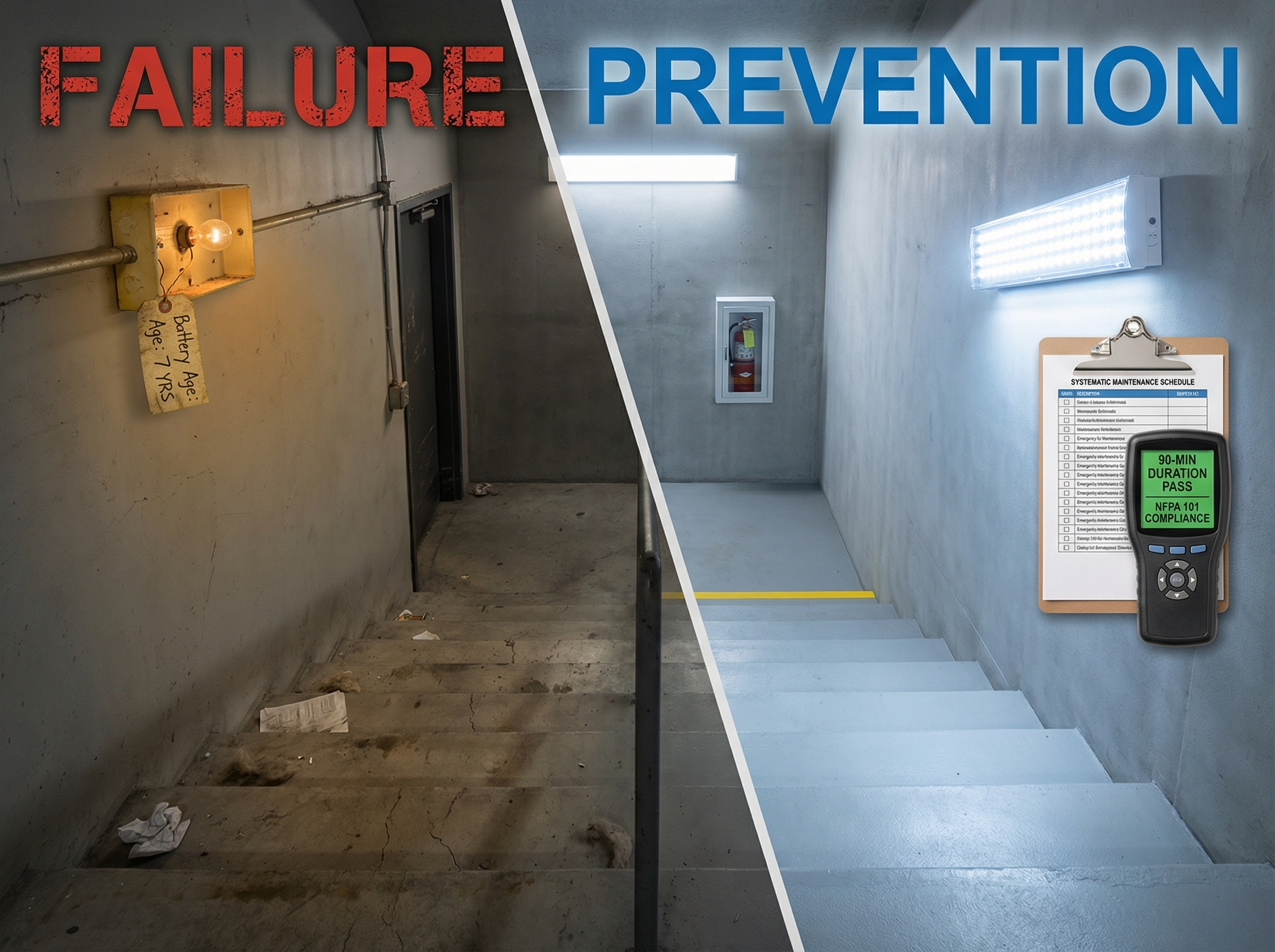
- Backup batteries in emergency lighting systems were 7 years old (beyond manufacturer specifications)
- No documentation of battery load testing or 90-minute duration verification
- Fire extinguisher placement had clearance issues in one storage area
- Fire door signage was inconsistent
- No evacuation drills had been conducted in 14 months
- Fire suppression system testing records were incomplete
Rather than panic-fixing these items days before inspection, the facility treated them as diagnostic information about what needed preventive attention.
Systematic Correction Implementation
Over three months, the facility implemented preventive actions:
Emergency lighting:
- Measured illumination in all areas (found 1.2 foot-candles in stairwells, above minimum)
- Replaced all backup batteries with new units
- Conducted load testing verifying 90-minute duration
- Established 3-year battery replacement schedule
- Created maintenance documentation system
Fire suppression:
- Reviewed all pressure gauge readings
- Compared readings to normal operating ranges
- Identified and corrected anomaly (backflow preventer blockage)
- Verified pressure readings stable and normal
Documentation:
- Implemented fire extinguisher inspection and maintenance documentation
- Created fire alarm testing verification system
- Established evacuation drill schedule with documented results
- Organized all maintenance records by system
Personnel:
- Conducted evacuation drill and documented results
- Trained employees on emergency procedures
- Ensured fire wardens understood responsibilities
Inspection Results
When inspector arrived, facility was diagnostically prepared—not just compliant, but systemically strengthened.
Inspector findings:
- All systems operating normally
- Documentation complete and well-organized
- Maintenance schedules being followed
- Emergency lighting verified compliant
- Fire suppression system functioning correctly
- Evacuation procedures understood by staff
- Zero violations
More importantly:
The facility had implemented preventive systems that would keep it compliant beyond the inspection date. Emergency lighting batteries would be replaced on schedule. Maintenance would be documented. Evacuation drills would continue. Fire prevention would be systematic, not reactive.
—
Emergency Lighting: Diagnostic Tool for Fire Prevention
Emergency lighting diagnostics reveal facility-specific prevention opportunities.
What Inspection Reveals
Illumination diagnostics:
- Actual illumination levels (measured in foot-candles)
- Comparison to code minimum (1 foot-candle per NFPA 101)
- Identification of areas with inadequate lighting
- Documentation of areas meeting code
Battery diagnostics:
- Backup battery age
- Battery capacity testing results
- Load testing showing actual vs. rated duration
- Evidence of whether 90-minute duration is maintained
System diagnostics:
- Whether backup system is functioning
- Whether regular maintenance is documented
- Whether replacement schedules are established
- Whether testing is being conducted regularly
Converting Diagnostics to Prevention
When inspection diagnostics reveal “emergency lighting batteries at 6 years old,” the preventive response is:
- Immediate replacement with new batteries
- Documented replacement with dates and technician credentials
- Established 3-year replacement cycle
- Added to facility maintenance schedule
- Future testing documented
This prevents emergency lighting failures before they occur.
—
48Fire Protection’s Role in Diagnostic Inspection Processes
48Fire Protection helps facilities understand and use inspection processes as diagnostic tools for fire prevention.
Pre-Inspection:
- Conduct facility assessment identifying potential findings
- Interpret what inspectors will be looking for
- Prepare facility for diagnostic information gathering
During Inspection:
- Support facility understanding of findings
- Explain diagnostic meaning of test results
- Connect findings to preventive actions needed
Post-Inspection:
- Interpret findings as preventive opportunities
- Develop corrective action plan
- Establish preventive maintenance systems
- Schedule follow-up to verify implementation
—
Understanding Inspection Findings as Diagnostic Information
Every inspection finding provides diagnostic information.
Finding: “Emergency lighting illumination 0.8 foot-candles (code requires 1.0)”
Diagnostic meaning: Lighting system is degraded and below safety standards
Preventive action: Replace fixtures or upgrade system, establish testing schedule
Finding: “Fire extinguisher pressure gauge reading outside normal range”
Diagnostic meaning: Extinguisher may be degraded or experiencing internal problems
Preventive action: Service extinguisher, verify charging, replace if necessary
Finding: “No evacuation drill records in past 18 months”
Diagnostic meaning: Preparedness isn’t being verified and employee knowledge may be degraded
Preventive action: Conduct drill, document results, establish annual schedule
Finding: “Emergency lighting batteries 6+ years old”
Diagnostic meaning: Battery capacity is likely degraded, 90-minute duration may not be maintained
Preventive action: Replace batteries, establish 3-year replacement cycle, document testing
—
Building Systematic Fire Prevention
The best inspection outcomes don’t come from fixing problems found during inspection. They come from understanding the inspection process as a diagnostic framework for building systematic fire prevention.
This facility transformed inspection from compliance event to prevention tool. Emergency lighting went from untested equipment to verified system with documented maintenance. Fire suppression changed from system with occasional checks to monitored system with regular testing. Documentation shifted from absent to comprehensive.
The inspection didn’t just reveal compliance status. It revealed what prevention systems the facility needed to establish.
—
Moving Forward: Inspection as Prevention Framework
If your facility approaches fire protection inspections as stress events to survive rather than diagnostic opportunities to learn from, your prevention systems are likely incomplete.
Strategic approach to inspection processes transforms them into frameworks for systematic fire prevention—identifying gaps, establishing corrective actions, and building systems that maintain compliance year-round.
[Talk to an Expert!] at 48Fire Protection about using inspection processes as diagnostic frameworks for fire prevention. We’ll help you understand what inspectors are evaluating, interpret findings as diagnostic information, and establish preventive systems that keep your facility compliant continuously. Your inspection doesn’t have to be a one-time event—it can be the foundation of ongoing fire prevention and compliance.