The #1 Fire Alarm Mistake Most Property Managers Make
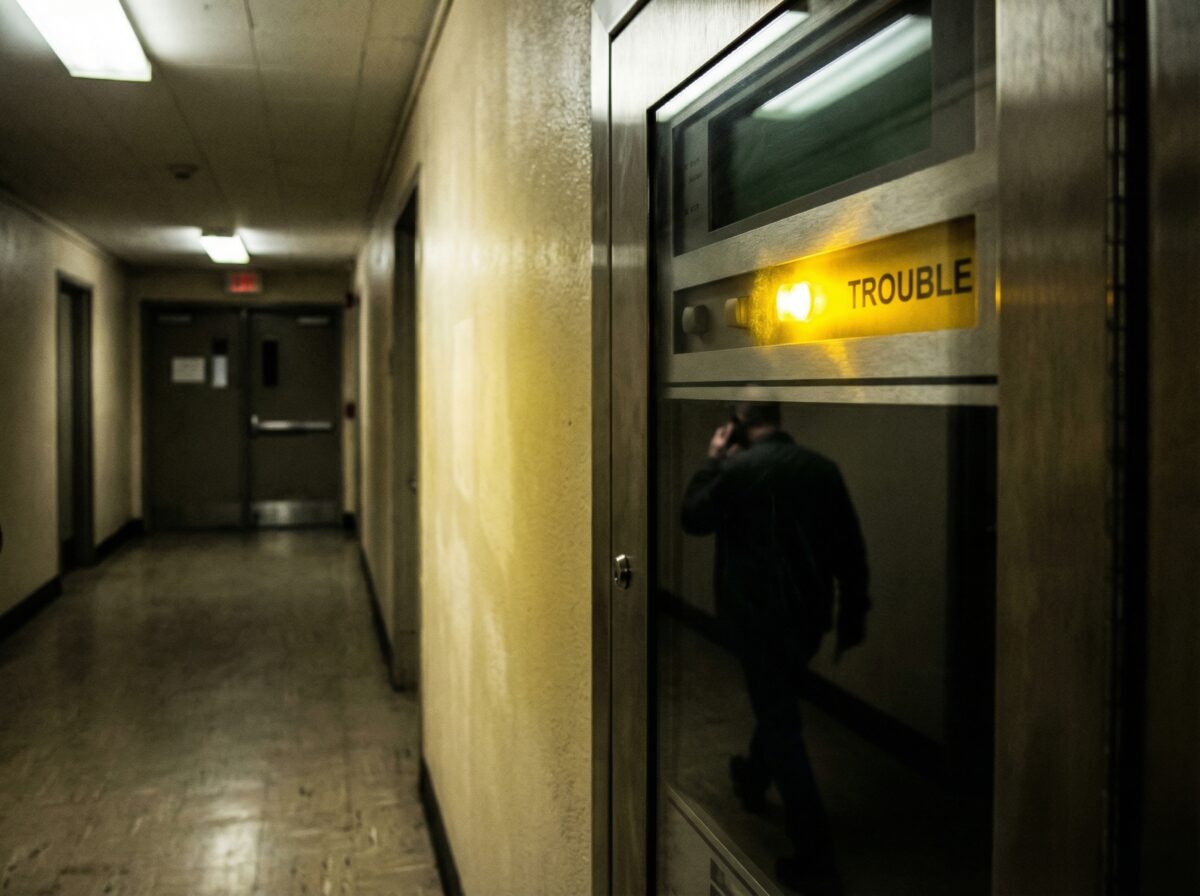
Yellow light glowing on the fire alarm panel. “Trouble” indicator lit up. Been there for three days—maybe a week? Hard to remember exactly when it started.
Building operations continue normally. Tenants don’t notice. Fire alarm still works—tested last month. Whatever’s causing the trouble can probably wait until next scheduled maintenance visit.
This thought process—treating fire alarm troubles as non-urgent—represents the single most expensive mistake property managers make regarding fire protection systems.
Not skipping annual inspections. Not failing to document testing. Not neglecting detector cleaning. Those mistakes cost money during fire marshal visits.
Ignoring trouble conditions costs money every day they remain unresolved, creates liability during fires, and systematically undermines the reliability of fire protection systems protecting building occupants.
What Fire Alarm Trouble Signals Actually Mean
Fire alarm control panels monitor system integrity continuously. When panel detects problems with equipment, wiring, power supply, or communication, it activates trouble indicators alerting building management that something needs attention.
Trouble signal categories:
Device troubles:
- Detector not communicating with panel
- Pull station showing wiring fault
- Notification device circuit supervision fault
- Individual addressable device reporting malfunction
System troubles:
- Ground fault detected on signaling circuits
- Panel battery voltage low or failed
- AC power failure or interruption
- Communication failure to monitoring station
Environmental troubles:
- Detector sensitivity outside acceptable range
- Temperature conditions affecting equipment
- Excessive contamination reported by intelligent devices
Supervisory troubles:
- Fire sprinkler control valve closed
- Fire pump not maintaining pressure
- Fire suppression system tank level low
Each trouble type indicates specific problem requiring investigation and correction. Trouble signals don’t mean fire alarm system completely non-functional, but signal that some aspect of system compromised.
NFPA 72 Section 10.15.1 addresses impaired fire alarm systems: “When a required fire alarm system is out of service for more than 4 hours in a 24-hour period, the authority having jurisdiction shall be notified, and the building shall be evacuated or an approved fire watch shall be provided.”
While trouble conditions don’t automatically trigger this requirement, prolonged troubles can escalate to system impairments requiring immediate action.
Why Property Managers Deprioritize Troubles
Understanding why troubles get ignored helps address the root problem.
Reason 1: Alarm still sounds during tests
Property manager’s perspective: “We activated a pull station last week during monthly test. Horns sounded throughout building. System obviously works. This trouble light probably isn’t serious.”
Flaw in reasoning: Fire alarm systems contain hundreds of components. One detector failing doesn’t prevent notification devices from sounding when other devices activate. But that one failed detector leaves area unprotected.
Building with 150 smoke detectors loses one detector to communication failure. Building still has 149 functional detectors. Testing by activating any of those 149 devices produces normal alarm response. Failed detector’s coverage gap remains hidden unless specifically tested.
Reason 2: No visible consequences
Trouble condition exists for days or weeks. No fire occurs. No fire marshal inspection happens. No insurance auditor visits. No observable negative outcome results from ignoring trouble.
This creates false impression that troubles don’t matter. “We’ve had trouble lights before. Never caused real problems. This one can wait too.”
Problem: Consequences of ignored troubles only become apparent during fires or inspections. By then, financial and legal implications already established.
Reason 3: Cost avoidance
Service calls cost $200-500 depending on contractor rates and required parts. Property managers managing tight budgets postpone service calls until multiple troubles accumulate or scheduled maintenance visit approaches.
“We’ll have them fix it during quarterly maintenance next month. No need to pay for separate service call.”
Mathematics seems sound: Save $400 service call by waiting 4 weeks.
Reality: Many jurisdictions consider active trouble conditions during fire marshal inspections as violations, potentially incurring $500-2,500 fines. Insurance claims during periods of documented system troubles face complications costing thousands to tens of thousands of dollars.
Reason 4: Lack of urgency from contractors
Some fire alarm contractors reinforce deprioritization: “It’s just a trouble. Not an emergency. We can look at it next week when we’re in your area.”
This response signals troubles aren’t serious. Property managers hearing this from technical experts naturally conclude waiting is acceptable.
Professional fire protection companies like 48fire treat troubles as urgent service needs requiring investigation within 24-48 hours maximum. Not because every trouble is emergency, but because trouble conditions indicate system reliability compromised.
Reason 5: Complexity and technical language
Panel displays: “Zone 3 Device 142 Comm Fail” or “SLC Loop B Ground Fault”
Property managers without fire alarm technical knowledge can’t assess severity. Is “Comm Fail” minor glitch or major problem? Does “Ground Fault” mean building at risk?
Unable to evaluate urgency, property managers default to treating all troubles as low priority rather than investigating each occurrence.
The Actual Costs of Ignored Troubles
Trouble conditions aren’t free. They cost money in multiple ways even when no visible consequences occur immediately.
Code compliance violations
Fire marshals conducting inspections check fire alarm panel status. Active trouble conditions at time of inspection typically result in citations.
NFPA 72 Section 10.15 requires maintaining systems in operable condition. Trouble conditions indicating device failures, wiring problems, or system malfunctions constitute code violations.
Typical fines for trouble-related violations:
- Active trouble condition during inspection: $500-1,500
- Multiple unresolved troubles: $1,000-3,000
- Chronic pattern of ignored troubles: $2,000-5,000+
Fire marshal documentation shows building had active trouble for 23 days at time of inspection. Fine reflects not just current trouble but pattern of neglect.
Insurance policy complications
Commercial property insurance policies contain “protective safeguards” language requiring fire protection systems maintained in working order.
Active trouble conditions during fire events provide insurance companies basis for claim reductions or denials. Even if specific trouble didn’t contribute to fire damage, documented system impairment weakens building owner’s position during claim negotiations.
Industry data shows insurance adjusters routinely use fire marshal reports documenting system troubles to negotiate 10-30% claim reductions on fire damage settlements.
Building with $100,000 fire damage claim loses $10,000-30,000 due to documented trouble condition existing at time of fire. That single ignored trouble signal cost more than five years of prompt service call responses.
Actual system failures during fires
Trouble conditions indicate real equipment problems. Ignored long enough, troubled devices fail completely during emergencies.
Detector showing “Comm Fail” for two weeks completely non-functional if fire occurs in its coverage area. That area unprotected despite building paying for monitored fire alarm system.
Pull station showing trouble due to wiring fault may not transmit alarm signal when activated during emergency. Occupant pulls station thinking they’ve alerted building and fire department. Station fails to activate alarm due to existing wiring problem. Response delayed while occupant searches for working pull station or someone notices smoke.
These aren’t theoretical scenarios. Fire investigation reports regularly document equipment failures traced back to pre-existing trouble conditions that remained uncorrected.
Cascading equipment failures
Some troubles indicate problems affecting multiple system components. Ground faults on signaling line circuits can damage detectors and panel electronics over time. Ignored ground faults lead to progressive device failures requiring more extensive—and expensive—repairs than addressing initial trouble promptly.
Battery voltage troubles indicate charging system problems or failing batteries. Ignored battery troubles mean system loses backup power capability. During utility outages or fires affecting building power, system becomes completely non-functional.
What could be $200 battery replacement becomes $800 emergency service call replacing batteries plus damaged charging circuit plus multiple devices affected by power irregularities.
Operational inefficiencies
Active trouble conditions generate monitoring company notifications. Some monitoring companies bill for excessive trouble signal volume. Buildings with chronic troubles may pay $20-50 monthly in trouble signal fees beyond standard monitoring costs.
Active troubles also complicate legitimate alarm responses. Monitoring company operators seeing building with multiple existing troubles may delay responses verifying new alarm signals, questioning whether new signal represents actual emergency or additional system malfunction.
Tenant relations damage
Trouble signals often produce audible reminder tones from fire alarm panels. In buildings where panels located in occupied areas, constant chirping or beeping creates tenant complaints and productivity disruptions.
Some troubles cause notification devices activating intermittently. Tenants experiencing random horn chirps or strobe flashes blame property management for poor building maintenance. Lease renewal decisions factor in overall building management quality perceptions.
Categories of Troubles Requiring Immediate Response
Not all troubles identical in urgency, but all require timely attention. Understanding trouble categories helps prioritize response.
Critical troubles (same-day response required):
Communication failure to monitoring station:
Panel cannot transmit alarm signals to monitoring company. Building effectively unmonitored despite paying for monitoring service. Fire occurs during communication failure—monitoring company never receives alarm signal, fire department not dispatched automatically.
NFPA 72 Section 26.6.3.2.2 requires testing communication paths every 6 months minimum. Communication failures between scheduled tests require immediate restoration.
AC power failure:
Panel operating on battery backup. Batteries provide 24-48 hours operation typically. If AC power not restored, batteries drain completely leaving building without fire protection.
Power failures from utility outages resolve automatically. Power failures from tripped breakers, failed panel power supplies, or wiring problems require technician intervention before battery capacity exhausted.
Multiple device failures in same area:
Three or four detectors in same zone showing communication failures or malfunctions indicates wiring problem affecting entire area. That entire area may be unprotected despite other building areas functioning normally.
Fire pump or sprinkler supervision troubles:
Supervisory troubles indicate fire suppression systems compromised. Sprinkler control valve closed, fire pump not maintaining pressure, or suppression system tank levels low represent life safety impairments requiring immediate investigation.
High-priority troubles (24-48 hour response required):
Individual device communication failures:
Single detector or pull station not communicating with panel. That specific location unprotected but rest of system functional. Verify whether device failure or wiring problem. If wiring problem, could affect adjacent devices progressively.
Battery voltage low:
Batteries showing declining voltage indicate charging system problems or aging batteries nearing failure. System still operational on AC power but losing backup capability. Battery replacement or charging system repair needed before complete failure.
Ground faults:
Unwanted electrical connection between signaling circuit and building ground. Can cause erratic system behavior, false alarms, or progressive damage to devices. Requires troubleshooting to locate fault source and correct wiring problem.
Detector sensitivity drift:
Addressable detectors reporting sensitivity measurements outside normal range. Indicates contamination requiring cleaning or detector nearing end of service life requiring replacement. Detector still functional but not operating within optimal parameters.
Standard-priority troubles (1-week response acceptable):
Detector contamination alerts:
Intelligent addressable detectors report contamination levels approaching maintenance thresholds. Detectors still fully functional but scheduling cleaning prevents progression to sensitivity drift or false alarm problems.
Low battery on wireless devices:
Wireless detectors or devices showing battery voltage declining. Devices still operational but battery replacement needed before complete failure. Most wireless device batteries last 5-10 years; warnings typically appear months before failure.
Panel display or indicator issues:
Panel LEDs burned out, display contrast faded, or indicator problems not affecting system functionality. Cosmetic issues not impacting fire protection but should be corrected during next service visit.
Auxiliary function troubles:
Building interface troubles affecting HVAC shutdown, door release, or similar functions not directly related to fire detection and alarm signaling. Important for complete system operation but lower priority than detection/notification functions.
Fire protection contractors like 48fire assess trouble urgency during service calls, explaining why certain troubles require immediate attention while others can be scheduled for routine maintenance visits. Understanding priority helps property managers make informed decisions about response timing.
Financial Impact Analysis
Quantifying costs of ignored troubles versus prompt response clarifies economic case for timely service.
Scenario 1: Prompt trouble response
Building experiences device communication failure. Property manager calls contractor immediately. Service call completed within 48 hours.
Costs:
- Service call: $350
- Device replacement: $85
- Total: $435
Problem resolved. System restored to full functionality. No violations. No insurance complications. No further damage.
Scenario 2: Delayed trouble response (3 months)
Same communication failure ignored for 90 days until quarterly maintenance visit.
Costs:
- Quarterly maintenance: $400 (includes addressing trouble)
- Fire marshal inspection during 90-day window finds active trouble: $750 fine
- Insurance audit notes trouble documented in monitoring records: Potential claim complication
- Ground fault associated with communication failure damaged two adjacent devices during 90-day period: $340 additional repairs
- Total: $1,490+
Cost difference: Delaying response cost $1,055 more than immediate service call—not including potential insurance claim complications.
Scenario 3: Ignored trouble during fire event
Communication failure exists for 6 weeks. Fire occurs in area with failed detector.
Costs:
- Fire damage: $50,000
- Insurance reduction due to documented system impairment (20%): $10,000 policyholder responsibility
- Service call to repair system after fire: $350
- Total: $10,350+ out-of-pocket
Cost difference: Single ignored trouble resulted in $10,000+ additional costs beyond direct fire damage.
These scenarios reflect actual cost patterns from insurance claims and code enforcement actions. While not every ignored trouble leads to fire during the impairment period, statistical risk over time makes expensive outcomes inevitable.
Annual cost comparison:
Building A (prompt trouble response):
- 6 service calls per year for troubles: $2,100
- Zero violations during fire marshal inspection: $0
- No insurance complications: $0
- Annual total: $2,100
Building B (delayed trouble response):
- 2 service calls per year (accumulating multiple troubles): $700
- 2 violation citations during inspections: $1,500
- Insurance surcharge for poor maintenance history: $500
- Annual total: $2,700
Building B trying to save money on service calls actually spends $600 more annually while maintaining lower system reliability.
Common Trouble Conditions and Causes
Understanding frequent trouble types helps property managers recognize situations requiring immediate attention versus those allowing brief delays.
“Device Fail” or “Device Missing”
Meaning: Addressable device not responding to panel polling. Panel expects device at specific address but receiving no communication.
Common causes:
- Detector removed during ceiling tile work, not reinstalled
- Wiring connection loosened by vibration or temperature cycling
- Device reached end of service life (electronics failed)
- Short circuit or ground fault on SLC loop
Response needed: Technician must locate device, test wiring, determine whether device replacement or wiring repair required. If device removed, must be reinstalled or replaced to restore coverage.
“Ground Fault”
Meaning: Unintended electrical connection between fire alarm circuit and building ground (structural steel, conduit, electrical ground).
Common causes:
- Insulation damage on wiring (rubbing against sharp edges, moisture intrusion)
- Improperly installed devices with ground connections touching signaling wires
- Condensation in outdoor junction boxes
- Damage from other trades working near fire alarm wiring
Response needed: Technician uses specialized ground fault detection equipment isolating fault location. Wiring repairs or device reinstallation corrects problem. Left unaddressed, ground faults can damage panel electronics and cause progressive device failures.
“Battery Trouble” or “Low Battery”
Meaning: Backup batteries showing voltage below acceptable threshold or failing to hold charge.
Common causes:
- Batteries reaching end of service life (5-10 years typical)
- Charging circuit malfunction in panel
- Battery connections corroded
- Excessive battery drain from chronic AC power problems
Response needed: Test battery voltage under load. Replace batteries if failed or nearing failure. If new batteries showing problems, panel charging circuit requires repair. Battery troubles shouldn’t be postponed—backup power capability critical during utility outages and fires.
“AC Fail” or “AC Power Loss”
Meaning: Panel not receiving primary AC power from building electrical system.
Common causes:
- Building power outage (utility problem)
- Circuit breaker tripped
- Wiring connection loosened at panel or electrical panel
- Power supply within fire alarm panel failed
Response needed: If building has power but panel doesn’t, immediate service call required. Panel operating on battery backup with limited runtime. If entire building without power, monitor trouble—should clear when power restored. If trouble persists after building power restoration, panel power supply may need replacement.
“Communication Failure” or “Telco Fail”
Meaning: Fire alarm panel cannot communicate with monitoring station. Alarm signals cannot be transmitted for emergency response.
Common causes:
- Internet connection down (IP communicators)
- Cellular signal lost (cellular communicators)
- Telephone line problem (phone line dialers)
- Monitoring company receiver problem
- Communicator device failure
Response needed: Verify building internet/phone service operational. If building communications working, communicator device may need replacement or reprogramming. Contact monitoring company confirming they’re receiving signals from other customers (verifying their receiver operational). Communication failures leave building unmonitored—high priority response required.
“Supervisory” troubles
Meaning: Fire suppression system component requiring attention. Not fire alarm system problem but related fire protection equipment.
Common causes:
- Fire sprinkler control valve closed (system isolated)
- Fire pump not maintaining pressure
- Fire suppression tank level low
- Sprinkler pipe tamper switch activated
Response needed: Investigate cause immediately. Supervisory troubles indicate fire suppression systems may be impaired. Closed valves leave areas without sprinkler protection. Fire pump problems indicate potential water supply issues. These troubles affect building fire protection beyond just alarm system functionality.
Companies like 48fire provide 24/7 emergency response for critical troubles, ensuring communication failures, power problems, and supervisory issues get addressed regardless of when they occur. Standard business-hours-only service leaves buildings vulnerable during nights and weekends when many troubles occur.
Establishing Effective Trouble Response Protocols
Property managers need clear procedures for handling fire alarm troubles when they occur.
Step 1: Daily panel status checks
Designate building staff member responsible for checking fire alarm panel status daily. Takes 30 seconds:
- Panel shows normal status (green LED typically)
- No alarm indicators active
- No trouble indicators active
- No supervisory indicators active
If any abnormal indicators, document what’s displayed and when first noticed. Report to property manager immediately.
Step 2: Immediate documentation
When trouble occurs, record:
- Date and time trouble first noticed
- Exact trouble indicator or panel message
- Any recent building activities (construction, maintenance, power outages)
- Whether trouble condition constant or intermittent
This information helps contractors diagnose problems faster, reducing service call time and costs.
Step 3: Contractor notification
Contact fire alarm service contractor same day trouble discovered. Provide documentation from Step 2.
Don’t wait to see if trouble resolves on its own. Many troubles indicating real equipment failures won’t self-correct. Early contractor notification enables scheduling prompt response.
Step 4: Monitor trouble status
While awaiting contractor response, check whether trouble condition worsening:
- Single device trouble expanding to multiple devices (indicates wiring problem spreading)
- Trouble changing from intermittent to constant (indicates problem progressing)
- Additional troubles appearing (indicates systemic problem)
Report changes to contractor—may upgrade service priority from routine to emergency response.
Step 5: Verify correction completion
After contractor completes service call:
- Verify panel shows normal status (trouble indicators cleared)
- Obtain written documentation describing problem found and repairs made
- File documentation with building fire alarm records
- Update building log showing trouble occurrence and resolution
This documentation proves troubles addressed promptly if questions arise during fire marshal inspections or insurance audits.
Step 6: Pattern analysis
Review trouble history quarterly:
- Recurring troubles in same locations indicate chronic problems needing permanent solutions
- Increasing trouble frequency indicates aging equipment nearing replacement
- Trouble types clustering (multiple ground faults, multiple device failures) indicate systemic issues
Share pattern observations with fire alarm contractor. Proactive system upgrades based on trouble patterns prevent more extensive failures.
Fire alarm service agreements from companies like 48fire typically include trouble response as standard service. Property managers shouldn’t feel hesitant contacting contractors about troubles—prompt trouble response is expected part of professional fire protection maintenance.
Technology Solutions for Better Trouble Management
Modern fire alarm systems and monitoring services provide tools helping property managers stay aware of system status.
Remote monitoring and alerts
Addressable fire alarm systems with network connectivity enable remote system monitoring by contractors and property managers.
Capabilities:
- Real-time panel status viewing via web portal or mobile app
- Automatic email/text alerts when troubles occur
- Historical trouble logging for pattern analysis
- Remote diagnostics reducing service call time
Property managers receive immediate notification when troubles occur rather than discovering problems during building walkthroughs. Some systems provide device-level information helping contractors prepare for service calls with correct parts and tools.
Predictive maintenance alerts
Intelligent addressable systems report device health data before complete failures occur:
Detector contamination levels:
System tracks dust accumulation in detectors. When contamination approaches levels affecting performance, system generates maintenance alert. Scheduled cleaning prevents progression to sensitivity drift troubles or false alarms.
Battery voltage trending:
System monitors battery voltage over time. Gradual voltage decline indicates batteries nearing end of service life. Proactive replacement scheduled before battery failure trouble occurs.
Device sensitivity drift:
Regular sensitivity measurements identify detectors operating outside optimal range before reaching trouble threshold. Early replacement prevents troubles and ensures reliable detection.
Communication signal quality:
Wireless devices and cellular communicators report signal strength. Declining signal quality triggers alerts before complete communication failure.
These predictive capabilities shift maintenance from reactive trouble response to proactive service preventing troubles from occurring.
Building management system integration
Fire alarm systems interfacing with building automation systems provide centralized monitoring:
Benefits:
- Single dashboard showing all building system status including fire alarm
- Automated work order generation when troubles occur
- Integration with preventive maintenance scheduling
- Historical data logging for compliance documentation
Property managers monitoring building systems can’t miss fire alarm troubles when integrated into daily oversight workflows.
Monitoring company analytics
UL-listed central station monitoring companies track trouble signal patterns across monitored buildings:
Services provided:
- Trouble frequency reports (monthly summary of trouble types and occurrences)
- Comparison to similar buildings (is trouble rate higher or lower than average?)
- Recommended preventive actions based on trouble patterns
- Chronic trouble escalation (alerts when same trouble occurs repeatedly without correction)
These analytics help property managers and contractors identify problems before they escalate to emergencies or code violations.
Fire protection companies like 48fire offering advanced monitoring services provide these analytics as part of comprehensive system management, helping property managers make informed decisions about maintenance timing and system upgrades.
Code Requirements for Trouble Response
NFPA 72 and local fire codes establish expectations for how quickly troubles should be addressed.
NFPA 72 Section 10.15 – Impaired Systems
While NFPA 72 doesn’t specify exact timeframes for correcting every trouble type, Section 10.15 addresses impaired fire alarm systems:
“When a required fire alarm system is out of service for more than 4 hours in a 24-hour period, the authority having jurisdiction shall be notified, and the building shall be evacuated or an approved fire watch shall be provided for all occupants left unprotected by the shutdown until the fire alarm system has been returned to service.”
This establishes 4-hour threshold triggering mandatory actions for system impairments. While all troubles don’t constitute complete system impairments, jurisdictions often interpret chronic unresolved troubles as impairments requiring notification and corrective action.
Local code variations
Many jurisdictions adopt NFPA 72 with amendments establishing specific trouble response timeframes:
Common requirements:
- Communication failures: 24-48 hours maximum
- Critical device failures: 48-72 hours maximum
- Non-critical troubles: 7-14 days maximum
- Fire suppression supervisory troubles: 24 hours maximum
Property managers should verify local requirements with fire marshal or fire alarm contractor. Assumptions based on NFPA 72 alone may not meet jurisdiction-specific expectations.
Fire marshal interpretation
Fire marshals have discretion interpreting code requirements during inspections. Active trouble conditions discovered during inspections frequently result in violations even if building hasn’t exceeded specific time limits.
Fire marshal perspective: “Panel shows active trouble. Building management knew about problem but didn’t prioritize correction. This demonstrates inadequate fire protection system maintenance.”
The existence of unresolved trouble provides basis for citation regardless of how recently trouble occurred.
Insurance company expectations
While not code enforcement, insurance policies often reference “proper maintenance” or “working order” without defining specific response timeframes.
Insurance investigators evaluating claims interpret chronic or long-standing troubles as maintenance failures potentially affecting coverage. Documented pattern of prompt trouble response strengthens building owner’s position during claim investigations.
Creating Organizational Culture Around Fire Alarm Maintenance
Changing how property management organizations view fire alarm troubles requires cultural shift.
Education and training
Property management staff need basic fire alarm system knowledge:
Training topics:
- What trouble signals indicate (system health, not just alarms)
- Why troubles require prompt attention (code, insurance, reliability)
- How to check panel status and document troubles
- When to call contractor immediately versus routine scheduling
- How fire alarm systems actually work (detection, notification, monitoring)
30-minute annual training sufficient for most property management staff. Fire alarm contractors often provide this training as part of service agreements.
Companies like 48fire offer property management team training ensuring all staff understand their roles in maintaining fire protection system reliability.
Standard operating procedures
Written procedures eliminate ambiguity about trouble response expectations:
SOP elements:
- Who checks panel daily
- How troubles get reported (email, work order system, phone)
- Who has authority to call contractor for service
- Maximum response timeframes by trouble category
- Documentation requirements
- Follow-up verification procedures
Documented procedures ensure consistent trouble handling regardless of which staff member encounters problem first.
Accountability systems
Assign clear responsibility for fire alarm system oversight:
Roles:
- Building engineer or maintenance supervisor: Daily panel checks and initial trouble response
- Property manager: Contractor authorization and budget approval
- Fire alarm contractor: Technical troubleshooting and repairs
- Monitoring company: Alert generation and emergency dispatch
When everyone understands their specific responsibilities, troubles don’t fall through cracks due to assumed someone else is handling them.
Budget allocation
Include fire alarm trouble response in annual maintenance budgets:
Typical annual trouble response costs:
- 4-6 service calls for troubles: $1,400-2,400
- Emergency after-hours response (1-2 annually): $600-1,200
- Preventive maintenance reducing trouble frequency: $800-2,000
Total budget: $2,800-5,600 annually
Pre-allocated budget eliminates hesitation about authorizing service calls. Property managers with “fire alarm emergency fund” call contractors immediately rather than delaying for budget approval.
Performance metrics
Track fire alarm system reliability:
Metrics to monitor:
- Average trouble resolution time (goal: under 48 hours)
- Number of troubles per quarter (decreasing trend indicates improving reliability)
- Fire marshal inspection results (zero violations goal)
- False alarm frequency (decreasing indicates better maintenance)
Measuring performance makes fire alarm reliability visible priority rather than invisible background task.
When to Consider System Replacement
Chronic troubles sometimes indicate systems nearing end of service life requiring replacement rather than continued repairs.
Replacement indicators:
Trouble frequency increasing:
System averaging 1-2 troubles monthly despite regular maintenance indicates widespread equipment aging. Continuous repairs becoming more expensive than system replacement.
Parts availability declining:
Manufacturer discontinued panel model 5+ years ago. Replacement parts increasingly scarce and expensive. Device failures require sourcing used equipment from salvage suppliers.
Technology obsolescence:
Conventional system provides limited diagnostic information. Addressable system would enable better trouble detection and faster service. Smart devices would provide predictive maintenance capabilities.
Recurring same troubles:
Ground faults appearing in multiple locations indicate wiring insulation deteriorating throughout building. Detector communication failures spreading across system indicate SLC loop wiring problems. Piecemeal repairs ineffective when infrastructure failing systemically.
Major building renovations:
Significant construction provides opportunity for system replacement without separate disruption period. Addressing aging fire alarm system during renovation more efficient than separate project later.
Code requirement changes:
Building use changed or occupancy increased triggering enhanced fire alarm requirements. Existing system lacks capacity or capabilities meeting updated codes. Upgrade required regardless of current system reliability.
Fire protection companies like 48fire perform system condition assessments helping property managers evaluate whether continued maintenance or system replacement provides better long-term value. Analysis considers equipment age, trouble history, parts availability, and current code requirements.
Need help establishing effective fire alarm trouble response procedures at your property? [Talk to an expert](/contact-us) at 48fire who can assess your current system reliability, provide 24/7 trouble response services, and implement monitoring solutions that alert you immediately when problems occur—ensuring you never face code violations or insurance complications from ignored trouble conditions.
The Bottom Line on Fire Alarm Troubles
Yellow trouble light on fire alarm panel isn’t decoration. It’s urgent communication from equipment designed to protect building occupants during fires.
Every day trouble condition remains unresolved represents day when fire protection system reliability is compromised. Not completely non-functional—but not operating at full capability either.
Property managers make hundreds of maintenance decisions monthly. Prioritization inevitable when resources limited. But fire alarm troubles deserve different treatment than most maintenance items.
Fire alarm failures during emergencies create life safety risks and massive financial liability. Code violations from unresolved troubles cost thousands in fines. Insurance complications from documented system impairments cost tens of thousands.
The actual expense of prompt trouble response—$200-500 per service call—is trivial compared to costs of ignored troubles during inspections, fires, or insurance claims.
Single mistake property managers make more than any other: treating fire alarm troubles as low-priority maintenance items that can wait.
That mistake is expensive. And completely preventable.
Trouble light illuminates on panel? Call contractor. Same day. Every time. Problem gets diagnosed and corrected before it escalates to violations, failures, or liability.
Simple rule: Yellow light means call contractor. Following this rule consistently prevents virtually every trouble-related complication property managers face.
The most common fire alarm mistake also happens to be the easiest one to fix. Just requires changing one habit: responding to troubles immediately instead of eventually.
Buildings maintaining zero-trouble status don’t achieve it through luck. They achieve it through consistent, prompt attention to every trouble signal the moment it appears. That practice costs less and protects more than any alternative approach.