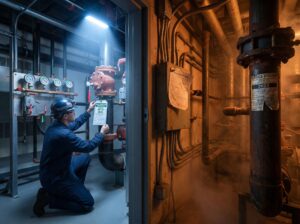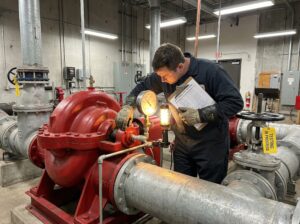
The Risk Calculation
Fire risk isn’t abstract. It’s measurable. A facility with functional fire detection systems responds to emergencies in minutes. A facility with degraded detection systems responds in hours—or doesn’t respond until damage is severe.
This difference—between detection and non-detection, between early response and late response—is precisely what preventive fire inspections quantify and reduce.
—
Risk Reduction Through Detection System Assurance
Understanding Fire Detection Risk
Fire detection systems serve a single critical purpose: identifying fire in early stages when response is most effective.
What early detection means:
- Fire detected within 1-3 minutes of ignition
- Occupants alerted immediately
- Emergency responders dispatched quickly
- Fire suppression systems activate automatically
- Evacuation can begin while building is still safe
- Property damage is minimal
- Life safety is maintained
What delayed or failed detection means:
- Fire burns undetected for 10-30+ minutes
- Smoke accumulates throughout building
- Occupants may not evacuate
- Emergency responders arrive to advanced fire
- Suppression systems never activate
- Evacuation becomes dangerous
- Significant property damage occurs
- Life safety is compromised
The difference between these outcomes is detection system functionality.
How Preventive Inspections Reduce Detection Risk
Preventive fire inspections verify detection system functionality before fires occur.
What inspections examine:
- Smoke detector placement (one per 400 sq ft maximum spacing)
- Fire alarm system responsiveness
- Audible alarm volume and audibility throughout facility
- Visual alarm visibility (strobe lights)
- Battery backup functionality
- Control panel operation
- System testing records and maintenance schedules
What inspectors measure:
- Actual vs. required detector spacing
- Alarm audibility in various locations
- System response time
- Battery condition and age
- Equipment functionality
What facilities learn:
Preventive inspection reveals whether detection systems can actually detect fires and alert occupants. A facility discovering that smoke detectors are spaced beyond recommended distances learns they have detection gaps. A facility finding that alarm audibility is inadequate in certain areas learns evacuation warnings may not reach all occupants.
These aren’t violations. These are risk measurements.
—
Risk Metrics: Preventive vs. Reactive Approaches
Preventive Inspection Approach
Timeline:
- Month 1: Facility schedules preventive inspection
- Month 1: Inspection reveals detection system status
- Months 2-3: Facility implements corrections (new detectors, audibility improvements, schedule adjustments)
- Month 4: Detection systems verified functional and optimized
- Ongoing: Regular maintenance prevents degradation
Risk Profile:
- Detection systems: Verified functional
- Fire response time: 1-3 minutes (early detection)
- Occupant alert: Immediate and reliable
- Suppression activation: Automatic and timely
- Property loss: Minimal (fires caught in early stages)
- Life safety: Protected
Outcome: Fire risk is measurably reduced.
Reactive Approach (No Preventive Inspection)
Timeline:
- Fire occurs without prior inspection or verification
- Detection system either works or doesn’t
- If detection fails: Fire burns 15-30+ minutes before discovery
- Emergency response is delayed
- Fire has spread significantly
- Building evacuation becomes difficult
Risk Profile:
- Detection systems: Unknown functionality
- Fire response time: 15-30+ minutes (unknown delay)
- Occupant alert: Uncertain or delayed
- Suppression activation: Depends on detection working
- Property loss: Significant (advanced fire stage)
- Life safety: At risk
Outcome: Fire risk remains unmeasured and uncontrolled.
The difference isn’t philosophical. It’s measurable in detection reliability, response time, and property protection.
—
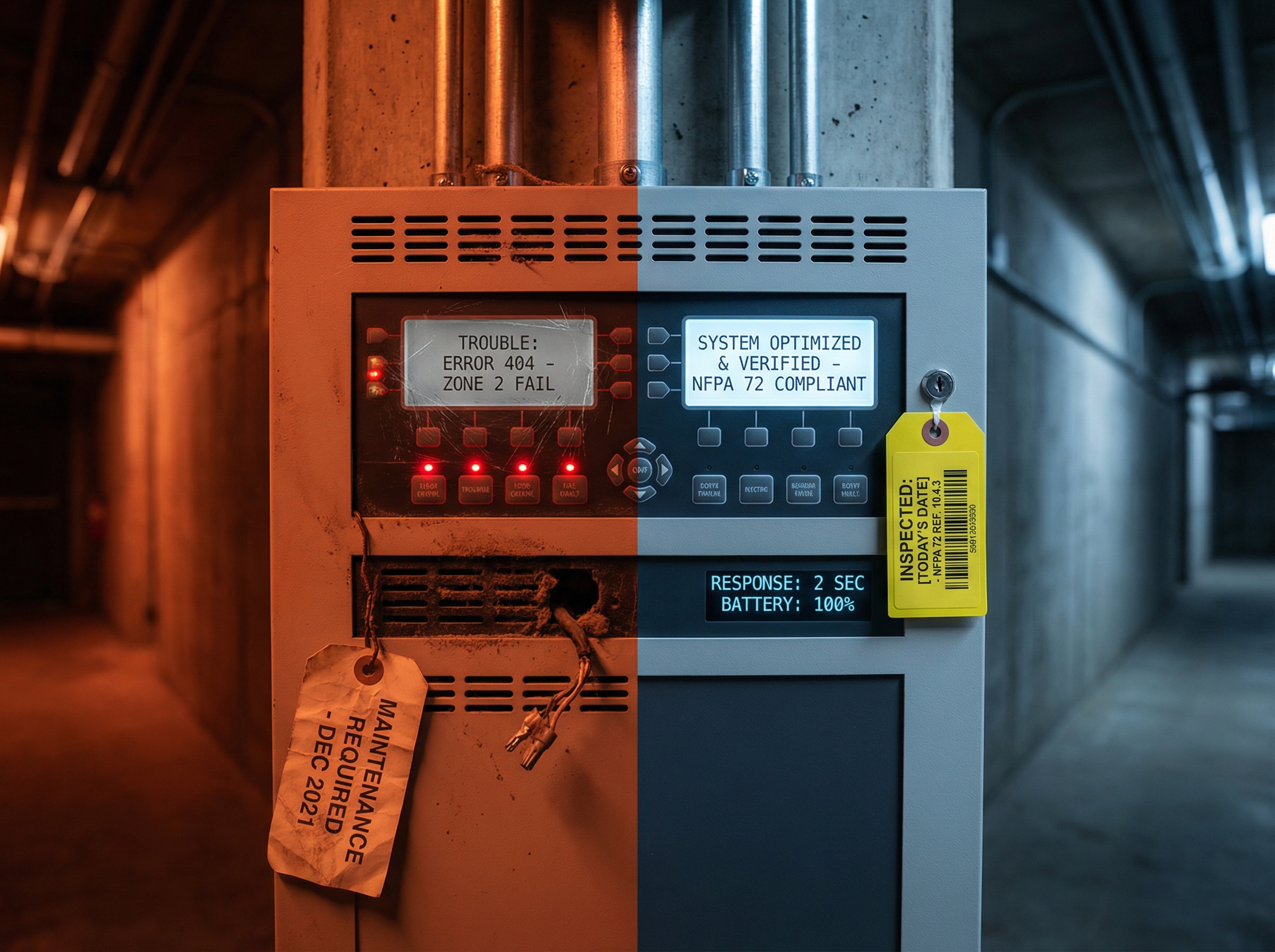
Detection System Performance: Before and After Preventive Inspection
One facility’s experience demonstrates how preventive inspection quantifies and reduces fire detection risk.
Pre-Inspection Detection System Status
Building characteristics:
- 40,000 square foot commercial office facility
- Multiple floors and wings
- 120 total employees
- 15-year-old fire alarm system
- Smoke detectors installed but never tested for spacing compliance
Pre-Inspection Assessment (Preventive Inspection Conducted):
1. Smoke detector spacing:
- Required: One detector per 400 sq ft maximum
- Actual: Several areas had 600+ sq ft between detectors
- Risk implication: Detection gaps where fires could develop undetected
2. Alarm audibility testing:
- Measured alarm volume in various locations
- Found areas where alarm was 70 dB but background noise was 75 dB
- Risk implication: Alarm inaudible during operating hours
3. Fire alarm control panel:
- Equipment 15 years old
- Battery backup deteriorated
- Response time 8-10 seconds (acceptable but slow)
4. System testing records:
- No documented testing for 3+ years
- Maintenance records incomplete
- Risk implication: Unknown if system was being serviced
5. Emergency lighting integration:
- Fire alarm system triggers emergency lighting
- Emergency lighting backup batteries degraded
- Risk implication: If fire detected, emergency lighting may fail during evacuation
Pre-Inspection Risk Assessment: Detection system functionality was uncertain. Multiple components were degraded or untested.
Post-Inspection Detection Risk Reduction Implementation
Corrections implemented (2-month timeline):
1. Smoke detector optimization:
- Added 8 new detectors to close spacing gaps
- Verified spacing compliance throughout facility
- Purchased detectors with higher sensitivity ratings
2. Alarm audibility improvement:
- Relocated speakers in areas with high ambient noise
- Added visual strobes in three wing areas
- Verified audibility testing showing 90+ dB in all areas
- Risk reduction: All occupants can now hear alarm during any conditions
3. Fire alarm system upgrades:
- Upgraded control panel to modern system
- Installed new battery backup (certified 24-hour monitoring)
- Verified response time: 2-second activation
- Risk reduction: Faster detection-to-notification process
4. System maintenance protocol:
- Implemented quarterly testing schedule
- Documented all testing and maintenance
- Assigned responsibility for system verification
- Risk reduction: System degradation detected early
5. Emergency lighting coordination:
- Verified fire alarm system integration with emergency lighting
- Replaced emergency lighting backup batteries
- Tested integrated system (alarm → lighting activation)
- Risk reduction: Complete detection-to-evacuation chain functional
Post-Inspection Fire Detection Risk Profile
Detection system capabilities (post-correction):
- 100% facility coverage with proper spacing
- Audible alarm everywhere in building
- 2-second detection-to-notification response
- Automatic emergency lighting activation
- Quarterly system verification
- Complete maintenance documentation
Fire risk reduction quantified:
- Detection latency reduced from “unknown” to 2 seconds
- Occupant notification: From uncertain to guaranteed
- Response time: From 15-30 minutes (if detected late) to 1-3 minutes (early detection)
- Property loss potential: From significant to minimal
- Life safety: From at-risk to protected
—
Risk Reduction Components: How Each System Contributes
Detection Systems and Fire Suppression Integration
Preventive inspections verify that detection systems work with suppression systems.
The integrated chain:
1. Fire starts
2. Smoke detected (within 2-3 minutes)
3. Alarm activates
4. Suppression system triggers automatically
5. Emergency lighting activates
6. Evacuation begins
Risk reduction:
Each component working together reduces fire risk dramatically compared to systems working independently or not at all.
Emergency Lighting and Detection Risk
Emergency lighting appears throughout fire response as detection systems trigger evacuation.
Detection system triggers emergency lighting:
- Fire detected → Alarm sounds → Emergency lighting activates
- Occupants can see exit routes in darkness or smoke
- Evacuation is safe and orderly
- Risk reduction: Evacuation success depends on detection triggering lighting
Pre-inspection finding: Emergency lighting backup batteries degraded (65% capacity), reducing response capability if detection system activated emergency lighting.
Post-inspection correction: New emergency lighting batteries installed with 100% capacity, ensuring detection system activation triggers full emergency lighting response.
Risk reduction: Detection system activation now guarantees emergency lighting activation.
—
Preventive Inspection: Risk Assessment Tool
Preventive fire inspections function as risk assessment tools, quantifying detection system effectiveness.
What gets assessed:
- Detection reliability: Can system reliably detect fire?
- Response speed: How fast does detection trigger notification?
- Coverage completeness: Are all areas covered?
- Redundancy: Do backup systems exist?
- Integration: Do detection, suppression, lighting work together?
- Maintenance: Is system being serviced regularly?
What facilities learn:
Risk metrics for detection systems. Not “Is detection acceptable?” but “What is actual detection reliability and how can we improve it?”
—
48Fire Protection’s Role in Preventive Detection System Optimization
48Fire Protection conducts preventive inspections that quantify fire detection risk and implement risk reduction strategies.
Assessment phase:
- Evaluate current detection system coverage and functionality
- Measure alarm audibility and visibility
- Test system response time
- Review maintenance and testing records
- Identify detection gaps or degradation
Implementation phase:
- Recommend detection system improvements
- Coordinate system upgrades or repairs
- Verify detection system integration with suppression and lighting
- Establish testing and maintenance protocols
- Document all improvements
Verification phase:
- Test detection system responsiveness
- Verify alarm audibility and visibility
- Confirm integration with emergency lighting
- Document system status
- Establish ongoing maintenance schedule
—
Moving Forward: Preventive Detection Optimization
If your facility hasn’t conducted preventive inspection of fire detection systems, you’re operating with unknown risk.
You don’t know if smoke detectors can actually detect fires in all areas. You don’t know if alarms will alert occupants during operating hours. You don’t know if emergency lighting will activate when detection systems trigger evacuation. You don’t know if detection systems will work when actually needed.
Preventive inspection quantifies these unknowns and reduces fire risk through system optimization and verification.
[Talk to an Expert!] at 48Fire Protection about preventive fire inspections of your detection systems. We’ll assess current detection capability, identify risk gaps, implement improvements, and verify that your detection systems actually reduce fire risk when fires occur. Fire risk doesn’t have to be unknown—it can be measured and systematically reduced.