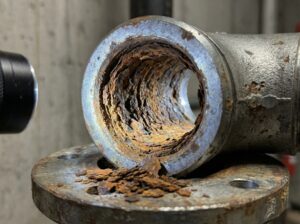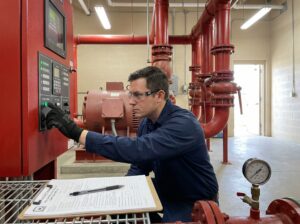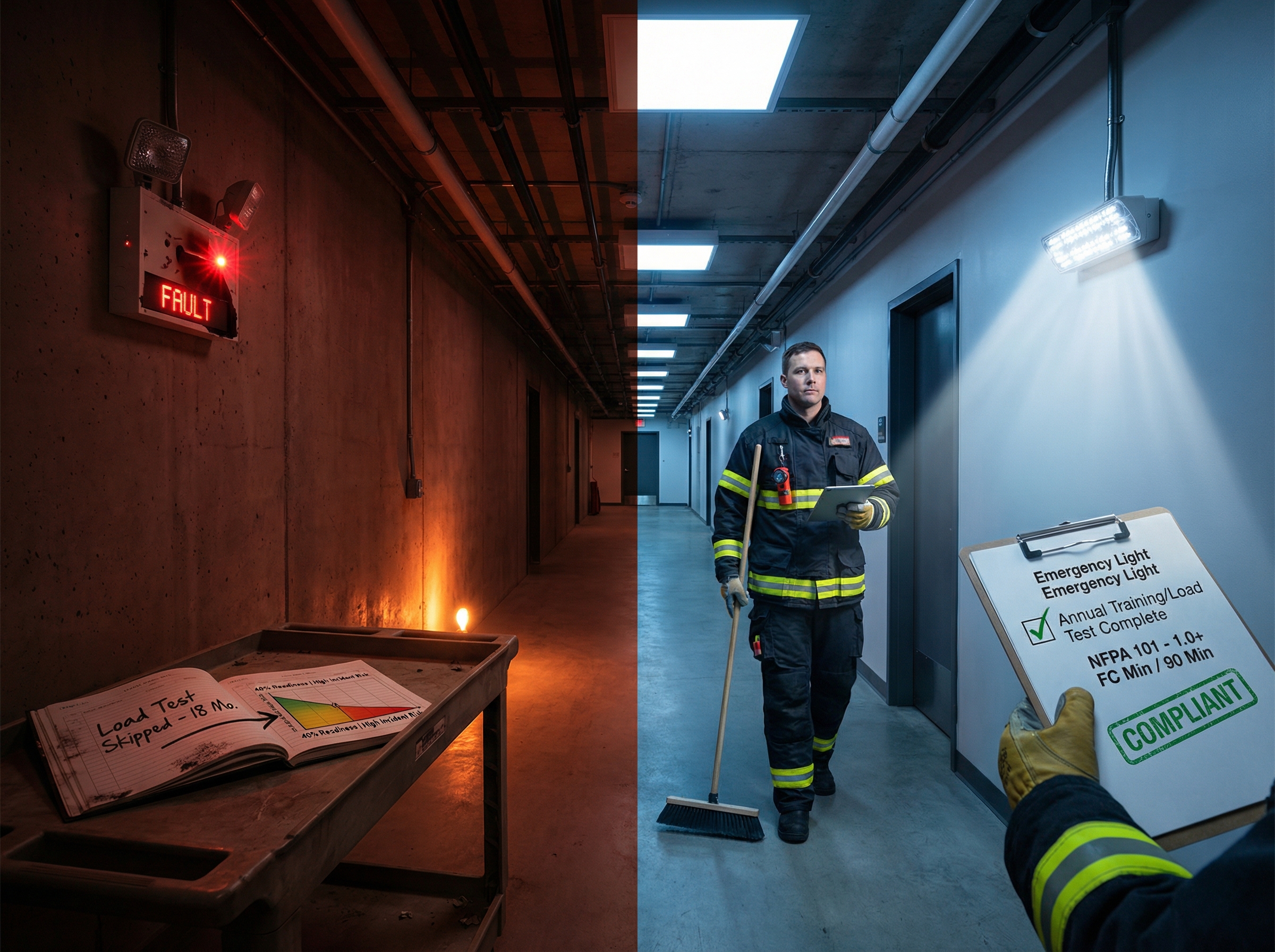
Training is not an event. Training is maintenance. Fire protection systems require physical maintenance—testing, inspection, repair. Fire protection competency requires training maintenance—refresher training, practice drills, knowledge renewal. Both decline without ongoing attention. Both need systematic upkeep.
Facilities understand physical fire protection maintenance. Annual sprinkler testing. Emergency lighting load testing. Fire door inspection. These keep systems functioning. But competency maintenance receives less attention. Training happens once, then nothing for years. Knowledge fades. Procedures are forgotten. Staff turnover erases institutional memory. Fire protection competency decays.
48Fire Protection documents this decay pattern repeatedly: facilities with strong initial training but no ongoing maintenance show measurable competency decline within 6-12 months. Facilities with ongoing training maintenance sustain competency indefinitely.
This is why ongoing fire safety training isn’t optional—it’s maintenance.
—
The Competency Decay Pattern: What Happens Without Ongoing Training
Month 1 (Post Initial Training):
- Knowledge retention: 95%
- Procedure compliance: 97%
- Emergency response readiness: 95%
- Staff confidence: 93%
Month 6 (No Ongoing Training):
- Knowledge retention: 70% (25-point decline)
- Procedure compliance: 75% (22-point decline)
- Emergency response readiness: 68% (27-point decline)
- Staff confidence: 65% (28-point decline)
Month 12 (No Ongoing Training):
- Knowledge retention: 55% (40-point decline from peak)
- Procedure compliance: 60% (37-point decline)
- Emergency response readiness: 52% (43-point decline)
- Staff confidence: 50% (43-point decline)
Month 24 (No Ongoing Training):
- Knowledge retention: 40% (55-point decline)
- Procedure compliance: 45% (52-point decline)
- Emergency response readiness: 38% (57-point decline)
- Staff confidence: 35% (58-point decline)
Competency returns nearly to pre-training baseline. Training investment essentially lost.
—
Why Competency Decays: The Four Decay Mechanisms
Mechanism 1: Forgetting Curve
Human memory follows predictable decay pattern. Information not reinforced is forgotten. Within days, retention drops 50%. Within months, retention drops 70-80%. Fire safety procedures are no exception.
Occupants forget:
- Emergency exit locations they rarely think about
- Alarm activation procedures they’ve never used
- Assembly point locations they’ve never visited in emergency
- Emergency lighting specifications (NFPA 101: 1.0+ foot-candles) they learned once
Mechanism 2: Procedure Drift
Without reinforcement, procedures drift. People modify procedures unconsciously. “Good enough” replaces “correct.” Shortcuts emerge. Documentation gets ignored. Emergency lighting load testing (90-minute backup battery verification) gets delayed or skipped.
Mechanism 3: Staff Turnover
New employees arrive. Trained employees leave. Organizational knowledge walks out the door. New staff lack training that departing staff received. Fire safety competency becomes inconsistent across workforce.
Mechanism 4: System Changes
Systems get upgraded. Exit routes change. Assembly points relocate. Emergency lighting gets modified or added. Previous training doesn’t reflect current facility. Competency becomes outdated even if remembered.
—
The Maintenance Solution: Ongoing Training Framework
Physical maintenance prevents system failure. Training maintenance prevents competency failure. Both require systematic approach.
48Fire Protection Ongoing Training Maintenance Framework:
Annual Refresher Training (Every 12 months):
- All occupants participate
- Emergency procedures review
- Exit identification confirmation
- Emergency lighting education reinforcement (1.0+ foot-candles minimum, 90-minute backup)
- Assembly point procedures
- New staff integration
- System changes communication
- Duration: 1-2 hours
Quarterly Fire Drills (Every 3 months):
- Full evacuation practice
- Procedure execution
- Competency observation
- Emergency lighting usage observation
- Floor warden accountability practice
- Results documentation
New Employee Onboarding (Within 30 days of hire):
- Facility-specific fire safety training
- Emergency procedures
- Role clarification
- Exit and assembly point identification
- Emergency lighting understanding
System Change Training (As needed):
- When exits change
- When assembly points relocate
- When emergency lighting modified
- When procedures update
- Immediate communication and training
Floor Warden Annual Certification Renewal (Every 12 months):
- Accountability procedure refresher
- Coordination training
- Emergency lighting specifications review
- Competency verification
—
Ongoing Training Impact: Competency Sustainability
Facilities With Ongoing Training Maintenance:
Month 1 (Post Initial Training):
- Knowledge: 95%, Procedures: 97%, Readiness: 95%, Confidence: 93%
Month 6 (With Ongoing Maintenance):
- Knowledge: 92%, Procedures: 94%, Readiness: 91%, Confidence: 90%
- Minimal decay (3-5 points)
Month 12 (With Annual Refresher):
- Knowledge: 94%, Procedures: 96%, Readiness: 93%, Confidence: 92%
- Competency restored and maintained
Month 24 (With Continued Maintenance):
- Knowledge: 93%, Procedures: 95%, Readiness: 92%, Confidence: 91%
- Sustained high competency
Difference: Facilities with ongoing training maintain 90%+ competency indefinitely. Facilities without ongoing training drop to 40-50% competency within 24 months.
—
The Emergency Lighting Maintenance Parallel
Emergency lighting requires physical maintenance AND training maintenance:
Physical Emergency Lighting Maintenance:
- Annual load testing: Verify 90-minute backup battery duration
- Illumination measurement: Confirm 1.0+ foot-candles in exit routes
- Battery replacement: Every 4-5 years
- System documentation: Maintenance records
Training Maintenance for Emergency Lighting:
- Occupant education: Emergency lighting provides safe evacuation illumination (1.0+ foot-candles)
- Staff understanding: Backup battery systems maintain 90-minute minimum
- Operations training: Load testing procedures, illumination measurement
- Annual reinforcement: Reminder of lighting purpose and specifications
Both types of maintenance required. Physical maintenance keeps lights functioning. Training maintenance keeps people understanding and trusting the system. Without training maintenance:
- Occupants forget emergency lighting exists
- Staff neglect load testing
- Load testing procedures are lost
- System specifications unknown
- Confidence in lighting erodes
With ongoing training maintenance:
- Occupants understand lighting guides evacuation
- Staff conduct load testing systematically
- Procedures are documented and followed
- Specifications known (1.0+ foot-candles, 90-minute backup)
- Confidence sustained
—
Staff Turnover: Why Ongoing Training Is Organizational Necessity
Average employee tenure in commercial facilities: 3-5 years. Within 5 years, significant workforce turnover occurs. Initial training reaches people who no longer work at facility. New staff lack fire safety training entirely.
Without Ongoing Training:
- Year 1: 100% staff trained
- Year 3: 60% staff trained (40% hired since initial training, no training received)
- Year 5: 40% staff trained (60% hired since initial training)
- Year 7: 20% staff trained (80% workforce never received training)
Fire safety competency concentrated in decreasing portion of workforce.
With Ongoing Training Maintenance:
- Annual refresher training: All current staff trained each year
- New employee onboarding: New hires trained within 30 days
- Consistent competency: 95%+ workforce trained at all times
- Institutional knowledge: Sustained regardless of turnover
—
The ROI of Ongoing Training Maintenance
Investment:
- Annual refresher training: $2,000-5,000 (depending on facility size)
- Quarterly fire drills: $500-1,500 per drill
- New employee onboarding: $100-200 per employee
- Total annual investment: $5,000-12,000 typical
Return:
- Sustained audit compliance (avoiding citations and corrective action costs)
- Maintained insurance classification (premium savings)
- Reduced incident risk (avoiding fire-safety incidents)
- Consistent emergency response capability (occupant protection)
- Staff confidence and organizational culture (reduced turnover, improved morale)
Comparison:
- One-time training with no maintenance: Competency decays to 40% within 24 months
- Ongoing training maintenance: Competency sustained at 90%+ indefinitely
- Difference: 50 percentage points of competency maintained through ongoing investment
—
Ongoing Training vs. Physical Maintenance: The Same Logic
| Maintenance Type | Frequency | Purpose | Without Maintenance | Cost |
|---|---|---|---|---|
| Sprinkler Testing | Annual | Verify system function | System failure risk | $2,000-5,000 |
| Emergency Lighting Load Testing | Annual | Verify 90-minute backup | Lighting failure risk | $1,000-3,000 |
| Fire Door Inspection | Annual | Verify door function | Containment failure | $500-2,000 |
| Fire Safety Training | Annual | Verify competency | Competency failure | $5,000-12,000 |
Physical systems get maintained because everyone understands failure consequence. Fire safety competency deserves same maintenance logic—decay leads to failure.
—
48Fire Protection: Ongoing Training Maintenance Programs
48Fire Protection delivers ongoing fire safety training maintenance preventing competency decay:
Annual Refresher Training:
- All occupants participate
- Emergency procedures reinforced
- Exit and assembly point confirmation
- Emergency lighting education (NFPA 101: 1.0+ foot-candles, 90-minute backup)
- System changes communicated
- Competency verified
Quarterly Fire Drill Facilitation:
- Evacuation drill coordination
- Procedure observation
- Emergency lighting usage assessment
- Results documentation
- Improvement recommendations
New Employee Onboarding Training:
- Facility-specific fire safety
- Emergency procedures
- Role clarification
- Emergency lighting understanding
System Change Training:
- Exit modifications
- Assembly point relocations
- Emergency lighting system changes
- Procedure updates
Floor Warden Annual Certification:
- Accountability refresher
- Coordination procedures
- Emergency lighting specifications
- Competency renewal
—
The Maintenance Mindset: Training as Ongoing Investment
Facilities that view training as one-time event experience competency decay and lose their investment. Facilities that view training as ongoing maintenance sustain competency indefinitely.
Fire protection maintenance includes:
- Testing fire alarm systems annually
- Testing sprinkler systems annually
- Testing emergency lighting (1.0+ foot-candles verification, 90-minute load testing) annually
- Training staff and occupants annually
All four are maintenance. All four prevent failure. All four require ongoing investment.
The question isn’t whether to provide ongoing training. The question is whether to maintain the fire protection competency already established or let it decay back to baseline.
[Contact 48Fire Protection] to establish ongoing fire safety training maintenance for your facility. We’ll deliver annual refresher training, facilitate quarterly drills, provide new employee onboarding, conduct system change training, and maintain floor warden certifications. Prevent competency decay. Sustain organizational fire protection competency. Maintain what you’ve built.
Maintenance isn’t optional for systems. It’s not optional for competency either. Ongoing training is fire protection maintenance.