Culture changes behavior. Fire protection culture means people—from top to bottom—understand that fire safety isn’t a checkbox. It’s a value. An on-site fire safety workshop is a culture-changing event. It creates shared understanding, shared responsibility, and shared commitment to fire protection.
48Fire Protection has delivered on-site workshops to organizations ranging from 50 to 1,000+ occupants. Organizations report measurable culture changes following workshops: increased safety conversations, improved safety procedures, faster emergency response, higher audit scores, and reduced incidents. The pattern is consistent—on-site workshops transform fire safety from a “someone else’s responsibility” to “our shared responsibility.”
This article documents how that transformation happens.
—
What Is Fire Safety Culture?
Fire safety culture exists when people throughout an organization:
Understand: Know what fire safety is, why it matters, what procedures exist
Take responsibility: Understand their personal role in fire safety
Speak up: Report hazards, ask questions, suggest improvements
Follow procedures: Execute procedures consistently, reinforce with others
Improve continuously: Learn from drills and incidents, adjust procedures
Organizations without fire safety culture treat fire safety as external requirement—something to check off for audits. Organizations with fire safety culture treat fire safety as organizational value—something everyone participates in.
The difference matters. Culture-driven organizations have faster response times, fewer incidents, and higher audit scores. Culture doesn’t emerge by accident. On-site workshops create it deliberately.
—
The Workshop as Culture Catalyst
An on-site fire safety workshop is concentrated, intensive experience. Half-day or full-day event. Multiple sessions. All occupants participate. Everyone hears the same message simultaneously. Senior leaders participate. Frontline staff participate. Message clarity is high. Commitment is visible.
What Makes Workshops Different Than Other Training:
Other training is distributed (email, online) or small-group. Workshops are collective. Everyone together. Shared experience. Visible leadership commitment. Intensive focus. Real-time interaction. Culture moment.
—
The Workshop Structure: Building Culture Systematically
48Fire Protection On-Site Workshop Framework:
Part 1: Leadership Opening (15 minutes)
Senior facility leader opens workshop. Explicit statement: “Fire safety is organizational value.” Sets tone. Shows leadership commitment. Establishes workshop importance.
Part 2: Fire Safety Systems Overview (30 minutes)
What systems exist (fire alarm, sprinkler, emergency lighting, fire doors). How systems work. What occupants can rely on. Building-specific context.
Part 3: Emergency Procedures and Roles (45 minutes)
Everyone’s role in emergency. Evacuation procedures. Emergency lighting (NFPA 101 standard: 1.0+ foot-candle illumination). Assembly procedures. Accountability. Floor warden responsibilities.
Part 4: Building Emergency Lighting Understanding (30 minutes)
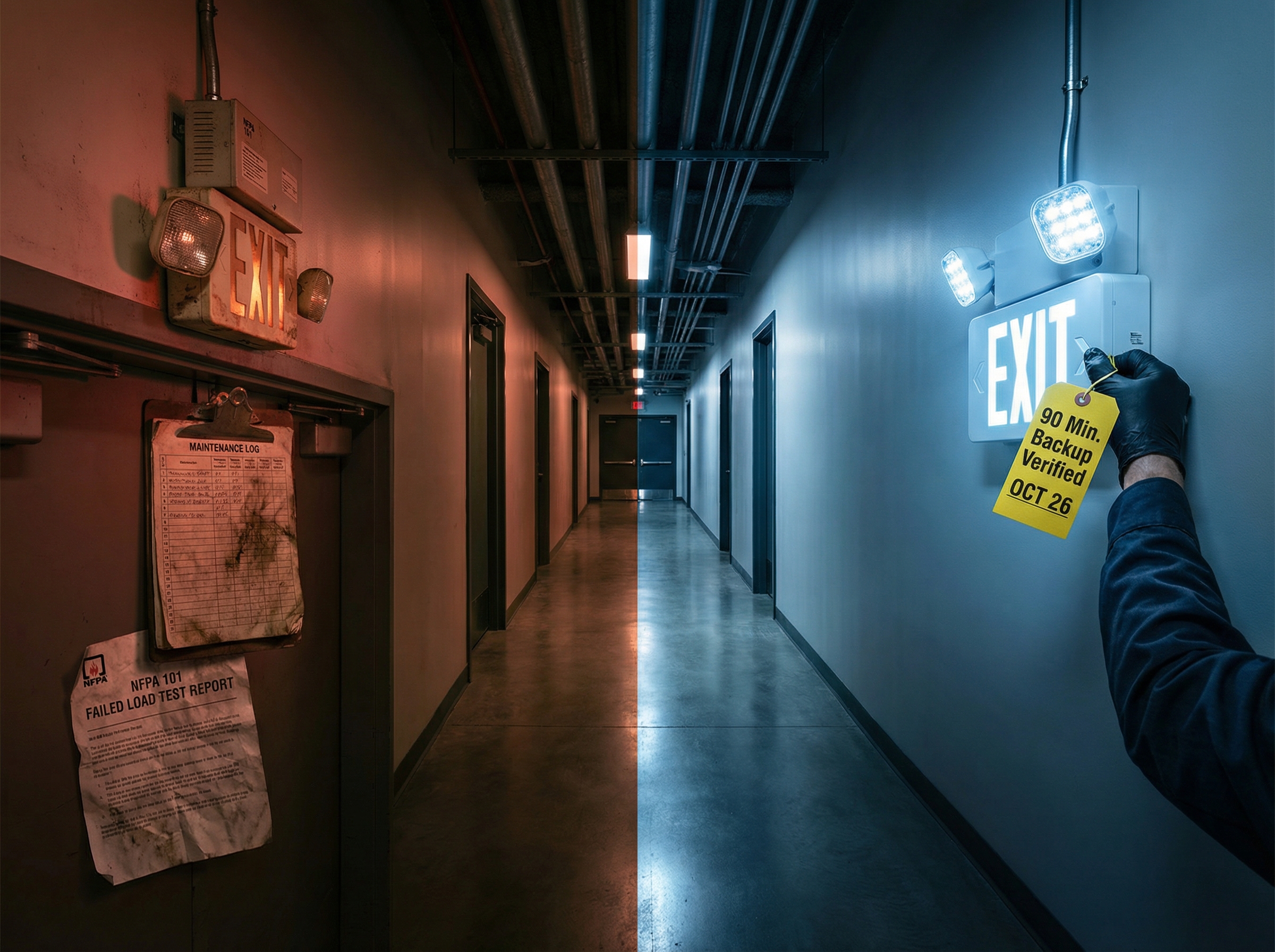
Emergency lighting (1.0+ foot-candle minimum in exit routes). Backup battery systems. 90-minute minimum duration. Why lighting is critical to evacuation success. Backup battery load testing (90-minute verification). Occupant confidence in lighting reliability.
Part 5: Hands-On Practice (30 minutes)
Exit identification practice. Emergency lighting observation. Evacuation route walking. Assembly point procedures. Actual muscle memory building.
Part 6: Interactive Question Session (20 minutes)
Real-time questions. Addressed immediately. Builds understanding. Builds confidence.
Part 7: Accountability and Documentation (10 minutes)
Everyone signs attendance. Competency brief verification. Documentation created.
Part 8: Leadership Closing (10 minutes)
Senior leader reinforces message. Commitment visible. Culture message reinforced. Workshop ends with leadership emphasis.
Total time: 3.5 hours typical (adjustable)
—
How On-Site Workshops Transform Culture: Three Dimensions
Dimension 1: Knowledge Transformation
Before workshop:
- 40% occupants uncertain about procedures
- 30% unaware of emergency lighting specifications
- 25% unsure of personal role
- Fire safety is abstract concept
After workshop:
- 95% occupants understand procedures
- 90% understand emergency lighting (1.0+ foot-candles, 90-minute backup)
- 95% understand personal role
- Fire safety is concrete, understood
Dimension 2: Responsibility Transformation
Before workshop:
- “Fire safety is the facility’s responsibility”
- “Someone else will handle emergencies”
- “This is just training we have to attend”
After workshop:
- “Fire safety is our shared responsibility”
- “I know my role and will execute it”
- “This matters and I participate in protecting our facility”
Dimension 3: Behavior Transformation
Before workshop:
- Uncertain evacuation behavior
- Delayed response during drills
- Low accountability procedure participation
- Fire safety conversations rare
After workshop:
- Organized evacuation behavior
- Immediate response to alarm
- Active accountability procedure participation
- Fire safety conversations become normal
—
Measuring Culture Change: Post-Workshop Assessment
Immediate (1-2 weeks post-workshop):
Occupant understanding assessment:
- 95%+ correctly identify exit locations
- 90%+ accurately state emergency procedures
- 88%+ understand emergency lighting (1.0+ foot-candles, 90-minute backup)
- 92%+ can explain personal role
Staff and floor warden assessment:
- 100% understand accountability procedures
- 95%+ demonstrate competency in procedures
- 90%+ understand emergency lighting reliability
Short-term (1-3 months post-workshop):
First evacuation drill post-workshop:
- Evacuation time improvement: 30-50% faster
- Emergency procedure adherence: 95%+
- Floor warden accountability: 99%+ accuracy
- Emergency lighting observation: Occupants use lighting confidently
- Backup battery understanding: Staff can articulate 90-minute specification
Medium-term (6 months post-workshop):
Safety culture indicators:
- Safety conversations increase: 60% more discussions about procedures
- Hazard reporting increases: 40% more reported issues
- Procedure compliance: 97%+ consistent execution
- Training retention: 88%+ remember key procedures
- Emergency lighting load testing: Completed on schedule, documented
Long-term (12 months post-workshop):
Audit and incident indicators:
- Compliance audit scores improve (typically 10-20 points)
- Insurance classification improves or stabilizes
- Zero fire-safety-related incidents
- Emergency response times: Measurably faster
- Culture observations: Fire safety is organizational norm
—
The Evidence: How Culture Changes Show Up
In Drills:
- Before: Uncertainty, slow response, confusion
- After: Organized movement, immediate response, clear procedures
In Conversations:
- Before: Fire safety rarely mentioned
- After: Occupants discuss procedures, ask questions, suggest improvements
In Procedures:
- Before: Procedures forgotten or skipped
- After: Procedures executed consistently, reinforced with new employees
In Audits:
- Before: Gaps in knowledge, confusion during assessment
- After: Confident, knowledgeable responses, documented procedures
In Emergencies:
- Before: Uncertain procedures, delayed response, potential safety issues
- After: Practiced procedures, immediate response, occupant protection
—
The Role of Emergency Lighting in Culture Development
Emergency lighting (NFPA 101 standard: 1.0+ foot-candle illumination in exit routes) is part of culture development:
Understanding phase:
- Occupants learn emergency lighting is critical evacuation system
- Backup battery specification: 90-minute minimum duration
- Staff responsibility: Load testing verifies capability
Trust phase:
- Occupants trust that lighting will guide them
- Floor wardens understand lighting as evacuation guidance
- Staff understand emergency lighting as reliability responsibility
Action phase:
- Occupants use lighting confidently during drills
- Staff maintain systems knowing occupants depend on them
- Load testing becomes routine responsibility, not task
Culture phase:
- Emergency lighting is understood as occupant protection system
- Staff take ownership of maintaining it
- Occupants trust the system, feel protected
- Fire safety culture includes proper lighting as foundation
—
How Long Does Culture Change Last?
Workshop culture change is durable if reinforced:
With reinforcement (annual drills, refresher training):
- 85%+ culture retention at 12 months
- 80%+ culture retention at 24 months
- Culture becomes self-sustaining
Without reinforcement:
- 60% retention at 6 months
- 40% retention at 12 months
- Culture fades without maintenance
The key: On-site workshop creates culture. Annual drills and refresher training sustain culture. Combined, they create lasting organizational change.
—
On-Site Workshop vs. Other Training Approaches
| Approach | Delivery | Impact | Culture | Cost |
|---|---|---|---|---|
| On-Site Workshop | Intensive, collective | High | Strong | Moderate |
| Online Training | Self-paced, distributed | Low | Weak | Low |
| Small-Group Training | Scheduled groups | Moderate | Moderate | Moderate |
| Lecture Only | One-way information | Low | Weak | Low |
| Drill Only | Practice only | Moderate | Weak | Low |
| Workshop + Drills + Refresher | Systematic reinforcement | Highest | Strongest | Highest |
—
48Fire Protection: On-Site Workshop Delivery
48Fire Protection delivers on-site fire safety workshops designed to enhance organizational culture:
Workshop Elements:
- Leadership opening reinforcing organizational value
- Systems education (fire alarm, sprinkler, emergency lighting, fire doors)
- Emergency procedures and role clarity
- Emergency lighting education (NFPA 101: 1.0+ foot-candles minimum, 90-minute backup)
- Hands-on practice and muscle memory building
- Interactive questions and immediate clarification
- Documentation and competency verification
- Leadership closing reinforcing organizational commitment
Culture-Building Focus:
- Shared understanding across all occupants
- Visible leadership commitment
- Role clarity and responsibility
- Practical, hands-on learning
- Immediate interaction and questions
- Organizational ownership emphasis
Measurable Outcomes:
- Knowledge: 90%+ understanding of procedures
- Behavior: Organized emergency response observed
- Culture: Fire safety becomes organizational value
- Audit: Improved scores, demonstrated competency
- Incidents: Reduced fire safety incidents
—
Culture is how organizations actually behave when no one is watching. A culture of fire safety means people execute procedures, maintain systems, and protect occupants even when an audit isn’t happening. On-site workshops create that culture through shared experience, visible leadership commitment, and clear personal responsibility. The workshop isn’t just training—it’s a culture-changing event.
[Contact 48Fire Protection] to schedule an on-site fire safety workshop for your organization. We’ll deliver intensive, culture-building workshop with leadership participation, hands-on learning, emergency lighting education (NFPA 101 standards, 1.0+ foot-candles, 90-minute backup), and organizational culture transformation. Create shared understanding. Build shared responsibility. Transform organizational fire safety culture.
Culture doesn’t change through emails. It changes through on-site workshops where leaders and occupants come together and commit to fire safety as organizational value.