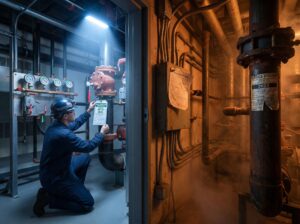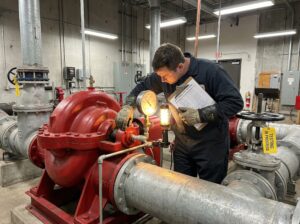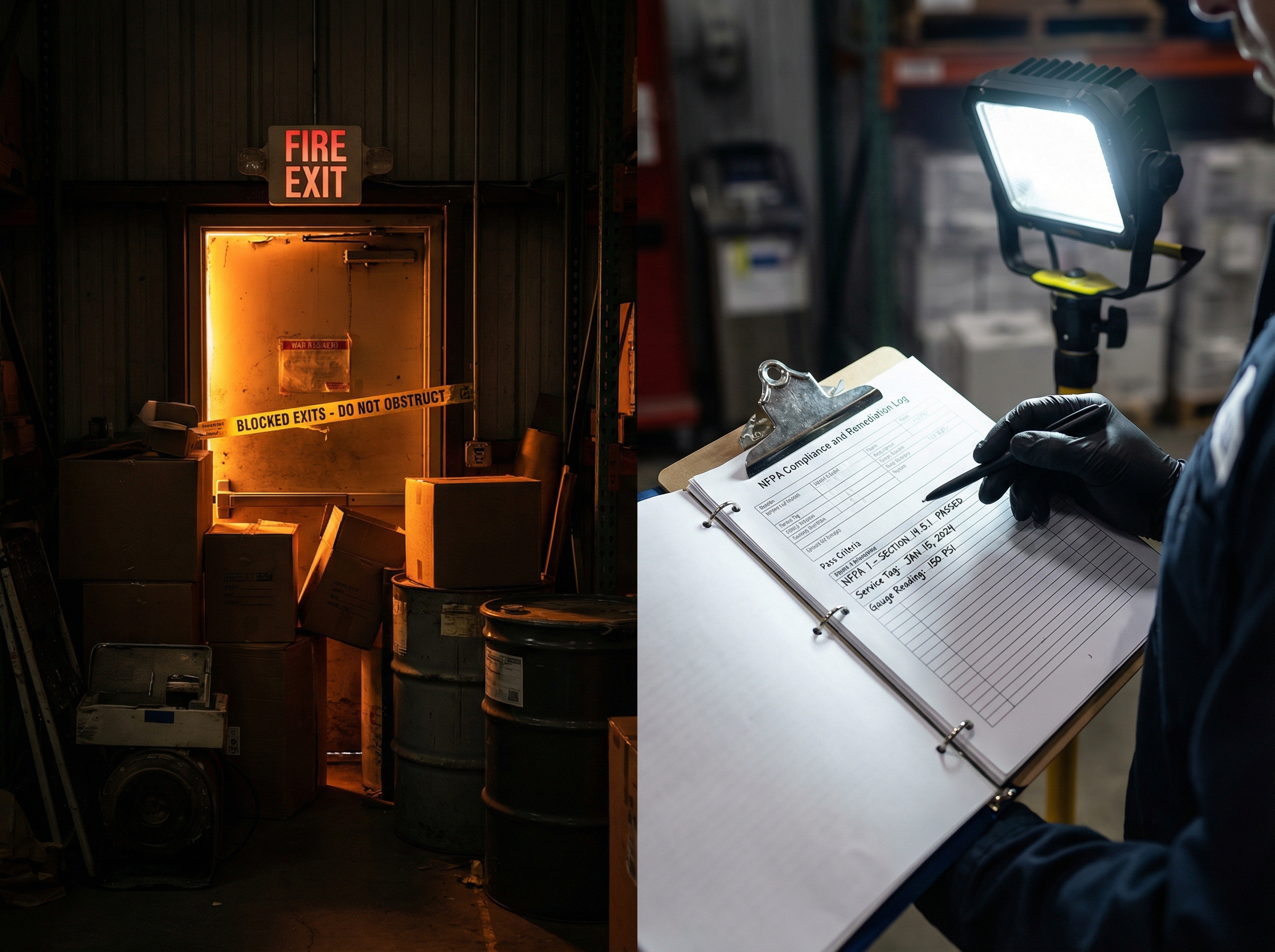
Opening a plant floor door and stepping into a quiet morning are not always the same as stepping into a safe, compliant day. In the fire protection world, the line between a routine inspection and a forced business shutdown can be razor-thin. Imagine a mid-size manufacturing facility where a routine check uncovers a critical fire protection system hazard: a compromised sprinkler valve, a water-mumping line, or a failing fire alarm control panel. The inspector’s conclusion might be enough to halt operations immediately. The stakes are high: a halt in production, lost revenue, and, more importantly, a risk to life and limb if hazards remain unaddressed.
In this article, we explore whether inspectors can shut a business down on the spot, what that authority looks like in practice, and how facilities—especially those with complex fire protection systems—can stay out of harm’s way. We’ll tie in real-world examples from OSHA, MSHA, and city building departments to help facility managers understand their obligations, the triggers for emergency shutdowns, and the steps to take when authorities arrive. By the end, you’ll have a practical framework for reducing the likelihood of a hard stop while maintaining rigorous safety and compliance.
—
Why this topic matters for fire protection
Fire protection systems are central to life safety in any occupied facility. They are also subject to intense scrutiny from multiple authorities: occupational safety, mine safety, and building departments. When a hazard is deemed imminent or a critical code violation is observed, inspectors have broad levers to pull to protect workers and occupants. Those levers can include immediate stop-work orders, cessation of operations, or more targeted controls—yet all of them share a common goal: rapid abatement of the hazard and safe reopening only after the risk is eliminated.
To operate in this environment, facilities must understand not only the requirements of the fire protection systems themselves, but also the broader enforcement landscape. The following sections lay out what “emergency shutdown” means in practice, the authority that supports it, and the practical playbooks you can use to stay compliant—and keep your doors open.
—
How inspector authority works in practice
This is not a simple “one-size-fits-all” situation. Different agencies, different hazards, and different jurisdictions create a spectrum of authority that governs whether a business can be shut down on the spot.
- Imminent danger and abatement: OSHA defines imminent danger as conditions that could cause death or serious harm immediately. In such cases, inspectors can require steps to stop the danger and may seek a federal court to enforce abatement. This is a powerful tool because it translates into immediate corrective action to remove the hazard. The core idea is simple: if people are in imminent danger, do whatever is necessary to stop exposure while the hazard is remediated. [Source: OSHA Imminent Danger pages][osha.gov]
- Stop Work Orders (SWOs) in construction and related settings: Local building departments frequently issue Stop Work Orders when unsafe conditions are identified on-site. SWOs can be full or partial depending on the hazard and can halt construction or related work until conditions are corrected. The triggers are often tied to safety failures, lack of required permits, or unsafe practices that expose workers or the public to risk. It’s common to see SWOs issued in scenarios where structural, electrical, or life-safety concerns arise during a project. [Source: SWO Common Conditions | NYC Department of Buildings]([nyc.gov])
- Emergency shutdowns in other industrial contexts: In mining contexts and other high-hazard workplaces, inspectors can issue orders that halt operations immediately when hazards are present. The 2024 MSHA impact inspections, for example, identified numerous violations and included Imminent Danger Orders (107(a)) in some cases, illustrating the blunt force impact of inspector authority when hazards are present. While the specifics vary by industry, the underlying principle is the same: hazard in the workplace that could cause serious harm can trigger immediate action. [Source: MSHA 2024 impact inspections][dol.gov]
- Enforcement and regulatory pathways: In general, enforcement offices (OSHA, state plan states, and other federal or local agencies) maintain the right to require abatement and to pursue formal enforcement if hazards persist. In many cases, enforcement can involve deadlines for corrective action and re-inspections, with penalties for noncompliance. You can view enforcement frameworks and related processes at OSHA’s enforcement pages. [Source: OSHA Enforcement] [osha.gov]
These authorities are designed to rapidly address hazards that put workers or occupants at immediate risk. They also underscore a critical point for facility managers: a stop-work or shutdown order is not a hypothetical—it’s a real, enforceable, safety-first action guided by precise standards and on-the-ground observations.
—
What triggers an on-the-spot shutdown in fire protection contexts?
While the specific triggers vary by jurisdiction and inspector, several common themes repeatedly surface in fire protection settings:
- Fire protection system impairment: If the fire alarm system, detection network, or water-based fire suppression system is found to be in a state that could fail during an incident (e.g., a damaged control panel, a dry-pipe system with low pressure, a compromised sprinkler head, or a blocked water supply line), an inspector may order abatement and, in extreme cases, an immediate shutdown of operations where feasible to protect occupants.
- Life-safety egress hazards: Blocked or unusable egress routes, locked or hidden exits, or stairwells obstructed by ongoing work can prompt orders to cease operations until safe egress is assured.
- Work without required permits or inadequate controls: Construction or modification work that affects life safety without the necessary permits, or contingencies not in place (temporary fire watch, for example), can trigger a stop-work order until the situation meets code requirements.
- Unexpected hazard enhancement during service work: In some cases, routine service or testing reveals a hazardous condition that could escalate; the inspector may require work to pause until corrective controls are installed (or a fire watch is established) to ensure safe testing and re-testing.
- Inadequate hazards communication and mitigation planning: When a facility cannot demonstrate a robust plan for hazard mitigation—or cannot demonstrate that employees are adequately trained and informed—an inspector may require a pause in activities until those gaps are closed.
These trigger categories map to the broader safety principle of “abate hazards now, reopen when safe.” Each jurisdiction may apply these principles with its own procedural nuances, but the intent—protecting life and property—remains universal.
—
A practical framework: planning to avoid surprise shutdowns
To minimize the risk of a sudden shutdown, facilities should adopt a proactive, cross-disciplinary approach that aligns fire protection engineering, building compliance, and safety management. Here’s a practical framework you can follow.
1) Map your fire protection landscape
- Inventory of all life-safety systems (fire alarms, suppression systems, passive fire protections, means of egress, emergency lighting).
- Current inspection and testing cadence (ITM, monthly checks, quarterly tests).
- Critical components with known vulnerabilities (e.g., water-filled systems with standing water, aging electrical panels, air-handling units near fire zones).
- Permitting and work authorization status for any ongoing changes to life-safety systems.
2) Align with code-based expectations
- Ensure your maintenance and testing programs are aligned with recognized standards (for example, NFPA standards for fire protection systems and local building codes). While the exact codes vary by jurisdiction, the overarching goal is timely detection, correction, and verification of operational readiness.
3) Create an early-abatement plan
- Develop internal procedures for identifying and correcting hazards quickly.
- Establish a clear line of communication for facility managers, safety officers, and contractors when a hazard is found.
- Predefine thresholds for stopping work or operations and the required sign-offs to restart.
4) Implement robust training and awareness
- Train staff on recognizing signs of system impairment and reporting channels.
- Run regular drills for emergency shutdown scenarios, including coordination with local authorities and fire departments.
5) Maintain ready-to-activate safety controls
- Ensure redundancy where possible (dual power supplies for critical alarms, alternate alarm pathways, backup water supply for sprinkler systems).
- Keep fire watches organized and capable of immediate deployment during maintenance or testing that requires temporary shutdown.
—
A closer look at the authority spectrum: a table of key drivers
| Driver | Who can issue it | Typical trigger | Scope of control | Reopening path | Example jurisdiction | Primary risk to operations |
|---|---|---|---|---|---|---|
| Imminent Danger (OSHA) | Federal OSHA inspectors; can involve abatement orders and court enforcement | Conditions likely to cause death or serious harm immediately | Immediate steps to stop the danger; can be nationwide in scope | Abatement of hazard and re-inspection; formal enforcement if not remedied | Broad (federal) | Sudden, wide-reaching shutdown risk; high safety stakes |
| Stop Work Order (SWO) | Building departments (city/county) | Unsafe conditions in construction or modifications; lack of permits | On-site halt of construction or related activities | Compliance with permit, safety corrections, re-inspection | Many US cities (e.g., NYC) | Project delays; potential partial or full stop in operations depending on hazard |
| Emergency shutdown (industry-specific) | Industry regulators (e.g., MSHA in mining; OSHA in various sectors) | Imminent hazards observed on site; hazardous conditions found during inspections | Immediate cessation of operations or specific processes | Corrective actions, abatement, and re-inspection | Mining and heavy industry; diverse sectors | Rapid impact on production; can be local or plant-wide |
- Key point: The exact mix of authority depends on the setting, but the common thread is clear—when life safety is at risk, authorities can and will intervene quickly.
- Pro tip: If you are operating a facility with critical life-safety systems, pre-emptively adopting a formal “hazard abatement and reopening” protocol can reduce the time to resolve issues and minimize downtime after an inspection.
- Quote-worthy reminder: “Imminent danger orders are not a suggestion; they are an enforceable tool designed to remove exposure to an immediately life-threatening hazard.” [Source: OSHA Imminent Danger][osha.gov]
—
Real-world examples that illuminate the stakes
- Case 1: A large manufacturing plant discovers a delayed response in the fire alarm system during a quarterly test. The inspector notes that with a confirmed risk of system failure during a fire event, occupants would be at risk. An immediate stop-work order is issued for the affected zone while a rapid remediation plan is executed. Once the system is brought back to spec and tested, a re-inspection is arranged, and operations resume.
- Case 2: A construction project on a retrofit of a sprinkler system triggers an SWO due to “work without permit” for a critical section of the building. The SWO remains in place until the permit is properly issued, the area is made safe, a competent fire protection contractor has completed the necessary work, and the site is re-inspected. This prevents a potentially dangerous situation from escalating during a period of vulnerability.
- Case 3: In a mining setting, MSHA’s 2024 impact inspections identified multiple violations and included Imminent Danger Orders in at least one case, underscoring inspectors’ readiness to halt operations when hazards are present. Although not fire-protection-specific, the principle translates: when a hazard presents an immediate risk to life, the authority to intervene exists and is actively exercised. [Source: MSHA 2024 impact inspections]([dol.gov])
These vignettes show that the line to halt operations is not mere theory. It is real, enforceable, and designed to prevent fatalities and serious injuries. Even within a field as technical as fire protection, the ultimate objective remains consistent: protect people and property.
—
Common misconceptions vs. reality
- Misconception: “Inspectors can only issue a warning or request corrective actions; they can’t shut down operations.”
Reality: In many cases, imminent danger orders and other enforcement tools empower inspectors to require immediate abatement and can effectively stop work or operations until hazards are addressed. The authority can involve court enforcement for compliance, especially in severe hazard scenarios. This is why proactive risk management matters for facilities with life-safety systems. [OSHA Imminent Danger]([osha.gov])
- Misconception: “Shut-down power only applies to construction projects, not ongoing operations.”
Reality: While Stop Work Orders are common in construction, other inspectors (like fire protection inspectors or building officials) can order a shutdown or partial shutdown of operations when a hazard endangers occupants or workers. The principle of safe reopening after abatement applies across settings. [SWO Common Conditions]([nyc.gov])
- Misconception: “Once a risk is spotted, you have time to fix it without legal consequences.”
Reality: When hazard abatement cannot be achieved quickly or the hazard is severe, formal enforcement actions can be pursued, including abatement orders and penalties. Understanding enforcement pathways helps facilities prepare better abatement plans. [OSHA Enforcement]
- Misconception: “Relocation or partial shutdown is unrealistic in many facilities.”
Reality: In some cases, inspectors will permit partial shutdowns or engagement of a fire watch and other mitigations while critical work continues. The aim is to balance safety with ongoing operations wherever feasible. SWOs can be partial depending on hazard severity. [SWO Common Conditions]([nyc.gov])
—
How to navigate a shutdown scenario: a practical playbook
If an inspector arrives on site with a determination that an imminent hazard exists, facilities can ease the process by following a clear, documented response plan. The following steps outline a practical approach for a fire protection-focused operation.
Immediate actions (within minutes)
- Acknowledge and secure the hazard: Stop the affected operation or process if it is safe to do so, and implement any immediate protection measures (fire watch, isolating the area, etc.).
- Communication: Notify facility leadership, safety personnel, and relevant contractors about the hazard and the order to stop work if required.
- Preserve evidence: Do not alter or destroy evidence that might be relevant to later abatement actions or inspections, but focus on rapid hazard mitigation.
- Document the decision: Record who issued the order, the hazard observed, the corrective actions required, and the intended timeline to reopen.
- Initiate abatement planning: Begin drafting a formal abatement plan with clear milestones and responsibilities.
Interim actions (0–24 hours)
- Engage qualified professionals: Bring in fire protection contractors or engineers to assess the hazard and develop a remediation plan.
- Implement immediate mitigation: If possible, implement fixes that quickly reduce risk (temporary fire watch, temporary power fixes, temporary alarm bypass protections, etc.).
- Notify occupants and authorities: Maintain clear communications with building management, tenants, and the inspecting agency about progress and expected timelines.
- Prepare for re-inspection: Schedule a follow-up inspection and ensure all corrective actions are fully documented and tested before re-entry.
Long-term actions (days to weeks)
- Finalize abatement: Complete all corrective actions to meet applicable codes, standards, and manufacturer specifications.
- Verification testing: Conduct thorough testing and commissioning of the affected fire protection systems (alarm, detection, suppression) to demonstrate readiness.
- Documentation: Assemble a comprehensive abatement file including inspection reports, test results, maintenance logs, and any necessary permits or approvals.
- Reopening: Coordinate with the inspector and building authority for re-inspection, a formal reopening, and a signed clearance for continued operation.
—
The role of fire protection professionals during a potential shutdown
In the context of a potential shutdown, a fire protection contractor or consultant can be a critical ally. Their roles might include:
- Rapid hazard assessment: A qualified professional can quickly determine root cause and develop an actionable remediation plan to address the hazard.
- Technical advisory: They interpret codes and standards to determine the most practical restoration approach—minimizing downtime while ensuring life safety.
- Validation and testing: After abatement, a professional can conduct the required tests and validations to help secure a re-inspection and reopening.
- Documentation and communications: They can help prepare the necessary documentation for the inspector, including justification for abatement steps and a clear path to compliance.
- Training and process improvement: Post-event debriefs can identify process improvements to prevent recurrence.
—
The cost of shutdown vs. the benefit of compliance
- Short-term operational impact: A shutdown halts production, disrupts schedules, and can lead to financial losses; however, this is often preferable to a protracted incident where a hazard affects workers or the public.
- Long-term safety and risk reduction: Proper abatement reduces the risk of catastrophic incidents, which can be catastrophic in both human and financial terms.
- Reputation and trust: Demonstrating a proactive, safety-first posture can bolster trust with employees, customers, insurers, and regulators.
- Insurance and penalties: Noncompliance can trigger higher premiums and penalties, while a strong compliance posture can support smoother claims processes.
- Recurrence risk: Identifying root causes and implementing robust corrective actions lowers the likelihood of repeated issues and subsequent shutdowns.
—
A phonetic safety net: how to keep the lines open
- Maintain consistent ITM programs: Regular testing and maintenance of life-safety systems, with documentation and traceability.
- Invest in redundancy and resilience: Where feasible, provide redundancy in critical circuits, power feeds, and communication paths so that a fault in one path does not trigger a total shutdown.
- Pre-plan for emergency shutdown situations: Predefine roles, responsibilities, and escalation procedures for if an inspector identifies risk. This reduces delays in abatement and re-inspection.
- Engage early with authorities: Establish proactive communication channels with local fire departments, building departments, and occupational safety agencies so that you know what to expect during inspections and how to respond quickly.
- Document everything: Keep a well-organized hazard log, abatement plans, test results, and inspection records that are easily accessible during a re-inspection.
—
48Fire Protection section: our targeted services to keep you safe and compliant
At 48Fire Protection, we specialize in the kinds of services that help facilities minimize shutdown risk while maintaining top-tier life-safety performance. Our approach centers on prevention, rapid response, and meticulous compliance.
- Fire protection system design and installation: We design and install reliable, code-compliant fire protection systems tailored to your space and risk profile, from wet-dry sprinkler systems to advanced detection networks.
- Inspection, testing, and maintenance (ITM): We provide scheduled ITM services to ensure systems are ready when needed, including alarm testing, sprinkler inspections, and flow testing, all aligned with recognized standards.
- Fire code compliance assessments: Our engineers perform comprehensive assessments against current codes and standards, identifying gaps and proposing actionable remediation plans.
- Abatement planning and emergency response support: If a hazard arises, we help you develop a robust abatement plan with realistic timelines and responsibilities, plus liaison support with authorities for re-inspection.
- Technical training and safety programs: We deliver staff training on system operation, hazard recognition, and safe shutdown procedures, so your team can respond swiftly and safely.
- System commissioning and re-commissioning support: After any remediation, we perform thorough commissioning to verify your systems’ readiness before reopening.
- Ongoing advisory and risk reduction consulting: We provide ongoing guidance to optimize maintenance strategies, upgrade aging components, and implement best practices for fire protection.
With 48Fire Protection on your side, you gain a partner who speaks both “engineer” and “operational manager,” translating complex safety requirements into clear actions that protect people and keep your doors open.
—
Key takeaways: quick-reference guide
- Yes, inspectors can shut down or halt work on the spot when hazards present an immediate risk. The authority exists to protect life safety and may involve abatement orders or enforcement actions. [OSHA Imminent Danger]([osha.gov])
- Stop Work Orders and other enforcement actions can be issued by building departments or other regulating bodies when unsafe conditions are identified. Partial or full shutdowns are possible depending on the hazard. [SWO Common Conditions]([nyc.gov])
- The mining and heavy industry examples (MSHA) illustrate the broader, cross-industry application of immediate shutdown authority where hazards exist. [MSHA 2024 impact inspections]([dol.gov])
- OSHA’s enforcement framework provides the legal backbone for abatement orders and enforcement actions—helpful to understand if you’re navigating a potential shutdown. [OSHA Enforcement]([osha.gov])
- Proactive, comprehensive fire protection planning (design, ITM, compliance assessments, and rapid abatement support) reduces the likelihood of shutdowns and keeps operations safer.
—
Final word: staying open through safety, preparedness, and partnership
Inspectors hold real power in the sense that their primary mission is safety—not punishment. The ability to halt operations—whether to address imminent danger, enforce building compliance, or require abatement—serves as a necessary check against hazards that could have catastrophic consequences. For facility managers, the practical takeaway is straightforward: maintain rigorous life-safety systems, establish robust abatement and re-inspection processes, and partner with trusted fire protection professionals who can guide you through both compliance and continuity.
At 48Fire Protection, we recognize the pressures you face: regulatory demands, a busy production schedule, and a workforce that depends on a safe environment. Our mission is to help you reduce the chance of a shutdown by ensuring your life-safety systems are reliable, compliant, and well-documented. By integrating preventive maintenance, proactive risk assessments, and readiness planning into your operations, you can significantly lower the likelihood of surprise stop-work orders while improving overall safety performance.
If you want to talk through your facility’s fire protection strategy, compliance posture, or an emergency abatement plan, we’re here to help.