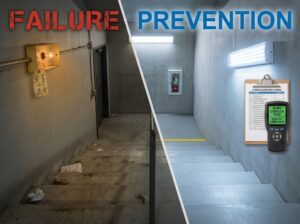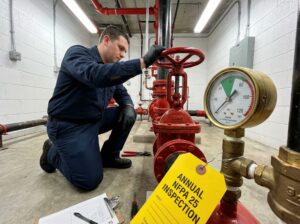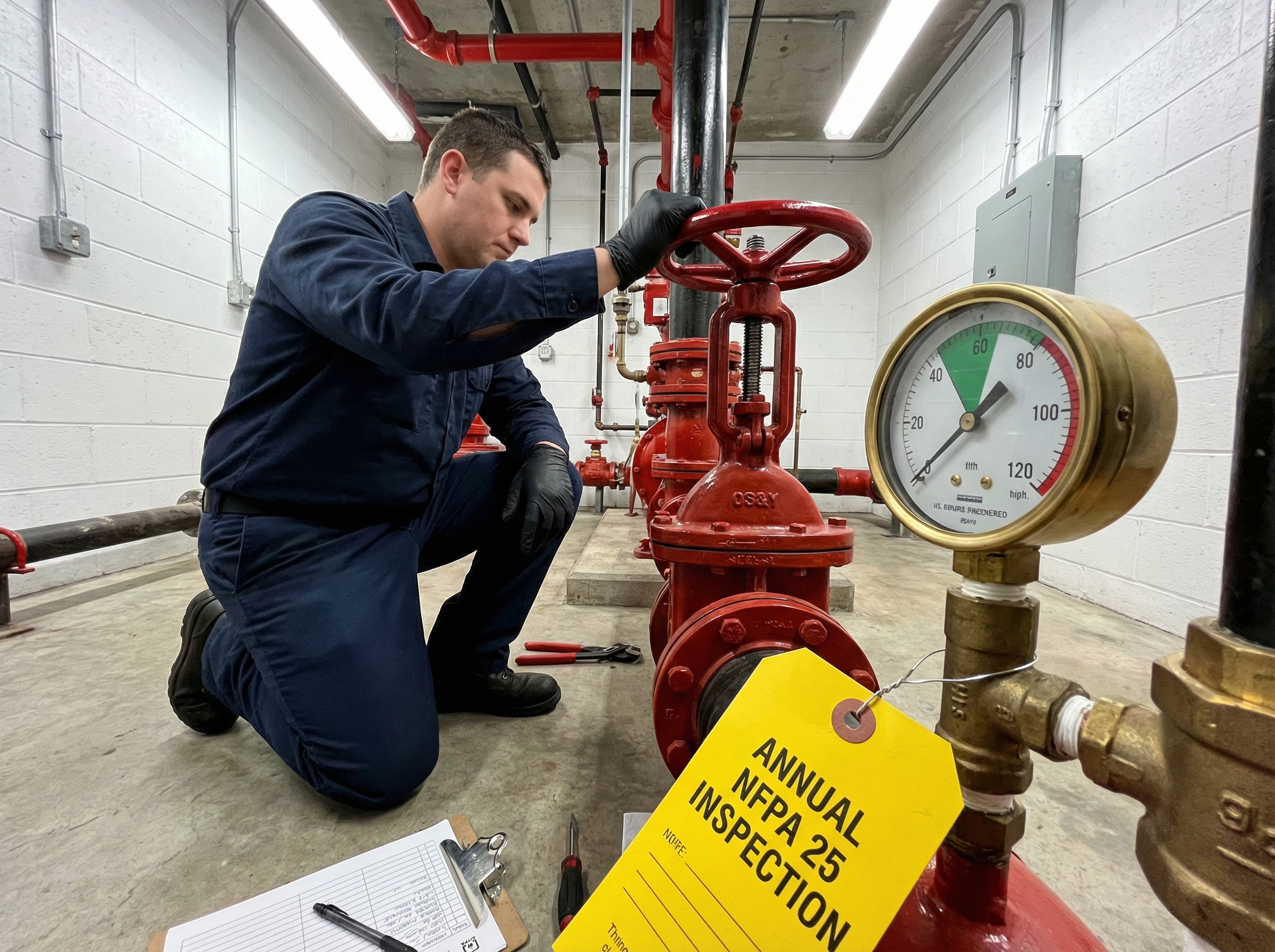
Opening scene: A mid-sized office campus sits on the edge of a fast-growing district. The building manager has two critical priorities: keep tenants safe and stay on the right side of the compliance clock. It’s spring, and an impending AHJ (authority having jurisdiction) inspection looms. The sprinkler system has been serviced on an ad-hoc basis, and the fire alarm and suppression ITM (inspection, testing, and maintenance) logs are inconsistent at best. A recent internal audit reveals missing or mismatched ITM records, outdated impairment notifications during a temporary shut-down, and a lack of a coordinated schedule across multiple owned properties. The manager asks a very practical question: How do we align fire sprinkler inspection schedules with fire code deadlines and NFPA 25 ITM requirements so we’re compliant, cost-efficient, and not chasing last-minute surprises?
If this sounds familiar, you’re not alone. Across different markets, facility managers, building owners, and risk teams face a layered challenge: understanding, documenting, and implementing the right Fire Sprinkler Inspection Schedule, Fire Code Compliance Deadlines, and NFPA 25 inspection requirements under a single, auditable calendar. This article breaks down the timelines you need to track, why those timelines matter, and how to implement a robust, defensible compliance program that reduces risk and operational disruption.
Table of contents
- The regulatory backbone: what governs ITM, impairment, and alarm systems
- A practical timeline model: how NFPA 25 cycles translate to real-world schedules
- The impairment, testing, and notification framework: what to do when things go wrong
- Common pitfalls and how to avoid them
- A scalable implementation approach: from data collection to calendar discipline
- A case-in-point: a multi-building schedule aligned to NFPA 25 and NFPA 72
- 48Fire Protection services that power compliance
- Quick reference: cadence by system component
- Checklist: building-wide compliance readiness
- Next steps and how to stay on track
- Endnote: how to keep the clock from ticking past deadlines
The regulatory backbone: what governs ITM, impairment, and alarm systems
Fire protection compliance sits at the intersection of standards, codes, and local jurisdiction requirements. Three core threads drive most accountability in the US market:
- NFPA 25: Standard for the Inspection, Testing, and Maintenance (ITM) of water-based fire protection systems. This standard governs how often ITM activities must occur, including routine inspections, functional testing, and certain maintenance items. NFPA 25 is published on a three-year cycle, and its frequencies are explicit in the latest editions. Understanding the exact ITM windows requires careful reading of the standard and any applicable local amendments. The cycle is updated on a three-year cadence, which means that changes to frequencies and scope can impact your scheduling year-to-year. [Understanding NFPA 25] provides a solid foundation for what ITM entails and how frequency windows are defined. [NFPA 25 2026 public inputs] highlights how proposed first-draft ITM frequency changes may affect future schedules.
- NFPA 72: National Fire Alarm and Signaling Code. While NFPA 25 focuses on water-based systems, NFPA 72 governs fire alarm systems, including supervisory and impairment notification requirements, and how those systems should operate during outages. The 2025 edition (NFPA 72-2025) introduces cybersecurity considerations, impairment notification within eight hours, RAMO (redundant automatic mechanical operations), and updates to inspection/testing intervals for control valve supervisory devices and water flow devices. These changes have direct implications for compliance scheduling and impairment management in buildings that rely on integrated fire protection. [NFPA 72 2025] summarizes these updates and the practical impacts for facility teams.
- Local codes, AHJs, and the reality of impairment management. In many jurisdictions, impairment management and notification timing must align with NFPA 25/72 guidance, but AHJs can impose additional reporting requirements and response times. The impairment policy is a critical control point that spans both water-based ITM and fire alarm signaling. The latest understanding emphasizes rapid impairment notification and clear, auditable records of any temporary reduction in system effectiveness. For deeper context on how impairment timelines fit into broader NFPA standards, see the public-facing explanations and analyses in the sources cited above. [NFPA 72 2025]
A practical timeline model: how NFPA 25 cycles translate to real-world schedules
To translate a three-year NFPA 25 cycle into day-to-day operations, you need a model that connects ITM domains (water-based systems) with the corresponding testing and maintenance windows. The most practical approach is to segment the calendar into predictable periods for critical components, and pair those periods with a maintenance window that minimizes disruption to building occupants.
Key concepts to frame your scheduling:
- ITM windows are defined by the system’s components. A water-based system typically includes sprinkler piping, alarm devices, backflow preventers, actuators, and supervisory/waterflow devices. The exact frequencies will be established in your project’s ITM plan in accordance with NFPA 25.
- Internal documentation governs how frequently you perform inspections, tests, and maintenance tasks. If a component has a 3-year internal inspection window, you should align your calendar so that the inspection occurs in a predictable year and is followed by a schedule of annual or semi-annual checks as appropriate.
- Variations by system type exist. For example, backflow preventers may have different testing schedules than sprinkler heads, and alarm signaling devices may require more frequent functional tests.
Why this matters: the three-year cycle isn’t a suggestion; it’s a constraint that can clash with business operations if not planned. A robust calendar ensures that you don’t end up with an “ITM December sprint” where multiple tasks collide and you’re forced into overtime or rushed inspections. It also keeps impairment management consistent with NFPA 72’s updated expectations around notification timing and reporting.
Putting it into a workable calendar structure:
- Year A: Focus on regulatory compliance windows for aging components, external inspections, and backflow preventer testing where applicable.
- Year B: Rotate the focus to sprinkler head and valve supervision device checks, ensuring that any updated intervals from NFPA 25 or NFPA 72 are integrated.
- Year C: Comprehensive ITM cycle refresh and documentation audit; this is the year you do a complete data accuracy sweep on all ITM records.
The reality is that the NFPA 25 cadence is framed by a three-year cycle, but your calendar should be continuous and cumulative. You don’t want to hit a year where the only entry on your calendar is “ITM for all backflow preventers” if you also have “alarm system impairment notification that must be tested monthly.” By organizing your calendar around system groups and by year, you minimize risk and maximize the likelihood of passing inspections without last-minute scrambles. For a deeper dive into the three-year update rhythm and how it’s applied in practice, see the Understanding NFPA 25 resource. [Understanding NFPA 25]
Impairment management, testing cadence, and the 8-hour impairment notification window
One of the practical questions facility teams ask is: What are the deadlines when a system is impaired? NFPA 72-2025 introduces an eight-hour impairment notification requirement in certain circumstances, emphasizing timely communication to the authority having jurisdiction and to building leadership. While impairment rules are principally associated with fire alarm systems, the concept—document, report, and respond quickly to impairment events—applies across the fire protection stack. The 8-hour window acts as a policy anchor: if you cannot restore operations within eight hours, you must escalate notifications, log the impairment details, and implement compensatory measures. This requirement is especially important when scheduling ITM activities that necessitate partial or full system shutdowns. The sources cited below discuss the impairment concept in the context of NFPA 72-2025 and the broader compliance ecosystem. [NFPA 72 2025]
In practice, impairment management should be a formalized process, not a piecemeal activity:
- Pre-impairment planning. Before any shut-down, identify the exact scope, the affected system portions, and the expected duration. Ensure that all stakeholders (facility management, operations, IT, and the AHJ if required) are informed.
- Temporary compensatory measures. Where possible, implement temporary measures to maintain fire protection coverage during impairment. This could include increased patrols, additional notification to occupants, or alternative alarm/suppression procedures.
- Impairment notification workflow. Create a standard impairment notification protocol that triggers within the allowed window. The eight-hour clock, where applicable, should be understood and actioned consistently.
- Post-impairment restoration and documentation. After work is complete, restore the system, re-run the ITM checks where needed, and update all logs with precise start and end times, affected components, and any deviations from the baseline.
The interplay between NFPA 25 and NFPA 72 is important here. The impairment concept in NFPA 72 informs impairment management for fire alarm systems, and NFPA 25 ITM activities often require system shutdowns or partial outages to perform their tasks. A synchronized impairment policy helps ensure that both systems are treated consistently in the plan and that documentation remains coherent and auditable. We’ll explore an integrated, auditable approach in the implementation section.
Common pitfalls and how to avoid them
- Pitfall: Treating NFPA 25 as a “best effort” schedule rather than a formal ITM calendar.
- Solution: Build a formal, documented ITM schedule for all water-based systems, and tie it to the three-year cadence with specific windows for each subsystem (piping, sprinklers, valves, backflow devices, and alarm/supervisory devices).
- Pitfall: Inadequate recordkeeping and fragmented logs across buildings and vendors.
- Solution: Centralize ITM records into a single, auditable log with timestamps, responsible party, and evidence (photos, test reports, and calibration data).
- Pitfall: Impairment notifications that are reactive rather than proactive.
- Solution: Establish and enforce an impairment notification policy that is triggered at the moment work begins, with escalation paths and clear documentation of duration and compensatory measures. The NFPA 72-2025 updates emphasize these practices. [NFPA 72 2025]
- Pitfall: Misalignment between NFPA 25’s three-year cadence and local AHJ deadlines.
- Solution: Map your internal ITM schedule to each AHJ’s calendar and confirm with the AHJ early in the project to avoid last-minute re-inspections. The 2026 public inputs for NFPA 25 highlight the fact that ITM frequencies are under active review and may influence local expectations. [NFPA 25 2026 public inputs]
- Pitfall: Overlooking cybersecurity implications introduced in NFPA 72-2025
- Solution: Integrate cybersecurity considerations for fire alarm and signaling control systems into ITM planning and testing routines. The NFPA 72: 2025 edition notes cybersecurity requirements as part of the modernization of fire alarm systems. [NFPA 72 2025]
A robust implementation approach: from data collection to calendar discipline
To turn the concepts above into a durable operational system, you need a disciplined, repeatable implementation plan. We propose a practical, five-step approach that can scale from a single building to a campus portfolio.
Step 1 — Data collection and system inventory
- Compile a complete inventory of all water-based fire protection system components: sprinkler heads, control valves, waterflow devices, alarm devices, backflow preventers, supervisory modules, and any associated mechanical equipment (e.g., pumps, tanks).
- Gather existing ITM records, service histories, inspection dates, test reports, and impairment logs.
- Identify components with known vulnerabilities (e.g., corrosion-prone backflow preventers, weak battery backups for alarm notification devices).
Step 2 — Map to NFPA 25 frequencies
- For each component, determine the applicable ITM interval (inspection, testing, and maintenance). Create a matrix mapping components to their frequencies and tasks (e.g., visual inspection, functional test, hydrostatic test, internal inspection, etc.).
- Align these frequencies with the three-year cadence and identify any special-case tasks that require annual or biannual attention.
- Document exceptions or local amendments and secure approvals from the AHJ if necessary.
Step 3 — Build the compliance calendar
- Create a centralized, multi-year calendar (rolling 3-year window) that assigns tasks to specific months and assigns owners (internal staff or third-party vendors).
- Build buffers into the calendar to handle unexpected delays (supplier/service downtime) and to accommodate occupancy patterns (minimize disruption to tenants).
- Include impairment windows where needed and ensure the impairment policy triggers timely notifications.
Step 4 — Establish responsibilities, training, and control points
- Assign a primary compliance owner for the calendar (often a facilities manager or a dedicated fire protection coordinator) and a backup.
- Define clear task ownership for external vendors (e.g., fire protection contractor, electrical contractor for alarms, mechanical contractor for water-based systems).
- Implement a training program so that field technicians understand the organization’s reporting requirements, data entry standards, and documentation expectations.
Step 5 — Audit, verify, and improve
- Conduct quarterly internal audits of ITM records and impairment logs.
- Use checklists to verify that all required tests have been completed, and that all records and evidence are complete and correctly filed.
- Review the calendar annually to accommodate NFPA 25 2026 public input updates and NFPA 72 2025 changes, and adjust frequencies as necessary.
The “cadence by component” table (a practical quick reference)
The exact frequencies for every component should come from your ITM plan, but the following table presents a practical, generalized cadence that aligns with typical NFPA 25 implementations. It’s intended as a starting point for planning discussions with your team and your compliance partner.
| Component | Typical ITM activity | Suggested cadence | Notes |
|---|---|---|---|
| Sprinkler heads (dry/wet) | Visual inspection, corrosion check | Annually | Include head replacements if corrosion or damage is found |
| Control valves (main, sectional) | Functional test, valve operation, tamper switch checks | Annually | If hydraulically significant, consider more frequent checks |
| Waterflow detectors | Functional test, wiring integrity | Annually | Verify signaling path to alarm panel |
| Supervisory devices | Battery check, loop supervision | Biannually | Battery replacement per manufacturer recommendations |
| Backflow preventers | Differential pressure test, valve operation | 3-year cycle (or as specified) | Critical for water supply integrity; ensure certified tester |
| Pumps and jockey pumps | Operations test, run-time verification | Annually or per manufacturer guidance | Include start/stop sequences and battery backup checks |
| Fire alarm signaling devices | Circuit integrity test, sounders, strobes | Annually | Align with NFPA 72 testing requirements; consider monthly tests per AHJ (where applicable) |
| Impairment logs | Documentation and alerting | As needed; during impairment periods | Immediate impairment notification not less than 8 hours (per NFPA 72-2025 guidance) |
Note: The above table is a practical starting point. Exact frequencies must be defined by your ITM plan and local requirements. The three-year NFPA 25 cadence means some items will occur on a cycle that overlaps or straddles calendar years; the key is to maintain continuous, auditable records and to avoid gaps.
Case study: a multi-building campus aligning NFPA 25 and NFPA 72
Background
A campus with three office buildings, a data center, and a retail concourse faced fragmented ITM scheduling across property management and outside service providers. The gaps in notification to building leadership and AHJ timing created a risk of non-compliance, particularly during the annual insurance requirement cycle.
What they did
- Consolidated ITM data into a single, auditable database with a rolling three-year window.
- Created a unified compliance calendar that mapped NFPA 25 ITM windows by component and aligned alarm device testing to NFPA 72-2025 cycles with impairment notification requirements.
- Trained a dedicated compliance owner, with a cross-functional team that included a facilities supervisor, a security lead (for alarm devices), and a mechanical contractor (for water-based systems).
Results
- Reduced the last-minute scramble before inspections by 60%.
- Achieved a clean audit trail, with clear evidence and timestamped documentation for all ITM activities.
- Improved impairment management with standardized notification and escalation protocols, consistent with eight-hour impairment notification practices in NFPA 72-2025.
- Achieved smoother AHJ inspections due to consistent, auditable schedules and centralized documentation.
The case study illustrates how a disciplined, integrated approach to NFPA 25 ITM windows and NFPA 72 impairment expectations can substantially reduce risk and improve operational reliability. See the NFPA 25/72 sources cited in this article for the regulatory context and updates.
48Fire Protection services that power compliance
Near the end of the compliance journey, facilities teams often ask for a partner who can bring discipline, expertise, and scalable capability. 48Fire Protection specializes in helping organizations build and sustain robust fire protection compliance programs that align with NFPA standards and local requirements. Our integrated services are designed to take you from data collection through calendar discipline to ongoing audit readiness.
Key services we offer:
- ITM program development and optimization for water-based systems (NFPA 25 alignment)
- Comprehensive ITM scheduling and calendar management across single buildings or multi-site portfolios
- Impairment management services, including impairment notification templates, escalation workflows, and restoration tracking
- Fire sprinkler testing, inspection, and maintenance performed by qualified technicians
- Fire alarm system testing, inspection, and maintenance aligned with NFPA 72-2025 updates
- Backflow preventer testing, valve operation checks, and pump testing
- Documentation and record-keeping: auditable logs, test reports, photos, and evidence that meet AHJ expectations
- Training programs for facility teams on NFPA 25 and NFPA 72 implications, including cybersecurity considerations for signaling systems
- On-demand advisory support for code interpretation, AHJ coordination, and compliance strategy
Our approach is anchored in three core principles:
- Proactive scheduling: We help you design a calendar that anticipates NFPA 25 cycles, avoids bottlenecks, and minimizes building disruption.
- Transparent documentation: We provide a secure, auditable record of all ITM activities, impairment events, and communications with AHJs.
- Continuous improvement: We review performance, update frequencies as NFPA 25 and NFPA 72 evolve, and adjust the calendar to reflect new requirements.
For more context on NFPA updates and how they affect scheduling and impairment management, you can consult the NFPA 72 updates and NFPA 25 public input processes referenced earlier. [NFPA 72 2025][NFPA 25 2026 public inputs]
Quick reference: cadence by system component and implementation notes
- Sprinkler heads and piping: Annual visual inspection and corrosion checks; routine, system-level hydrostatic testing as required by your ITM plan.
- Valves and control devices: Annual functional checks; ensure tamper/valve status are properly recorded; plan for any annual calibration tasks.
- Alarm devices and signaling circuits: Annual tests; monthly or quarterly operational verification as per AHJ requirements; include cybersecurity considerations when applicable under NFPA 72-2025.
- Backflow preventers: Usually on a 3-year cycle, with annual testing if required by the project’s environmental conditions or building code interpretations; ensure third-party testing credentials are on file.
- Water supply components (pumps, tanks): Annual run tests and performance verification; check for proper operation of auxiliary equipment (e.g., jockey pumps) during each cycle.
- Impairment management: Ongoing; impairment notification within eight hours when required; maintain a centralized impairment log for all ongoing activities.
In practice, this cadence feeds into a single calendar that your team uses for planning, execution, and reporting. It is not enough to segment testing by system; you need an integrated schedule that reflects the dependencies among components, the resource constraints of your vendors, and the occupancy schedule of each building. The three-year cycle informs the timing, but the calendar must reflect real-world constraints to be effective.
Checklists and workflows that support compliance
Pre-work impairment assessment checklist
- [ ] Identify affected systems and components
- [ ] Determine potential outage duration and required mitigations
- [ ] Notify occupants and AHJ if required
- [ ] Establish temporary compensatory measures (patrols, alternative signaling)
- [ ] Document impairment details and timing
ITM planning checklist
- [ ] Confirm ITM frequencies in the project’s plan
- [ ] Assign responsibilities for inspection, testing, and maintenance
- [ ] Schedule dates aligned to the three-year cadence
- [ ] Prepare evidence packages (photos, test reports, calibration data)
- [ ] Review and approve the plan with AHJ if applicable
Records and documentation requirements
- [ ] Centralized database for ITM records
- [ ] Evidence collection template (photos, test reports, calibration records)
- [ ] Version control for updated procedures and frequency changes
- [ ] Access controls to protect sensitive operational information
Annual compliance review
- [ ] Review NFPA 25 and NFPA 72 updates (e.g., 2026 public inputs or 2025 changes)
- [ ] Compare internal schedules to updated frequencies
- [ ] Adjust the calendar and ITM plans as needed
- [ ] Re-train staff on any new processes or requirements
Incorporating regulatory changes: keeping pace with NFPA updates
NFPA standards are dynamic; three-year update cycles for NFPA 25 mean frequencies and scope may shift as new public inputs are reviewed and adopted. NFPA 72’s 2025 edition also introduces changes, including cybersecurity and impairment considerations, which can influence testing schedules and notification requirements. Staying ahead requires regular review of the published updates and a process to translate those updates into your internal calendar and procedures. The following sources provide ongoing context:
- NFPA 72 2025 changes and implications for impairment and testing. [NFPA 72 2025]
- NFPA 25 2026 public inputs and proposed ITM frequency changes. [NFPA 25 2026 public inputs]
- Understanding NFPA 25 and its three-year cycle for ITM. [Understanding NFPA 25]
- Additional NFPA 72 context and standards detail (official NFPA pages). [NFPA 72 detail]
Horizontal rule
Implementation framework: how to operationalize the timelines in your organization
Phase 1: Readiness assessment
- Inventory all water-based systems and fire alarm components
- Gather all existing ITM records and impairment histories
- Identify critical path tasks and the occupancy impact of testing
Phase 2: Plan design
- Create a formal ITM plan aligned to NFPA 25 cycles
- Build a multi-year calendar with task owners and due dates
- Define impairment and notification workflows
Phase 3: Execution and documentation
- Execute ITM tasks in accordance with the calendar
- Capture evidence and maintain auditable logs
- Manage impairment events with the eight-hour notification framework
Phase 4: Audit and improvement
- Perform quarterly internal audits of ITM records and impairment logs
- Update plans for NFPA 25 and NFPA 72 updates
- Re-train staff on any changes to procedures
Phase 5: Scaling and portfolio expansion
- Extend the calendar to additional properties or campuses
- Standardize processes across sites for consistency
- Maintain a central dashboard to monitor compliance status across properties
A closing thought on risk, value, and outcomes
The risk of falling out of compliance is not limited to the potential for penalties; it includes the more tangible consequences of a system impairment during an emergency, reduced reliability of life-safety signaling, and potential disruption to operations in the event of an inspection. A well-planned compliance timeline, rooted in NFPA 25 ITM cycles and informed by NFPA 72 impairment and cybersecurity considerations, delivers value in several ways:
- Reduced likelihood of surprise inspections due to a predictable, auditable process.
- Improved system reliability through rigorous testing and proactive maintenance.
- Clearer communication between facilities teams, contractors, and AHJs.
- Stronger protection for occupants and assets in the event of an emergency.
Endnote: how to keep the clock from ticking past deadlines
The pace of NFPA updates and the complexity of modern fire protection systems require a proactive approach to compliance. Build your program around three pillars: disciplined data, predictable scheduling, and auditable documentation. Pair those pillars with a dedicated compliance lead and a scalable partner network (like 48Fire Protection) to manage day-to-day tasks and strategic updates alike. The goal is not just to survive an audit, but to operate with confidence that your fire protection systems perform as intended when it matters most.
48Fire Protection: your partner for compliant, reliable fire protection
- We help you design and implement an end-to-end ITM program for water-based systems and fire alarm signaling that aligns with NFPA 25 and NFPA 72 requirements.
- We provide comprehensive ITM scheduling services, impairment management, and centralized recordkeeping to ensure auditable evidence for AHJs and insurers.
- We deliver ongoing updates and training on NFPA 25/72 changes and their practical impact on your operations.
- We scale with your portfolio, delivering consistent processes across multiple sites while maintaining a singular, auditable compliance library.
[Contact 48Fire Protection] to discuss how we can tailor a fire protection compliance timeline and ITM program for your organization.
References and further reading (selected)
- NFPA 72 2025 changes and implications for impairment and testing. [NFPA 72 2025]
- NFPA 25 2026 public inputs and ITM frequency discussions. [NFPA 25 2026 public inputs]
- Understanding NFPA 25: ITM frequency windows and three-year cycle overview. [Understanding NFPA 25]
- NFPA reference on general code details (NFPA 72, official details). [NFPA 72 detail]