Direct problem statement
When a tenant moves out and a new occupant moves in, buildings don’t simply switch from one lease to another. They often switch uses, change occupancy classifications, and trigger a fresh round of fire protection decisions. In many markets, a tenant turnover—whether it’s a small retail space changing hands or a multi-tenant industrial facility bringing in a new storage operator—can trigger upgrades to sprinkler protection, fire alarm integration, and egress strategies to meet current code editions. The consequence of missing or delaying these upgrades is not only noncompliance risk and possible fines; it’s a real threat to life safety and a facility’s insurance and reputation.
The reality our readers face is that tenant turnover safety depends on clear expectations, a rigorous assessment, and a well-executed plan that aligns with evolving codes and AHJ interpretations. This article provides a practical, comprehensive framework for Property Management Compliance and Fire Protection Requirements during tenant turnover. We’ll walk through the regulatory landscape, typical turnover scenarios, a repeatable implementation process, practical checklists, and real-world risk considerations. We’ll also show how 48Fire Protection helps ensure turnover readiness so you can protect occupants, reduce risk, and keep projects on schedule.
Why tenant turnover triggers new fire protection requirements
A tenant turnover is more than a change of occupancy name on a lease. It often involves:
- A change in occupancy type or hazard profile: A storage tenant, a light manufacturing operator, or a healthcare clinic may carry different fire loads, different egress needs, or different risk factors than the previous occupant.
- A potential change in egress and evacuation requirements: Occupant load, travel distances, and egress illumination can shift with a new tenant, triggering different operating strategies.
- A revision or upgrade of fire protection systems: Depending on occupancy changes and jurisdiction, sprinklers, fire alarm interfaces, and incident command considerations may require updates to current NFPA editions or local amendments.
- The AHJ’s posture toward current codes: Authorities Having Jurisdiction (AHJs) increasingly expect that significant tenant changes trigger reviews and upgrades to meet current editions of NFPA standards and the IBC/IFC, where applicable.
Key data points and guidance
- Storage tenant triggers: A notable scenario is a new storage tenant that can prompt moving sprinkler protection to current NFPA 13 editions per NFPA 1 and AHJ guidance on changes in occupancy. This is a common trigger in commercial and industrial buildings and is discussed in industry practice guidance. [New Storage Tenant Need to Meet Current Code?]
- 2024 IBC/IFC changes: The 2024 IBC clarifies occupancy evacuation levels (Condition 1 vs Condition 2) and clarifies when NFPA 13R or NFPA 13D systems are required, affecting fire protection decisions during occupancy changes. This direct linkage between occupancy classification, evacuation strategy, and sprinkler system type is essential when planning turnover work. [Changes to the 2024 IBC and IFC]
- NYC guidance on alterations and occupancy changes: Building Bulletins in 2023 address alterations and changes of occupancy with references to NFPA 13/13R, signaling updated government guidance on when sprinklers are required during tenant turnover. For jurisdictions with heavy local code influence, these bulletins illustrate how authorities articulate the same concepts at the municipal level. [Building Bulletins 2023 – Buildings]
The regulatory framework: what governs fire protection during turnover
A robust turnover safety program sits at the intersection of fire codes, occupancy classifications, and the specific requirements of the AHJ. While the exact requirements vary by jurisdiction, there are common threads that apply widely:
- Fire Code baseline (NFPA 1): The Fire Code, including amendments and jurisdiction-specific modifications, sets general requirements for life safety and fire protection during alterations and occupancy changes.
- Sprinkler system standards (NFPA 13/13R/13D): NFPA 13 is the standard for the installation of sprinkler systems for most commercial occupancies. NFPA 13R covers residential occupancies up to four stories, and NFPA 13D covers one- and two-family dwellings with certain limitations. Turnover decisions are heavily influenced by the occupancy type and hazard level as defined by the project. A turnover that changes occupancy type or hazard can trigger a requirement to install or upgrade sprinklers to the appropriate standard edition or to “current code” per AHJ guidance.
- Occupancy analysis and egress (IBC/IFC): The International Building Code and International Fire Code provide definitions for occupancy groups, egress requirements, and evacuation strategies. The 2024 updates emphasize how occupancy evacuation levels interact with sprinkler coverage strategies (for example, the choice between NFPA 13R vs NFPA 13D in certain contexts) and how these choices influence the scope of turnover renovations. See the NFSA’s summary of 2024 IBC/IFC changes for more detail. [Changes to the 2024 IBC and IFC]
- Local guidance (Building Bulletins): City and state building departments issue bulletins and amendments that guide when sprinkler protection is required during alterations and occupancy changes. The NYC Building Bulletins 2023 provide a concrete example of how government guidance is aligned with NFPA concepts and occupancy changes. [Building Bulletins 2023 – Buildings]
A practical framework for turnover planning
To translate the regulatory framework into reliable field practice, property managers benefit from a repeatable framework that covers assessment, planning, execution, and post-turnover verification. The framework below is designed to be project-agnostic but adaptable to your jurisdiction’s specifics.
Phase 0: Pre-turnover readiness assessment
- Assemble a turnover compliance team: include property manager, facilities engineer, building engineer, fire protection contractor, and AHJ liaison (if needed).
- Collect baseline drawings and system information: as-built drawings, hydraulic calculations, current sprinkler coverage, fire alarm integration points, egress layouts, and occupancy classifications.
- Review the lease clause triggers: identify what constitutes a “tenant turnover event” for your property’s contracts and which agencies must be notified.
- Identify materials and hazards: assess whether the new tenancy introduces hazardous materials, special storage, or additional fire loads that can impact sprinkler design.
Phase 1: Occupancy and code analysis
- Determine the new occupancy classification: confirm if the new tenant’s use is compatible with the existing space or if a reclassification is required.
- Assess evacuation strategy implications: ensure the occupancy evacuation concept (e.g., Condition 1 vs Condition 2) remains aligned with life-safety objectives.
- Evaluate sprinkler strategy: decide whether NFPA 13, NFPA 13R, or NFPA 13D applies, and whether upgrades to current code editions are needed.
- Confirm AHJ expectations: engage the AHJ early to understand acceptable upgrade paths and documentation requirements.
Phase 2: design and documentation
- Develop a Scope of Work (SOW): clearly define the upgrades, the system types, the edition of NFPA standards to apply, and any required modifications to fire alarm interfaces.
- Update drawings and hydraulics: revise water-based fire protection drawings, hydrostatics, and coverage areas to reflect the new design basis.
- Prepare bid packages and permit plans: include all NFPA references, inspection/test plan, and commissioning procedures.
Phase 3: implementation and testing
- Execute the upgrade work: install or modify sprinklers, update the alarm interfaces, and ensure egress paths are preserved during construction.
- Conduct acceptance testing: coordinate with the AHJ for required tests (hydraulic verification, water flow tests, alarm verification, and/or system start-up checks).
- Training and occupancy-ready handover: train occupants and facility teams on the new protection strategy, emergency procedures, and reporting requirements.
Phase 4: post-turnover verification and ongoing compliance
- Documentation delivery: deliver updated drawings, code compliance memos, maintenance schedules, inspection logs, and commissioning reports.
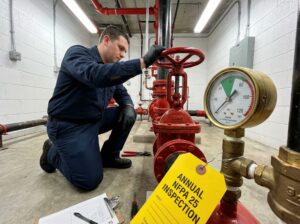
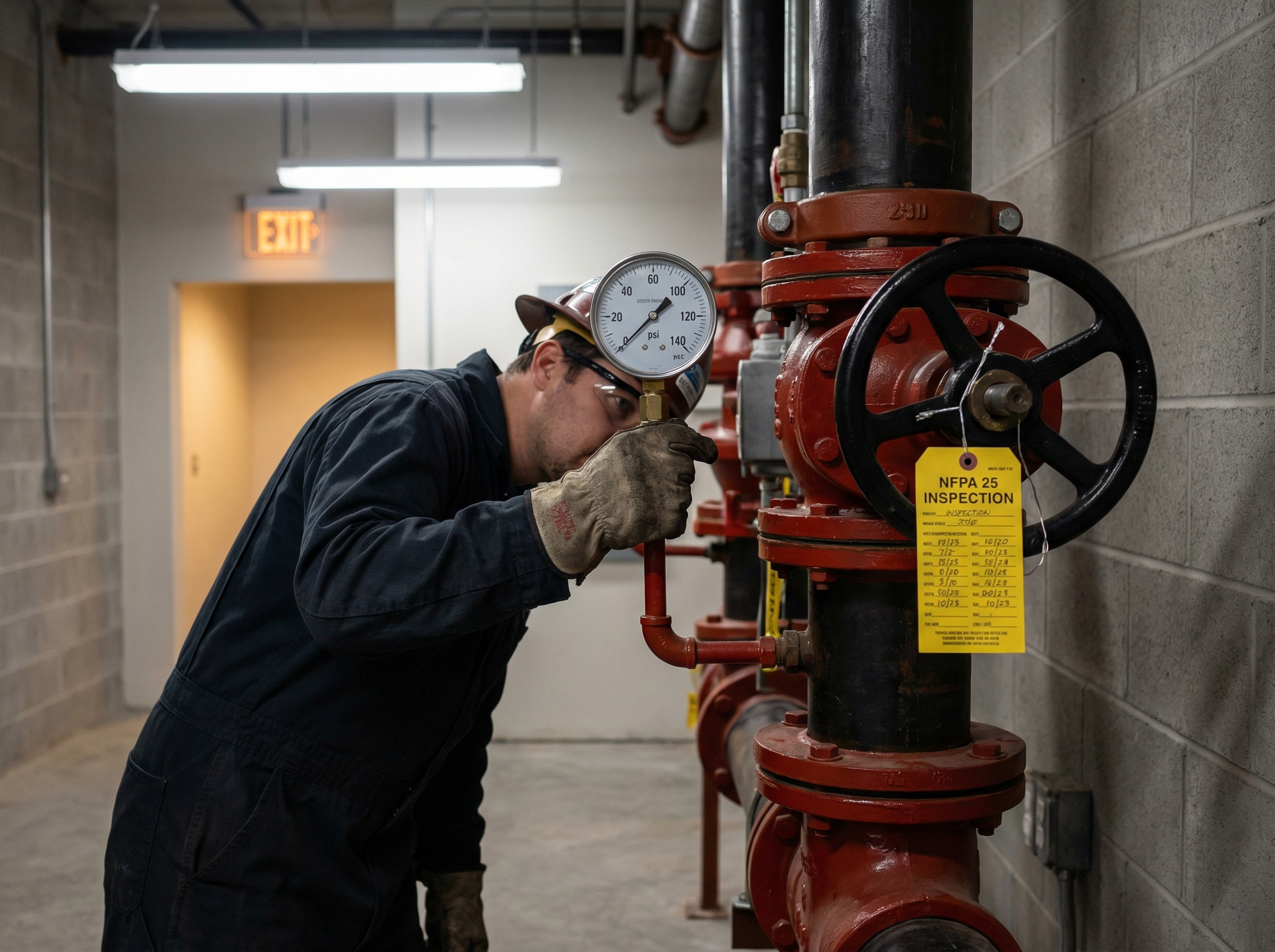
- Establish ongoing inspection cadence: align with NFPA 25 for inspection, testing, and maintenance of water-based fire protection systems and with NFPA 72 for fire alarm systems, as appropriate to the system type.
- Schedule follow-up audits: plan periodic checks to confirm continued compliance and operational readiness.
Implementation details: step-by-step guidance
1) Assemble the team and establish a governance plan
- Create a turnover task force with a documented charter.
- Define decision rights, escalation paths, and sign-off points.
- Set a realistic but aggressive turnover timeline to minimize business disruption while ensuring safety and compliance.
2) Analyze the space and determine occupancy impacts
- Use a pre-turnover survey to map current vs. proposed uses.
- Confirm occupancy group changes that could alter egress and life-safety requirements.
- Engage the AHJ during the design phase to ensure the proposed approach meets local expectations.
3) Decide on sprinkler strategy and code editions
- If the new tenant changes the hazard classification or occupancy classification, assess whether the current sprinkler layout is adequate or if a modernization upgrade is required.
- Determine if current AHJ expectations favor NFPA 13 or a more limited system (13R/13D) depending on occupancy, location, and risk.
4) Document the plan and secure approvals
- Prepare a formal turn-over package including updated NFPA references, hydraulic calculations, design drawings, and test/commissioning plans.
- Obtain permit approvals and align with schedule constraints to minimize disruption.
5) Implement and verify
- Carry out construction or modifications with strict adherence to the design basis.
- Execute acceptance tests under AHJ observation or approval as required.
- Record outcomes, capture any deviations, and implement corrective actions.
6) Handover to operations
- Provide a complete package to the building operations team: as-builts, test reports, maintenance requirements, and contact points for ongoing support.
- Establish a maintenance calendar for the updated system and ensure the property team is aware of inspection intervals.
A practical toolset for turnover safety
Turnover readiness checklist (pre-turnover)
[ ] Occupancy analysis completed
[ ] Current NFPA equivalents identified (NFPA 13/13R/13D)
[ ] AHJ engaged for guidance and acceptance testing plan
[ ] Drawings updated and hydraulics verified
[ ] Permit applications filed and approvals obtained
[ ] Risk assessment for new hazards and fire loads completed
[ ] Alarm interface coordination verified
Turnover readiness checklist (post-turnover)
[ ] Updated as-built drawings and hydraulic calculations delivered
[ ] Commissioning reports and test results filed
[ ] Maintenance plan established and communicated
[ ] Training completed for operations staff
[ ] Inspection schedule aligned with NFPA 25 and NFPA 72
A comparative view: sprinkler system types and when they apply
The interplay between occupancy, code editions, and sprinkler system type is a central concern during turnover. The table below provides a high-level guide to conventional system types and typical applicability. Note: Always verify with the local AHJ, as interpretations vary by jurisdiction and project specifics.
| System Type | Typical Occupancies | When It Is Commonly Required | Primary Code References |
|---|---|---|---|
| NFPA 13 (wet/dry/decentralized) sprinkler systems | Commercial office, manufacturing, multi-tenant spaces with greater hazard | When occupancy and hazard require broad coverage and shared water supply; often the default for non-residential spaces | NFPA 13; NFPA 1 guidance; IBC/IFC definitions |
| NFPA 13R (residential up to 4 stories) | Residential occupancies and some small-scale mixed-use spaces | In dwellings and certain mixed-use cases where life safety is the priority and complexity of full NFPA 13 is not required | NFPA 13R; especially in multi-family scenarios or certain attached-residential layouts |
| NFPA 13D (one- and two-family dwellings) | Single-family dwellings and small-scale residential units | For specific dwelling-type occupancies where limited protection is appropriate | NFPA 13D; limited coverage in small occupancy footprints |
Keep in mind that many turnovers require a dialogue between the building owner, the tenant, and the AHJ to determine the correct system and applicable code editions. The 2024 IBC/IFC changes emphasize occupancy evacuation levels and the interplay with sprinkler coverage approaches, which can influence system choices during turnover. [Changes to the 2024 IBC and IFC]
What about street-level insights? Local guidance matters
Local guidelines can intensify or relax turnover requirements. For example, NYC’s Building Bulletins in 2023 address alterations and changes of occupancy with references to NFPA 13/13R, illustrating how government guidance translates NFPA concepts into practical, enforceable requirements for tenant turnover. This underscores the importance of coordinating with municipal authorities early in the turnover planning process. [Building Bulletins 2023 – Buildings]
Tenancy scenarios: applying the framework to real-world turnover
Scenario A: A new storage tenant in a light-industrial warehouse
- Key risk: High stored value and potential fire load changes; possible changes to occupancy classification depending on the storage type.
- Turnover approach: Review NFPA 13 implications, verify whether current edition upgrades are needed, and consider upgrading to current NFPA standards where the AHJ requires.
- Outcome: The system can be updated to ensure full coverage of fire protection for the new occupancy, with updated documentation and a commissioning record.
Scenario B: A small office relocation within a multi-tenant building
- Key risk: Minor changes in occupant load but potential egress adjustments and alarm integration challenges.
- Turnover approach: Validate whether occupancy load changes demand changes to egress illumination or sprinkler coverage; ensure the fire alarm interfaces align with the new tenant’s needs.
- Outcome: A cost-effective amendment that preserves safety standards and keeps the building compliant.
Scenario C: A healthcare clinic moving into a portion of a mixed-use building
- Key risk: Higher hazard due to medical equipment and patient care needs; potential changes to fire alarm integration with nurse call systems; more stringent life safety requirements.
- Turnover approach: Engage AHJ early; evaluate if NFPA 13 or NFPA 13R is required; plan for enhanced sprinkler protection and robust fire alarm integration.
- Outcome: A highly compliant safety solution that preserves occupant safety and minimizes risk to staff and patients.
The role of 48Fire Protection: Turning turnover risk into safety and compliance
This is where 48Fire Protection’s expertise makes a tangible difference. A turnover project requires a deep, disciplined approach to design, coordination, and execution. Our service approach focuses on preventing surprises, aligning with current codes, and delivering a proven path to compliance and safety.
48Fire Protection services aligned to turnover safety
- Turnover readiness assessment: A structured review of existing systems, occupancy plans, hazard profiles, and AHJ expectations to determine whether upgrades are required and what the scope should be.
- Code-compliant system upgrades: Design and installation work to upgrade sprinklers and related fire protection systems to the appropriate NFPA standards (13/13R/13D) and to current code editions as required by the AHJ.
- AHJ coordination and permit management: Proactive engagement with the AHJ to secure approvals, plan acceptance tests, and align with permit requirements, reducing delays.
- Documentation and commissioning: Updated drawings, hydraulic calculations, and commissioning reports that satisfy both the lease and the governing authorities, including post-turnover occupancy testing.
- Integrated life-safety planning: Evaluation of fire alarm interfaces, interlocks, and egress provisions to ensure a cohesive life-safety strategy across the new tenancy.
- Training and knowledge transfer: Occupant safety training and building operations staff briefings to ensure sustained compliance and quick response in emergencies.
- Ongoing risk management and maintenance: A tailored maintenance and inspection schedule, aligned to NFPA 25 and NFPA 72, to preserve system effectiveness between turnover and future occupancy events.
A practical example of 48Fire Protection’s turnover service package
- Pre-turnover survey and risk assessment
- Occupancy and code analysis with AHJ input
- SOW development and permit coordination
- System upgrade design (sprinklers, alarms, interface changes)
- Installation, testing, and commissioning
- Final handover package with as-builts and maintenance plan
- Ongoing support and 12-month post-turnover check-ins
Reality check: the consequences of missing turnover safety
- Code noncompliance: If the turnover triggers upgrades but they aren’t implemented in a timely and compliant manner, the property can face violations, fines, or stop-work orders.
- Life-safety exposure: Inadequate sprinkler coverage or compromised egress can expose occupants to unnecessary risk during emergencies.
- Operational disruption: Late or poorly coordinated changes can derail occupancy plans, delay lease turnovers, and increase costs.
- Insurance and liability: Inaccurate documentation or insufficient protection can affect coverage and create additional liability in the event of a claim.
A quick-reference guide to avoid common turnover pitfalls
- Pitfall: Underestimating the scope of occupancy changes
Pro tip: Conduct a thorough occupancy analysis early; don’t assume that a name change means no protection changes are required.
- Pitfall: Waiting for the AHJ to raise the issue
Pro tip: Engage the AHJ early with a proposed plan; proactive alignment minimizes delays and objections.
- Pitfall: Relying on outdated drawings
Pro tip: Require updated, as-built drawings with hydraulic calculations prior to turnover acceptance.
- Pitfall: Inadequate documentation
Pro tip: Build a turnover file with all test reports, maintenance records, and code references for easy access during inspections or future turnover events.
Illustrative citations and how to use them in planning
- New storage tenant guidance and current code upgrade implications: Meyer Fire discusses how certain turnover scenarios may require upgrading sprinkler protection to current NFPA 13 editions per NFPA 1 and AHJ guidance. This is a practical reminder that turnover safety isn’t optional—it’s about meeting current expectations and protecting people and property. [New Storage Tenant Need to Meet Current Code?]
- 2024 IBC/IFC changes and their implications for turnover: The changes highlight the relationship between occupancy evacuation levels and sprinkler system requirements, influencing the decision about whether to deploy NFPA 13R, NFPA 13D, or a full NFPA 13 approach. This matters for planning and for setting expectations with the tenant and the AHJ. [Changes to the 2024 IBC and IFC]
- NYC guidance on occupancy and alterations: Building Bulletins 2023 illustrate how government guidance references NFPA 13/13R in turnover scenarios, underscoring the need to align plans with local regulatory expectations. [Building Bulletins 2023 – Buildings]
- NFPA’s sprinkler standard overview and occupancy considerations: The NFPA family of standards (including NFPA 13) governs how sprinkler systems are designed, installed, and maintained. Understanding these standards helps ensure turnover safety aligns with recognized best practices. Learn more about the sprinkler standards at NFPA: [NFPA 13 – Standard for the Installation of Sprinkler Systems]
A broader view: harmonizing turnover safety with ongoing operations
Turnover safety is not a one-off project; it’s a component of ongoing property risk management. A turnover-safe building sets the foundation for reliable operations, predictable occupancy, and resilient facilities. The best practice is to integrate turnover planning into annual facility risk assessments and maintenance planning. By including turnover risk in your overall safety program, you gain the following benefits:
- Improved occupant safety and reduced risk exposure during occupancy changes.
- Clear documentation and alignment with current codes, reducing noncompliance risk.
- Smoother lease transitions and reduced delays due to regulatory approvals.
- Increased confidence among tenants, property owners, and insurers.
A note on scope: what counts as “current code”?
The phrase “current code” is context-dependent. In many markets, the AHJ expects turnover projects to upgrade to the latest edition of NFPA standards (for sprinklers, alarms, and related life-safety systems) and to align with the most current IBC/IFC provisions applicable to the occupancy. In Brooklyn or Manhattan, for example, NYC Building Bulletins and local amendments can influence the exact edition and scope. While standards evolve, the core objective remains constant: ensure life safety and foreseeable risk are managed in a way that meets or exceeds the latest adopted requirements.
Bringing it all together: your turnover safety playbook
- Start with a clear problem statement: Tenant turnover triggers new fire protection requirements that must be understood upfront.
- Use a structured process: Phase the work into pre-turnover assessment, occupancy and code analysis, design/documentation, implementation, and post-turnover verification.
- Treat turnover as a project with a plan, not a surprise: Build a formal SOW, timelines, and AHJ engagement plan.
- Rely on a robust set of checklists: Pre-turnover and post-turnover checklists keep teams aligned and ensure no critical step is skipped.
- Engage qualified partners early: Turnover is a collaborative effort among property managers, fire protection contractors, and the AHJ.
- Document thoroughly: Updated drawings, calculations, test results, and maintenance schedules support ongoing compliance.
48Fire Protection: your turnkey partner for turnover safety and compliance
At 48Fire Protection, we specialize in helping property managers translate complex code language into practical, cost-effective turnkey solutions. Our turnover-focused services are designed to minimize risk, shorten project timelines, and deliver a compliant, occupant-safe environment for the new tenancy. We combine field-tested processes with deep code knowledge to deliver outcomes you can rely on.
What we offer
- Turnover readiness assessments and occupancy analysis
- Sprinkler system upgrades to current NFPA editions when required
- AHJ coordination and permit management
- Updated design drawings, hydraulic calculations, and commissioning reports
- Integrated life-safety planning, including fire alarm interfaces and egress considerations
- Training and knowledge transfer for building operations teams
- Ongoing maintenance planning and inspection readiness (aligned to NFPA 25 and NFPA 72)
Why choose 48Fire Protection for tenant turnover projects
- Proven, repeatable turnover process: Our framework ensures consistency across projects, reducing risk and improving predictability.
- Strong regulatory alignment: We maintain up-to-date knowledge of NFPA standards, IBC/IFC implications, and local authorities’ expectations.
- Seamless project execution: We coordinate with tenants, building owners, and AHJs to minimize disruption and keep turnover on schedule.
- Comprehensive documentation: We deliver complete, auditable records that support future compliance and inspections.
If you’re planning a tenant turnover and want to ensure you meet Fire Protection Requirements, Tenant Turnover Safety, and Property Management Compliance, reach out to us and we’ll tailor a turnover plan that fits your building’s needs.