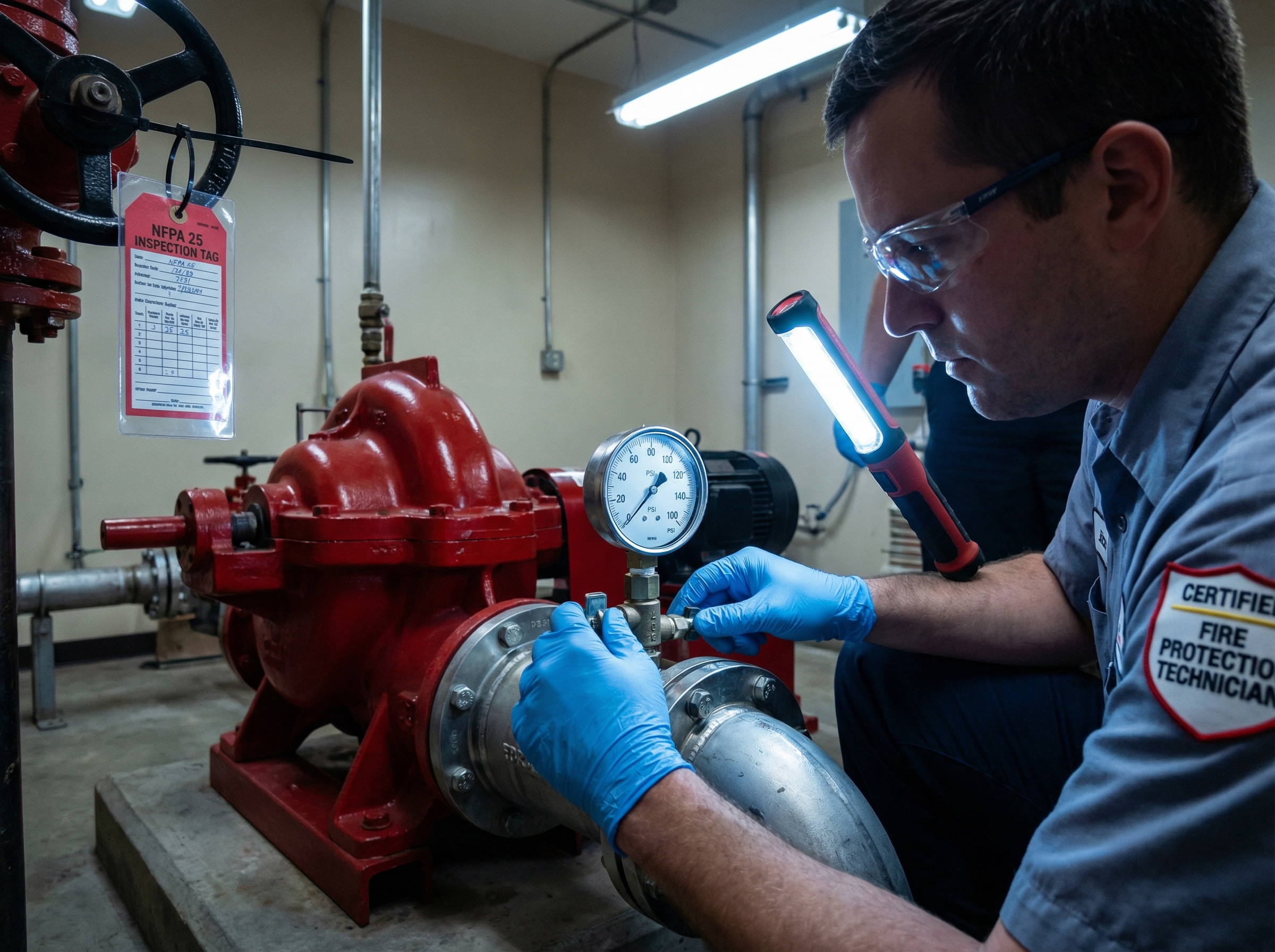
Opening scenario
Picture this: a mid-market manufacturing facility has just completed a busy buy-side diligence process. The deal closes, a new owner takes the helm, and within weeks the acquiring team discovers that critical water-based fire protection systems—sprinklers, standpipes, and their maintenance records—are out of date or inconsistently documented. It’s not just a compliance issue; it’s a material risk that could derail post-close operations, trigger costly retrofits, or expose the company to liability in the event of a loss. This is the reality of mergers and acquisitions (M&A) in the world of fire protection.
In the high-stakes environment of deal-making, fire protection compliance is not a passive checkbox on a due-diligence list. It’s a live, dynamic area that can shape the deal’s valuation, integration timeline, and post-close operating costs. This article walks you through the essential considerations for fire protection compliance during M&A, with practical checklists, state-specific nuances, and a clear path from pre-deal diligence to post-close integration. We’ll also show how 48Fire Protection can support every phase—from initial risk assessment to the implementation of a compliant, well-documented fire protection program.
Executive snapshot: why fire protection compliance matters in M&A
- Hidden liabilities: Inadequate ITM (inspecting, testing, and maintenance) records for water-based fire protection systems can create undisclosed liabilities that affect purchase price and post-close budgets.
- Regulatory gating: Many jurisdictions enforce NFPA-based standards through the adopted versions of NFPA 25, NFPA 13, NFPA 72, and related codes. Understanding the current local adoption status matters for deal diligence.
- Risk of operational disruption: Fire protection systems that are not properly maintained or that have documentation gaps may fail when needed, leading to business interruption, evacuation complexity, or insurance issues.
- Post-close integration costs: If the target’s compliance status requires retrofits or system updates, those costs should be factored into the integration plan and financial model.
Foundational context: core standards and current enforcement trends
- NFPA 25 governs the inspection, testing, and maintenance (ITM) of water-based fire protection systems. It is updated on a three-year cycle, and the 2023 edition introduced changes to ITM requirements and owner responsibilities that are critical to verify during M&A due diligence. For more detail, see Understanding NFPA 25. [Understanding NFPA 25]
- State and local adoption dynamics matter. Maryland officially adopted NFPA 25-2023 as of June 23, 2025, with concurrent adoption of NFPA 13-2022, NFPA 20-2022, and NFPA 72-2022. This signals that updated NFPA standards are enforceable and should be checked in deal diligence. [Maryland Adopts the 2023 edition of NFPA 25]
- Florida’s approach is representative of how states align with NFPA standards through the Florida Fire Prevention Code, which updates on a three-year cycle and adopts NFPA 1 and NFPA 101 by reference. M&A diligence in Florida should verify compliance with these adopted references. [633.202 Florida Fire Prevention Code]
- For context on the NFPA framework itself, the NFPA maintains detailed standards for various systems (including NFPA 25 for ITM and NFPA 13 for sprinklers). See the NFPA standards overview for 25 and related codes. [NFPA 25 Overview]
The intersection of M&A due diligence and fire protection compliance
M&A diligence typically focuses on financials, legal exposure, and operational readiness. Fire protection compliance adds a technical, regulatory layer that can meaningfully affect deal value and post-close budgets. A robust approach to fire protection during M&A addresses:
- System inventory and condition: What water-based systems exist (wet, dry, Deluge, pre- or post-action), and what is their condition, age, and maintenance history?
- ITM program integrity: Are ITM records complete, current, and auditable? Do the owner’s responsibilities align with the latest NFPA 25 edition adopted locally?
- Documentation and procurement: Are as-built drawings, hydraulic calculations, maintenance logs, and system manuals present and accessible?
- Regulatory alignment: What NFPA editions are adopted in the jurisdiction where the asset is located, and what does that imply for post-close compliance?
- Operational and insurance implications: Will noncompliant systems or documentation affect underwriting, premiums, or liability in case of a fire event?
Structure of this article
- Part 1: The regulatory landscape—NFPA 25, local adoptions, and what to verify in diligence.
- Part 2: The due-diligence playbook—pre-deal, during-deal, and post-close actions.
- Part 3: State-specific diligence considerations—Florida, Maryland, North Carolina, and comparable regimes.
- Part 4: A practical diligence toolkit—checklists, templates, and data requests.
- Part 5: 48Fire Protection services—how we can support each phase of M&A fire protection compliance.
- Part 6: Case study and real-world takeaways.
- The article ends with a call to action to engage 48Fire Protection for a comprehensive M&A fire protection program.
Part 1 — The regulatory landscape: NFPA 25, owner responsibilities, and what to verify
A. NFPA 25 in the M&A context
NFPA 25 is the standard for ITM of water-based fire protection systems. The essence of NFPA 25 is to ensure that water-based systems will perform as intended when needed. For M&A teams, key questions include:
- Are the systems properly installed and maintained per the edition in force where the asset is located?
- Are the ITM intervals being met, including the required testing and inspection frequencies for different components (e.g., sprinklers, backflow prevention devices, alarm devices, standpipes, and water supplies)?
- Are owner responsibilities clearly defined and being fulfilled by the current owner, and will those responsibilities transfer to the new owner without lapse?
- Are the ITM records complete, auditable, and ready for transfer to the new owner?
Important nuance: NFPA 25’s three-year cycle means that the standard is updated periodically, and the specific edition adopted by the jurisdiction determines the exact ITM requirements. The 2023 edition introduced changes that affect ITM responsibilities and how owners document and verify compliance. This is precisely the kind of issue that can become a material risk in a takeover if diligence misses a critical ITM deficiency or an outdated inspection interval.
B. State-and-local adoption dynamics matter for M&A
- Maryland’s adoption of NFPA 25-2023 (as of June 2025) demonstrates that updated standards are enforceable in practice and should be checked when assessing an asset’s compliance posture. The concurrent adoption of NFPA 13-2022, NFPA 20-2022, and NFPA 72-2022 indicates that multiple related fire protection standards are now enforceable in that jurisdiction. For diligence, this means looking beyond NFPA 25 to understand the broader code framework affecting the asset. [Maryland Adopts the 2023 edition of NFPA 25]
- Florida’s Fire Prevention Code (633.202) updates on a three-year cycle and adopts NFPA 1 and NFPA 101 by reference, which sets out broader life safety requirements and fire protection baselines. M&A teams acquiring assets in Florida should consider how these NFPA-based requirements translate into operational readiness and post-close compliance strategies. [633.202 Florida Fire Prevention Code]
- The general NFPA landscape remains critical. For a broad understanding of how NFPA 25 is structured and how it interacts with other NFPA codes, refer to the NFPA’s official codes-and-standards detail for code 25. [NFPA 25 Overview]
C. The practical implication: diligence must verify both installation and ongoing maintenance
- The value of a deal can hinge on whether ITM protocols have been strictly followed, whether maintenance logs are complete and up-to-date, and whether the current owner has established a robust ITM program that will smoothly transfer to the acquirer.
- If a jurisdiction requires owner-responsibility documentation and a clean transfer of ITM obligations, the absence of such documentation can trigger post-close remediation, retrofits, or even regulatory enforcement actions. This is not theoretical; it translates directly into cost, schedule, and risk management.
Part 2 — The due-diligence playbook: pre-deal, during-deal, and post-close actions
A robust due-diligence workflow reduces the risk of mispricing, regulatory exposure, and post-close disruption. Below is a practical playbook that aligns with NFPA 25’s ITM obligations while acknowledging state-specific adoption status.
A. Pre-deal (target selection and initial risk assessment)
Initiate an asset-ready fire protection package: Request a complete inventory of all water-based systems, including:
- Sprinkler types and configurations (wet, dry, deluge, pre-action)
- Standpipes and hydrant configurations
- Backflow prevention devices and their testing history
- Water supply reliability and pressure data
- ITM records (dates, results, responsible parties)
- Hydraulic calculations and as-built drawings
- Cross-check with the latest NFPA edition in force in the jurisdiction. Establish whether the current ITM program aligns with NFPA 25-2023 or other edition referenced by the state and local codes.
Identify potential red flags:
- Missing or fragmented ITM records
- Past noncompliance notices or penalties
- Incomplete system inventories or ambiguous ownership of ITM responsibilities
- Obsolete components (e.g., outdated backflow preventers or sprinkler heads)
B. During-deal (deep-dive verification and risk quantification)
Conduct a site evaluation and ITM audit:
- Confirm the presence and condition of every water-based system component
- Verify the installation consistency and whether the as-built drawings reflect the actual installed configuration
- Check the maintenance logs for completeness, currency, and alignment with the applicable NFPA edition
- Review last ITM dates against required frequencies and identify any gaps
- Assess the effectiveness of the owner’s ITM program and the ability to transition responsibilities
Benchmark against jurisdictional requirements:
- Confirm whether Florida’s 633.202 or Maryland’s NFPA 25 adoption affects the asset in question
- Verify that the asset’s compliance status is consistent with the current enforcement expectations
Quantify financial and operational impact:
- Estimate the cost of retrofits, retroactive ITM updates, or system replacements that may be required to meet NFPA 25 and local code requirements
- Assess the potential impact on insurance coverage, premiums, and risk transfer mechanisms
Validate contract language:
- Ensure representations and warranties cover ITM compliance status, documentation transfer, and post-close remediation obligations
- Consider adding a post-closing compliance holdback or earn-out tied to ITM milestones
C. Post-close (integration planning and ongoing compliance program)
Build a transition plan that covers:
- Handover of ITM records to the new owner
- The establishment of a formal ITM program aligned with the adopted NFPA edition
- A schedule for completing any required retrofits or maintenance gaps
- Training for facilities personnel on NFPA 25 obligations and documentation expectations
Implement a compliance governance model:
- Designate an owner or coordinator responsible for ITM oversight
- Create a centralized storage system for all ITM records, inspection certificates, and maintenance logs
- Establish a cadence for annual internal audits to ensure ongoing compliance
Part 3 — State-specific diligence considerations: Florida, Maryland, and beyond
A. Florida (633.202) and NFPA adoption
- Florida’s Fire Prevention Code establishes NFPA-based requirements by reference and is updated on a three-year cycle. The Florida code framework requires understanding how NFPA 25 interacts with NFPA 1 and NFPA 101 within the asset’s jurisdiction. For diligence, verify which NFPA editions the state has formally adopted and how those editions influence ITM responsibilities and fire protection system performance. [633.202 Florida Fire Prevention Code]
B. Maryland (NFPA 25-2023 adoption and companion codes)
- Maryland’s adoption of NFPA 25-2023, accompanying NFPA 13-2022, NFPA 20-2022, and NFPA 72-2022, creates a robust compliance baseline. In diligence, confirm the asset’s adherence to these updated standards and verify that documentation reflects the current adoption status. This is especially important for properties with mixed-use or multi-building footprints where different zones might fall under different code cycles. [Maryland Adopts the 2023 edition of NFPA 25]
C. Other jurisdictions and common patterns
- While Florida and Maryland provide vivid examples, the M&A diligence playground includes many states with their own unique adoption calendars. In practice, diligence teams should:
- Map each asset to its jurisdiction’s adopted NFPA editions
- Verify that ITM records and maintenance programs align with the adopted standards
- Anticipate potential retrofits or documentation gaps triggered by new code editions and factor these into financial models
Part 4 — The diligence toolkit: checklists, data requests, and templates
A. Data requests to support due diligence
Complete system inventory including:
- List of water-based fire protection systems (wet/dry/deluge/pre-action)
- All fire pumps, water supplies, controllers, and backflow preventers
- Standpipes and sprinkler heads, with types and coverage areas
ITM documentation package:
- Current ITM schedules, inspection dates, test results, and corrective actions
- Maintenance logs for all components
- Past deficiencies and remediation actions
- Last three ITM certificates and corresponding witness statements
Architectural and hydraulic documents:
- As-built drawings, hydraulic calculations, and floor plans showing sprinkler layouts
- Piping materials and corrosion protection details
Regulatory correspondence:
- Any notices of violation, enforcement actions, or citations
- Past fire marshal or authority having jurisdiction (AHJ) communications
Owner responsibilities and transition:
- Contracts describing ITM obligations
- Warranties and service agreements for fire protection systems
- Current and future service provider commitments
B. Diligence checklists (with checkboxes)
- [ ] Confirm jurisdictional NFPA edition adopted for the asset’s location
- [ ] Verify ITM interval compliance for all water-based systems
- [ ] Confirm the existence and currency of all ITM documentation
- [ ] Validate installation drawings and hydraulic calculations match the installed systems
- [ ] Review backflow prevention device testing history and water supply reliability
- [ ] Identify any retrofits required to meet current NFPA editions
- [ ] Assess insurance implications and any coverage gaps due to noncompliance
- [ ] Ensure documentation transfer plan is in the closing mechanics
- [ ] Establish a post-close action plan for ITM remediation, if needed
- [ ] Draft representations and warranties related to fire protection compliance
C. Diligence templates
- ITM gap assessment template: capture last ITM date, test results, deficiencies, corrective actions, responsible party, and proposed remediation plan.
- Asset listing and system health summary: high-level snapshot of all systems, their status, and the anticipated cost of remediation.
- Regulatory mapping matrix: a matrix that links each asset to its governing NFPA editions and local enforcement.
D. Data-driven decision support
- A robust diligence process uses data analytics to quantify risk. Examples include:
- Time-to-compliance modeling: expected time to bring all systems into compliance with the adopted NFPA editions
- Cost-to-complete estimates: retrofits, parts, and labor
- Insurance impact scenarios: cost shifts based on post-close fire protection status
Part 5 — 48Fire Protection services: supporting every phase of M&A fire protection compliance
Near the end of the diligence journey, the organization needs a partner who can translate regulatory requirements into actionable plans, timely deliverables, and measurable risk reduction. 48Fire Protection offers a comprehensive suite of services tailored for M&A scenarios, ensuring a smooth transition from diligence to post-close compliance.
- Fire protection compliance audits: Independent, objective audits of water-based systems, alarms, extinguishers, and egress protections to identify gaps relative to NFPA standards and jurisdictional requirements.
- NFPA 25 ITM program design and management: Creation and management of a complete ITM program aligned with the applicable NFPA edition, including documentation templates, testing schedules, and witness testimony guidance.
- Diligence-ready documentation package: A curated, regulator-ready package of drawings, logbooks, certificates, and affidavits suitable for closing and post-close transfer.
- Post-close integration support: Transition services to implement remediation plans, update maintenance contracts, and align risk transfer with insurance requirements.
- Regulatory liaison and AHJ coordination: Guidance on communication with authorities having jurisdiction to ensure a smooth transfer of responsibilities and acceptance of ITM documentation.
- Training and knowledge transfer: On-site and remote training for facilities personnel regarding NFPA-based maintenance, testing, and documentation requirements.
- Emergency action planning and fire drills alignment: Ensuring readiness for regulatory filings and safety program integrations in the post-close environment.
- Comprehensive risk reduction strategy: A holistic approach that aligns fire protection with business operations, insurance, and regulatory expectations.
Service examples you might reference in diligence reports
- NFPA 25-driven ITM program design and deployment tailored to the asset’s system mix
- Pre-closing to post-closing documentation transfer plan and schedule
- Asset-level risk scoring with recommended remediation budgets
- On-demand training for operations and facilities teams on compliance expectations
48Fire Protection’s rationale for supporting M&A teams
- Deep domain expertise in NFPA codes, particularly NFPA 25 ITM requirements and the practical realities of maintenance in industrial facilities
- A track record of helping buyers, sellers, and lenders reduce risk through rigorous, evidence-based diligence
- A transparent, data-driven approach to cost estimation, schedule impact, and risk quantification
- A commitment to aligning fire protection compliance with insurance, operations, and regulatory strategies to maximize deal value
Section highlight: why choosing the right diligence partner matters
- An effective diligence process translates regulatory complexity into a clear, actionable path to compliance. The right partner delivers not only checklists and documents but also the confidence that, once the deal closes, operations will continue to run with a known, auditable compliance status and a plan for ongoing ITM success.
Part 6 — Case study: hypothetical M&A diligence in action
Scenario: A manufacturing facility in a state with NFPA 25-2023 adoption (or later) is being acquired. The seller provides ITM records that cover the past three years, but gaps exist: some devices lack calibration certificates, some hydrant test documents are incomplete, and there’s no clear owner-responsibility transfer plan.
Step 1: Pre-deal risk discovery
- The diligence team flags ITM record gaps and potential retrofits needed to meet NFPA 25-2023 requirements.
- The team notes that Florida-based assets would require alignment with NFPA-adopted references by Florida’s Fire Prevention Code.
Step 2: In-depth site assessment during due diligence
- A field team verifies sprinkler coverage and conducts a live ITM audit to compare with the records.
- The hydraulic calculations are reviewed against the as-built drawings to verify accuracy.
Step 3: Financial impact assessment
- The team develops a remediation budget for missing ITM entries, retrofits needed to meet current codes, and potential backflow device replacements.
- Insurance implications are evaluated to understand how post-close compliance affects premiums.
Step 4: Negotiation and closing conditions
- The deal includes warranties around ITM compliance, a post-closing remediation plan with milestones, and an earn-out tied to ITM milestones.
Step 5: Post-close execution
- 48Fire Protection implements the ITM program in line with NFPA 25-2023, coordinates with AHJs to confirm acceptance, and ensures the transfer of all ITM documentation to the new owner.
Key takeaways from the case study
- A disciplined, data-driven diligence process reduces the risk that an asset’s air-tight financial projections are undermined by hidden fire protection liabilities.
- Aligning ITM documentation with the latest adopted NFPA edition is critical in jurisdictions that actively adopt NFPA standards via state or local codes.
- A post-close plan that is clear and well-supported reduces the ramp-up time for compliance and helps stabilize insurance arrangements.
Using citations to reinforce best practices
- NFPA 25 and the ITM requirements: The three-year cycle and the 2023 edition changes are critical in diligence. See Understanding NFPA 25 for a practical overview. [Understanding NFPA 25]
- Maryland adoption as a diligence predictor: The Maryland adoption signals enforceability of updated NFPA standards and the need to verify the latest editions across NFPA 25, 13, 20, and 72. [Maryland Adopts the 2023 edition of NFPA 25]
- Florida code adoption and diligence scope: Florida’s approach demonstrates the practical impact of NFPA-based requirements in asset diligence. [633.202 Florida Fire Prevention Code]
- NFPA 25 official reference: For a broader perspective on NFPA 25 and its integration with other codes, see NFPA’s standard page. [NFPA 25 Overview]
A note on the scope of 48Fire Protection’s expertise
- Our team is well-versed in NFPA 25 ITM requirements, NFPA 13/72/101 interfaces, and jurisdictional adoption practices across multiple states. We provide end-to-end diligence support—ranging from document collection and gap analysis to ITM program design, training, and post-close remediation planning.
One section: 48Fire Protection’s services for M&A fire protection compliance
- Pre-closing risk discovery and ITM readiness assessment
- ITM program design and management aligned to the applicable NFPA edition
- Documentation transfer strategy and post-close remediation planning
- AHJ coordination and regulatory affairs support
- Post-close ITM execution, testing, and record-keeping
- Training for facilities teams on NFPA-based maintenance and documentation
- Insurance coordination and risk transfer planning
Putting it all together: the practical, structured approach to M&A fire protection compliance
- Start with a clear understanding of the regulatory framework and current local adoptions.
- Build a robust due-diligence plan that integrates ITM considerations and documentation transfer into the closing process.
- Use a data-driven approach to quantify risk, remediation costs, and timeline implications for post-close compliance.
- Engage a partner who can deliver both technical diligence and practical remediation support to avoid post-close surprises.
- Ensure the closing conditions include enforceable representations and warranties on ITM status, with a clear post-close remediation plan and milestones.
Checklists you can adapt for your deal
Pre-deal diligence checklist
- [ ] Jurisdictional NFPA edition adopted for the asset location
- [ ] Comprehensive ITM documentation present and current
- [ ] As-built drawings and hydraulic calculations available
- [ ] Correct owners’ responsibilities for ITM clearly defined
- [ ] No outstanding notices of violation or regulatory penalties
- [ ] Inventory of all water-based fire protection systems complete
During-deal diligence checklist
- [ ] On-site ITM audit conducted and compared to records
- [ ] Gaps identified and quantified
- [ ] Cost estimate for remediation prepared
- [ ] Post-close compliance plan drafted and aligned with closing conditions
- [ ] AHJ engagement plan prepared (if required)
Post-close integration checklist
- [ ] ITM program transferred and owned by new owner
- [ ] All documentation accessible and auditable
- [ ] Maintenance contracts realigned to the new ownership and compliance requirements
- [ ] Ongoing internal audit schedule established
- [ ] Insurance and risk-transfer updated to reflect compliant status
Final notes and call to action
Fire protection compliance during M&A is not just a regulatory check—it’s a critical driver of deal value, operational resilience, and post-close success. By recognizing the importance of NFPA 25 ITM requirements, understanding state-level adoptions, and implementing a structured diligence approach, you can reduce risk and accelerate a clean, compliant transition.
If you are evaluating an asset for acquisition or preparing your own company for a merger, reach out to 48Fire Protection for a comprehensive, diligence-ready fire protection program. Our team can help you uncover hidden liabilities, quantify remediation costs, and deliver an auditable transition plan that aligns with NFPA standards and local codes.