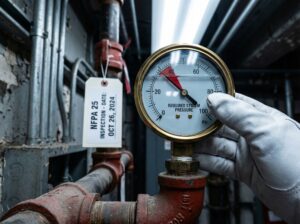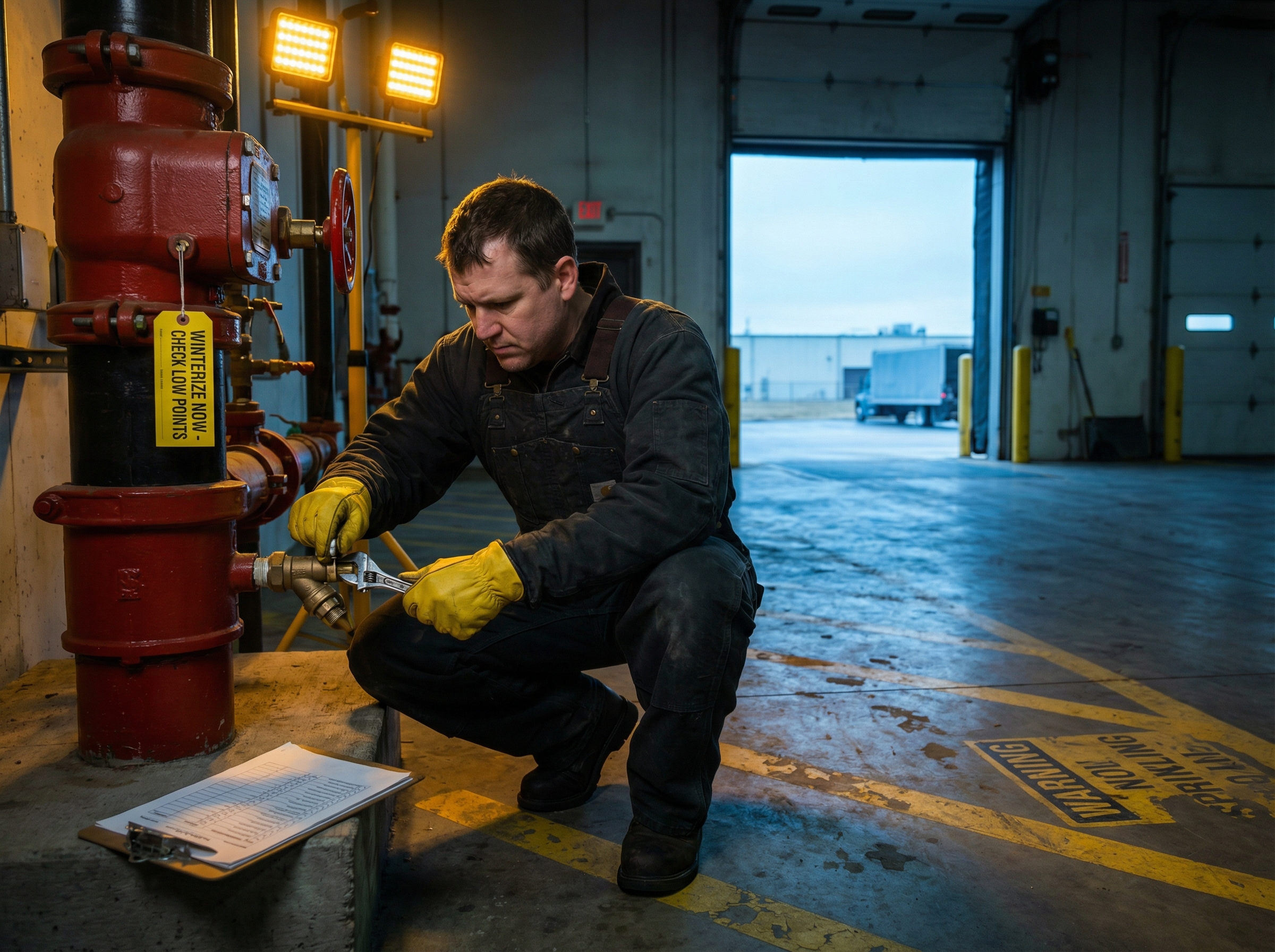
Opening scenario: When expansion is good for business, it also changes risk. A fast-growing regional distributor recently moved from a 40,000 sq ft facility into a 120,000 sq ft multi-zone campus with mezzanines, a high-density racking system, and a mix of cold storage and finished goods. Project managers celebrated, but the fire protection team warned of a hidden risk: the existing fire protection design wasn’t scaled for new spaces, higher storage heights, or the expanded occupancy. The result could be costly downtime, damaged inventory, or worse—injury. This is the moment where commercial fire protection system design, fire safety regulations for business, and advanced fire protection systems become not just compliance checkboxes, but strategic enablers of a safe, resilient expansion.
In this article, we’ll unpack how to approach fire protection during growth, with practical steps, real-world constraints, and a path to a compliant, cost-effective, and future-proof system. You’ll learn how to align expansion plans with current fire protection standards, how to select the right technology mix, and how to implement a design that scales with your business needs.
Table of contents
- Why expansion changes fire risk
- The regulatory backbone: what you must comply with
- Design fundamentals: what “Commercial fire protection system design” entails
- Storage, high ceilings, and obstructions: new design challenges for expansions
- The design process for expansion projects: a practical, phased approach
- Advanced fire protection options for growing facilities
- Checklist: pre-expansion readiness
- Budgeting and ROI considerations
- Case example: applying best practices to a real-world expansion
- 48Fire Protection: services to support your expansion
- Conclusion and next steps
- References
Why expansion changes fire risk
Growth brings more complexity: more occupants, more processes, new spaces (industrial, office, retail, or distribution), higher storage heights, and often a mix of finished goods and raw materials. Each modification alters heat release characteristics, ignition probabilities, ventilation patterns, and the effectiveness of an existing protection scheme. The net effect can be an expanded exposure pool and altered egress patterns, which in turn drives different detection, suppression, and alarm design requirements.
Key risk observations from national fire data and regulatory guidance include:
- Nonresidential fire activity remains a significant concern as facilities evolve. The United States Fire Administration highlights the ongoing impact of nonresidential fires on losses and casualties, with 2023 seeing roughly 110,000 nonresidential building fires and substantial economic and human costs [Nonresidential Fire Estimate Summaries (2014-2023)] — a strong reminder that expansion introduces new risk vectors that can quickly escalate if protection is not updated.
- Construction and modifications produce unique fire protection challenges that demand a formal program. OSHA’s Fire Protection standard explicitly requires a formal fire protection program across all construction phases, with minimum portable extinguisher coverage and travel-distance limits to extinguishers. This isn’t optional during expansion—it’s a baseline expectation for safety and compliance [1926.150 – Fire protection].
- The code landscape is not static. The 2025 edition of NFPA 13 introduces provisions for high-ceiling, obstructed-space storage and related design areas, which directly affect how sprinkler systems must be configured in expanding facilities. For managers planning upgrades or new builds, understanding these changes is essential to avoid undersized protection in critical areas [Changes in the 2025 Edition of NFPA 13].
- The broader NFPA framework underpins modern protection design. NFPA standards provide the baseline for sprinkler design, detection, alarm integration, and system reliability. For expansion projects, relying on the latest editions and associated guidance helps ensure your design is defensible under code enforcement and insurance review. Visualizing how these standards apply to your space is essential to a robust plan.
To ground this discussion in data and regulation, we’ll weave in practical design guidance, regulatory requirements, and technology options. Remember: expansion risk isn’t just a hazard—it’s a project management challenge that can be mitigated with disciplined planning and professional design.
The regulatory backbone: what you must comply with
Every expansion must align with a framework of fire protection standards, building codes, and safety regulations. Three core threads run through most mid-size to large expansions:
1) Fire protection program quality and construction-phase requirements
- OSHA 1926.150 requires a formal fire protection program for construction activities, including portable extinguishers and travel-distance provisions that ensure a firefighter or worker can reach a unit promptly during construction. In practice, this means you won’t simply relocate equipment and hope for the best; you’ll need documented extinguishment resources, regular inspections, and clear coverage plans for temporary construction zones. This is the minimum standard you must meet during any on-site expansion work [1926.150 – Fire protection].
2) Commercial fire protection system design, including sprinkler and detection coverage
- The core of expansion design rests on the principles of commercial fire protection system design: ensuring adequate detection, annunciation, and suppression that match occupancy type, storage hazards, and process risk. Sprinkler design must account for headroom, obstructions, and storage layout, particularly in areas with high-pile storage and mezzanines. The 2025 NFPA 13 changes add nuance to design areas and obstructions, influencing how you calculate hydraulic demand and select sprinkler types for expanded spaces [Changes in the 2025 Edition of NFPA 13].
3) NFPA 13-based design standards
- NFPA 13 is the foundational standard for sprinkler systems in most commercial facilities. It guides sprinkler selection, placement, hydraulic calculations, and protection area delineation. When you’re expanding, you need to verify that new spaces conform to the latest edition and that any transitional spaces (loading docks, offices, data centers, storage rooms) are designed with appropriate coverage. In addition to installation, ongoing maintenance and inspection are governed by related NFPA standards (for example, NFPA 25 covers inspection and testing of water-based systems). For expansion planning, referencing NFPA 13 in conjunction with project-specific hazards ensures a compliant and reliable system [NFPA 13 – Standard for the Installation of Sprinkler Systems] (NFPA’s standards page).
Design fundamentals: what “Commercial fire protection system design” entails
A well-planned expansion is not a patch job; it’s a holistic design exercise that anticipates current and future uses. Here are the core design elements to address early in the project.
Design goals
- Achieve reliable early detection and annunciation across the expanded footprint.
- Provide timely suppression coverage where needed, with appropriate options for storage, process areas, and high-occupancy zones.
- Maintain occupant egress integrity and fire department access.
- Minimize downtime during expansion by planning for temporary protection measures that integrate with permanent systems.
Key design elements
- Detection and alarm: Optimize for the new occupancy mix, including offices, manufacturing floors, and storage. Decide between addressable detection, fixed heat/smoke detectors, and integration with the building management system.
- Suppression strategy: Choose the appropriate approach (wet-pipe, dry-pry, deluge, water mist, clean agent, or hybrid systems) based on area hazard, occupancy, and stored goods.
- Water supply and hydraulics: Ensure adequate water supply, pressure, and flow to the expanded system, with precise hydraulic calculations that reflect added spray areas, obstructions, and elevation changes.
- Obstructions and high ceilings: Expanded facilities frequently include tall racking, storage mezzanines, and other obstructions that influence sprinkler placement and coverage. The 2025 NFPA 13 changes address these challenges by refining design areas and sprinkler requirements for obstructed spaces [Changes in the 2025 Edition of NFPA 13].
- System integration: Ensure that fire detection, suppression, access control, and mass notification systems work together. A modern facility often benefits from integrated life-safety and facility management solutions.
A practical design approach
- Start with a field survey: Map all existing protection boundaries, identify expansions, and document high-hazard zones (e.g., flammable liquids, hazardous materials, or high-risk storage).
- Define performance targets by zone: For example, office areas may prioritize early detection and evacuation signaling, while storage areas emphasize rapid sprinkler response and reliable water supply.
- Validate design with code checks: Confirm that all zones meet NFPA 13 and NFPA 25 (for inspection/maintenance where applicable) requirements, plus any jurisdictional amendments (IFCs/IBC assumptions, local addenda).
- Build a robust testing plan: Include hydraulic verification, nuisance alarms, and functional testing that covers the new spaces. The plan should align with OSHA and NFPA expectations for commissioning and acceptance.
Storage, high ceilings, and obstructions: new design challenges for expansions
One of the biggest pitfalls in expansions is underestimating the impact of high ceilings, mezzanines, and obstructed spaces on fire protection performance. High ceilings can require longer response times for detection and higher column counts for sprinkler density; obstructions such as racks and storage aisles affect water distribution and sprinkler coverage. The 2025 NFPA 13 edition acknowledges these challenges and introduces refined design areas and sprinkler requirements to address storage and obstructions more robustly. When you’re planning an expansion, you must evaluate:
- Storage configuration changes (racking height, aisle widths, compact storage)
- Ceiling height and room geometry (high-pile storage, mezzanines)
- Obstructions (columns, equipment, storage aisles) that alter spray patterns and air movement
- The interaction between storage spaces and fire protection coverage (avoiding dead zones and ensuring reliable discharge)
Table: Design options for protecting storage and operational zones
| Zone type | Protection approach | Key considerations | Pros | Cons |
|---|---|---|---|---|
| Storage with high-pile shelving | Sprinkler design with extended response and adequate clearance; consider spray density and clearance from products | Obstructions, storage height, aisle width | Higher protection for goods; scalable as storage grows | Higher upfront costs; more complex hydraulics |
| Cold storage or temperature-controlled rooms | Climate-controlled, may require dry pipe or pre-Action systems with corrosion resistance | Humidity, condensation, material compatibility | Maintains product integrity; faster response due to cooler temps | Specialized equipment; maintenance complexity |
| General manufacturing/production floors | Wet-pipe or water mist; possible stand-alone detectors | Noise considerations; integration with process controls | Reliable protection; easier to maintain | System sizing may be conservative if zones are not well-defined |
| Office and admin spaces | Early warning detectors and zone-based suppression as needed | Occupant safety and minimal nuisance alarms | Quick occupant notification; flexible design | Potential for overprotection if misapplied |
Note: The table above is a simplified reference. In practice, a thorough site assessment is essential to determine the optimal mix of detection, suppression, and water supply. For facilities with obstructions or high ceilings, engineers often use computational modeling and hydraulic calculations to verify coverage and ensure compliance with NFPA requirements.
The design process for expansion projects: a practical, phased approach
A robust expansion protection plan typically follows a phased process that aligns with project milestones. Below is a practical template you can adapt.
Phase 1: Discovery and constraint mapping
- Compile existing protection data (as-built drawings, system inventories, and maintenance histories).
- Conduct field surveys to identify new zones and potential hazard changes.
- Define expansion goals: occupancy mix, storage height, product types, and operational hours.
Phase 2: Hazard analysis and design framework
- Identify high-risk areas: flammable liquids, storage configurations, or processes that require enhanced protection.
- Determine the protection strategy per zone: detection type, suppression approach, and system integration.
- Establish design criteria benchmarks (e.g., expected sprinkler density, water supply, and acceptance criteria).
Phase 3: System design and calculations
- Perform hydraulic calculations that reflect expanded layouts and obstructions.
- Specify sprinkler types, spray patterns, and head placement that account for high ceilings and obstructions.
- Plan for power supply, standby power, and remote monitoring integration.
Phase 4: Documentation and approvals
- Produce design drawings, hydraulic calculations, and sequence of operations.
- Obtain code compliance checks from the authority having jurisdiction (AHJ) and coordinate with building permits.
Phase 5: Construction and commissioning
- Install protection systems according to the design documents, with quality assurance checks.
- Conduct testing, including functional tests on detection, annunciation, and suppression.
- Complete final acceptance and training for maintenance staff.
Phase 6: Post-expansion verification and ongoing maintenance
- Schedule regular inspections, testing, and maintenance per NFPA standards.
- Update as-built drawings to reflect the new protection layout.
- Align with insurance requirements and potential incentives tied to enhanced protection.
Advanced fire protection options for growing facilities
Expansion often benefits from a layered approach that combines traditional fire protection with modern, intelligent, and less intrusive technologies. Here are several advanced options to consider:
1) Water-based suppression optimizations
- Wet and dry sprinkler systems remain foundational for many facilities, especially in open plan areas and conventional storage zones.
- High-pile storage or obstructed-space designs may benefit from optimized sprinkler density, adjusted deflection patterns, and specialized sprinklers designed for storage environments.
2) Water mist and hybrid systems
- Water mist systems use finely atomized water to produce effective cooling and displace oxygen in a targeted way, often with smaller water discharge than traditional sprinkler systems. These can be particularly advantageous for spaces that require minimal collateral water damage or where high-value equipment is present.
3) Clean agent and inert gas systems
- For critical areas such as data centers, control rooms, or server rooms, clean agent or inert gas suppression can offer fast knockdown with minimal collateral damage to sensitive equipment. This is especially relevant to expansions that unify operations across multiple spaces and need to preserve equipment uptime.
4) Early detection and intelligent annunciation
- Smart detectors, addressable fire alarm systems, and integration with building management systems allow for precise location-based annunciation, reducing response times and enabling targeted evacuation or shutdown procedures.
5) Standby power and resilience
- Expansions should consider independent power sources for critical life-safety systems, ensuring continuity during outages. This is essential for facilities handling essential goods or critical processes during expansion.
6) Data-driven maintenance and remote monitoring
- Modern protection systems support remote monitoring and predictive maintenance, which reduces downtime and extends the life of protection assets. This approach aligns well with growing facilities that span multiple zones and require coordinated maintenance across site boundaries.
7) Obstruction-aware design innovations
- For high-ceiling or obstructed areas, design professionals may specify special sprinkler heads, alternative mounting heights, and zone controls to ensure adequate coverage. The updated 2025 NFPA 13 guidelines emphasize the importance of considering storage and obstructions in design areas.
8) Integration with fire department connections and pre-incident planning
- As facilities expand, establishing robust external connections and pre-incident planning with the local fire department enhances overall resilience and reduces on-site risk.
Checklists and practical steps for expansion readiness
Use these checklists to keep the expansion project on track and compliant.
Pre-expansion readiness checklist
- [ ] Complete an up-to-date site survey of all existing protection zones and new expansion areas.
- [ ] Define occupancies, storage types, and hazardous materials present in the expanded footprint.
- [ ] Confirm funding and schedule alignment for protection system upgrades in the expansion scope.
- [ ] Prepare a hazard analysis that identifies high-risk areas requiring enhanced protection.
- [ ] Establish a target protection philosophy for each zone (detection, suppression, egress, and resilience).
- [ ] Engage a qualified fire protection engineer to perform hydraulic calculations for the expanded layout.
- [ ] Coordinate with AHJ early to address code interpretations and permit requirements.
Expansion design and construction checklist
- [ ] Develop design drawings showing new and modified protection zones, device locations, and control sequences.
- [ ] Verify power supplies, standby power, and critical equipment reliability for life-safety systems.
- [ ] Plan for temporary protection during construction in line with OSHA 1926.150 requirements.
- [ ] Complete risk-based testing plans, including functional testing of detection and suppression.
- [ ] Prepare training materials for facility personnel on new systems and maintenance procedures.
- [ ] Update operation and maintenance manuals with the expanded layout and system changes.
Post-expansion maintenance and verification checklist
- [ ] Schedule NFPA-compliant inspections and testing (per applicable standards).
- [ ] Confirm calibration and testing of detectors after any reconfiguration.
- [ ] Verify that all new equipment is included in maintenance contracts and spare parts inventory.
- [ ] Update all drawings and documentation to reflect the final installed configuration.
- [ ] Maintain ongoing communication with the AHJ for periodic re-inspections and code compliance.
Budgeting and ROI considerations
allocating funds for expansion protection is not a mere line item; it’s an investment in resilience, product protection, and business continuity. Here are practical budgeting considerations and ROI drivers.
Budget categories
- Design and engineering: The upfront cost of site surveys, hazard analyses, hydraulics, and design development.
- Equipment and installation: Sprinkler heads, detectors, control panels, piping, and required hardware; plus the cost of any specialty systems (water mist, clean agent, etc.).
- Integration and commissioning: System integration with alarms, building management systems, and the commissioning process to bring the expansion online with verified performance.
- Temporary measures during construction: Costs associated with OSHA-compliant temporary fire protection (extinguishers, barriers, temporary detection, and water supply planning).
- Maintenance and lifecycle: Ongoing inspections, tests, and maintenance; spare parts and service contracts are essential for long-term reliability.
ROI drivers
- Reduced downtime risk: By ensuring your expansion is protected from day one, you minimize the time lost to fire incidents or system failures.
- Inventory protection: Proper protection reduces potential losses from fires affecting stored goods and processes.
- Insurance and resilience: Upgraded protective capabilities can positively influence insurance premiums and coverage terms.
- Compliance and risk reduction: Adherence to NFPA standards and OSHA requirements reduces legal and regulatory risk and supports a safer work environment.
Case example: applying best practices to a real-world expansion
A mid-sized distribution center planned a 40% expansion to accommodate peak-season demand, including a high-density pallet storage area and a new blast freezer. The project team recognized that simply extending the existing sprinkler layout would risk underserving the new storage heights and obstructed zones. They engaged a fire protection engineer to perform a hazard analysis, quantify hydraulic demand for the expanded footprint, and design a zone-based protection approach.
Key steps they implemented:
- Mapped existing protection zones and projected expanded coverage requirements.
- Selected a mixed approach: water-based sprinkler for most zones, with water mist for high-value, high-risk storage zones, and a clean agent system for critical operations rooms.
- Updated detection with addressable sensors and integrated annunciation with building management and security.
- Strengthened the water supply and added a backup power source to the fire protection system.
- Established a commissioning plan with a staged testing schedule and operator training.
This approach led to a smoother expansion, reduced risk of downtime, and ensured compliance with both NFPA standards and OSHA requirements through all construction phases. The use of high-quality design and implementation could have a meaningful impact on the bottom line by avoiding costly retrofits and minimizing the chance of protection gaps.
48Fire Protection: services to support your expansion
As you plan and execute a business expansion, 48Fire Protection offers a suite of expertise to ensure your project is compliant, reliable, and scalable. Our engineers bring depth in commercial fire protection system design and execution, with a focus on practical, field-proven strategies for expanding facilities.
What we offer
- Commercial fire protection system design and optimization: We tailor protection strategies to your space, ensuring appropriate coverage for new zones and obstructions while remaining cost-conscious.
- Fire safety regulations for business compliance: Our team keeps you aligned with OSHA, NFPA, and local AHJ requirements, helping you navigate complex permitting processes.
- Integration of advanced fire protection systems: We help select and implement advanced options (water mist, clean agent, hybrid systems, intelligent detection) that fit your risk profile and budget.
- Hydraulics and calculations: We perform precise hydraulic calculations for expanded spaces and provide documentation to support permit review and insurance assessment.
- Construction-phase protection programs: We help implement OSHA-compliant temporary protection during construction and coordinate with contractors for a seamless transition to the final system.
- Commissioning, training, and ongoing maintenance: From functional testing to operator training and long-term maintenance plans, we ensure your system continues to perform as designed.
- Ongoing compliance and modernization planning: We assist with periodic system reviews, code updates, and lifecycle planning to keep protection aligned with facility growth.
Near the end of the article, we’ll summarize how to engage with 48Fire Protection for your expansion needs and provide specific service details.
Why partner with 48Fire Protection for expansion projects
- Proven design excellence: We bring a rigorous, code-driven approach to expansion projects that reduces risk and downtime.
- Multidisciplinary integration: We coordinate with architectural, structural, and mechanical teams to ensure protection aligns with the broader project plan.
- Flexible solutions: We tailor protection strategies to your hazards, space constraints, and budget, including advanced systems for challenging environments.
- Lifecycle focus: We don’t stop at installation; we deliver commissioning, training, maintenance plans, and ongoing compliance guidance.
Callouts and reminders
- Early and frequent regulatory alignment: Start with a pre-design regulatory review to avoid last-minute disputes with AHJs.
- Obstruction-aware design is essential: Obstructions and high ceilings have a meaningful impact on protection coverage and must be addressed in the design phase.
- Document everything: A robust set of drawings, calculations, and sequences of operation will help with permitting, insurance, and future expansions.
Citations and sources
- Nonresidential Fire Estimate Summaries (2014-2023) — USFA data on fire losses and trends in nonresidential fires, highlighting the importance of robust fire protection during expansion: https://www.usfa.fema.gov/statistics/nonresidential-fires/ [citation]
- 1926.150 – Fire protection: OSHA standard requiring a formal fire protection program during construction with minimum extinguisher coverage and travel-distance requirements: https://www.osha.gov/laws-regs/regulations/standardnumber/1926/1926.150 [citation]
- Changes in the 2025 Edition of NFPA 13: NFPA 13 changes regarding high-ceiling and obstructed-space provisions affecting expansion design: https://nfsa.org/2024/07/23/changes-in-the-2025-edition-of-nfpa-13-technotes/ [citation]
- NFPA references and standard guidance on sprinkler installation and design (NFPA 13): https://www.nfpa.org/codes-and-standards/list-of-codes-and-standards/detail?code=13 [citation]
Note: The NFSA article linked above discusses the 2025 NFPA 13 changes and their practical implications for design. For broader NFPA standard context, you can also consult NFPA’s official pages and standard documents.
Addressing common questions (Q&A)
- Do I need to upgrade my entire protection system when expanding, or can I add small zones? It depends on hazard analysis, updated occupancy, and the interaction of existing zones with new spaces. In many cases, a phased approach that upgrades critical sections first—such as high-hazard storage or data centers—while extending protection to other zones is prudent, especially when higher hazard levels or deeper obstructions are introduced.
- How do high ceilings and obstructions affect protection design? High ceilings can slow detection and alter sprinkler coverage patterns. Obstructions (racks, equipment) can create dead zones where water distribution is insufficient. The 2025 NFPA 13 changes address some of these design challenges by refining design areas and considering storage and obstructions more explicitly.
- What about using advanced systems like water mist or clean agent in expansion projects? Advanced systems can be suitable for targeted priorities, especially in spaces with sensitive equipment or high-value inventory where traditional water-based protection could cause collateral damage. A risk-based assessment will determine the most appropriate technology mix, and 48Fire Protection can guide the selection and implementation process.
- How do I ensure ongoing compliance after expansion? Maintain a robust maintenance and testing program (per NFPA standards), keep as-built drawings up to date, and schedule periodic reviews to align with any changes in occupancy, storage, or processes. Compliance is an ongoing process, not a one-time event.
Key takeaways
- Expansion introduces new fire protection challenges that require a formal, phased approach to design and implementation.
- Regulatory requirements from OSHA, NFPA, and AHJs shape how you plan and execute expansions. Proactive compliance reduces risk and downtime from the outset.
- Advanced fire protection systems, integrated with smart detection and resilient water supply, can significantly improve protection for high-risk zones while reducing collateral damage.
- A dedicated design and implementation partner, like 48Fire Protection, can help you navigate the complexities of expansion, from design through commissioning and ongoing maintenance.
Conclusion
Expansion is a compelling growth driver, but it also raises the stakes for fire protection. A deliberate, standards-based approach to commercial fire protection system design that accounts for new hazards, obstructions, and high-ceiling areas will protect people, inventory, and operations. By aligning your expansion plan with OSHA requirements, NFPA 13 provisions (including 2025 updates for storage and obstructions), and a modern, integrated protection strategy, you’ll reduce risk, improve resilience, and position your business for a smooth, successful growth trajectory.