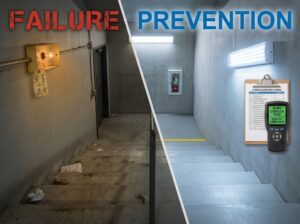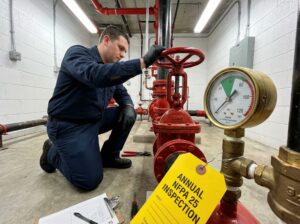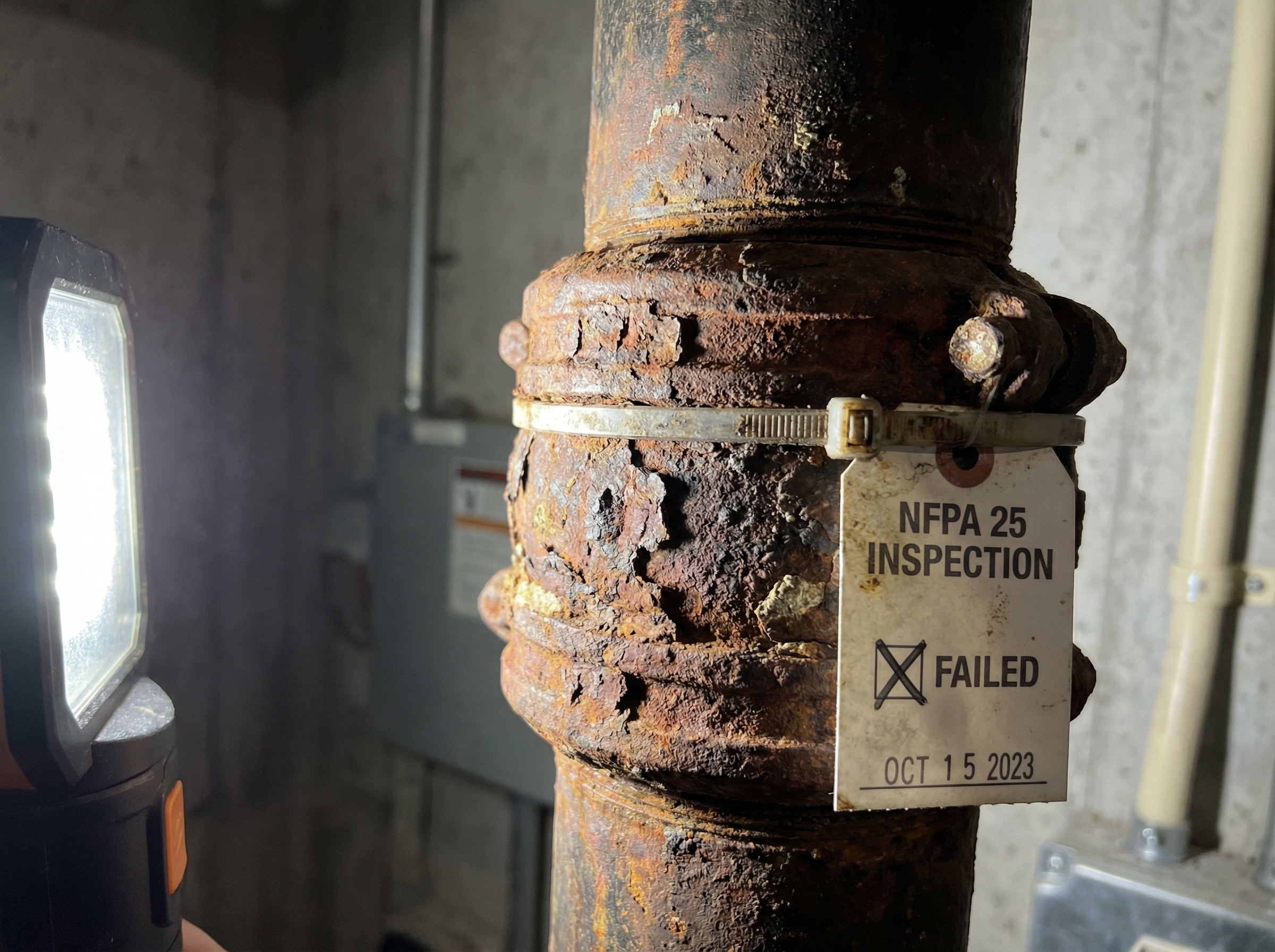
A mid-sized chemical processing plant sits quietly on a Tuesday morning, until a routine compliance review reveals a cascade of gaps: missing or outdated Fire Prevention Plans, untested extinguishing systems, and a maintenance log that’d be more at home in a museum than a live plant floor. The site is not unique. Across industrial facilities—from chemical plants and refineries to metalworks and food processing—uniform compliance with fire protection standards is not optional; it’s a core operating assumption. In today’s risk-aware environment, industrial fire protection compliance is a strategic capability that protects people, property, and productivity.
This article dives into what “Fire Safety Compliance” means for industrial facilities, how to align with NFPA industrial standards, and how to build a durable program that withstands audits, inspections, and real-world operational pressures. We’ll blend practical steps, data-driven context, and concrete guidance that a facilities team can implement now. We’ll also show how 48Fire Protection can partner with your organization to design, implement, and sustain robust fire protection compliance.
Throughout, you’ll see references to authoritative sources that frame the landscape of industrial fire protection. For credibility and ongoing learning, we’ve included key citations from OSHA, NFIRS data, and the Chemical Safety Board’s investigations, along with a nod to NFPA’s standards universe.
—
Opening context: why compliance matters in the real world
Imagine a plant manager walking into the maintenance office after a Friday night shift. The plant’s emergency response team has practiced drills and the site burns with the hum of pumps and fans, but a compliance grab-bag of issues sits on the desk: outdated Fire Prevention Plans, a missing annual inspection report for fire sprinklers, and a lack of formal documentation for ignition-source controls in high-risk areas. The manager realizes that “fire safety” isn’t a single task; it’s an integrated program that ties together written plans, physical safeguards, people, processes, and continuous improvement.
This scenario is not hypothetical in the sense that data show industrial facilities face persistent fire risks that demand structured, auditable protection programs. If you’re responsible for Industrial Fire Protection and Fire Safety Compliance, you’re operating in a space where regulatory requirements and best practices converge to reduce risk, ensure business continuity, and protect lives. The following sections translate that reality into actionable steps, frameworks, and checklists you can apply to your facility.
Key idea: Effective industrial fire protection compliance is not a one-and-done project. It’s a living, auditable program that integrates people, processes, and plant systems, anchored in recognized standards and continuous improvement.
—
The compliance landscape: who sets the rules and why
Industrial facilities sit at the intersection of multiple regulatory and voluntary regimes. Compliance isn’t about chasing a single standard; it’s about harmonizing a framework that reduces risk across design, operation, and maintenance. Two anchors define the baseline and the aspirational posture:
- The Occupational Safety and Health Administration (OSHA) requires a formal Fire Prevention Plan (FPP) in many industrial settings, along with ongoing safeguards for hazardous materials, ignition sources, and assigned responsibility. The core requirement is a written plan with minimum elements that reflect the facility’s specific hazards and controls. This baseline is codified in 29 CFR 1910.39, which emphasizes a documented approach to preventing fires in workplaces. [OSHA 1910.39 Fire Prevention Plans]
- The National Fire Protection Association (NFPA) provides a comprehensive, widely adopted set of standards that guide design, installation, testing, maintenance, and operations of fire protection systems in industrial settings. While compliance is voluntary for many organizations, NFPA standards are broadly adopted by regulators, insurers, and third-party auditors as the authoritative reference for best practice and risk reduction. A broad entry point is NFPA’s official hub: [NFPA – National Fire Protection Association]
Supplementing these anchors are nationwide and sector-specific data, incident analyses, and lessons learned from investigations that show what can go wrong when safeguards aren’t robust, current, and properly maintained.
- The U.S. Fire Administration’s NFIRS program collects nationwide fire incident data that informs risk assessment for industrial facilities. The 2024 Public Data Release shows more than 22,500 fire departments reporting and over 33 million incident responses since the system’s inception, underscoring the scale of fire risk and the value of data-informed risk management. This data source helps facilities benchmark risk and tailor preventive strategies accordingly. [NFIRS 2024 Public Data Release]
- The Chemical Safety Board (CSB) investigates significant chemical incidents and publishes findings that illustrate how gaps in safeguards translate into large property damage and elevated risk. A high-profile example is the 2023 Martinez Renewables Facility fire, where the CSB identified six safety gaps contributing to the incident and highlighted near $350 million in property damage, emphasizing the need for robust protections around fired heaters and related equipment. These investigations reinforce the criticality of robust safeguards in industrial environments. [CSB Final Report on 2023 Martinez Fire]
Together, OSHA’s regulatory baseline, NFPA standards, and incident investigations create a compelling case for treating Fire Safety Compliance as a strategic, continuous program rather than a periodic checkbox.
Key takeaway: In industrial facilities, compliance is a multi-source discipline—grounded in written plans, anchored by standards, and reinforced by data-driven risk management.
—
NFPA industrial standards: the practical backbone
When we talk about NFPA in the industrial context, we’re talking about a family of standards that cover design, installation, testing, and ongoing maintenance of fire protection systems, as well as behavior and operations around fire hazards. For facilities seeking to align with “NFPA Industrial Standards,” a practical entry point is to map the standard categories to your plant’s systems and processes.
Here’s a concise table to orient your program. It highlights core NFPA standards commonly referenced in industrial settings, along with their scope, key provisions, and why they matter for industry:
| Standard | Scope | Key Provisions | Why it matters for industrial facilities |
|---|---|---|---|
| NFPA 13 | Installation of sprinkler systems (wet, dry, deluge, etc.) | System design, water supply, hydraulics, inspection, testing, and maintenance requirements | Direct protection for life and property when sprinklers are the primary suppression method; ensures coverage, reliability, and performance during a fire event. |
| NFPA 25 | Inspection, testing, and maintenance of water-based fire protection systems | Scheduling, procedures, and documentation for ongoing system reliability | Keeps sprinkler systems functioning as intended; regular testing helps catch degradation and ensure readiness. |
| NFPA 70 | National Electrical Code (NEC) and electrical safety | Wiring methods, electrical installations to reduce ignition sources, bonding/grounding, arc-flash considerations | Reduces ignition risk from electrical equipment in industrial environments; critical for zones with flammable materials. |
| NFPA 1 | Fire Code (code-wide coverage) | Fire prevention, protection, life safety systems, and combustible storage practices | Sets a cohesive framework for fire prevention programs across facilities; helps harmonize multiple fire protection layers. |
| NFPA 72 | National Fire Alarm and Signaling Code | Fire alarm systems, notification, supervision, testing | Ensures reliable life-safety signaling and timely notification to occupants and responders. |
| NFPA 92 | Smoke management and control | Smoke control design, exhaust systems, and related performance | Critical for facilities with enclosed spaces or complex process ventilation, improving tenability during incidents. |
| NFPA 85/86 (where applicable) | Fired heaters and process equipment safety | Design, operation, and maintenance of fired heaters; safeguards to prevent flare and overheat events | Industrial facilities with fired heaters require robust controls because startup/shutdown and process changes can create ignition risk. |
Note: The exact standard set will vary by facility type (chemical processing, refining, metals, plastics, food processing, etc.), but the table above reflects core areas that frequently appear in audits and regulatory expectations. For a deeper dive into NFPA standards, visit NFPA’s official site: [NFPA – National Fire Protection Association]
Key takeaway: NFPA standards are not just “rules.” They are a practical language for designing, operating, and maintaining risk-reducing fire protection systems in industrial settings.
—
Why this matters: data-driven risk in industrial environments
A rigorous Fire Safety Compliance program is not just about meeting a standard; it’s about reducing real-world risk to people, assets, and uptime. Two sources illuminate why robust compliance matters in industrial settings.
- Fire incident data informs risk prioritization. The NFIRS data underscores the magnitude and variety of fire incidents across departments and regions, illustrating the scale of risk that industrial facilities must manage. Translating that data into plant-level action helps you identify high-risk areas (e.g., electrical rooms, areas with flammable liquids, process heaters) and tailor preventive strategies accordingly. [NFIRS 2024 Public Data Release]
- High-profile investigations reveal the cost of gaps in safeguards. The CSB Martinez fire report demonstrates how multiple gaps—in this case around fired heaters and related safeguards—can lead to severe consequences and substantial property damage. The report’s six safety gaps are a reminder to assess both design protections and operational discipline (maintenance, training, management of change) in concert. [CSB Final Report on 2023 Martinez Fire]
- OSHA offers the baseline for workplace fire prevention planning. Even if a site has robust NFPA-aligned protections, OSHA’s requirement for a written Fire Prevention Plan with specified elements creates a systematic framework for hazard identification, control measures, and accountability. This baseline must be effectively integrated with NFPA-based system design and maintenance programs. [OSHA 1910.39 Fire Prevention Plans]
Key takeaway: Data and investigations reinforce that comprehensive, auditable programs that link planning, system protection, and ongoing maintenance are essential for industrial fire safety.
—
A practical framework: from gaps to a resilient compliance program
The core of Fire Safety Compliance is a repeatable, auditable process that yields continuous improvement. Here is a practical framework you can adapt to your facility, built around a Problem → Solution → Implementation approach with a chronological orientation.
Step 0: Prepare and align leadership
- Define the compliance objectives aligned with business goals (safety, uptime, insurance risk reduction, regulatory alignment).
- Appoint a Fire Protection Coordinator or cross-functional team with clear roles (plan owner, system owners, maintenance, operations, training, and QA).
- Establish a governance cadence (quarterly reviews, annual risk assessment refresh).
Step 1: Conduct a comprehensive gap assessment (Baseline)
- Inventory all fire protection systems (sprinklers, suppression, detection, alarms, means of egress, emergency lighting, extinguishers, etc.).
- Review current documents: Fire Prevention Plan, fire risk assessments, equipment lists, maintenance records, testing certificates, training records, and change-management logs.
- Compare against NFPA standards most relevant to your facility type (NFPA 13, 25, 72, 70, 1, etc.) and OSHA requirements.
- Identify gaps in design, installation, operation, maintenance, and documentation.
Step 2: Design a compliant, risk-based program
- Create or refresh the Fire Prevention Plan with explicit hazard identification, controls, and responsibilities.
- Develop a systematic inspection, testing, and maintenance (ITM) program for all life-safety systems, with schedules that reflect equipment criticality and manufacturer recommendations.
- Implement an ignition-source control program (hot work, energy isolation, permit-to-work, safe operation practices for heaters and furnaces).
- Build a robust training and drill program for operations, maintenance, and emergency response personnel.
- Establish a management-of-change process to capture modifications to processes, equipment, or materials that could alter fire risk.
Step 3: Implement the technical safeguards
- Install or upgrade life-safety systems (sprinklers, detection, alarms) as needed to meet risk profile and NFPA guidance.
- Ensure electrical safety controls align with NFPA 70 (NEC) requirements and that ignition sources are minimized in high-risk areas.
- Integrate fire protection systems with site-wide mechanical and electrical design practices to ensure reliability and maintainability.
- Prepare for commissioning: verify that all systems perform under planned conditions, and that documentation is accurate and complete.
Step 4: Validate through testing, inspection, and drills
- Execute a formal ITM program for water-based and non-water-based systems (fire suppression, detectors, alarms).
- Conduct drills to test the efficacy of emergency response, communication protocols, and evacuation routes.
- Validate documentation accuracy, cross-referencing field records with plan-level controls.
Step 5: Sustainment and continuous improvement
- Regular audits (internal and third-party) to verify compliance and system performance.
- Updates to the Fire Prevention Plan to reflect process changes, new hazards, or lessons learned from drills and incidents.
- Ongoing training refreshers, including scenario-based exercises and equipment familiarization.
Numbers and milestones matter here. A typical compliance program will span several months for gap closure, followed by ongoing maintenance and annual audits. The timeline should be tailored to the facility’s size, complexity, and regulatory environment.
Key takeaway: Build compliance as an ongoing program with defined ownership, auditable records, and a cadence for review and improvement.
—
Common gaps—and how to address them
The following list captures typical issues seen in industrial facilities and practical approaches to close them. Use it as a quick diagnostic to prioritize actions.
- Missing or outdated Fire Prevention Plan (FPP)
- Action: Reconfirm FPP elements; assign plan owner; ensure the plan reflects current hazards, materials, and operations; embed the plan into a digital document repository with version control.
- Inadequate ignition-source controls for hot work and process heating
- Action: Implement a robust permit-to-work system; train workers on hot work protocols; ensure hot work areas are clearly defined and supervised.
- Insufficient inspection, testing, and maintenance (ITM) of fire protection systems
- Action: Align ITM schedules to NFPA 25 guidance; retain service logs with traceable serial numbers; use digital ITM software to monitor completion and generate reports.
- Poor documentation and recordkeeping
- Action: Centralize documents; ensure each item has owner, frequency, test results, and corrective actions; archive historical records logically for audits.
- Inadequate training for personnel and emergency responders
- Action: Implement role-based training; conduct regular drills; document outcomes and improvement actions.
- Unclear ownership and accountability
- Action: Define governance, assign a Fire Protection Coordinator, and link performance metrics to leadership.
- Lack of integration between design and maintenance teams
- Action: Create cross-functional teams and a change-management workflow to ensure new installations or modifications preserve fire protection integrity.
- Underemphasis on data-driven risk assessment
- Action: Use NFIRS-type incident data and facility-level risk scoring to allocate resources to high-risk areas.
- Insufficient consideration of manager-of-change (MOC) processes
- Action: Tie MOC to both design changes and operational changes, ensuring that any changes affecting fire safety trigger an updated plan and re-validation.
Key takeaway: Proactively identifying and closing these gaps reduces the likelihood of incidents, audit findings, and insurance-rate shocks.
—
The inspection and audit playbook: preparing for and thriving in audits
Audits are opportunities to demonstrate resilience, not threats to be endured. A well-prepared facility can use audits to reaffirm good practices, uncover improvement opportunities, and reduce downtime caused by corrective actions.
Pre-audit readiness
- Gather and organize all critical documents: FPP, ITM records, maintenance logs, training records, incident logs, change-management records, and emergency response plans.
- Verify system performance: confirm that life-safety devices function as intended and that any modifications are properly documented.
- Confirm personnel roles: ensure operators, maintenance staff, and supervisors understand their responsibilities during an audit.
On-site audit flow (typical)
1) Opening meeting: outline scope, schedule, and expected deliverables.
2) Document review: auditors examine plans, logs, and records for completeness and accuracy.
3) Facility walk-through: inspectors verify physical safeguards, egress routes, equipment placement, and hazard controls.
4) System testing and demonstrations: where permitted, demonstrate the operation of critical systems and alarms.
5) Interviews: auditors speak with staff to assess understanding of procedures and response capabilities.
6) Findings and corrective action: auditors present findings; facility commits to a remediation plan with timelines.
Post-audit actions
- Close-out package: compile responses, corrective-action evidence, and verification that actions were completed.
- Root-cause analysis for any recurrent issues: if a finding appears repeatedly, escalate to leadership.
- Schedule next audit activities and sustainment actions.
Checklist: Pre-audit readiness
- [ ] Fire Prevention Plan updated and approved
- [ ] ITM records for sprinklers, detectors, alarms, and extinguishers current
- [ ] Training records up-to-date, with vendor-provided certifications where applicable
- [ ] Emergency response plan tested and drills documented
- [ ] Change-management records for any modifications affecting fire safety
- [ ] Access to critical documentation and digital repository tested
Block quote (expert perspective): “Compliance is not only about passing the audit; it’s about proving that every day your team has visibility and control over fire risk, validated by data, and reinforced by training.” — Industrial Fire Protection Leader
Key takeaway: A structured audit playbook reduces friction, speeds remediation, and demonstrates a lasting commitment to fire safety.
—
Quantifying the value of compliance: cost, risk, and return
Compliance is often perceived as a cost center, but a disciplined Fire Safety Compliance program yields tangible benefits that extend beyond regulatory relief.
- Risk reduction: Properly designed and maintained systems reduce the probability of a fire event and its potential severity, protecting lives and assets.
- Downtime reduction: Well-maintained systems reduce unplanned outages caused by fire protection failures, supporting uptime and productivity.
- Insurance considerations: Demonstrable compliance and robust protection can influence insurance terms, premiums, and coverage conditions.
- Liquidity of mitigation actions: A documented program helps leadership allocate resources efficiently and justify investments in upgrades.
Economics are facility-specific, but the total cost of ownership for a robust program—considering design, installation, testing, training, maintenance, and audits—tends to be favorable when weighed against the consequences of a fire event or regulatory penalties. An essential approach is to treat compliance investments as protective equipment for the business, rather than as discretionary spend.
Tables and quick projections can help stakeholders see return-on-investment (ROI) in a concrete way. For example, consider a facility-wide ITM program for water-based systems with a five-year horizon. The upfront investment in ITM software and periodic testing costs is offset by reduced risk exposure, fewer compliance findings, and less emergency repair downtime. The exact numbers will vary by facility, but the principle remains consistent: prevention and preparedness yield measurable business value.
Key takeaway: Treat fire protection compliance as an integrated risk-management and value-protection program, not a reactive cost center.
—
Case study insight: what Martinez teaches industrial facilities
The 2023 Martinez Renewables Facility fire incident provides a stark cautionary tale about the consequences of gaps in safeguards around fired heaters and related equipment. The CSB’s final report identifies six safety gaps that contributed to the incident and highlights the scale of property damage, underscoring the need for comprehensive safeguards ranging from design to operations. Although Martinez is a specific site, the lessons are broadly applicable:
- Ensure robust safeguards around fired heaters, including failure-mode analysis, flame monitoring, safe operating limits, and automatic shutdown strategies when anomalies occur.
- Maintain rigorous ignition-source controls and hot-work practices, especially in areas where high-temperature equipment is present.
- Integrate process safety with fire protection, recognizing that process changes can alter fire risk in complex systems.
- Establish clear accountability and documentation for routine maintenance, testing, and change management.
In short, the Martinez case reinforces a core principle: safety is not a static set of devices, but a dynamic system of safeguards that requires ongoing attention, verification, and improvement. [CSB Final Report on 2023 Martinez Fire]
Key takeaway: Real-world incidents demonstrate that even sophisticated facilities can fail if guardrails around fuel, ignition sources, and fired equipment are not actively managed and continuously improved.
—
A practical path to NFPA-aligned Industrial Standards compliance
Bringing together OSHA requirements, NFPA standards, and learnings from incident investigations, here is a practical, actionable path to align with NFPA Industrial Standards and achieve durable Fire Safety Compliance:
- Map your facility against NFPA standards relevant to your sector (e.g., NFPA 13 for sprinkler design, NFPA 25 for ITM, NFPA 70 for electrical safety, NFPA 1 for fire code compliance, NFPA 72 for fire alarm systems, and NFPA 92 for smoke management). This lets you identify gaps in design, operation, and maintenance.
- Develop a unified Fire Prevention Plan that reflects current hazards, materials, and processes. The plan should include explicit responsibilities, hazard controls, and step-by-step procedures for ignition sources and hot-work activities.
- Establish a robust ITM program with documented test schedules, acceptance criteria, and reporting. An auditable log helps pass inspections and demonstrates readiness for an incident response.
- Implement ignition-source controls and hot-work permitting, ensuring that all high-risk activities are preceded by risk assessments and safeguards are in place (shields, fire watches, gas detection, and purge controls as required).
- Build a training and drills program that includes hands-on practice, system-specific procedures, and emergency response scenarios. Record outcomes and corrective actions.
- Integrate documentation into a central digital repository with version control and access controls. Digitalization supports audit readiness and reduces the risk of lost or outdated documents.
- Prepare for audits with a structured flow and a readiness checklist. Use the audit findings to drive continuous improvement rather than treating audits as a one-time event.
- Invest in technology and monitoring where appropriate (e.g., remote monitoring for critical life-safety systems, vibration and corrosion monitoring for fire protection equipment, and data analytics to optimize maintenance intervals). Technology can improve reliability and provide early warning of degradation.
- Engage with a trusted partner for design, installation, testing, inspection, and ongoing maintenance. A systems integrator with expertise in NFPA standards and real-world operations can accelerate compliance and reduce risk.
Key takeaway: An NFPA-aligned program is not a collection of disparate tasks; it’s a coordinated, data-informed system that covers design, installation, operation, and maintenance with auditable documentation and continuous improvement.
—
48Fire Protection: how we support industrial Fire Safety Compliance
Near the end of the journey to robust compliance is the practical next step: choosing the right partner to design, implement, and sustain your program. 48Fire Protection brings a focused set of capabilities tailored to Industrial Fire Protection and Fire Safety Compliance, with the goal of delivering durable, auditable protection that aligns with NFPA standards and regulatory expectations.
What we offer (selected services relevant to industrial compliance):
- Fire Protection System Design and Installation: Sprinkler systems (wet/dry/deluge), detection and alarm integration, and life-safety system design tuned to your facility’s risk profile.
- Inspection, Testing, and Maintenance (ITM): Systematic ITM programs for water-based systems, detection, and alarms with documentation that supports audits and insurance requirements.
- Fire Prevention Planning and Risk Assessments: Comprehensive FPP development and risk assessment services tailored to specific process hazards and materials.
- Ignition Source Control and Hot Work Management: Permit-to-work programs, hot work policies, and supervisor training to prevent ignition events during maintenance and operations.
- Emergency Response Training and Drills: Scenario-based training for operators, maintenance staff, and emergency responders with documented outcomes.
- Change Management and Documentation: A centralized approach to capturing process changes, equipment modifications, and material handling updates that could affect fire risk.
- Site-Wloor and Data-Driven Readiness: On-site reviews, digital recordkeeping, and analytics-driven recommendations to improve performance and readiness.
- Regulatory and Standards Alignment: Guidance on NFPA standards relevance to your plant, gap closure plans, and audit-prep support.
A few real-world considerations for industrial facilities:
- Lifecycle approach: Fire protection isn’t a one-time install. We help you implement an end-to-end lifecycle approach—from design, through installation, to ongoing maintenance and eventual upgrade planning as standards evolve.
- Documentation discipline: The value of auditable records cannot be overstated. We help you establish consistent documentation practices that ensure traceability and compliance readiness.
- Training and competency: A strong program requires ongoing training and drills. We tailor programs to your workforce and risk profile, building a culture that values safety and preparedness.
- Data and analytics: With the right data, you can forecast maintenance, identify high-risk zones, and optimize resource allocation.
If you’re aiming to elevate your industrial facilities’ Fire Safety Compliance program, 48Fire Protection stands ready to partner with you to design, implement, and sustain robust, NFPA-aligned protection and documentation that supports safer operations and stronger assurance for leadership, insurers, and regulators.
—
Putting it all together: a concise plan you can implement this quarter
To help you operationalize these ideas, here is a quarter-long plan you can adapt. It blends the framework, data context, and practical actions discussed above.
Week 1–2: Baseline and scope
- Conduct a facility-wide risk assessment, inventory all fire protection systems, and map to NFPA standards.
- Assemble a Fire Protection Coordinator team and set governance cadence.
Week 3–4: Documentation refresh
- Update the Fire Prevention Plan with hazard inventories, controls, responsibilities, and hot-work provisions.
- Create or update the ITM schedule for sprinklers, detectors, and alarms; align with NFPA 25.
- Centralize documents in a digital repository with version control.
Month 2: Implementation and upgrades
- Plan and execute any necessary upgrades to life-safety systems (scheduled or phased to minimize downtime).
- Implement or strengthen ignition-source controls and hot-work management.
- Initiate staff training and emergency response drills; capture outcomes.
Month 3: Verification and sustainment
- Complete commissioning tests for new or upgraded systems.
- Run a full audit readiness drill with a documented corrective-action plan.
- Establish ongoing monitoring, analytics, and continuous improvement processes.
Quarterly reviews
- Review incidents, drills, and ITM results; adjust the program accordingly.
- Update risk rankings and resource allocations based on the latest data.
Key takeaway: A quarter-long plan with defined milestones can establish the foundation for a durable, auditable Fire Safety Compliance program.
—
Final thoughts: building a durable, auditable program
Industrial Fire Protection is about more than meeting a minimum standard; it’s about building and maintaining a resilient program that reduces risk, supports uptime, and fosters a culture of safety. By aligning with NFPA standards, leveraging OSHA’s Fire Prevention Plan requirements as a baseline, and learning from incident investigations, facilities can create a comprehensive framework that stands up to audits and real-world challenges.
The data and case studies underscore a simple but powerful reality: the risk landscape is dynamic, and so must be your protection strategy. Gaps in the Martinez incident and the scale of fire-incident data from NFIRS remind us that complacency is expensive. A comprehensive Fire Safety Compliance program—rooted in NFPA standards, reinforced by rigorous ITM, and supported by strong leadership and training—helps you reduce risk, protect people, and safeguard operations.
If you’re looking for a partner who understands industrial environments and can translate standards into practical, auditable programs, 48Fire Protection is ready to help. Our team combines field expertise with regulatory insight to deliver solutions that improve safety, compliance, and business continuity.
—