Fire Protection Compliance and Business Continuity
Opening question hook:
What happens to your business when fire protection compliance is treated as an afterthought—and why does a robust fire protection strategy pay off in real terms for continuity, resilience, and the bottom line?
If you manage facilities, you’ve likely asked yourself how to connect the dots between regulatory compliance, reliable life safety, and the ability to resume operations quickly after a disruption. In today’s risk environment, compliant fire protection is not merely a checkbox on a regulatory form; it’s a strategic asset that sustains your operations, protects people, and preserves value.
As a leading fire protection services partner, 48Fire Protection has helped many organizations design and implement fire protection programs that align with both legal obligations and business objectives. This article provides a deep dive into fire protection compliance and business continuity, blending regulatory expectations with practical, enterprise-wide strategies.
—
Why Fire Protection Compliance Matters for Business Continuity
In a world where downtime can cost millions and regulatory penalties can compound risk, a comprehensive fire protection program is a core component of business continuity planning. Compliance offers a framework that reduces risk, speeds recovery, and contributes to safer workplaces.
Key reasons why compliance matters to continuity:
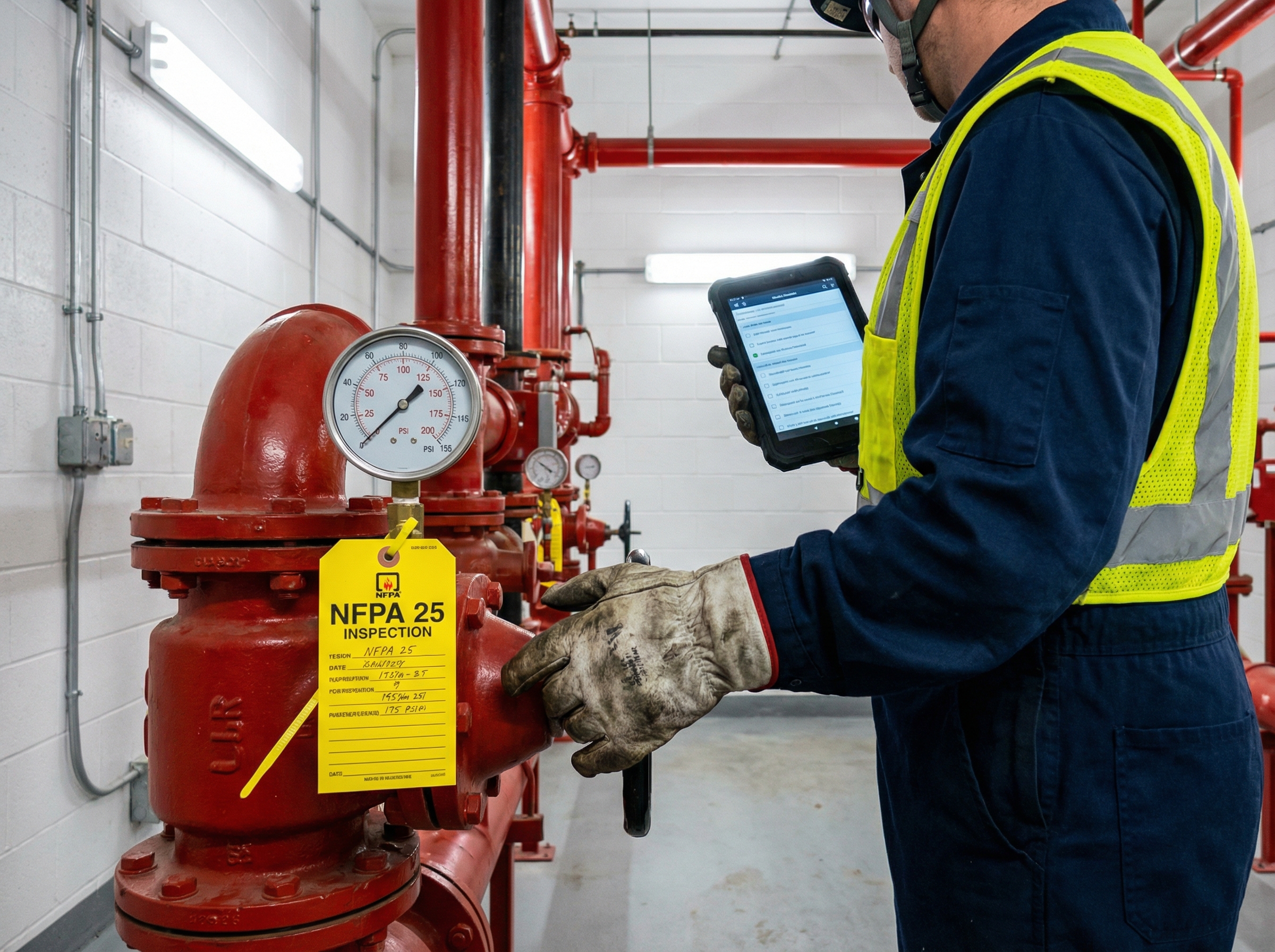
- Minimized downtime: When fire protection systems are properly maintained and tested, they operate as designed, reducing the likelihood of system failures during an incident and accelerating recovery timelines. The ongoing testing cadence defined by standards such as NFPA 25-2023 is designed to prevent unexpected outages and ensure readiness. [NFPA 25-2023 Standard for the Inspection, Testing, and Maintenance of Water-Based Fire Protection Systems](https://www.ansi.org/standards/nfpa/nfpa252023?utm_source=openai) is a critical reference for maintenance programs.
- Reduced liability and insurance impact: Demonstrating an active, well-managed fire protection program can influence insurance terms and risk transfer strategies, while also limiting exposure to fines and citations in the event of an incident.
- Protecting people and assets: Fire protection compliance creates predictable, repeatable processes for life safety, property protection, and business operations. The National Fire Protection Association (NFPA) and U.S. Fire Administration (USFA) data emphasize that fires pose real injury and fatality risk, underscoring why reliable detection and suppression matter. For example, USFA reports 13,350 civilian fire injuries in 2023 and a per-capita injury rate of 39.9 injuries per million population, illustrating the scale of risk and the importance of prevention and protection measures. [Fire Injury Risk (2023)](https://www.usfa.fema.gov/statistics/deaths-injuries/injury-risk.html?utm_source=openai)
- Resilience through business continuity planning: A fire protection program that integrates with a formal business continuity plan (BCP) ensures that when an incident occurs, there are predefined recovery procedures, critical-asset protection strategies, and cross-functional coordination to minimize downtime.
Table: A quick map of regulatory drivers to business outcomes
| Regulatory Driver | Primary Focus | Business Outcome | Typical Frequency |
|---|---|---|---|
| NFPA 25-2023 | Inspection, testing, and maintenance of water-based systems | Reliability of suppression and detection water supply | Annual to quarterly depending on system and risk assessment |
| NFPA 101 (Life Safety Code) | Life safety, egress, occupancy protection | Safer occupancy, compliant means of egress | Ongoing; periodic surveys and life-safety reviews |
| NFPA 72 | Fire alarm and signaling systems | Early warning, reliable notification, coordinated response | Ongoing; routine testing and annual inspections |
| OSHA safety programs | Workplace fire prevention and protection requirements | Regulatory compliance, safer workplaces | Ongoing; training and program reviews |
- Note: The data and examples in this article reflect general industry trends and widely accepted standards. Always tailor compliance and continuity plans to your jurisdiction, occupancy, and risk profile.
—
The Regulatory Landscape: A Framework for Compliance and Continuity
Compliance is not a single standard; it’s an ecosystem of requirements that often intersect. A practical approach is to map out the major standards most relevant to your facility and then align your internal processes with those expectations.
Key standards and regulatory references commonly shape fire protection programs:
- NFPA 25-2023: The current standard for the inspection, testing, and maintenance of water-based fire protection systems. This standard sets the baseline for maintenance frequencies, test procedures, and documentation. Adherence helps ensure that sprinklers, backflow preventers, water supplies, and alarm-actuated devices perform when needed. [NFPA 25-2023 Standard for the Inspection, Testing, and Maintenance of Water-Based Fire Protection Systems](https://www.ansi.org/standards/nfpa/nfpa252023?utm_source=openai)
- NFPA 72: The National Fire Alarm and Signaling Code, which governs fire detection and alarm systems, notification, and signaling to occupants and responders. Reliable signaling is central to timely evacuation and post-incident management. [NFPA 72 – National Fire Alarm and Signaling Code](https://www.nfpa.org/codes-and-standards/all-codes-and-standards/list-of-codes-and-standards/detail?code=72)
- NFPA 101: Life Safety Code, which addresses occupancy protection, means of egress, and life safety strategies. This standard guides design and ongoing safety reviews to ensure safe egress and occupancy protection.
- OSHA Fire Safety Requirements: While local codes and NFPA standards provide the technical basis, OSHA’s standards outline workplace fire prevention and protection obligations that often shape inspection programs, training, and documentation.
In practice, organizations integrate these standards into a unified Fire Protection Program (FPP). A mature FPP isn’t a one-time project; it’s a living program with assigned responsibilities, documented procedures, and scheduled reviews to adapt to changes in occupancy, use, or risk.
Citations:
- [Residential Fire Estimate Summaries (2014-2023)](https://www.usfa.fema.gov/statistics/residential-fires/?utm_source=openai) note a 6% decrease in fires over the decade but a 25% increase in dollar losses, underscoring the financial impact of each fire event and the importance of protecting both people and assets.
- [Fire Injury Risk (2023)](https://www.usfa.fema.gov/statistics/deaths-injuries/injury-risk.html?utm_source=openai) highlights the per-capita risk of injuries and reinforces why early detection and reliable suppression matter so much.
- [NFPA 25-2023 Standard for the Inspection, Testing, and Maintenance of Water-Based Fire Protection Systems](https://www.ansi.org/standards/nfpa/nfpa252023?utm_source=openai) provides the current baseline for testing and maintenance practices.
- [NFPA 72 – National Fire Alarm and Signaling Code](https://www.nfpa.org/codes-and-standards/all-codes-and-standards/list-of-codes-and-standards/detail?code=72) helps frame modern detection and notification systems.
- [Additional NFPA Reference: NFPA 72 detail page](https://www.nfpa.org/codes-and-standards/all-codes-and-standards/list-of-codes-and-standards/detail?code=72)
—
The Risk Landscape: What the Data Tells Us
Understanding risk is foundational to a resilient Fire Protection Strategy. Real-world data anchors decisions about where to invest in prevention, detection, and recovery.
- Fire incidence and severity trends: Over the 2014–2023 period, residential fires decreased by about 6%, but the dollar loss grew by roughly 25%. This implies that even as fire frequency declines, the financial impact of each incident can be more severe—whether due to higher property values, more complex equipment, or intensified business dependencies. This trend argues for preserving robust protection, maintenance, and rapid recovery capabilities. [Residential Fire Estimate Summaries (2014-2023)](https://www.usfa.fema.gov/statistics/residential-fires/?utm_source=openai)
- Injury risk: NFPA’s 2023 data shows 13,350 civilian fire injuries with a per-capita rate of 39.9 injuries per million people. These figures remind us that early warning, reliable detection, and clear occupant egress are not luxuries but essential components of everyday safety, with direct implications for business continuity when occupants must evacuate and return to work. [Fire Injury Risk (2023)](https://www.usfa.fema.gov/statistics/deaths-injuries/injury-risk.html?utm_source=openai)
- System performance and maintenance: The reliability of fire protection systems correlates strongly with how well maintenance and testing are executed. The 2023 edition of NFPA 25 is specifically designed to standardize these activities, providing prescriptive and performance-based guidance to keep systems functional between inspections. [NFPA 25-2023 Standard for the Inspection, Testing, and Maintenance of Water-Based Fire Protection Systems](https://www.ansi.org/standards/nfpa/nfpa252023?utm_source=openai)
- Early warning and protection: The NFPA 72 standard is essential for ensuring that detection and signaling deliver timely alerts to occupants and responders, a critical determinant of safe evacuation and rapid incident response. [NFPA 72 – National Fire Alarm and Signaling Code](https://www.nfpa.org/codes-and-standards/all-codes-and-standards/list-of-codes-and-standards/detail?code=72)
—
Fire Protection Strategy: A Practical Framework for Compliance and Continuity
A robust Fire Protection Strategy (FPS) translates regulatory requirements into a coherent, enterprise-wide program. It must align with business objectives, risk tolerance, and operational realities.
A practical FPS framework includes:
- Prevention: Eliminate or mitigate ignition sources and fuel loads through maintenance, housekeeping, electrical safety, hot-work controls, and safe operation procedures.
- Detection: Ensure reliable detection across all occupancy types, with appropriate zoning, sensitivity, and rapid signaling to occupants and responders.
- Containment and control: Appropriate compartmentalization, fire barriers, passive fire protection, and accessible common areas to slow the spread of fire.
- Suppression: Selectively deploy suppression systems—water-based sprinklers, dry chemical, clean agent, or multi-portfolio options—based on risk and occupancy. NFPA 13 and NFPA 25 guides for sprinkler design and maintenance complement NFPA 25’s testing requirements.
- Evacuation and notification: Ensure clear, well-practiced evacuation routes, assembly points, and robust notification systems that meet NFPA 72 requirements.
- Recovery and resilience: Prepare for rapid restoration, data protection, and continuity of critical operations. Link recovery objectives (RTO, RPO) to protection investments and maintenance cycles.
To operationalize FPS, organizations typically develop a Fire Protection Program that integrates people, processes, and technology. The following key elements help ensure target outcomes:
- Governance and ownership: Define roles (e.g., Facility Manager, Safety Officer, Systems Engineer) and assign accountability for compliance, testing, and remediation.
- Documentation and data management: Maintain centralized records of designs, as-built drawings, test results, inspection reports, and maintenance activities.
- Training and drills: Regular training for facility staff and occupants, with practicing evacuation, incident reporting, and response actions.
- Change management: Establish a formal process to manage modifications to occupancy, equipment, or processes that could affect fire protection.
- Budgeting and lifecycle planning: Plan for capital projects (retrofits, new systems) and ongoing maintenance to keep the FPS robust over time.
Citations:
- NFPA 25-2023 as the baseline for maintenance and testing ensures that the protection assets operate when needed and that documentation supports compliance and continuity. [NFPA 25-2023 Standard for the Inspection, Testing, and Maintenance of Water-Based Fire Protection Systems](https://www.ansi.org/standards/nfpa/nfpa252023?utm_source=openai)
- NFPA 72’s guidance on detection and signaling informs the reliability of occupant notification, a critical element in both life safety and business continuity. [NFPA 72 – National Fire Alarm and Signaling Code](https://www.nfpa.org/codes-and-standards/all-codes-and-standards/list-of-codes-and-standards/detail?code=72)
- The interplay between injury risk and protection reliability highlights why proactive testing, maintenance, and staff training are essential. [Fire Injury Risk (2023)](https://www.usfa.fema.gov/statistics/deaths-injuries/injury-risk.html?utm_source=openai)
—
The Implementation Journey: From Gap Analysis to Ongoing Excellence
Building and sustaining a compliant fire protection program is a journey, not a stand-alone project. Below is a practical, phased approach that organizations can apply to their facilities.
Phase 1: Gap Analysis and Compliance Mapping
- Inventory all life safety systems and their current compliance status.
- Map systems to applicable standards (NFPA 25, NFPA 72, NFPA 101, OSHA requirements).
- Identify gaps in inspection frequency, testing procedures, documentation, and training.
- Prioritize remediation based on risk, occupancy, and criticality of assets.
Phase 2: Fire Protection Strategy Design
- Define protection objectives aligned to risk tolerance and business continuity goals.
- Decide on system architecture (sprinklers, detection, passive fire protection, extinguishers) and redundancy where appropriate.
- Develop a lifecycle plan for capital upgrades and maintenance activities.
Phase 3: System Selection and Engineering
- Select appropriate equipment given occupancy and hazard class.
- Specify integration with building management systems (BMS) and security systems where beneficial.
- Ensure compatibility with local codes and inspections.
Phase 4: Installation and Commissioning
- Execute with qualified installers and commissioning agents.
- Perform factory and on-site testing per standards (e.g., thresholds, sensitivity, alarm verification).
- Compile as-built documentation, operation manuals, and system manuals.
Phase 5: Maintenance, Testing, and Documentation
- Establish a maintenance calendar consistent with NFPA 25 requirements.
- Document all tests, findings, corrective actions, and replacements.
- Retain a central repository for audits and regulatory reviews.
Phase 6: Training, Exercises, and Continuous Improvement
- Train staff on system operation, alarm procedures, and evacuation.
- Conduct periodic drills and tabletop exercises to improve response.
- Review performance data, revise procedures, and refresh training as needed.
Phase 7: Audit and Compliance Review
- Schedule internal audits to verify adherence to standards and internal procedures.
- Prepare for third-party inspections and regulatory reviews.
- Implement corrective actions and track progress.
Implementation should leverage data-driven approaches. For example, a maintenance program that prioritizes high-risk areas (e.g., data centers, chemical processing zones, high-occupancy spaces) minimizes downtime and expedites recovery after an incident.
Checklist: Implementation Readiness
- [ ] Complete asset inventory with hazard classifications
- [ ] Map systems to NFPA 25, NFPA 72 priority areas
- [ ] Define maintenance frequencies and test procedures
- [ ] Establish a central documentation repository
- [ ] Assign system owners and responsibilities
- [ ] Create a training plan and schedule drills
- [ ] Align the plan with the business continuity objectives
- [ ] Secure budget for capital replacements and maintenance
Bold takeaway:
- A well-documented, tested, and coordinated Fire Protection Program is the backbone of resilience. It reduces downtime, lowers risk of injury, and supports faster return to operations.
—
Integrating Fire Protection with Business Continuity Planning (BCP)
Business Continuity Planning looks beyond the immediacy of a fire event to how a facility can maintain or quickly resume critical operations. The synergy between fire protection compliance and BCP rests on the predictability of protective measures and the agility of recovery processes.
Key integration points:
- Business Impact Analysis (BIA): Identify mission-critical processes and the impact of interruption. Tie protection investments to critical assets and processes to minimize RTO (Recovery Time Objective) and RPO (Recovery Point Objective).
- Incident Response and Recovery Procedures: Build incident response into the FPS, with clear roles for occupants, security, facilities, and emergency services.
- Data and Asset Protection: In data-driven environments, ensure that server rooms and data centers have appropriate fire protection (e.g., water-based suppression considerations) and that data backups are safeguarded.
- Training and Culture: Regular training ensures that occupants are ready to act quickly, reducing exposure and enabling a smoother return to operations.
- Testing and Exercises: Periodic drills test not only the detection and evacuation but also the coordination between facilities and business units during a disruption.
Practical tips for alignment:
- Map RTO/RPO targets to protection levels for each critical asset.
- Use a standardized reporting format for maintenance and testing to support audit readiness.
- Schedule rehearsals of the incident response plan that incorporate bounce-back scenarios (e.g., partial facility loss, essential operations on backup power).
Data-informed decisions matter. Consider how injury risk and loss data influence your protection choices. For example, with ongoing fire injury risk data and loss trends, investing in faster occupant notification and more robust detection becomes a business priority. [Fire Injury Risk (2023)](https://www.usfa.fema.gov/statistics/deaths-injuries/injury-risk.html?utm_source=openai)
—
Common Pitfalls: What to Avoid in Fire Protection Compliance
Even mature organizations can stumble when implementing FPS initiatives. Here are common missteps and how to avoid them:
- Treating maintenance as a one-off project: Fire protection needs ongoing care. Implement a formal maintenance calendar tied to NFPA 25 and ensure accountability for the results.
- Underestimating integration needs: Fire detection, suppression, and building management systems should operate together. Silos create blind spots during an incident.
- Inadequate training and drills: Without regular training, staff may respond inappropriately to alarms, causing confusion, injuries, and delays.
- Missing documentation or version control: Change management without rigorous documentation leads to non-compliance and audit risk.
- Short-term budgeting: Skimping on maintenance or upgrades can produce higher long-term costs due to system failures and downtime.
- Failure to align with BCP: Without tying FPS to RTOs, responses may be slower, and recovery timelines may extend beyond expectations.
Pro tip:
- Establish a quarterly compliance review that validates that testing, training, and documentation are up to date. This keeps the FPS dynamic and responsive to changing risk.
—
A Structured Toolkit: Checklists, Tables, and Quick References
To keep the Fire Protection Program actionable, use practical tools that teams can update and reference.
Checklist: Quarterly Compliance Review
- [ ] Inspect all active detection devices for obstruction, damage, and serviceability
- [ ] Verify alarm notification devices function and routes to responders are accurate
- [ ] Review NFPA 25 maintenance results and address any open items
- [ ] Confirm documentation is complete and accessible
- [ ] Re-evaluate risk classifications and update asset prioritization if occupancy or use changes
- [ ] Train staff on updated procedures and conduct a walkthrough drill
Table: Comparative View of Key Fire Protection Standards
| Standard | Focus Area | Typical Frequency | Primary Beneficiaries | Practical Impact on Continuity |
|---|---|---|---|---|
| NFPA 25-2023 | Water-based fire protection systems – inspection, testing, maintenance | Varies (annual, quarterly, monthly) depending on system and risk | Facilities, Maintenance, Safety teams | Improves reliability and reduces downtime due to system failures |
| NFPA 72 | Fire alarm and signaling | Routine testing; annual inspections | Occupants, Security, Emergency responders | Improves evacuation efficiency and incident response timing |
| NFPA 101 | Life Safety Code | Ongoing life safety reviews; periodic re-evaluation | Building owners, Fire marshals | Ensures egress integrity and occupant safety |
| OSHA Fire Safety | Workplace protection requirements | Ongoing; training and program reviews | All workers | Promotes a safer working environment and regulatory compliance |
Block quote:
“Compliance is not a barrier to operation; it is the framework that makes reliable operation possible under pressure.” — Industry perspective
—
The 48Fire Protection Advantage: Our Relevant Services
Near the end of a project, organizations often ask: “What exactly can a specialist partner deliver to get us from compliance gaps to an auditable, resilient FPS?” 48Fire Protection offers a comprehensive suite of services designed to meet you where you are, align with your risk profile, and support long-term continuity.
Section: 48Fire Protection Services Near the End of the Article
- Fire Protection Program Development: We help you design a formal Fire Protection Program (FPP) that integrates regulations, risk, and business objectives. This includes governance structures, documentation standards, and a plan for ongoing improvement.
- System Assessment and Gap Analysis: Our engineers perform thorough assessments of life safety systems, identify gaps in NFPA 25 and NFPA 72 compliance, and propose prioritized remediation plans.
- Design and Engineering: We translate compliance requirements into system designs tailored to occupancy, hazard class, and risk tolerance. We consider integration with building management systems and existing infrastructure.
- Installation, Commissioning, and Startup: Our teams install and commission equipment to meet current standards, ensuring proper configuration, zoning, and setpoints.
- Maintenance, Testing, and Calibration: We establish and execute a testing cadence aligned with NFPA 25-2023, with robust documentation and a focus on reliability.
- Documentation Management: Centralized, accessible records of designs, as-built drawings, test results, and maintenance activities to support audits and continuous improvement.
- Training and Exercise Programs: We deliver occupant safety training, system operation instruction, and regular drills to embed a culture of preparedness.
- Incident Response Planning and Recovery: We integrate fire protection into a broader Incident Response and Business Continuity plan, including data protection and rapid return-to-operations strategies.
- Regulatory Liaison and Audit Support: We assist with third-party audits, permit applications, and regulatory reviews to streamline compliance.
- Remote Monitoring and Smart Solutions: Where appropriate, we implement connected sensors and monitoring systems to provide real-time insights, predictive maintenance, and faster detection.
Why choose 48Fire Protection?
- Deep domain expertise in fire protection compliance, system design, maintenance, and continuity planning.
- A practical, risk-based approach that aligns with NFPA standards and real-world operations.
- Proven track record of helping organizations reduce downtime, manage costs, and improve safety outcomes.
- Transparent reporting, with clear documentation and audit trails to support regulatory reviews.
Note: The above services are provided in the context of a comprehensive Fire Protection Program that connects compliance with business continuity objectives.
—
Real-Life Impacts: Translating Compliance into Results
Consider a mid-sized facility with a multi-tenant or multi-use environment. Without a robust FPS, this facility could face:
- Unplanned downtime after a fire incident due to delayed response or inadequate recovery planning.
- Higher insurance premiums or disputes due to lack of demonstration of ongoing maintenance and system reliability.
- Regulatory penalties or corrective action orders if inspections reveal gaps in NFPA 25 or NFPA 72 compliance.
Conversely, with a well-designed FPS aligned to NFPA standards:
- Detection and alarm reliability improve, reducing evacuation times and injuries.
- Maintenance records provide traceable evidence of compliance, facilitating audits and reducing downtime.
- Business continuity strategies become more actionable, with clear recovery objectives and action plans.
A robust FPS also helps organizations manage risk dynamically. For instance, if a building addition changes occupancy or uses a space for a different purpose, the risk profile shifts. A compliant FPS enables rapid revalidation of protection strategies and minimizes the time required to re-approve the plan.
Citations:
- The injury risk data underscores why reliable detection and prompt notification are essential parts of any FPS. [Fire Injury Risk (2023)](https://www.usfa.fema.gov/statistics/deaths-injuries/injury-risk.html?utm_source=openai)
- The residential fire and loss data illustrate the independent importance of protecting both people and property. [Residential Fire Estimate Summaries (2014-2023)](https://www.usfa.fema.gov/statistics/residential-fires/?utm_source=openai)
—
Roadmap for a Successful Fire Protection Compliance and Continuity Program
1. Initiate a Compliance and Continuity Assessment
- Define scope: facilities, occupancy types, risk profiles.
- Gather existing documentation: drawings, system lists, test records, maintenance logs.
- Identify regulatory mandates and standards to apply (NFPA 25, NFPA 72, NFPA 101, OSHA requirements).
2. Develop a Target Operating Model (TOM)
- Create a governance structure, roles, and responsibilities.
- Establish KPIs for maintenance, testing, and incident readiness.
- Align FPS with Business Continuity objectives (RTO/RPO targets for critical assets).
3. Implement a Phased Upgrade Plan
- Prioritize high-risk areas for immediate remediation.
- Plan capital projects for updates to detection, suppression, or control systems.
- Execute in phases that minimize disruption to operations.
4. Establish a Documentation and Audit Trail
- Implement a centralized repository for all fire protection documents, test results, and maintenance records.
- Create a standardized reporting format to facilitate audits.
- Schedule regular internal audits and management reviews.
5. Build a Training and Exercise Program
- Develop role-based training for occupants, facility staff, and responders.
- Schedule quarterly drills that simulate realistic incidents, including partial facility loss and restoration scenarios.
6. Integrate FPS with Business Continuity
- Ensure FPS decisions are tied to RTOs and RPOs for critical processes.
- Validate recovery procedures and backups to support rapid resumption of operations.
7. Maintain a Culture of Continuous Improvement
- Use post-incident reviews and testing outcomes to refine procedures.
- Invest in ongoing upgrades and preventive maintenance to stay ahead of risk.
Important note:
- The data and guidance in this article reflect standard practice for fire protection and business continuity planning. Always tailor programs to your facility’s specific hazards, occupancy types, and regulatory landscape.
—
Conclusion: The Strategic Value of Compliance-Driven Continuity
Fire protection compliance is not simply about avoiding penalties or satisfying auditors. It’s about building a resilient organization that can withstand, survive, and quickly recover from fire-related disruptions. The data landscape – including injury risk and the trend of losses associated with fewer fires – reinforces the need for a proactive, integrated approach to protection and continuity. By aligning NFPA standards with business objectives, organizations can reduce risk, protect people and assets, and shorten the path back to normal operations after an incident.
If you’re ready to elevate your facility’s Fire Protection Program, 48Fire Protection stands ready to help with comprehensive services that connect compliance to continuity.
[Contact 48Fire Protection](/contact-us)