A fire extinguisher inspection might seem routine—but it’s one of the simplest and most effective ways to prevent tragedy, property loss, or costly fines. Fire extinguishers are your first line of defense in an emergency, but only if they actually work when needed.
At 48 Fire, we’ve seen how a missed inspection or expired tag can cause serious compliance issues for property owners. The truth is, keeping extinguishers in working condition isn’t just a safety measure—it’s a legal requirement under NFPA 10 and local fire codes.
Here’s what you’ll learn in this guide:
- What a fire extinguisher inspection really involves
- How often inspections are required under national standards
- Common inspection failures (and how to prevent them)
- Why professional service is worth it
- How to choose the right partner for ongoing maintenance
This article breaks down everything you need to know to stay compliant and keep people safe.
—
1. What Is a Fire Extinguisher Inspection?
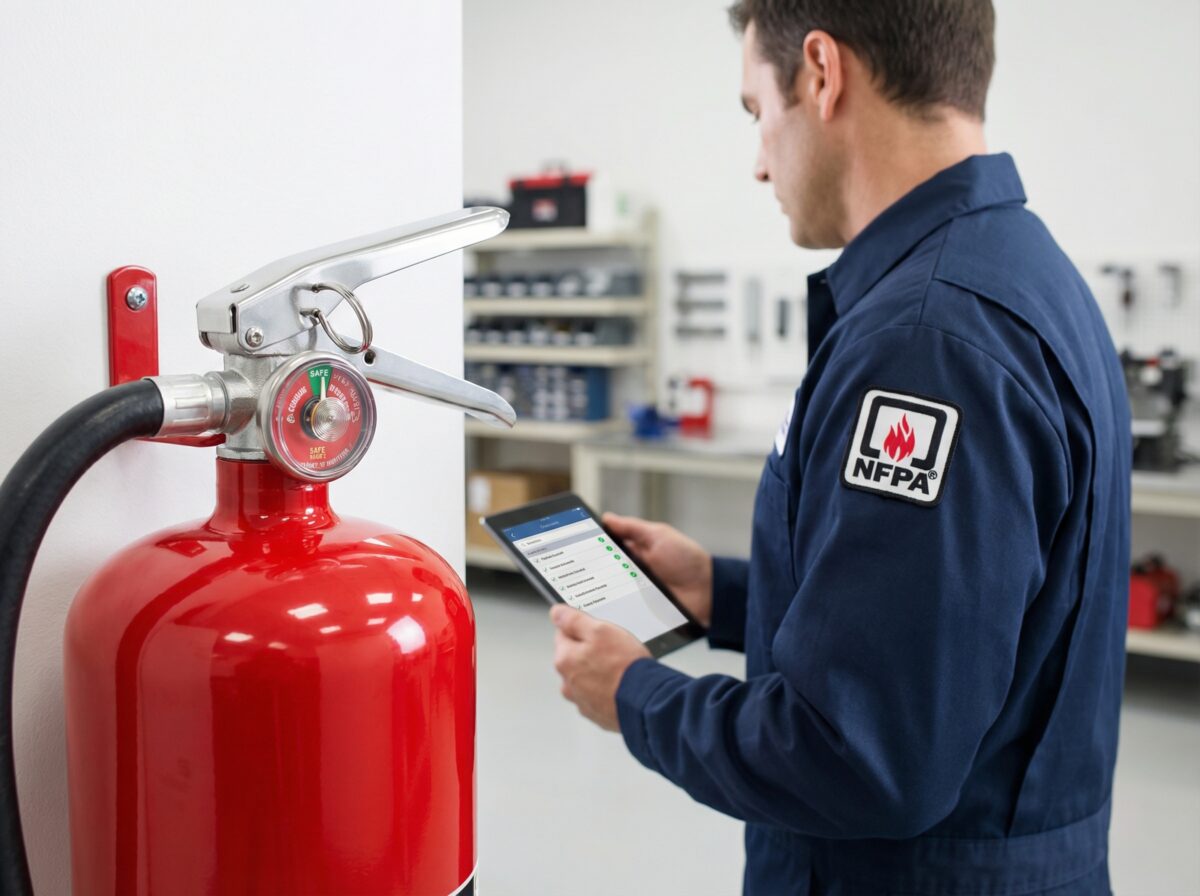
A fire extinguisher inspection is a systematic check to ensure that every extinguisher in your facility is fully functional, accessible, and compliant with local and national fire codes.
It’s not the same as a maintenance service or hydrostatic test. Instead, it’s a routine check—usually visual—to confirm that extinguishers are ready for immediate use.
1.1 Purpose of Regular Inspections
The goal of regular inspections is to:
- Detect visible damage, corrosion, or missing parts
- Verify pressure gauge readings are within the operable range
- Ensure safety seals, pins, and labels are intact
- Confirm extinguishers are accessible and properly mounted
- Check that instructions are readable and facing outward
> NFPA 10 requires fire extinguishers to be inspected monthly, maintained annually, and pressure-tested every 5 to 12 years, depending on the extinguisher type.
1.2 Who Can Perform an Inspection?
While monthly visual checks can be done by building staff or a safety officer, annual inspections must be conducted by a licensed fire extinguisher service technician.
That’s where companies like Hometown Fire Protection come in—we provide certified, nationwide inspection and maintenance services that meet NFPA 10 and OSHA requirements.
—
2. Fire Extinguisher Inspection Requirements and Frequency
Fire codes specify how often extinguishers must be checked and who can do it. Missing even one inspection can mean fines or liability in the event of a fire.
| Inspection Type | Frequency | Who Performs It | Purpose |
|---|---|---|---|
| Monthly Inspection | Every 30 days | Trained building staff or maintenance personnel | Quick visual check for readiness |
| Annual Maintenance | Once a year | Certified fire protection technician | Full inspection, recharging, and service tagging |
| Internal Maintenance / Hydrostatic Testing | Every 5–12 years | Licensed professional only | Pressure testing and internal examination for safety |
2.1 Monthly Visual Inspection
This quick inspection ensures extinguishers are:
- In their designated locations
- Not blocked or damaged
- Showing proper pressure
- Free from corrosion, leaks, or broken seals
These checks should be logged, either digitally or on a physical inspection tag, for recordkeeping and compliance.
2.2 Annual Maintenance Inspection
This is a more thorough inspection, performed by certified professionals. It includes:
- Removing the extinguisher from its bracket
- Checking internal pressure and weight
- Inspecting hoses, nozzles, and valves
- Replacing tamper seals
- Updating inspection tags and documentation
> Annual maintenance ensures extinguishers are not just present—but capable of working under real emergency conditions.
2.3 Hydrostatic Testing and Recharging
Even if an extinguisher looks fine externally, the internal cylinder can weaken over time.
Hydrostatic testing involves filling the extinguisher with water or another non-compressible fluid to check its pressure tolerance. Depending on the type:
- Dry chemical and CO₂ units: every 5 years
- Stored pressure water and foam units: every 5 years
- Halotron or clean agent units: every 12 years
—
3. Common Fire Extinguisher Inspection Issues (and How to Fix Them)
Even diligent facility managers can miss simple issues that cause extinguisher failures or compliance violations. Here are the most frequent ones—and how to avoid them.
| Issue | What It Means | How to Fix It |
|---|---|---|
| Low pressure | Extinguisher won’t discharge effectively | Recharge or replace immediately |
| Broken seal or missing pin | Extinguisher may have been used or tampered with | Replace seal, inspect for discharge, recharge if needed |
| Obstructed access | Employees can’t reach extinguisher in an emergency | Relocate or clear the area |
| Faded or unreadable label | Operating instructions unclear | Replace label or extinguisher |
| Corrosion or rust | Weakens cylinder integrity | Replace extinguisher |
| Expired inspection tag | Non-compliant with NFPA 10 | Schedule annual service |
3.1 Incomplete Recordkeeping
One of the most common issues isn’t physical damage—it’s missing records.
If your inspection logs aren’t up to date, your property can fail a fire inspection even if every extinguisher works perfectly.
Keep a digital or paper log that includes:
- Date of inspection
- Inspector’s initials
- Status of each extinguisher
- Corrective actions (if any)
3.2 Unlabeled or Mismatched Extinguishers
Every extinguisher should match the class of fire risk in its area:
- Class A: Paper, wood, cloth
- Class B: Flammable liquids
- Class C: Electrical equipment
- Class D: Combustible metals
- Class K: Cooking oils and fats
Using the wrong extinguisher can make a fire worse. Regular professional inspections verify that each unit is properly rated for its environment.
—
4. Why Professional Fire Extinguisher Service Matters
Performing visual checks is useful—but professional inspection ensures compliance, reliability, and safety. Here’s why partnering with a certified provider like Hometown Fire Protection makes a real difference.
4.1 Compliance with Fire Codes and Insurance Requirements
Local fire marshals, OSHA, and insurance providers all require proof of annual extinguisher maintenance.
Professional technicians:
- Apply current NFPA standards
- Verify proper signage and placement
- Provide service tags and inspection reports
- Ensure your facility passes inspections with confidence
Without professional verification, you risk:
- Fines or citations
- Voided insurance coverage
- Increased liability if a fire occurs
4.2 Early Problem Detection
Trained technicians often spot hidden issues before they become hazards—like micro-leaks, pressure loss, or cylinder wear invisible to the untrained eye. Early detection saves money and keeps your extinguishers ready for real emergencies.
4.3 Consolidated Fire Protection Services
Managing multiple vendors for sprinklers, alarms, and extinguishers can get messy.
With Hometown Fire Protection, businesses simplify operations by using one certified partner for all systems:
- Fire extinguisher inspection and maintenance
- Fire alarm testing
- Sprinkler system service
- Emergency lighting and exit sign inspection
This all-in-one approach keeps your documentation unified and your property fully protected.
—
5. Fire Extinguisher Inspection Checklist
Whether you manage a single office or a large industrial site, use this simplified checklist to track monthly and annual inspection items.
| Inspection Item | Monthly Check | Annual Check |
|---|---|---|
| Proper placement and visibility | ✅ | ✅ |
| Access not blocked | ✅ | ✅ |
| Safety pin and seal intact | ✅ | ✅ |
| Pressure gauge in green zone | ✅ | ✅ |
| Labels legible and facing outward | ✅ | ✅ |
| Hose and nozzle condition | ⚪ | ✅ |
| Physical damage or corrosion | ⚪ | ✅ |
| Weight and internal pressure verified | ⚪ | ✅ |
| Updated inspection tag | ✅ | ✅ |
| Recharge or hydrostatic test performed | ⚪ | ✅ |
> ⚪ = Checked only during professional annual service.
Keeping this list visible in maintenance rooms or digital dashboards helps teams stay organized and compliant year-round.
—
6. How to Choose a Reliable Fire Extinguisher Service Partner
Selecting the right partner ensures inspections are done right the first time. When evaluating providers, look for these key factors:
6.1 Certification and Licensing
Always confirm that your fire protection company is:
- Licensed in your state
- Employing technicians certified under NFPA 10
- Familiar with both national and local fire codes
Hometown Fire Protection meets all these standards with licensed teams across the U.S., ensuring nationwide compliance with regional expertise.
6.2 Transparent Reporting and Documentation
After every inspection, you should receive:
- A detailed inspection report
- Updated service tags
- Photos or digital logs (when applicable)
- Clear recommendations for any follow-up service
These records protect you during fire marshal inspections and insurance audits.
6.3 Emergency Support and Rapid Response
Fires don’t wait for business hours. Look for a service that offers:
- 24/7 emergency response
- Local technicians for fast dispatch
- On-site recharging and repair capabilities
Hometown Fire Protection provides around-the-clock support for clients nationwide—because emergencies can happen anytime.
—
7. How Fire Extinguisher Inspection Fits into Overall Fire Safety
Fire extinguishers are just one piece of your broader fire protection strategy.
Regular inspections connect directly to other safety systems and compliance processes.
| System | Why It Matters | Connection to Extinguisher Service |
|---|---|---|
| Sprinkler systems | Control large fires automatically | Technicians verify extinguishers complement sprinkler coverage zones |
| Fire alarms | Alert building occupants | Extinguishers must be accessible once alarm sounds |
| Emergency lighting | Guides people to exits | Extinguishers located along evacuation paths |
| Fire suppression systems | Specialized hazard control (kitchens, data centers) | Extinguishers serve as backup tools |
A professional service provider ensures these systems work together seamlessly, preventing coverage gaps or conflicting equipment layouts.
—
8. The Cost of Fire Extinguisher Inspection vs. Non-Compliance
Many property owners delay professional inspections to cut costs—but that often backfires.
8.1 Typical Inspection Costs
Fire extinguisher inspection pricing depends on volume, type, and location. Average costs include:
- $10–$25 per extinguisher for basic annual inspections
- $30–$50 per unit for recharge or hydrostatic testing
- Custom quotes for large commercial or industrial sites
For most facilities, that’s a fraction of what a single code violation or failed inspection could cost.
8.2 Potential Fines and Liabilities
Failing to maintain extinguishers can lead to:
- Local code fines: $250–$1,000 per violation
- OSHA penalties: Up to $14,000 per violation
- Insurance non-coverage: Denied claims if equipment wasn’t maintained
> Skipping an inspection might save a few dollars now—but it risks thousands later in fines, liability, or property damage.
—
9. Maintaining Inspection Readiness Year-Round
Compliance isn’t just a once-a-year event. To stay ready, implement these best practices:
1. Designate a responsible person for monthly visual checks.
2. Keep inspection records (digital or physical) for at least 12 months.
3. Replace expired extinguishers or those that fail testing immediately.
4. Schedule annual service early to avoid last-minute compliance rushes.
5. Train employees on extinguisher types and safe use procedures.
Many facilities use preventive maintenance plans from Hometown Fire Protection that include automated scheduling, reporting, and reminders—removing the guesswork from compliance.
—
10. Summary: Why Fire Extinguisher Inspection Is Non-Negotiable
Fire extinguisher inspections protect more than buildings—they safeguard lives, businesses, and communities. They ensure that when emergencies happen, your first line of defense is ready.
Let’s recap the key takeaways:
- Monthly visual inspections confirm basic readiness
- Annual professional maintenance ensures full compliance and performance
- Hydrostatic testing prevents internal failures over time
- Proper documentation avoids code violations and fines
- Certified service providers like Hometown Fire Protection simplify compliance nationwide
If you’re unsure whether your extinguishers are up to code—or your last inspection date is unclear—it’s time to schedule a professional checkup.
—
✅ Talk to an Expert!
Protect your people and property with certified, nationwide fire extinguisher service.
[Contact Hometown Fire Protection today](/contact-us) to schedule your next inspection or get a free compliance quote.