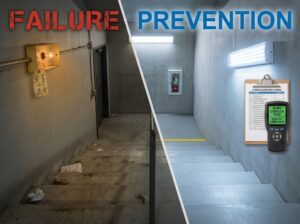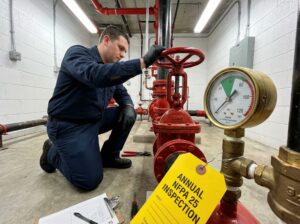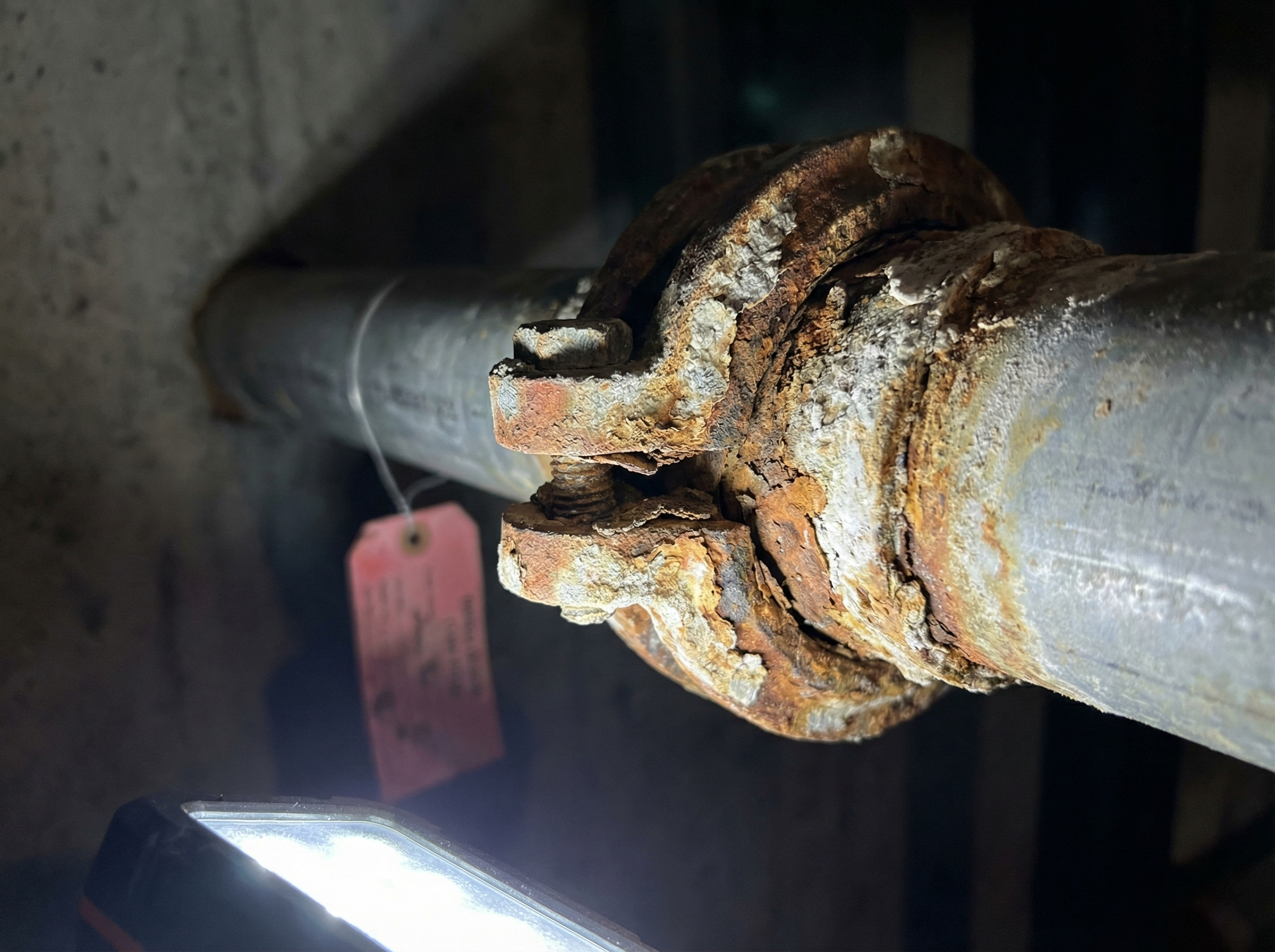
Opening with a hard truth: no matter how impressive a building looks on paper, if it isn’t fire-code compliant, it isn’t legally ready for occupancy. For property owners, developers, and facility managers, the occupancy permit is the final gatekeeper before people can safely work, shop, learn, or live inside a space. And the gatekeeper isn’t a mythical test; it’s a real, enforceable set of requirements enforced by local building and fire authorities. If fire code violations exist—and especially if they remain unresolved—the occupancy process stalls, permits get delayed, and the risks multiply: business interruption, insurance complications, and, most importantly, a real threat to life safety.
This article digs into the fire code violations that can derail occupancy permits, what inspectors look for during an occupancy permit inspection, and how to build a plan for compliance that stands up to even the most scrupulous review. We’ll blend jurisdictional nuances with practical checklists, and show how a proactive approach to Fire Code Compliance Services can save time, money, and lives. Along the way, you’ll find authoritative references from city and state agencies, as well as a practical framework you can apply today.
—
Why Occupancy Permits hinge on fire code compliance
An occupancy permit (or a Certificate of Occupancy) is the formal authorization to occupy a building for its intended use. In most places, no one may legally inhabit or operate in a space until the local building department issues this certificate, and a CO (or Temporary CO) is contingent on resolving all outstanding violations. The rule is simple in concept, but the implementation is complex in practice.
- In New York City, for example, the Certificate of Occupancy requires that all open violations be resolved before occupancy is permitted. This linkage between violations and the CO is a critical enforcement mechanism that pushes property owners to close out issues before final approvals are granted. See: Certificate of Occupancy — NYC Buildings. [nyc.gov]
- In other jurisdictions, occupancy permits are tied to fire-safety certificates and compliance statuses that are part of the permit-finalization process. For example, in New York State public schools, the Fire Safety Report submission with no outstanding violations immediately generates an annual Certificate of Occupancy; if there are uncorrected violations, a temporary CO or no CO may be issued depending on severity. See: Fire Safety & Certificates of Occupancy — NYSED. [nysed.gov]
- In Philadelphia, the Department of Licenses and Inspections (L&I) makes clear that violations, including fire code violations, must be corrected or appealed, and properties may not obtain final permit approvals or occupancy until those violations are resolved. See: Resolve a code violation at your property. [phila.gov]
These citations illustrate a broader truth: whatever your local jurisdiction, occupancy readiness is inseparable from code compliance. This is not a “nice-to-have” check; it is a requirement that governs whether people can physically occupy space.
- Pro tip: Even if a building is nearing the end of a construction project, you should treat fire code compliance as an ongoing discipline rather than a single milestone. Proactive, ongoing compliance reduces the risk of costly rework and occupancy delays.
- Important caveat: different jurisdictions may apply different thresholds for “temporary CO” versus “final CO,” and the severity of violations can influence whether occupancy is allowed during construction or only after corrective actions. Always verify the precise rules with the authority having jurisdiction (AHJ) for your project.
—
Fire code violation categories that commonly block occupancy
Below is a practical taxonomy you can use to assess a site quickly. Each category includes examples, typical severity ranges, and the likely occupancy permit implications.
Table: Common Fire Code Violation Categories
| Category | Common Violations | Typical Severity | Occupancy Permit Implication |
|---|---|---|---|
| Means of Egress & Occupant Safety | Blocked exits, improper corridor widths, unusable exit stairs, inadequate emergency lighting, blocked fire escapes | High | Substantial barrier to CO issuance if not remedied; possible temporary CO while corrected |
| Fire Alarm & Detection Systems | Non-functional smoke detectors, tampered alarm panels, failure to test systems, non-compliant notification appliances | High | Often requires immediate repair; temporary CO may be issued for limited duration while repairs are completed |
| Fire Suppression & Sprinkler Systems | Disconnected or inoperable sprinkler heads, test leaks, lack of water supply, improper hydraulics | High | Critical—system must be operational for CO; extended delays possible if access or water supply is constrained |
| Fire Dept. Connections & Access | Obstructed hydrants, blocked fire department connections, inaccessible equipment | Medium-High | Access issues can delay CO; corrections are typically required quickly |
| Fire Code Documentation & Records | Expired or missing inspections, incomplete maintenance logs, missing test reports | Medium-High | CO can be delayed until records are complete and up-to-date |
| Hazardous Materials & Storage | Improper storage of flammables, incompatible chemicals, unsealed containers, inadequate separation | High | Depending on risk, may require temporary CO or staged occupancy while mitigations are implemented |
| Emergency Power & Lighting | Inadequate emergency lighting, non-functional exit signs, battery back-up failures | Medium-High | Can delay CO; often solvable through rapid replacements or repairs |
| Electrical Safety in Fire Areas | Overloaded circuits, improper wiring methods, missing arc-fault or ground-fault protection, non-compliant electrical rooms | High | Electrical safety issues can be a gating item for CO; may require a licensed electrician and re-inspection |
| Egress Capacity & Occupancy Limits | Exceeding occupant load, blocked egress routes, lack of proper signage for egress | Medium-High | Can trigger revised occupancy approvals if space design changes; may require staged occupancy |
| Fire Service & System Testing | Missed quarterly or annual tests, non-compliant test procedures, undocumented test results | Medium | Documentation gaps can stall CO; tests must be completed and documented |
- Note: These categories reflect general practice across many AHJs, but exact requirements and severity thresholds vary by jurisdiction and building type. Always cross-check with the AHJ and the applicable code (for example, the International Fire Code and NFPA standards). For a high-level overview of the code framework, see the International Code Council’s guidance on the International Fire Code. [ICC — What is the International Fire Code (IFC)?]
—
Jurisdictional narratives: what inspectors look for during occupancy permit inspections
Different cities and states emphasize particular elements depending on their local codes, but several recurring themes consistently surface in occupancy-permit investigations. Below are narratives that illuminate what inspectors prioritize and why.
1) Egress and life-safety pathways
- Rationale: The ability for occupants to exit quickly and safely during a fire is non-negotiable in most fire codes. Inspectors verify that:
- All exits are clearly marked and unobstructed.
- Egress paths meet minimum width requirements for the intended occupancy.
- Exit doors relay and function correctly, including doors that self-close and latch, and emergency lights operate during a power outage.
- Likely questions an AHJ will ask:
- Are there any areas where people may be trapped due to furniture placement or storage?
- Are exit signs illuminated and audible during alarm conditions?
- Practical step: Conduct a pre-inspection walk-through focused on egress routes with a fresh set of eyes—clear pathways, test doors, verify signage, and confirm emergency lighting parity with code requirements.
2) Fire protection systems: status and documentation
- Rationale: Fire alarm and suppression systems act as the first line of defense. An inspector will demand that systems operate as designed, with tested documentation on file.
- Common issues:
- Alarm panels that do not respond to standard tests.
- Sprinkler heads blocked by storage or debris.
- Water supply or pump issues that impair sprinkler operation.
- Practical step: Schedule a comprehensive test of all life-safety systems and verify that the testing is witnessed, documented, and filed in accordance with local requirements.
3) Housekeeping, storage, and hazardous materials
- Rationale: Fire codes regulate storage configurations, especially near ignition sources and egress routes.
- Common issues:
- Excessive storage in mechanical rooms or near electrical equipment.
- Blocking access to fire-rated corridors or stairwells.
- Inadequate separation of flammable liquids or incompatible materials.
- Practical step: Create a “clear zone” map around mechanical rooms and electrical panels. Remove nonessential items and ensure proper separation and containment for hazardous materials.
4) Documentation: a paper trail that makes or breaks a permit
- Rationale: A building that looks complete on-site can still fail if the paperwork doesn’t travel with the project. Inspections rely on accurate, complete, and timely documentation.
- Common issues:
- Missing inspection reports, maintenance records, or proof of system acceptance.
- Outdated or expired permits, or unapproved code modifications.
- Practical step: Assemble a filing system that captures every inspection, test, and service event. The AHJ will want to see that records are current, accessible, and consistent with what is in the field.
—
The occupancy permit inspection process: a practical, chronological guide
Understanding the inspection process helps you align internal workflows with regulator expectations. Below is a typical progression you might expect, along with actionable steps you can take at each stage.
Phase 1 — Planning and pre-inspection readiness
- Identify the applicable codes (IBC, International Fire Code, NFPA standards) for your use and occupancy.
- Assign a Fire Code Compliance lead to coordinate with engineers, contractors, and the AHJ.
- Create a pre-inspection checklist focused on life safety, egress, alarm/suppression systems, and documentation.
- Schedule an internal mock inspection to catch issues before the real review.
Phase 2 — On-site inspection
- The AHJ (the building department or fire marshal) visits to validate:
- Egress path integrity and signage
- Fire alarm and suppression functionality
- Clear access to fire department connections
- Proper storage and handling of hazardous materials
- Adequate emergency lighting and exit signage
- If deficiencies are found, you receive an itemized list of corrections with deadlines.
Phase 3 — Corrections, re-inspection, and verification
- After corrections, you must re-notify the AHJ for re-inspection of the corrected items.
- Some corrections can be completed quickly; others may require system replacements, permit amendments, or design changes.
- The AHJ reviews documentation again, and, if compliant, issues the CO or Temporary CO.
Phase 4 — CO issuance and post-occupancy responsibilities
- Final CO is issued if all open violations are addressed.
- If a temporary CO was issued, ensure the remaining issues are addressed within the timeframe and that a final CO is obtained.
- Maintain ongoing compliance: many COs are conditioned on continued compliance with fire codes and periodic inspections.
- Pro tip: Build a “CO readiness” package that includes system test reports, maintenance logs, floor plan updates, and a map of egress routes. This package streamlines both the pre-inspection and final CO processes.
—
A practical, field-ready checklist: pre-CO readiness
Use this checklist to drive your internal readiness review. Check off each item as you confirm compliance.
- [ ] Egress: All exits unobstructed; doors functioning; exit signs illuminated; emergency lighting operational.
- [ ] Means of egress: Adequate width and capacity for the anticipated occupancy; no dead-end corridors without an exit.
- [ ] Fire alarm system: Fully tested; all devices responsive; panel monitored; test results logged.
- [ ] Fire suppression system: Sprinklers inspected and unobstructed; water supply validated; backflow prevention in place; hydraulic calculations current.
- [ ] Fire department connections and access: Clear access for fire equipment; hoses and standpipes accessible.
- [ ] Electrical safety: No overloaded circuits; fire-protection-rated electrical rooms; AFCI/GFCI where required.
- [ ] Hazardous materials: Proper storage, labeling, containment, and spill control; incompatible substances segregated.
- [ ] Housekeeping: Storage away from ignition sources; clearance around mechanical rooms and electrical panels.
- [ ] Documentation: All permits, inspections, maintenance logs, and test reports organized and up to date.
- [ ] Documentation cross-check: Floor plans reflect as-built conditions; occupancy classification matches actual use.
- [ ] Training and procedures: Evacuation plans, fire drills, staff training records, and emergency procedures in place.
- [ ] Temporary CO readiness (if applicable): If a temporary CO is anticipated, ensure all conditional items are scheduled for completion within regulatory windows.
- [ ] Post-occupancy plan: A schedule for ongoing testing, inspections, and maintenance to sustain compliance.
- Pro tip: Use a dedicated file for CO-related documents and ensure it’s accessible to the owner, building manager, and AHJ. Documentation is not just a boundary item; it’s the evidence that ongoing compliance is being upheld.
—
Real-world consequences: why leaseholds, lenders, and tenants care
Ignorance isn’t bliss when fire code violations threaten occupancy. The consequences of non-compliance can cascade into expensive delays, contract disputes, and tangible safety risks.
- Business disruption: Delays in CO issuance halt move-ins, occupancy changes, or business expansions, leading to revenue knock-ons and renegotiated leases.
- Insurance impact: Some insurance policies require compliance with fire codes as a condition of coverage. Violations can lead to higher premiums or coverage gaps.
- Life-safety risk: Most importantly, unresolved fire-code issues create real danger for occupants. A blocked exit or a malfunctioning life-safety system can have catastrophic outcomes in an emergency.
- Legal exposure: Operators may face fines, stop-work orders, or other enforcement actions if violations persist.
- Reputational impact: A building known for non-compliance can deter tenants, buyers, and partners, undermining a project’s market viability.
- Pro tip: Build a robust pre-CO communication plan that includes the owner, property manager, renovation contractors, and the AHJ. Timely coordination often shortens the duration of remediation and reduces the risk of deferrals.
—
Building a compliance-first culture: best practices for ongoing Fire Code Compliance Services
To avoid “surprises” at the occupancy permit stage, many facilities adopt ongoing Fire Code Compliance Services that keep readiness front and center.
- Regular internal audits: Scheduled audits for egress, life safety systems, storage practices, and hazard controls help catch issues before they become non-compliance.
- Proactive scheduling of tests: Many jurisdictions require periodic testing and maintenance (e.g., fire alarm tests, sprinkler tests). Plan and track these tests with alerts to ensure no gaps during permit windows.
- Documentation discipline: Maintain a centralized, accessible repository for all inspection reports, test results, maintenance logs, and permit documents.
- Training and drills: Periodic staff training on evacuation procedures and alarm responses improves actual performance and helps auditors assess your readiness.
- Expert partnerships: Engage with a fire protection services partner who specializes in occupancy-permit readiness, not just repairs after a violation notice.
- Risk-based approach: Prioritize items that have the highest safety risk and the greatest likelihood of delaying occupancy, such as life-safety system functionality and egress integrity.
—
Case studies and practical scenarios (illustrative)
To bring these concepts to life, consider two plausible scenarios that show how fire code violations can derail occupancy, and how proactive compliance can avoid delays.
Scenario A — The Retail Build-Out That Stalled at CO
A mid-sized retailer completes construction but neglects to verify that all life-safety documentation and egress signage were updated to reflect the final tenant fit-out. When the AHJ conducts the occupancy permit inspection, several egress doors are found to have non-functional alarms, and a fire extinguisher placement violates clearance requirements. Without a clear path to correction, the CO is withheld, and the tenant faces days or weeks of downtime, rental losses, and fines.
What went wrong:
- Incomplete documentation and untested life-safety systems.
- Egress path issues not aligned with final floor plan.
What to fix:
- Complete a pre-inspection walk-through, fix alarms, verify extinguishers’ placement, and re-run a documentation package.
Takeaway:
- Documentation and system reliability must be aligned with the final layout before the occupancy permit inspection.
Scenario B — The Office Campus with a Pending Fire Safety Certification
A multi-building campus in a state with a Fire Safety Certificate of Occupancy requirement has a central administration building where fire safety documentation lags behind the physical work. The campus submits the Fire Safety Report late, and local inspectors discover several uncorrected violations related to storage of flammable materials near mechanical rooms. The result is a temporary CO for a limited period, with a plan to address all issues within a fixed window.
What went wrong:
- Delays in essential Fire Safety Report submission.
- Improper storage of hazardous materials that triggered a compliance hold.
What to fix:
- Correct material storage practices; finalize and submit the Fire Safety Report; schedule a follow-up inspection.
Takeaway:
- Timely, accurate documentation is as critical as the physical state of the fire protection systems.
These scenarios illustrate how small oversights, if left unchecked, can lead to occupancy delays and risk. A proactive, structured approach reduces risk and accelerates the path to a final CO.
—
The 48Fire Protection perspective: Fire Code Compliance Services to streamline occupancy
At 48Fire Protection, our mission is to help clients achieve safe, compliant occupancy with minimal disruption. Our Fire Code Compliance Services are designed to align construction, operations, and regulatory expectations, so that occupancy permits can be secured on schedule and maintained thereafter.
What we offer
- Compliance readiness assessments: A thorough, on-site review of life-safety systems, egress paths, and documentation to identify gaps before they become blockers.
- Pre-inspection coaching and documentation assembly: We help you prepare a complete CO readiness package, including system test results, repair records, and as-built drawings.
- Egress optimization and life-safety improvements: We identify and remediate egress bottlenecks, signage issues, emergency lighting shortfalls, and other life-safety concerns.
- Fire alarm and suppression system support: We perform testing, commissioning, and documentation updates to ensure all systems are fully operable and compliant with applicable codes.
- Hazardous materials and storage compliance: We review and adjust storage practices, labeling, and containment strategies to satisfy fire code requirements.
- AHJ liaison and permit support: We act as your partner with the local AHJ to interpret requirements, coordinate inspections, and manage correction cycles.
- Ongoing compliance program development: We help you design a sustainable compliance program, including preventive maintenance calendars, periodic audits, and staff training plans.
Why this matters
- Reducing occupancy delays: A structured compliance program minimizes corrective cycles and accelerates CO issuance.
- Reducing risk: Proactive testing, documentation, and staff training improve overall safety for tenants, employees, and visitors.
- Demonstrating expertise to clients: A proven, transparent compliance program builds trust with tenants, lenders, and regulatory bodies.
How we approach it
- Step 1: Discovery and scope alignment with stakeholders.
- Step 2: On-site readiness audit and risk prioritization.
- Step 3: Action plan with clear timelines and responsible parties.
- Step 4: System testing, documentation updates, and AHJ coordination.
- Step 5: Final CO support and post-occupancy compliance management.
If your project is approaching occupancy, or you want to strengthen your ongoing compliance posture, 48Fire Protection can help you navigate the complexities and reduce risk. Our approach is practical, data-driven, and aligned with the standards you must meet to earn that final CO.
- Pro tip: When selecting a Fire Code Compliance Services partner, look for a firm with depth in both the field work (testing, repairs, and maintenance) and the regulatory interface (AHJ coordination, permitting, and documentation). The right partner can shave weeks off a CO timeline and keep your project on track.
—
Citations and further reading
Understanding occupancy readiness and fire-code enforcement requires reviewing credible sources. The following references highlight how different jurisdictions frame occupancy and fire-code compliance, and they underscore the real-world stakes of getting the CO right.
- Certificate of Occupancy — NYC Buildings: No one may legally occupy a building until the Department issues a Certificate of Occupancy or Temporary Certificate of Occupancy, and a CO requires that all open violations be resolved. [nyc.gov]
- Fire Safety & Certificates of Occupancy — NYSED: In New York State public schools, the electronic submission of a Fire Safety Report with no outstanding violations immediately generates an annual Certificate of Occupancy; if there are uncorrected violations, a temporary CO or no CO may be issued depending on severity. [nysed.gov]
- Resolve a code violation at your property — Philadelphia L&I: Violations (including fire code violations) must be corrected or appealed, and properties may not obtain permit finalization or occupancy approvals until those violations are resolved. [phila.gov]
- What is the International Fire Code (IFC)? — ICC: The International Fire Code (IFC) is a model code that addresses fire prevention and life safety in buildings and is a key part of modern occupancy requirements. [ICC — What is the International Fire Code (IFC)?]
- Additionally, for a broader perspective on how fire codes relate to standards development and enforcement, see NFPA and related resources (NFPA 1 Fire Code and NFPA 101 Life Safety Code). While the NFPA family of standards is extensive, the central message remains: regular testing, maintenance, and documentation are fundamental to occupancy readiness. [NFPA official site]
Note: While these sources illustrate jurisdictional practices and the framing of occupancy in different regions, always consult your AHJ for the specific requirements that apply to your building type, occupancy classification, and location. The AHJ’s guidance supersedes generalized descriptions and any noncompliant practice.
—
A closing note on the journey to occupancy readiness
Occupancy permits function as the validated bridge between construction and real-world use. They ensure that a building is not only physically complete but also functionally safe for occupants. Fire code violations are not mere paperwork; they are life-safety issues with real consequences for people inside the space.
By understanding the categories of violations that commonly stall occupancy, aligning your project with the requirements of the AHJ, and adopting a proactive Fire Code Compliance Services approach, you can reduce the risk of delays. This approach protects your investment, supports tenant confidence, and upholds the core mission of safety that underpins every fire protection strategy.
—
Ready to move from compliance planning to occupancy reality?
If you’re navigating a project toward occupancy, or if you want to strengthen your ongoing readiness for COs, 48Fire Protection is prepared to help. Our team brings hands-on expertise in life-safety systems, code compliance, and AHJ coordination—so you can secure that final certificate with confidence and keep it current through the life of the building.