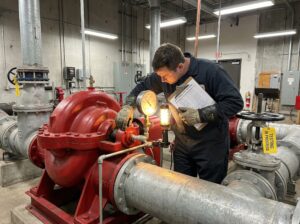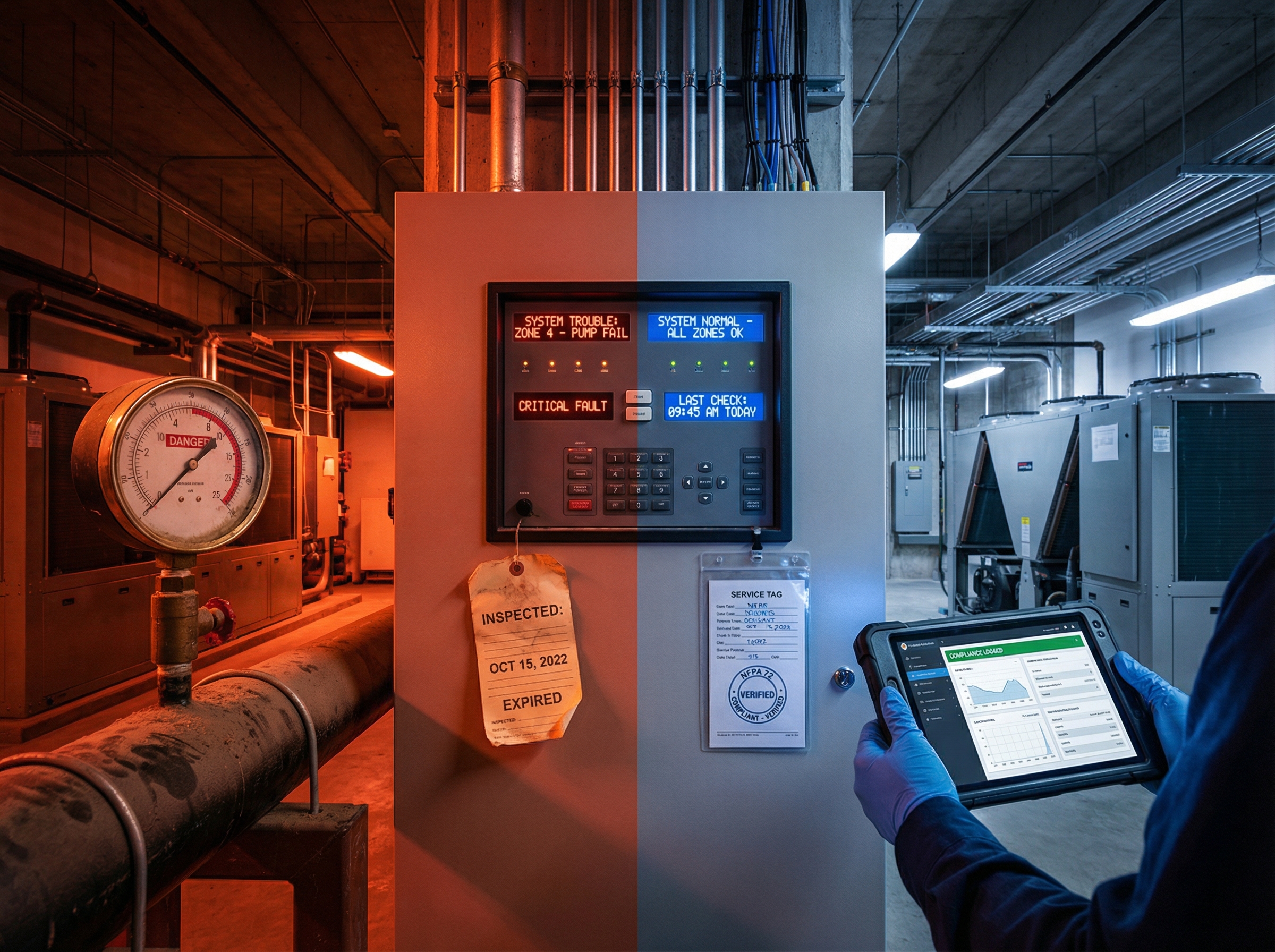
Fire code inspection of commercial facilities identifies same seven mistakes in 68-83% of buildings—recurring compliance errors facilities unknowingly make despite believing full compliance, preventable through awareness and systematic verification protocols.
Fire Code Compliance Disclaimer: Fire code requirements, violation types, correction methods, and compliance standards vary by jurisdiction, building type, occupancy classification, Authority Having Jurisdiction interpretations, and specific circumstances. Information reflects common fire code compliance patterns across diverse US facilities based on NFPA standards and typical municipal fire codes. Consult local fire marshal and applicable codes for jurisdiction-specific requirements.
The seven mistakes appear repeatedly:
| Mistake Category | Occurrence Rate | Average Correction Cost | Detection Without Inspection | Typical Consequence |
|---|---|---|---|---|
| Exit route obstructions | 58-71% of facilities | $0-500 (removal only) | Rare (habituated to clutter) | $3,000-8,000 citation |
| Fire extinguisher gaps | 52-68% of facilities | $800-2,500 (service/replacement) | Rare (don’t know requirements) | $2,800-8,000 citation |
| Improper fire door modifications | 28-41% of facilities | $1,200-4,500 (restoration) | Never (think modifications okay) | $3,000-12,000 citation |
| Emergency lighting testing neglect | 45-62% of facilities | $400-1,200 (testing/batteries) | Rare (assume functional) | $2,000-6,000 citation |
| Sprinkler clearance violations | 42-58% of facilities | $0-800 (storage relocation) | Occasional (noticed if severe) | $500-4,000 citation |
| Missing documentation | 38-56% of facilities | $500-1,500 (reconstruction) | Never (don’t know what’s required) | $1,500-5,000 citation |
| Electrical code violations | 31-47% of facilities | $400-2,000 (corrections) | Rare (normalized violations) | $1,000-5,000 citation |
Critical pattern: All seven mistakes occur in majority of facilities yet go undetected without professional fire code inspection—buildings operate believing compliance while unknowingly violating multiple code requirements discoverable only through trained systematic examination.
Most facilities commit these mistakes not through willful negligence but through lack of awareness—don’t know what codes require, assume current practices compliant, habituate to violations becoming invisible—discovering errors only when fire code inspection reveals deficiencies prompting expensive emergency corrections and potential citations.
This guide catalogs seven most common fire code mistakes identified during inspections, explains why each mistake so prevalent, details how fire code inspection detects errors, provides correction methodologies, offers prevention strategies ensuring ongoing compliance avoiding recurring violations.
—
MISTAKE 1: EXIT ROUTE OBSTRUCTIONS (Found in 58-71% of Facilities)
The most common fire code violation—and most easily preventable
What This Mistake Is
Exit route obstruction definition:
- Any item, equipment, or material impeding egress paths
- Includes corridors, aisles, stairwells, exit doors, exit discharge
- Violations: Storage boxes, furniture, equipment, displays, carts, debris
- Code requirement: Means of egress continuously maintained free of obstructions (NFPA 101)
Common obstruction patterns:
- Cardboard boxes stacked in corridors “temporarily” (become permanent)
- Furniture placement narrowing egress width below minimum (44 inches typical commercial)
- Equipment positioned near exit doors (reduces clearance)
- Stairwell storage (absolutely prohibited, most serious violation)
- Seasonal items (holiday decorations blocking exit signs)
—
Why This Mistake So Common
Obstruction development psychology:
Gradual accumulation (boiling frog syndrome):
- Week 1: Single box placed in corridor “just for today”
- Week 2: Box still there, more items added “temporarily”
- Month 1: Storage pattern established, staff habituated
- Month 3: Corridor storage normalized, no one questions
- Fire code inspection: Inspector immediately identifies violation facilities stopped noticing
Competing priorities (convenience vs. safety):
- Storage space limited (corridors convenient overflow location)
- Staff prioritizes accessibility (items placed for easy access)
- Safety abstract (fire evacuation seems unlikely, storage need immediate)
- Result: Facilities optimize for daily operations, unintentionally compromise egress
Lack of awareness (don’t know violation):
- Staff unaware egress rules (never trained on fire code requirements)
- Assume “passable = compliant” (can walk through = thinks okay)
- Don’t recognize gradual narrowing (width reduction happens incrementally)
- Fire code inspection: Trained inspector measures actual width, identifies non-compliance
—
How Fire Code Inspection Detects This Mistake
Professional examination methodology:
Systematic egress walk-through:
1. Walk every egress path (corridors, stairs, exit approaches)
2. Measure egress width (verify minimum maintained – typically 44 inches commercial)
3. Check exit door clearances (3-foot minimum both sides required)
4. Examine stairwells (zero storage allowed, absolutely prohibited)
5. Verify exit discharge (exterior paths clear to public way)
6. Photograph violations (document for correction)
Common findings:
- 58-71% of facilities have at least one obstruction
- Corridors most common (47% of facilities)
- Exit door areas second (34% of facilities)
- Stairwell storage third (18% of facilities – most serious)
—
Correction Method
Immediate remedy (same-day correction):
1. Remove all obstructions (relocate items to proper storage)
2. Measure egress widths (verify compliance after removal)
3. Clear exit door areas (ensure 3-foot clearance maintained)
4. Empty stairwells completely (zero tolerance for stair storage)
5. Mark proper boundaries (floor tape indicating keep-clear zones if needed)
Typical correction cost: $0-500 (labor only, unless proper storage must be created)
—
Prevention Strategy
How to avoid recurring exit obstructions:
Monthly egress monitoring:
- Designate responsible party (facilities manager, safety coordinator)
- Walk all egress routes monthly (systematic inspection schedule)
- Remove obstructions immediately (same-day correction protocol)
- Document walk-throughs (log dates, findings, corrections)
Staff education:
- Train on egress requirements (why clear routes critical)
- Explain width minimums (what’s acceptable vs. violation)
- Provide proper storage alternatives (eliminate need for corridor storage)
- Regular reminders (periodic safety bulletins, staff meetings)
Physical barriers:
- Floor markings (yellow lines indicating no-storage zones)
- Signage (“Keep Clear – Fire Exit Route”)
- Storage solutions (provide adequate alternatives)
48Fire Protection egress monitoring: Monthly walk-through service identifies obstructions before fire marshal, immediate correction coordination, staff training on compliance, digital documentation proving ongoing monitoring
—
MISTAKE 2: FIRE EXTINGUISHER COMPLIANCE GAPS (Found in 52-68% of Facilities)
Multiple violations often present simultaneously
What This Mistake Is
Common fire extinguisher violations:
- No monthly visual inspections documented (NFPA 10 requirement)
- Missing/expired annual service tags (over 12 months old)
- Pressure gauge in red zone (uncharged, non-functional)
- Obstructed/inaccessible (boxes, equipment blocking)
- Improper mounting (too high, too low, unsecured)
- Wrong type for hazard (Class A in kitchen needing Class K)
Most facilities have 2-4 extinguisher deficiencies simultaneously
—
Why This Mistake Happens
Why facilities neglect fire extinguisher compliance:
Monthly inspection confusion:
- Don’t know monthly checks required (NFPA 10 mandates)
- Think “visual check” means casual glance (actual procedure more detailed)
- No designated responsible party (everyone assumes someone else doing)
- Fire code inspection: Requests 12 months logs, facility has none
Annual service oversight:
- Don’t track service dates (no system monitoring expiration)
- Assume “contractor will notify” (contractors don’t track all clients proactively)
- Service expires unnoticed (tags 15-18 months old common)
- Fire code inspection: Checks tags, finds expired by 6+ months
Pressure loss undetected:
- No one examines gauges (equipment ignored if not obviously broken)
- Gradual pressure decline (occurs over months, goes unnoticed)
- Facility discovers only when inspector checks (or worse, when needed in fire)
—
How Fire Code Inspection Detects Compliance Gaps
Inspector examination process:
Documentation check:
1. Request monthly inspection logs (12+ months)
2. Verify log completeness (all months present, properly documented)
3. Check signatures/dates (confirm actual inspections occurred)
Physical inspection:
1. Examine 5-10 random extinguishers (representative sample)
2. Check pressure gauges (needle in green zone required)
3. Verify annual service tags (date within 12 months)
4. Assess accessibility (unobstructed, properly mounted)
5. Confirm appropriate type (correct class for hazard)
Common findings:
- 52-68% of facilities have deficiencies
- Missing monthly logs (38% of facilities)
- Expired service tags (31% of facilities)
- Pressure/accessibility issues (27% of facilities)
—
Correction Method
Systematic remediation:
Documentation:
- Implement monthly inspection program (assign responsible party, create logs)
- Backfill recent months if defensible (with actual inspections going forward)
- Establish tracking system (calendar reminders, digital platform)
Physical corrections:
- Recharge uncharged units (contractor service same-week)
- Schedule overdue annual service (all units inspected, tagged)
- Clear obstructions (relocate blocking items)
- Remount improper installations (correct height, secure brackets)
- Replace wrong types (appropriate class for hazard)
Typical correction cost: $800-2,500 (recharges, annual service, replacements)
—
Prevention Strategy
Monthly inspection protocol:
- Designated inspector (named individual responsible)
- Standardized checklist (pressure, accessibility, mounting, condition)
- Digital logging (app-based or cloud platform)
- Failed unit process (immediate notification, correction protocol)
Annual service scheduling:
- Track all service dates (spreadsheet or platform)
- Schedule renewals 30 days before expiration (proactive approach)
- Contractor relationship (standing service agreement)
- Confirmation process (verify tags applied, documentation received)
48Fire Protection extinguisher management: Monthly professional inspections, digital documentation automatic, annual service coordination, compliance guaranteed
—
MISTAKE 3: IMPROPER FIRE DOOR MODIFICATIONS (Found in 28-41% of Facilities)
Rating-voiding changes made unknowingly
What This Mistake Is
Common fire door modifications violating codes:
- Unauthorized hardware additions (door viewers, kick plates, surface bolts)
- Penetrations for wiring/equipment (holes drilled through door/frame)
- Painting over fire door labels (obscures required identification)
- Non-rated glazing changes (replacing wire glass with non-rated)
- Hold open devices (magnets, wedges defeating self-closing)
Critical issue: ANY unauthorized modification voids UL/testing certification
—
Why Facilities Make This Mistake
Modification rationale (well-intentioned but code-violating):
Functional improvements:
- Door viewer adds security (seems like safety enhancement, actually voids rating)
- Kick plate protects door (maintenance benefit, not realizing fire rating implications)
- Wiring passage convenient (electrician completes work, doesn’t know fire door rules)
Result: Facilities improve function, unknowingly void fire protection
Convenience prioritized:
- Hold open devices convenient (defeats purpose but solves nuisance)
- Paint over labels (aesthetic preference, eliminates required identification)
Result: Convenience trumps code compliance unknowingly
Lack of awareness:
- Don’t know doors fire-rated (labels painted over or missing)
- Assume modifications acceptable (not educated on rating requirements)
- Contractors modify without training (tradespeople unaware of fire door rules)
—
How Fire Code Inspection Detects Modifications
Inspector examination:
1. Locate fire door labels (edge of door, frame)
2. Verify label legibility (not painted over, damaged)
3. Examine all hardware (ensure each component rated for fire door)
4. Check for penetrations (holes, cutouts, unauthorized modifications)
5. Test self-closing (verify no hold open devices)
6. Document violations (photograph for correction evidence)
Common findings:
- 28-41% of facilities have improper modifications
- Painted labels most common (24% of facilities)
- Unauthorized hardware (16% of facilities)
- Penetrations/alterations (9% of facilities)
—
Correction Method
Restoration to code-compliant configuration:
1. Remove unauthorized hardware (non-rated components)
2. Fill/repair penetrations (restore door integrity)
3. Remove hold open devices (restore self-closing function)
4. Replace labels if necessary (identification restoration)
5. Repaint properly (labels remain visible)
Typical correction cost: $1,200-4,500 (hardware removal, door restoration, professional service)
—
Prevention Strategy
Fire door awareness program:
- Identify all fire doors (label verification, documentation)
- Staff education (explain rating importance, modification prohibition)
- Contractor notification (inform all vendors about fire door restrictions)
- Approval process (all door modifications reviewed before implementation)
48Fire Protection fire door management: Annual inspection identifying modifications, correction coordination, staff training, label restoration
—
MISTAKE 4: EMERGENCY LIGHTING TESTING NEGLECT (Found in 45-62% of Facilities)
Required monthly testing not performed
What This Mistake Is
Emergency lighting testing violations:
- No monthly 30-second functional tests (NFPA 101 requirement)
- Missing annual 90-minute capacity testing (professional certification)
- Failed units not identified/corrected (dead batteries undetected)
- No documentation of testing (cannot prove compliance)
Result: Emergency lighting may not function during actual emergency
—
Why This Mistake Overlooked
Testing neglect reasons:
Unawareness of requirement:
- Don’t know monthly testing required (NFPA 101 mandates)
- Assume “lights work = compliant” (don’t test systematically)
- Fire code inspection: Requests test logs, facility unaware supposed to have them
Assumed functionality:
- Lights appear fine (don’t realize batteries may be dead)
- Test buttons never pressed (no verification of actual function)
- Only discover failures when inspector tests (or during actual emergency)
Documentation gap:
- Tests performed informally (no written records)
- Can’t prove compliance (inspector requires documentation)
—
How Fire Code Inspection Detects Testing Neglect
Inspector process:
1. Request monthly test logs (12+ months documentation)
2. Randomly test 5-10 units (press test button, observe function)
3. Request annual 90-minute certificate (verify professional testing)
4. Identify failed units (document non-functional equipment)
Common findings:
- 45-62% of facilities have testing deficiencies
- No monthly logs (38% of facilities)
- Expired annual certificates (29% of facilities)
- Failed units discovered during inspection (18% of facilities)
—
Correction Method
Testing program implementation:
1. Conduct immediate facility-wide test (identify all failed units)
2. Replace failed batteries (immediate correction)
3. Implement monthly testing protocol (assign responsible party)
4. Schedule annual 90-minute testing (professional certification)
5. Create documentation system (digital logs, photo evidence)
Typical correction cost: $400-1,200 (battery replacements, testing implementation, annual certification)
—
Prevention Strategy
Monthly testing discipline:
- Designated tester (specific individual responsible)
- Test schedule (first Monday of month, etc.)
- Digital logging platform (app-based documentation)
- Failed unit protocol (immediate battery replacement process)
Annual certification scheduling:
- Calendar tracking (schedule 11 months after previous test)
- Professional contractor (90-minute capacity testing)
- Documentation filing (certificates maintained electronically)
48Fire Protection emergency lighting management: Monthly testing service, automatic documentation, annual certification, battery replacement coordination
—
MISTAKE 5: SPRINKLER 18-INCH CLEARANCE VIOLATIONS (Found in 42-58% of Facilities)
Storage gradually encroaches on required clearances
What This Mistake Is
Sprinkler clearance violation:
- NFPA 25 requires 18-inch clearance below all sprinkler heads
- Violations: Storage, shelving, equipment placed within 18 inches
- Consequence: Obstructs spray pattern, reduces fire suppression effectiveness
Most common pattern: Storage height increases gradually, eventually violates clearance
—
Why This Mistake Develops
Clearance violation psychology:
Incremental encroachment:
- Month 1: Storage placed 24 inches below head (compliant)
- Month 3: More inventory added, stack height 20 inches (still okay)
- Month 6: Stack reaches 16 inches (violation, but no one noticed transition)
- Fire code inspection: Inspector measures, identifies violation
Storage pressure:
- Limited warehouse space (maximize vertical storage)
- Staff unaware of 18-inch rule (no training on requirement)
- Assume “as high as fits” acceptable (don’t know clearance mandatory)
—
How Fire Code Inspection Detects Clearance Violations
Inspector examination:
1. Walk facility observing sprinkler coverage
2. Identify potential clearance violations (visual assessment)
3. Measure clearances (18-inch minimum verified)
4. Document violations (photograph, note locations)
5. Count violations (multiple locations typically found)
Common findings:
- 42-58% of facilities have clearance violations
- Warehouse/storage areas most common (71% of violations)
- Retail/merchandise areas (22% of violations)
- Multiple locations typical (average 3-5 violations per facility)
—
Correction Method
Storage relocation:
1. Measure all clearances (identify every violation)
2. Relocate items (reduce stack height, reorganize)
3. Mark maximum heights (indicators on racks/shelving)
4. Re-measure (verify compliance after correction)
Typical correction cost: $0-800 (labor only, unless additional storage space required)
—
Prevention Strategy
Ongoing clearance monitoring:
- Maximum height marking (visual indicators on storage systems)
- Staff training (explain 18-inch rule, why critical)
- Monthly verification (include in facility walk-throughs)
- Storage planning (consider clearances when arranging inventory)
48Fire Protection clearance monitoring: Quarterly facility walks, clearance measurement, immediate correction coordination, staff training
—
MISTAKE 6: MISSING/INADEQUATE DOCUMENTATION (Found in 38-56% of Facilities)
Cannot produce required records during fire code inspection
What This Mistake Is
Documentation deficiencies:
- Missing inspection logs (monthly extinguisher/lighting checks)
- Expired/missing certificates (sprinkler, alarm testing)
- No fire safety plan (required by NFPA 1)
- Missing evacuation diagrams (not posted)
- No designated responsible parties (accountability undefined)
—
Why This Mistake Occurs
Documentation failure patterns:
Unawareness of requirements:
- Don’t know what documentation required (no training on compliance)
- Assume equipment presence sufficient (don’t realize records mandatory)
- Fire code inspection: Inspector requests documents, facility doesn’t have them
Poor record keeping:
- Paper records lost (no systematic filing)
- Digital records not backed up (lost when computer replaced)
- No centralized system (each contractor files own, nothing organized)
Inspection procrastination:
- Testing performed, not documented (think “we did it” enough)
- Documentation delayed “until have time” (never happens)
- Backfilling attempted before inspection (inspector can often tell)
—
How Fire Code Inspection Reveals Documentation Gaps
Inspector requests:
1. 12 months monthly inspection logs (extinguishers, emergency lighting)
2. Current year professional certificates (sprinklers, alarms)
3. Fire safety plan (building-specific document)
4. Evacuation diagrams (posted in visible locations)
5. Responsible party designation (management accountability documentation)
Facility cannot produce = documentation violation
Common findings:
- 38-56% of facilities have documentation deficiencies
- Missing monthly logs most common (31% of facilities)
- Expired certificates second (24% of facilities)
- No fire safety plan third (18% of facilities)
—
Correction Method
Documentation reconstruction:
1. Gather existing records (consolidate from all sources)
2. Identify gaps (determine what’s missing)
3. Schedule missing inspections/testing (obtain current certificates)
4. Implement going-forward system (prevent future gaps)
5. Create fire safety plan (develop required documentation)
Typical correction cost: $500-1,500 (professional services to generate missing documentation, platform implementation)
—
Prevention Strategy
Systematic documentation management:
- Digital platform (cloud-based, centralized repository)
- Automated tracking (calendar reminders for renewals)
- Contractor coordination (all certificates uploaded automatically)
- Monthly verification (check documentation current)
48Fire Protection documentation platform: Automatic record collection, centralized repository, expiration tracking, instant retrieval capability, fire-marshal-ready packages
—
MISTAKE 7: ELECTRICAL CODE VIOLATIONS (Found in 31-47% of Facilities)
NFPA 70 violations normalized in daily operations
What This Mistake Is
Common electrical code violations:
- Extension cords as permanent wiring (NFPA 70 prohibits)
- Surge protectors daisy-chained (creates fire hazard)
- Electrical panels obstructed (must maintain 3-foot clearance)
- Missing panel covers (exposed wiring)
- Cords under carpets/through walls (heat buildup risk)
—
Why This Mistake Common
Electrical violation normalization:
Convenience prioritized:
- Extension cords easier than installing outlets (quick solution becomes permanent)
- Panel obstruction develops gradually (storage accumulates)
- Staff habituated (violations become invisible)
Lack of awareness:
- Don’t know extension cord rules (think temporary use undefined)
- Unaware of panel clearance requirement (3-foot minimum unfamiliar)
- Fire code inspection: Inspector identifies, facility didn’t know violations
—
How Fire Code Inspection Detects Electrical Violations
Inspector examination:
1. Look for extension cords (verify temporary use only)
2. Check surge protector configurations (no daisy-chaining)
3. Verify panel accessibility (3-foot clearance maintained)
4. Inspect panel condition (covers present, properly secured)
5. Note cord routing (not under carpets, through walls)
Common findings:
- 31-47% of facilities have electrical violations
- Extension cord misuse most common (24% of facilities)
- Panel obstructions second (18% of facilities)
- Surge protector violations third (14% of facilities)
—
Correction Method
Electrical compliance restoration:
1. Remove extension cords (install permanent outlets if needed)
2. Un-daisy-chain surge protectors (connect each directly to outlet)
3. Clear panel areas (remove storage, maintain clearances)
4. Install missing covers (protect exposed wiring)
5. Reroute cords (eliminate under-carpet/through-wall routing)
Typical correction cost: $400-2,000 (varies if permanent outlet installation required)
—
Prevention Strategy
Electrical discipline:
- Extension cord policy (define “temporary” clearly – 90 days maximum)
- Panel clearance marking (floor lines indicating keep-clear zone)
- Staff training (explain fire hazards of violations)
- Periodic checks (include in monthly facility walk-throughs)
48Fire Protection electrical compliance monitoring: Include in quarterly inspections, staff education, correction coordination
—
COMPREHENSIVE MISTAKE PREVENTION: SYSTEMATIC FIRE CODE INSPECTION PROGRAM
How to avoid all seven mistakes simultaneously
The Prevention Solution
48Fire Protection comprehensive fire code inspection service addresses all seven mistakes:
Quarterly inspection schedule:
- Exit route walk-throughs (Mistake 1 detection)
- Fire extinguisher verification (Mistake 2 prevention)
- Fire door examination (Mistake 3 identification)
- Emergency lighting testing (Mistake 4 compliance)
- Sprinkler clearance monitoring (Mistake 5 detection)
- Documentation audit (Mistake 6 gap identification)
- Electrical safety review (Mistake 7 monitoring)
Continuous compliance:
- Monthly services (some systems require monthly attention)
- Quarterly professional inspections (systematic coverage)
- Annual comprehensive review (complete verification)
- Real-time deficiency correction (48-72 hour response)
Documentation confidence:
- Digital platform (all records centralized)
- Automated tracking (never miss renewal dates)
- Instant retrieval (fire marshal ready always)
Result: Facilities with comprehensive program experience 92-97% mistake-free fire code inspection outcomes
—
CONCLUSION: AWARENESS + SYSTEMATIC VERIFICATION PREVENTS FIRE CODE MISTAKES
Seven common fire code mistakes occur in 68-83% of facilities—exit route obstructions (58-71% occurrence), fire extinguisher compliance gaps (52-68%), improper fire door modifications (28-41%), emergency lighting testing neglect (45-62%), sprinkler clearance violations (42-58%), missing documentation (38-56%), electrical code violations (31-47%)—preventable through awareness training and systematic fire code inspection programs identifying errors before Authority Having Jurisdiction citations.
Why mistakes so common despite good intentions: Facilities make errors not through willful negligence but through lack of awareness (don’t know code requirements), gradual habituation (violations develop incrementally becoming invisible), competing priorities (convenience trumps compliance unknowingly), insufficient training (staff not educated on fire safety codes), absence of systematic verification (no regular fire code inspection catching developing issues)—demonstrating need for professional examination complementing facility efforts through trained inspector perspective identifying errors normalized occupants no longer recognize.
Prevention methodology combining awareness and verification: Staff training educates on all seven mistake categories explaining code requirements and consequences, designated responsible parties create accountability for ongoing monitoring, monthly facility walk-throughs identify developing issues before major violations, quarterly professional fire code inspection provides expert verification catching errors facilities miss, immediate correction protocols remediate deficiencies within 48-72 hours preventing citation accumulation, digital documentation systems prove ongoing compliance to authorities—systematic approach delivering 92-97% mistake-free outcomes versus 32-17% facilities attempting compliance without professional inspection support.
48Fire Protection comprehensive fire code inspection mistake prevention program addresses all seven errors through quarterly professional examinations covering exit route obstructions with egress walk-throughs and width verification, fire extinguisher compliance with documentation audit and physical inspection, fire door modification detection through label verification and hardware examination, emergency lighting testing with functional verification and documentation review, sprinkler clearance monitoring through facility walks and measurement verification, documentation gap identification through records audit and certificate tracking, electrical code violation detection through panel inspection and cord policy verification—delivering systematic mistake identification, immediate correction coordination, staff training on prevention, digital documentation proving compliance, 48-72 hour deficiency response, 92-97% mistake-free fire code inspection outcomes protecting facilities from recurring violations through awareness and professional verification combination.
Fire Code Compliance Disclaimer: Fire code requirements, violation types, mistake patterns, correction methods, and compliance standards vary by jurisdiction, building type, occupancy classification, construction type, Authority Having Jurisdiction interpretations, and specific circumstances. Information reflects common fire code mistakes identified during inspections across diverse US commercial facilities based on NFPA standards and typical municipal fire codes. Individual facilities may have unique requirements. Consult local fire marshal, applicable fire codes (NFPA, IFC, local amendments), and qualified fire protection professionals for jurisdiction-specific compliance guidance.
[Avoid Fire Code Mistakes Through Professional Inspection]
Prevent common fire code violations through systematic mistake detection and correction. 48Fire Protection comprehensive inspection program identifies all seven errors: exit route obstructions through egress walk-throughs, fire extinguisher compliance gaps via documentation audit and physical verification, improper fire door modifications through label and hardware examination, emergency lighting testing neglect via functional testing and documentation review, sprinkler clearance violations through facility walks and measurement, missing documentation through records audit and certificate tracking, electrical code violations through panel and cord policy inspection—delivering quarterly professional examinations, immediate correction coordination within 48-72 hours, staff training on prevention strategies, digital documentation platform, continuous compliance monitoring, 92-97% mistake-free outcomes protecting facilities from recurring violations and costly citations through awareness education combined with systematic professional verification.