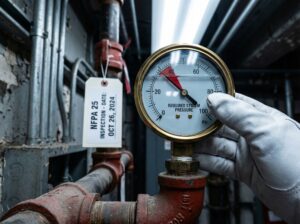
Opening scenario: A mid-size office building and a small café on the ground floor share a single corridor, a compact kitchen, and a mechanical room. On a Tuesday afternoon, a grease flare-up in the café’s cooking area spits sparks into the air. An employee reaches for a nearby fire extinguisher—but the gauge is broken, the cylinder is overdue for service, and the current extinguisher is the wrong type for cooking oil fires. The blaze is quickly contained, but not before it triggers a mandatory emergency response, a reprimand from the fire marshal, and a costly hit to insurance premiums. The incident wasn’t a mystery or a “freak accident”—it was the predictable outcome of poor extinguisher selection, placement, and maintenance, all failing to meet recognized codes and standards. The good news: this is entirely preventable with a systematic, documented approach to fire extinguisher compliance that aligns with OSHA, NFPA, and local regulations.
This article walks facility managers, safety officers, and building owners through the essential considerations for fire extinguishers in business environments: choosing the right extinguishers, placing them for maximum effectiveness, maintaining them, and navigating the complex landscape of fire code compliance. Along the way, you’ll find practical checklists, planning templates, and real-world guidance designed to help you reduce risk, improve response times, and ensure ongoing compliance.
—
Why compliance matters for fire extinguishers
Fire extinguishers are often the first line of defense for small, contained incidents. When they’re properly chosen, correctly installed, and regularly serviced, extinguishers can suppress or control many fires before they escalate to life-threatening or facility-damaging events. When they’re not, the consequences are immediate and costly: injuries or fatalities, property damage, business interruption, penalties from regulators, and higher insurance premiums.
Key reasons to prioritize fire extinguisher compliance:
- Risk reduction: The right extinguisher in the right place dramatically increases the chances of a safe, rapid initial response.
- Legal compliance: Federal, state, and local regulations govern extinguisher types, spacing, mounting heights, maintenance, and recordkeeping.
- Insurance and liability: Demonstrated compliance can influence premiums and coverage terms; noncompliance can lead to denial of claims or policy cancellation.
- Operational readiness: Regular inspections catch corrosion, damage, or gas loss before they render a device useless in a real event.
- Worker confidence and culture: A well-maintained extinguisher program signals that safety is a core business value, not an afterthought.
The practical takeaway: Fire extinguisher compliance is not a regulatory burden but a risk-management discipline that protects people, property, and profits.
—
The regulatory landscape: who governs extinguishers and what they expect
Two primary pillars govern portable fire extinguishers in most workplaces: OSHA regulations and the NFPA standards, with local jurisdictions like New York City applying additional rules. Below is a concise map of the major players and what they typically require.
OSHA 1910.157 — Portable Fire Extinguishers
- Requires portable extinguishers to be placed so that travel distance to the nearest extinguisher is reasonable for the hazard (examples include 75 feet for Class A, 50 feet for Class B, and 75 feet for Class D hazards). It also requires monthly visual inspections and an annual maintenance check, plus required recordkeeping.
- Practical implication: Your floor plans should be drawn with compliant travel distances in mind, and you must maintain documented inspection and maintenance records.
NFPA 10-2026 — Standard for Portable Fire Extinguishers
- Establishes the criteria for selecting, installing, inspecting, maintaining, and testing portable extinguishers. NFPA 10-2026 is the current edition and is widely adopted as the technical backbone for extinguisher programs in the United States.
- Practical implication: The standard provides detail on extinguisher types by hazard class, mounting heights, service intervals, and replacement criteria.
NYC portable extinguisher requirements (varies by building type and use)
- New York City regulations require the correct number, type, and placement of portable extinguishers based on building type and occupancy. These requirements are codified in Section 15-02 of Title 3 of the Rules of the City of New York (RCNY).
- Practical implication: If you operate in NYC, you must align with both NFPA 10 and the city’s rules; audits or inspections can be strict, and noncompliance can trigger penalties.
California/other state and local variations
- Many states and municipalities refer to NFPA standards and OSHA regulations while adding their own specific guidance for local occupancy types (e.g., schools, healthcare, high-rise office towers). Cal/OSHA, for example, also provides state-level guidance and may reference portable extinguisher requirements in its regulations.
- Practical implication: Don’t assume national standards will cover every local nuance. Always cross-check with the applicable local authority having jurisdiction (AHJ).
Cited sources:
- OSHA 1910.157 — Portable Fire Extinguishers: [OSHA 1910.157]
- NFPA 10-2026 — Standard for Portable Fire Extinguishers: [NFPA 10-2026]
- NYC portable extinguisher requirements: [Portable Fire Extinguisher Requirements (NYC)]
- Cal/OSHA guidance on portable extinguishers: [Cal/OSHA Portable Fire Extinguishers]
Table: Regulatory snapshot (quick reference)
| Regulator | What it covers | Typical requirements you’ll see in practice |
|---|---|---|
| OSHA (1910.157) | Portable extinguishers in general industry | Placement distances by hazard class; monthly visual inspections; annual maintenance; recordkeeping |
| NFPA 10-2026 | Selection, installation, inspection, maintenance, testing | Class-by-class extinguisher types; mounting heights; inspection frequency; service methods |
| NYC RCNY Title 3, Section 15-02 | NYC-specific extinguisher rules | Required counts, types, placement, and documentation per occupancy; stricter enforcement in NYC |
| State/Local AHJs (e.g., Cal/OSHA) | Local interpretations and supplements | Cross-reference with NFPA 10 and OSHA; occupancy-specific nuances |
—
Choosing the right extinguishers for your business
Understanding your hazards is the starting point. Fire extinguishers are not one-size-fits-all devices; the wrong type can actually worsen a small fire or become ineffective due to cooking oils, electronics, or metal fires. Here’s a practical guide to matching extinguisher types to typical business environments.
Common extinguisher classes and what they cover
- Class A: Ordinary combustibles (wood, paper, textiles)
- Class B: Flammable liquids (gasoline, solvents, cooking oils in many kitchens)
- Class C: Electrical fires (energized electrical equipment)
- Class D: Combustible metals (aluminum, magnesium—typical in metalworking facilities)
- Class K: Cooking oils and fats (commercial kitchens)
Most office and general business environments benefit from:
- ABC multi-purpose extinguishers: Good all-around reliability for A, B, and C fires; appropriate for most offices, retail spaces, and mixed-use facilities.
- Health care and high-electrical-risk environments may require specialized extinguishers (e.g., CO2 for data centers or sensitive electronics), but be mindful of re-ignition risks and user safety.
Kitchen-specific needs:
- Cooking-oil fires are best addressed with Class K extinguishers (wet chemical extinguishants) designed for kitchen environments. These extinguishers have special agents and nozzles designed to saponify fats and oils and prevent re-ignition.
Industrial and metalworking environments:
- Class D extinguishers are used for certain metal fires; these are specialized and not suitable for ordinary office environments unless specified by the AHJ or NFPA 10.
Sizing and rating considerations
- Extinguishers carry ratings like 2A10BC, 5-B:C, etc. The higher the number, the larger the fire it can handle in the A-class rating; BC relates to B and C classes.
- When selecting extinguishers, you balance fire suppression capability with weight, accessibility, and placement height.
48Fire Protection practical guidance
- Conduct a hazard assessment of each area: cooking areas, server rooms, mechanical rooms, electrical panels, storage spaces, and high-traffic corridors.
- For most offices and light-industrial spaces, a combination of ABC extinguishers and at least one Class K extinguisher in kitchens meets common compliance targets and emergency needs.
- Ensure extinguishers are not locked behind doors or blocked by storage; accessibility is non-negotiable.
Small-business nuance
- If your building houses multiple tenants with different risk profiles, consider a risk-based approach to extinguisher type and placement to avoid gaps in protection while maintaining cost-effectiveness.
Practical takeaway: Start with a baseline of ABC extinguishers for general areas and add Class K extinguishers in kitchen areas. For specialized operations (metalworking, high-voltage equipment, or hazardous materials handling), consult NFPA 10-2026 and your AHJ for any additional requirements.
Cited sources:
- OSHA 1910.157 (for general placement and maintenance expectations)
- NFPA 10-2026 (for detailed selection and maintenance guidance)
- NYC portable extinguisher requirements (for city-specific considerations)
- Cal/OSHA guidance (for broader regulatory context)
—
Placement, coverage, and travel distance: designing a compliant layout
A well-designed extinguisher layout reduces the time to access during a fire event and ensures coverage consistent with risk across the facility. OSHA’s travel-distance concept provides a practical starting point, but the actual layout should reflect your building’s layout, occupancy, and hazard distribution.
Travel distance rules (examples)
- Class A hazards: maximum travel distance typically 75 feet
- Class B hazards: maximum travel distance typically 50 feet
- Class D hazards: maximum travel distance typically 75 feet
- Note: These numbers are example guidelines drawn from OSHA 1910.157; actual distances can vary by hazard type and local code. Always cross-check with NFPA 10-2026 and your AHJ.
Key layout principles
- Proximity to high-risk areas: place extinguishers near kitchens, mechanical rooms, electrical closets, and near exits.
- Visibility and signage: extinguishers must be clearly visible, unobstructed, and properly labeled (with a mounting height often around 3 to 5 feet above floor level where permitted by code).
- Line of sight and accessibility: avoid placing extinguishers behind doors that require a secondary action to access or in pockets inaccessible during a fire.
- Thirty-second accessibility test: confirm that a person can reach and operate the extinguisher within 30 seconds from the point of risk.
Placement planning checklist
- [ ] Conduct a hazard assessment for each room or area
- [ ] Determine appropriate extinguisher classes by area (A, B, C, D, K as needed)
- [ ] Map travel distances to extinguishers from representative points in each area
- [ ] Confirm mounting height and mounting method per NFPA 10-2026
- [ ] Ensure extinguishers are not blocked by storage or equipment
- [ ] Install clear, illuminated or clearly visible signs pointing to extinguishers
- [ ] Schedule a removal plan for any extinguishers located in high-traffic corridors during peak activity times to minimize disruption
Example layout considerations by space type
- Offices and retail floors: plan extinguishers every 75 feet along corridors, with at least one extinguisher near each exit.
- Kitchens: add Class K extinguishers for cooking-oil fires; place near the cooking area and away from heat sources and exhausts to avoid interference with vent systems.
- Mechanical rooms and electrical rooms: place extinguishers within a short reach of equipment; consider CO2 or clean-agent extinguishers for sensitive electronics if appropriate for the risk.
- Storage and warehouse areas: heavier-usage environments may require multiple extinguishers and possibly higher-capacity units for larger squares.
NYC-specific check
- If you operate in NYC, ensure counts and placement meet the city’s requirements in addition to NFPA 10-2026 and OSHA 1910.157. NYC enforcement can be strict about spacing, type, and signage, and inspections will reference the RCNY standards.
Visual aid: placement map template (example)
- A simple floor plan with a corridor map
- A row of ABC extinguishers every 75 feet along corridors
- One Class K extinguisher near the kitchen
- Additional units in mechanical rooms and electrical closets
- Clear exit signage and unobstructed accessibility
- The map should be included in your extinguisher service records so auditors can verify compliance.
A note on mixed hazard environments: In spaces with multiple hazard types, prioritize coverage that ensures the most probable scenarios have quick access. For example, offices with a small kitchen and server rooms should emphasize travel distances to extinguishers in the kitchen and around data/IT spaces, while still maintaining coverage elsewhere.
Cited sources:
- OSHA 1910.157 (travel distances)
- NFPA 10-2026 (installation placement)
- NYC portable extinguisher requirements (NYC)
- Cal/OSHA guidance (for cross-reference and broader compliance)
Tables: travel distances by hazard class (typical examples)
| Hazard Class | Typical Travel Distance to Nearest Extinguisher | Practical notes |
|---|---|---|
| Class A (ordinary combustibles) | 75 feet | Common in offices, corridors; ensure accessible along pathways |
| Class B (flammable liquids) | 50 feet | Kitchens, maintenance areas; ensure extinguishers near potential spill zones |
| Class D (flammable metals) | 75 feet | Specialized environments; consult NFPA 10-2026 for placement |
| Class C (electrical) | Variable | Place near electrical panels and equipment; ensure non-conductive mounting or clearances |
—
Inspiring a disciplined approach to inspection and maintenance
Maintenance is where a compliant program earns its value. A neglected extinguisher is not just a missing tool; it’s a direct threat. The OSHA and NFPA standards require a disciplined cadence of inspections and maintenance to ensure readiness.
Monthly visual inspections (by trained staff or occupants)
- Check for physical damage, corrosion, leakage, and obstructions
- Ensure the pressure gauge or indicator shows the unit is charged
- Confirm tamper seals are intact
- Confirm the operating instructions are legible
- Ensure the mounting bracket is secure and the extinguisher is accessible
Annual maintenance and professional service
- A certified technician should conduct a thorough inspection and hydrostatic testing as required by NFPA 10-2026 and relevant AHJ requirements
- Check for hydrostatic test dates, recharging needs, and reassembly after service
- Replace or recharge extinguishers as needed; document all work performed
Recordkeeping and documentation
- Maintain a service log that captures: serial numbers, locations, inspection dates, maintenance actions, and the technician’s credentials
- Document recharging, hydrostatic testing, and any replacements
- Keep a current inventory with expiry dates for service and hydrostatic testing
Pro tip: pairing equipment with a digital record system
- Use a cloud-based extinguisher management system to track inspections, service dates, and replacement schedules
- Automate reminders for inspection due dates
- Attach photos, serial numbers, instructions, and compliance certificates to each device’s record
Common maintenance pitfalls to avoid
- Using the wrong service vendor: only qualified technicians should perform hydrostatic testing and overhaul
- Delaying maintenance after a discharge or partial release
- Failing to update signage or placement after renovations or floor-plan changes
- Not replacing tamper seals or damaged gauges
Checklist: monthly visual inspection (quick reference)
- [ ] Visual exterior condition (no dents or corrosion)
- [ ] Pressure gauge in the operable range
- [ ] Tamper seal intact
- [ ] Accessibility unobstructed
- [ ] Clear labeling and instructions legible
- [ ] Signage in place and visible
- [ ] Service tag up-to-date
Jetting the maintenance cadence with the fire code
- NFPA 10-2026 requires that extinguishers are inspected monthly, serviced annually, and hydrostatically tested on a schedule appropriate to the material and type
- OSHA 1910.157 reinforces the need for a documented inspection program and recordkeeping
Cited sources:
- OSHA 1910.157 (maintenance and recordkeeping)
- NFPA 10-2026 (maintenance and testing cadence)
- Cal/OSHA guidance on portable extinguishers (for cross-reference)
—
A closer look at NYC and other jurisdictional specifics
In a city like New York, the regulatory framework often requires stricter adherence to extinguisher counts, types, and placement. The NYC requirements operate alongside NFPA 10 and OSHA, and inspections are multi-agency in scope. A few practical implications for NYC facilities:
- Counting and placement must align with occupancy type (office, retail, mixed-use, restaurant, etc.)
- Kitchens must be equipped with Class K extinguishers if cooking appliances are in operation
- Proper signage and accessible mounting heights are closely scrutinized
- Documentation must be thorough, including annual maintenance, monthly inspections, and test results
Practical tip for NYC facilities: Maintain an up-to-date extinguisher map and location inventory that aligns with the RCNY and NFPA 10-2026 standards. This reduces disruption during inspections and minimizes the risk of noncompliance.
Cited sources:
- NYC portable extinguisher requirements (NYC RCNY)
- NFPA 10-2026 (for installation and maintenance guidance)
—
The implementation journey: from assessment to ongoing compliance
A robust extinguisher program moves through several well-defined stages. Each stage builds on the previous one to create a resilient compliance framework.
Stage 1: Baseline hazard assessment
- Map areas with different hazard classes (A, B, C, D, K)
- Identify high-risk zones (kitchens, mechanical rooms, electrical rooms, server rooms)
- Determine occupancy patterns and egress routes
Stage 2: Equipment selection and placement plan
- Choose extinguisher types based on hazards, occupancy, and local regulation
- Design a placement plan meeting travel-distance guidelines
- Prepare an extinguisher layout map for the site and include it in safety documentation
Stage 3: Installation and labeling
- Install extinguishers with appropriate mounting, signage, and accessibility
- Attach tamper seals, service tags, and maintain a visible inspection schedule
- Ensure signage is legible and compliant with color coding and pictograms
Stage 4: Training and familiarization
- Train staff on PASS technique (Pull, Aim, Squeeze, Sweep)
- Provide periodic refresher training and drills
- Confirm employees know where extinguishers are and how to use them safely
Stage 5: Inspection, maintenance, and recordkeeping
- Implement monthly visual inspections and annual professional service
- Maintain a comprehensive log of all inspections, servicing, and tests
- Review and update the extinguisher map after renovations or changes in occupancy
Stage 6: Audit, improvement, and ongoing compliance
- Periodically conduct internal audits to verify coverage and accessibility
- Correct any deficiencies promptly
- Update documentation to reflect changes and improvements
Stage 7: Partnering with a professional services provider
- For many businesses, working with a fire protection professional ensures consistent adherence to NFPA standards and local codes
- A qualified provider can conduct hazard analysis, establish a compliant extinguisher plan, perform regular servicing, and train staff
Case-in-point: A hypothetical phased enhancement
- Phase 1: A 60,000 sq ft office building with two high-occupancy floors learns that several extinguishers are overdue for maintenance and some travel distances exceed recommended guidelines.
- Phase 2: The team performs a hazard assessment, updates the extinguisher layout, and adds Class K extinguishers near the kitchen.
- Phase 3: The building engages a certified service provider to implement monthly inspections and annual maintenance, plus staff training.
- Phase 4: A year later, inspections pass with room to spare, documentation is complete, and insurance premiums stabilize or improve due to demonstrable compliance.
48Fire Protection’s role here is to guide facilities through each stage with expertise, ensuring alignment with NFPA 10-2026, OSHA standards, and local codes.
—
Training and human factors: empowering your team
Even with perfectly placed extinguishers, the best results only occur if staff are prepared to act quickly and correctly. Training is a critical component of a compliant, effective extinguisher program.
Core training topics
- When to use an extinguisher and when to evacuate
- Understanding extinguisher types and their appropriate applications
- How to orient, grab, and operate extinguishers safely
- PASS technique and escape route planning
- Inspection responsibilities and reporting defects
Training formats
- On-site hands-on practice with actual extinguishers (or training simulators)
- Short, frequent refresher sessions (e.g., quarterly)
- Include multi-lacational teams and shift patterns to ensure all staff are trained
- Printable quick-reference guides for workspaces
- E-learning modules with assessments for tracking
Practical reminders
- Training should emphasize not only how to use extinguishers but also how to call for help, evacuate, and prevent escalation
- Encourage employees to report any extinguisher that is damaged, missing, or blocked promptly
- After an event or drill, conduct debriefs to identify gaps in response and update procedures accordingly
Metrics you can track
- Training completion rate by department and shift
- Time-to-dispatch for emergency response
- Number of extinguishers flagged during monthly inspections
- Ratings from drill feedback on ease of use and visibility of extinguishers
—
Common mistakes and how to avoid them
Even with good intentions, organizations frequently stumble on extinguisher compliance. Here are the most common errors and practical solutions.
- Mistake: Not aligning with NFPA 10-2026 or not knowing which edition applies
- Solution: Establish a regulatory reference sheet and verify with your AHJ or a fire protection professional.
- Mistake: Inadequate coverage due to incorrect travel distances
- Solution: Reassess floor plans, possibly add extinguishers in gaps and ensure high-risk areas are well-protected.
- Mistake: Extinguishers placed behind doors or blocked by inventory
- Solution: Reorganize space or relocate extinguishers to accessible, clearly marked spaces.
- Mistake: Failing to maintain proper service records
- Solution: Use a digital log and assign responsibility to a supervisor to ensure updates after every inspection.
- Mistake: Using the wrong extinguisher for a specific hazard (e.g., Class K in a non-kitchen area or non-kitchen extinguishers in a kitchen)
- Solution: Confirm usage for each area via hazard analysis and update the plan as needed.
- Mistake: Delays in professional servicing or maintenance after discharge
- Solution: Schedule prompt servicing after any discharge or significant use and document the service.
- Mistake: Inadequate staff training or outdated training
- Solution: Implement regular refresher trainings and drills; use a standardized PASS technique.
—
A practical case study: compliance in action
Note: This is a hypothetical example designed to illustrate how a structured extinguisher program can transform safety and compliance.
Situation:
- A 75,000 square foot mixed-use building (office, retail, and a small kitchen) in a suburban town
- Prior to intervention, several extinguishers were older than recommended, and some travel distances exceeded typical guidelines
Intervention:
- A hazard assessment identified Class A needs for office areas, Class B for some maintenance spaces, and Class K for a small kitchen.
- The extinguisher layout was updated to ensure per-occupancy coverage, with ABC extinguishers in general areas and Class K near the kitchen
- A professional service provider conducted annual maintenance, hydrostatic testing where required, and established a monthly visual inspection routine
- Staff training sessions were conducted with periodic drills; a digital inspection log was implemented
Results:
- Within six months, all extinguishers passed inspection criteria, and travel distances met NFPA 10-2026 guidelines
- Documentation was standardized, making regulatory audits smoother and improving insurance discussions
- Incident response times improved because staff could locate extinguishers quickly and were prepared to act
Key takeaway: Systematic hazard assessment, proper selection and placement, routine maintenance, and staff training collectively reduce risk and improve regulatory adherence.
Cited sources:
- OSHA 1910.157 (regulations)
- NFPA 10-2026 (standard)
- NYC portable extinguisher requirements (local)
- Cal/OSHA guidance (for broader context)
—
48Fire Protection services: your partner for extinguisher compliance
At 48Fire Protection, we bring a practitioner’s approach to extinguisher compliance. Our services are designed to be practical, scalable, and aligned with the most current standards and local codes. Here’s what we offer near the end of your compliance journey:
Comprehensive extinguisher installation
- Hazard-based selection and placement
- Proper mounting and signage
- Coordination with architectural and mechanical teams to minimize disruption during installation
Routine extinguisher service and maintenance
- Monthly visual inspections by trained technicians
- Annual maintenance checks and required hydrostatic testing
- Replacements and refilling services as needed
- Clear, auditable service records with digital access to inspection logs
Regulatory gap analysis
- Identify gaps between your current extinguisher program and NFPA 10-2026, OSHA 1910.157, and local regulations
- Provide a recommended corrective action plan and prioritized timeline
- Deliver a compliant extinguisher map and documentation package for audits
Training and drills
- On-site or virtual training on extinguisher use (PASS technique)
- Regular refresher sessions and scenario-based drills
- Post-training assessments to measure knowledge retention
Documentation and reporting
- Digital inventory of all extinguishers, including location, type, and last service date
- Customizable reports for facility managers, safety committees, and AHJs
- Ready-to-present materials for compliance audits and insurance reviews
On-demand support
- 24/7 emergency response for extinguishers that require urgent attention
- Rapid reconfiguration of extinguisher layouts after renovations or new occupancy
Why choose 48Fire Protection
- Industry-certified technicians with ongoing training on NFPA standards and OSHA requirements
- A proactive, process-driven approach designed to reduce risk, not just fix problems after the fact
- Transparent pricing, clear service notes, and dependable scheduling to minimize downtime
If you’re aiming to elevate your extinguisher program to best-practice standards and maintain peace of mind through audits and inspections, 48Fire Protection stands ready to assist. Our goal is to help you protect people and property while maintaining regulatory compliance with a practical, implementable plan.
—
Conclusion: turning compliance into everyday safety
Fire extinguisher compliance is not a one-and-done project; it’s an ongoing discipline that touches planning, operations, and culture. By understanding the regulatory landscape (OSHA, NFPA, and local codes), selecting the right extinguishers for your hazards, designing a practical placement strategy, implementing routine maintenance, and investing in staff training, you create a safer building and a more resilient organization.
Whether you’re a small business with a single location or a multi-tenant facility with complex occupancy patterns, the fundamentals stay the same: hazard-aware equipment, accessible placement, rigorous maintenance, and disciplined documentation. When these elements align, you’re much less likely to encounter costly disruptions, liability concerns, or safety incidents.
If you’d like to elevate your fire extinguisher program with a trusted partner, 48Fire Protection is here to help. We’ll tailor a solution to your building, occupancy, and budget while ensuring you stay ahead of the curve on compliance.
—