Fire Protection Services in Madera, California
Fire Protection Services Madera
When fire safety is more than a checkbox, you want experts who treat your property like their own. We bring dependable systems, strong code expertise, and steady support to every customer. Whether you oversee a small shop or a large complex, we make things simple and we make them reliable. The sections below walk through our main services, but the real promise is clear. With 48Fire, you get confidence when you need it most.
Local Fire Safety Backed by National Expertise
We offer a full spectrum of services to meet all your fire safety and compliance needs in Madera.
Fire Alarm Systems
Advanced fire detection and alert systems for early warning and rapid response.
Fire Sprinkler Installation
Reliable automatic fire suppression systems designed for effective protection.
Fire Extinguisher Sales & Service
Regular inspection, maintenance, and refilling of fire extinguishers to ensure they are always ready for immediate use.
Emergency Lighting
Installation and maintenance of emergency lighting solutions to ensure safe evacuation routes during power outages or emergencies.
Fire Safety Inspections
Thorough inspections to identify potential hazards, ensure compliance with all safety regulations, and maintain system integrity.
Fire Safety Training
Customized training programs for your staff on fire prevention, extinguisher use, and emergency protocols.
Fire Alarm Systems
Fire Alarm Systems Madera
A fire alarm system is the heartbeat of your building’s life-safety plan. When every second counts, it detects danger, alerts occupants, and activates emergency response systems. Whether you manage an office complex, manufacturing facility, apartment building, or retail space, a properly designed fire alarm system isn’t just required by code—it’s essential for protecting lives and minimizing damage.
Madera is a Central Valley city known for agriculture, oak woodlands and proximity to the Sierra Nevada foothills; its hot, dry summers and seasonal winds increase wildfire risk, while rural-urban edges and combustible vegetation make fire spread a real concern for the community. Local topography funnels wind and can create variable fire behavior, and drought cycles raise the likelihood of faster-moving fires.
Residents and businesses should prioritize defensible space, home hardening, clear evacuation routes and maintained access for engines, while coordinating with the Madera County Fire Department and Cal Fire for inspections, burn permits and emergency alerts; water supply reliability and secure electrical infrastructure are also crucial for reducing ignition sources and improving response.
Madera Fire Alarm Systems Overview
48 Fire Protection designs, installs, inspects, and maintains intelligent fire alarm systems for all types of facilities. From initial engineering to ongoing monitoring, our certified technicians deliver code-compliant systems that integrate seamlessly with sprinklers, suppression, and security systems.
Design & Installation
Fire alarm system design and installation
Inspections & Testing
Routine inspections and NFPA 72 testing
Maintenance & Repairs
System monitoring and maintenance
Monitoring & Response
Constant monitoring and rapid response
Fire Alarm Design & Installation
Every structure requires a customized approach to fire detection and notification. Our design engineers start with a full risk assessment to determine device placement, system architecture, and integration needs. We design to NFPA 72 and local jurisdiction standards, ensuring your system provides clear, early warnings in every area that matters.
Our technicians install control panels, smoke and heat detectors, strobes, pull stations, and notification devices with precision and care. Whether it’s a simple conventional system or a complex networked intelligent system, 48 Fire Protection manages every step—from drawings and permitting to programming and final acceptance testing.
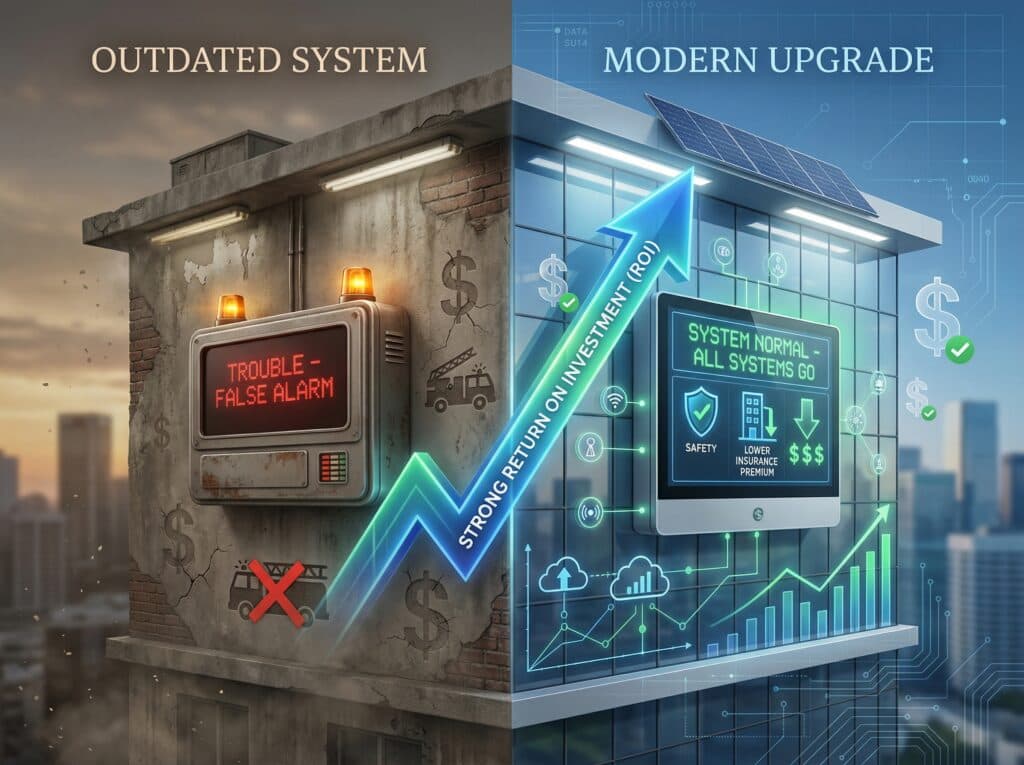
When repairs aren’t enough, we can design and install a replacement that meets current standards for performance and reliability. We know downtime means vulnerability, so our response is fast, precise, and professional.
Fire Alarm Inspection & Testing
Fire alarm systems are only effective when they’re fully operational. Routine testing keeps your building compliant and ready for inspection by local authorities and insurers.
- Device activation testing (smoke, heat, pull, and duct detectors)
- Control panel verification and signal transmission testing
- Battery and power supply checks
- Notification appliance operation
- Documentation for AHJ and insurance compliance
After each inspection, you’ll receive a detailed report outlining the results and any recommendations for maintenance or corrective action. We help you stay proactive, not reactive.
Fire Alarm Maintenance & Repairs
Over time, even the best systems need upkeep. Dust accumulation, aging wiring, or environmental changes can trigger false alarms or prevent signals from reaching the monitoring center. Our service team provides fast, accurate maintenance to keep your fire alarm system dependable.
We service all major brands and system types—conventional, addressable, and hybrid systems—and can replace or reprogram outdated components without requiring a full system overhaul. Our goal is to minimize downtime and extend the life of your system through expert care.
Fire Alarm Monitoring & Response
When your fire alarm activates, rapid response is everything. Our UL-listed monitoring partners provide 24/7 alarm monitoring to ensure the proper emergency services are notified immediately. We can integrate your fire alarm panel with sprinkler and suppression systems for unified protection and faster mitigation.
If your alarm system ever malfunctions or signals a fault, 48 Fire Protection offers on-call emergency service to diagnose and restore functionality anytime, day or night.
Fire Sprinkler Installation
Fire Sprinkler Installation Services Madera
Fire sprinkler systems are the foundation of reliable fire protection. They work around the clock to detect and control fires automatically, keeping people and property safe. To stay effective, these systems must be designed, installed, and maintained by trained professionals who understand both safety codes and the realities of fire risk.
Madera is a Central Valley city known for agriculture, oak woodlands and proximity to the Sierra Nevada foothills; its hot, dry summers and seasonal winds increase wildfire risk, while rural-urban edges and combustible vegetation make fire spread a real concern for the community. Local topography funnels wind and can create variable fire behavior, and drought cycles raise the likelihood of faster-moving fires.
Residents and businesses should prioritize defensible space, home hardening, clear evacuation routes and maintained access for engines, while coordinating with the Madera County Fire Department and Cal Fire for inspections, burn permits and emergency alerts; water supply reliability and secure electrical infrastructure are also crucial for reducing ignition sources and improving response.
Madera Fire Sprinkler Installation Services Overview
48 Fire Protection provides complete fire sprinkler services for residential, commercial, and industrial buildings across Texas and beyond. Whether you need a new system, an inspection, or urgent repairs, our certified team delivers precise, dependable service from start to finish.
Design & Installation
Engineered for precision and built for performance.
Inspections & Testing
Ensure compliance and readiness year-round.
Maintenance & Repairs
Fast, certified service to keep your systems ready.
24/7 Emergency Fire Sprinkler Service
Anytime support for your fire sprinkler system.
Design & Installation
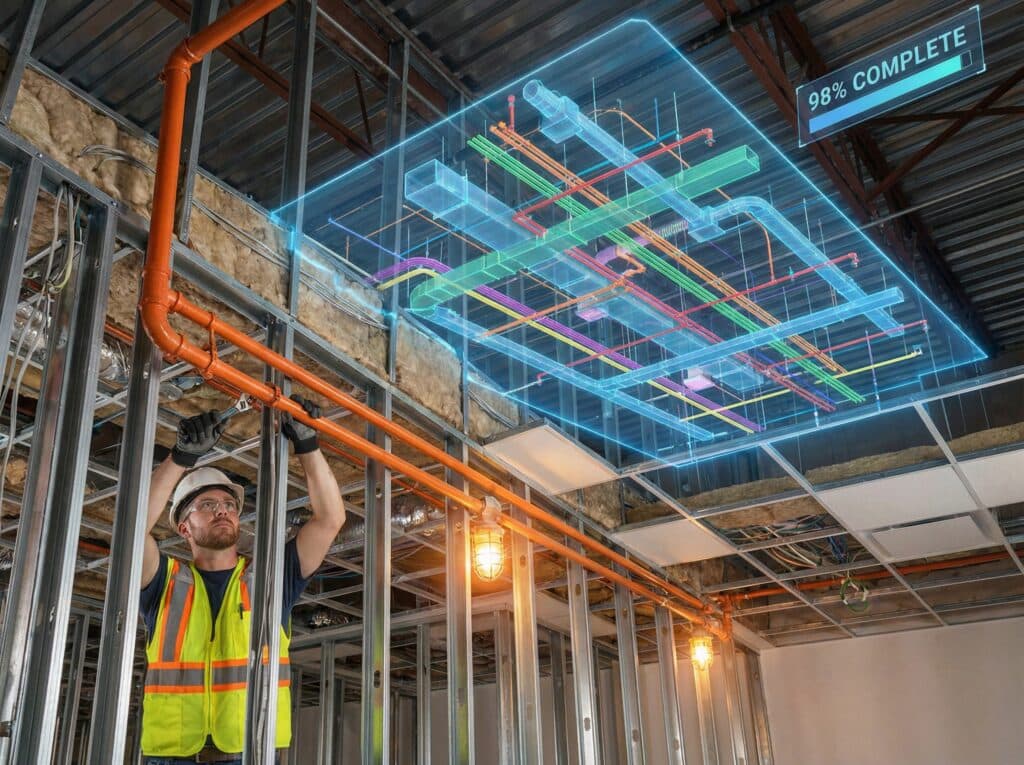
Every building is different. We design systems tailored to your layout, occupancy, and fire risk. From plan to final test, we manage every step with precision.
- Site Assessment
- Custom Layout
- Integration
- Testing
Inspections & Testing
If your sprinkler system is leaking, malfunctioning, or simply outdated, 48 Fire Protection can restore or replace it quickly and correctly. Our team repairs damaged valves, sprinkler heads, and control systems, ensuring everything functions as intended.
When repairs aren’t enough, we can design and install a replacement that meets current standards for performance and reliability. We know downtime means vulnerability, so our response is fast, precise, and professional.
Maintenance & Repairs
If your sprinkler system is leaking, malfunctioning, or simply outdated, 48 Fire Protection can restore or replace it quickly and correctly. Our team repairs damaged valves, sprinkler heads, and control systems, ensuring everything functions as intended.
When repairs aren’t enough, we can design and install a replacement that meets current standards for performance and reliability. We know downtime means vulnerability, so our response is fast, precise, and professional.
24/7 Emergency Fire Sprinkler Service
Fire emergencies and system failures can happen anytime—and that’s why our service never stops. 48 Fire Protection offers 24-hour emergency response for leaks, damaged equipment, or false activations. Our on-call technicians arrive prepared to troubleshoot and resolve issues right away.
Fire Extinguisher Service
Fire Extinguisher Services Madera
Keep your facility safe and compliant with expertly maintained fire extinguishers—installed, inspected, and serviced by certified professionals.
Madera is a Central Valley city known for agriculture, oak woodlands and proximity to the Sierra Nevada foothills; its hot, dry summers and seasonal winds increase wildfire risk, while rural-urban edges and combustible vegetation make fire spread a real concern for the community. Local topography funnels wind and can create variable fire behavior, and drought cycles raise the likelihood of faster-moving fires.
Residents and businesses should prioritize defensible space, home hardening, clear evacuation routes and maintained access for engines, while coordinating with the Madera County Fire Department and Cal Fire for inspections, burn permits and emergency alerts; water supply reliability and secure electrical infrastructure are also crucial for reducing ignition sources and improving response.
Madera Fire Extinguisher Services Overview
Fire extinguishers are your first line of defense when a fire breaks out. Readily accessible and fully functional portable extinguishers protect people, property, and operations. They also ensure your facility meets NFPA and local AHJ (Authority Having Jurisdiction) requirements. But extinguishers only work when they’re properly selected, inspected, and maintained—and that’s where 48 Fire Protection comes in.
Our certified technicians provide full-service fire extinguisher installation, inspection, maintenance, and recharging for commercial, industrial, and residential facilities. Whether you need a single replacement unit or a complete fire extinguisher program for multiple buildings, we deliver expert service that keeps your safety systems ready when they’re needed most.
Our fire extinguisher services include:
Installation and placement per NFPA and AHJ standards
Annual inspections and hydrostatic testing
Recharge and pressure maintenance
Employee training on proper extinguisher use
On-site reporting and compliance documentation
Smart monitored extinguisher options for large facilities
Fire Extinguisher Installation & Selection
Choosing the right type of extinguisher is critical to effective fire response. Our licensed technicians identify and install the proper extinguishers for your specific hazards—Class A for ordinary combustibles, Class B for flammable liquids, Class C for electrical equipment, Class D for metals, and Class K for commercial kitchens.
We assess your layout, occupancy, and local code requirements to ensure full coverage and compliance. Each extinguisher is installed in an accessible, visible location with clear signage and mounting height per NFPA 10 standards.
For clients managing multiple facilities, we can develop a customized extinguisher plan with standardized placement, labeling, and digital tracking for simplified management.
Recharge, Testing & Replacements
If a fire extinguisher has been discharged, even partially, it must be recharged by a certified technician. We perform recharging, hydrostatic testing, and cylinder replacement in accordance with NFPA guidelines.
Our technicians are trained to service all major extinguisher brands and types. For extinguishers that are damaged, expired, or beyond repair, we can replace them immediately to keep your protection uninterrupted.
Employee Training
Knowing how to use an extinguisher correctly can be the difference between a minor incident and a major fire. 48 Fire Protection offers hands-on training programs that teach your staff how to identify fire classes, use extinguishers safely, and respond appropriately under pressure.
We provide both on-site demonstrations and classroom-style training tailored to your facility’s needs. Many of our clients pair training with their annual inspection cycle for convenience and cost efficiency.
Smart Monitoring Solutions
For high-security or large-scale facilities, we offer monitored fire extinguishers equipped with electronic sensors that track pressure levels, movement, and tampering. If an extinguisher is removed, obstructed, or loses pressure, your team is instantly alerted via network notification—reducing risk and downtime.
This solution helps safety managers oversee hundreds of extinguishers remotely while maintaining compliance and readiness across multiple sites.
Emergency Lighting Systems
Emergency Lighting Madera
When the power goes out, visibility can mean the difference between calm evacuation and chaos. Emergency and exit lighting systems provide vital illumination that guides people to safety during fires, power failures, or other emergencies. To keep them ready when you need them most, they must be routinely tested, inspected, and maintained by qualified professionals.
Madera is a Central Valley city known for agriculture, oak woodlands and proximity to the Sierra Nevada foothills; its hot, dry summers and seasonal winds increase wildfire risk, while rural-urban edges and combustible vegetation make fire spread a real concern for the community. Local topography funnels wind and can create variable fire behavior, and drought cycles raise the likelihood of faster-moving fires.
Residents and businesses should prioritize defensible space, home hardening, clear evacuation routes and maintained access for engines, while coordinating with the Madera County Fire Department and Cal Fire for inspections, burn permits and emergency alerts; water supply reliability and secure electrical infrastructure are also crucial for reducing ignition sources and improving response.
Madera Emergency & Exit Lighting Services
48 Fire Protection provides complete emergency and exit lighting services for commercial, industrial, and multi-unit residential properties. Our certified technicians ensure your lights meet NFPA 101 Life Safety Code, OSHA, and local fire authority requirements—so your building stays safe, compliant, and never left in the dark.
Our emergency lighting services include:
Installation of emergency and exit lighting systems
Monthly and annual inspections per NFPA 101 standards
Battery testing and replacement
Bulb and LED module replacement
Functional and duration testing
Repair, maintenance, and record documentation
Emergency & Exit Light Installation
Every building’s layout and occupancy determine where emergency and exit lights should be installed. Our team designs and installs lighting systems that provide clear, reliable visibility along all exit routes, stairwells, corridors, and gathering areas.
We work with LED and battery-backed lighting systems from leading manufacturers to ensure durability, long battery life, and low maintenance costs. Whether you’re outfitting a new facility or upgrading an older system, 48 Fire Protection makes sure your installation meets both code and performance expectations.
Inspection & Testing
Routine inspection and testing aren’t just recommended—they’re required by NFPA 101. We handle both monthly and annual testing to ensure every fixture performs exactly as it should in an emergency.
Our process includes:
- Visual inspection: Checking for visible damage, secure mounting, and illumination coverage.
- Physical inspection: Testing internal batteries, bulbs, and circuitry under simulated power-loss conditions.
- 30-second monthly test: Required short test to confirm operation on battery backup.
- 90-minute annual test: Full discharge test ensuring lights maintain illumination for the mandated duration.
Each inspection includes digital recordkeeping, detailed reports for AHJ or insurance documentation, and proactive reminders before your next scheduled test.
Compliance You Can Count On
Even high-quality emergency lighting systems can degrade over time. Batteries lose capacity, LEDs dim, and wiring can corrode. Our technicians carry a full inventory of replacement parts and batteries—so most issues can be resolved during the same visit.
We offer on-site recharging, sealed lead acid and Ni-Cad battery replacement, and bulb or LED module upgrades. For systems that are beyond repair, we can retrofit new lighting to existing mounts, minimizing downtime and cost.
Maintenance & Repairs
Even high-quality emergency lighting systems can degrade over time. Batteries lose capacity, LEDs dim, and wiring can corrode. Our technicians carry a full inventory of replacement parts and batteries—so most issues can be resolved during the same visit.
We offer on-site recharging, sealed lead acid and Ni-Cad battery replacement, and bulb or LED module upgrades. For systems that are beyond repair, we can retrofit new lighting to existing mounts, minimizing downtime and cost.
This solution helps safety managers oversee hundreds of extinguishers remotely while maintaining compliance and readiness across multiple sites.

Fire Safety Inspections
Fire Safety Inspections Madera
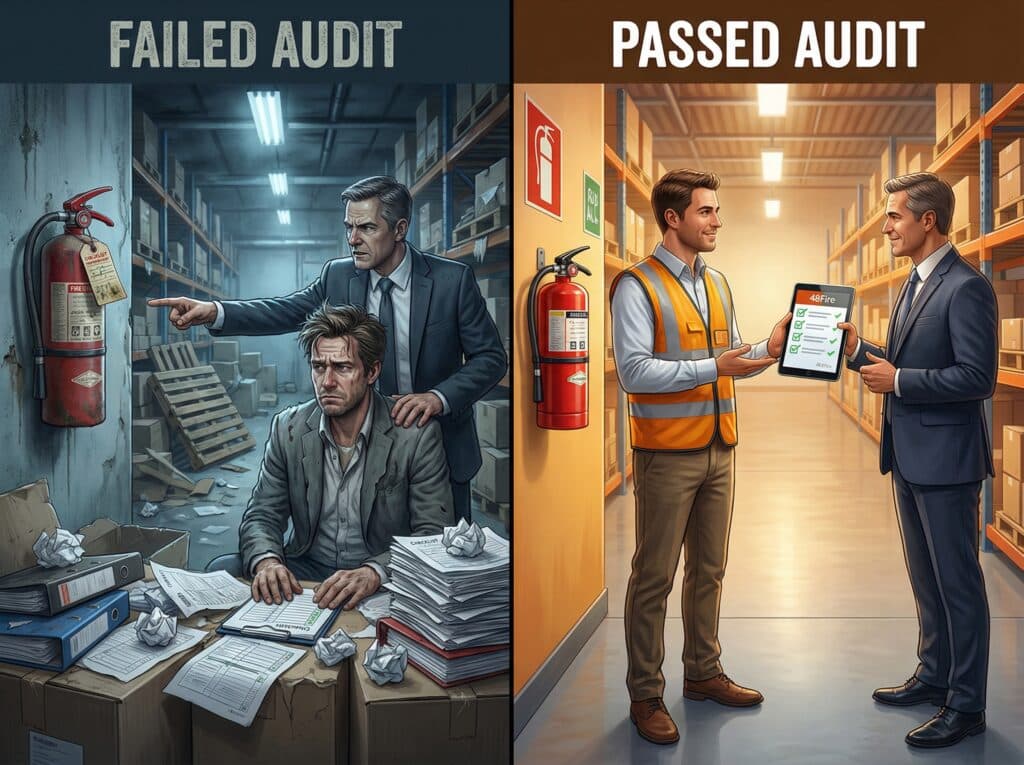
A fire safety inspection is one of the most important steps in protecting your building, people, and property. Regular inspections ensure that every fire protection system—from sprinklers and alarms to extinguishers and emergency lighting—is fully functional, code-compliant, and ready to perform when it matters most.
Madera is a Central Valley city known for agriculture, oak woodlands and proximity to the Sierra Nevada foothills; its hot, dry summers and seasonal winds increase wildfire risk, while rural-urban edges and combustible vegetation make fire spread a real concern for the community. Local topography funnels wind and can create variable fire behavior, and drought cycles raise the likelihood of faster-moving fires.
Residents and businesses should prioritize defensible space, home hardening, clear evacuation routes and maintained access for engines, while coordinating with the Madera County Fire Department and Cal Fire for inspections, burn permits and emergency alerts; water supply reliability and secure electrical infrastructure are also crucial for reducing ignition sources and improving response.
Madera Fire Safety Inspections
48 Fire Protection provides comprehensive fire safety inspections for commercial, industrial, and residential buildings across Texas and beyond. Our certified inspectors follow NFPA, ICC, and local AHJ (Authority Having Jurisdiction) standards to identify risks, verify system readiness, and help your facility pass fire marshal and insurance reviews without surprises.
Our fire inspection services include:
Complete building fire safety evaluations
Inspection of all active and passive fire protection systems
NFPA-compliant testing and documentation
Deficiency reporting and corrective recommendations
Digital inspection reports with detailed findings and photo verification
Re-inspection and compliance certification
What Is a Fire Safety Inspection?
A fire safety inspection is a systematic assessment of a building’s fire protection systems, structural features, and emergency readiness. It ensures that life-safety systems like alarms, sprinklers, extinguishers, and lighting meet all code requirements and function properly under real-world conditions.
Regular inspections help prevent small issues—like blocked exits, expired tags, or corroded sprinkler heads—from becoming major liabilities. They also keep your business compliant with insurance carriers, OSHA regulations, and local fire department mandates.
What We Inspect
Our licensed technicians and inspectors perform detailed evaluations of all key fire protection elements, including:
- Fire sprinkler systems – condition, pressure, and flow testing
- Fire alarms and detection systems – panel function and device activation
- Fire extinguishers – accessibility, pressure, and expiration
- Emergency and exit lighting – illumination, battery condition, and visibility
- Fire doors and egress paths – clearances and self-closing mechanisms
- Suppression systems – clean agent, kitchen hood, and special hazard systems
- Signage and safety markings – placement and legibility
Each inspection concludes with a full digital report summarizing deficiencies, maintenance recommendations, and compliance status.
Frequency and Compliance Requirements
The National Fire Protection Association (NFPA) and most local fire codes require that systems be inspected on a regular schedule—some monthly, others quarterly, semi-annually, or annually.
Our team manages your inspection calendar for you. We track when each component is due for service, send proactive reminders, and coordinate scheduling to ensure your facility stays inspection-ready at all times.
This approach reduces risk, simplifies compliance, and provides peace of mind for building owners, safety officers, and facility managers.
Why Fire Safety Inspections Matter
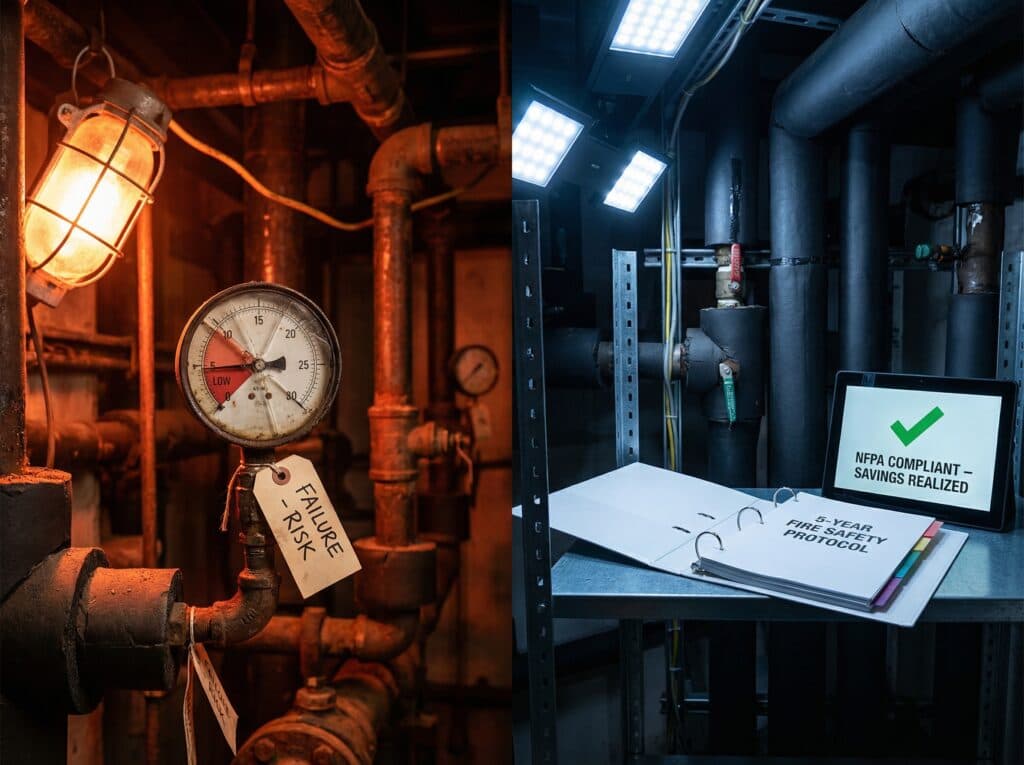
Routine inspections do more than meet legal requirements—they save lives and property. By catching small problems early, you can avoid costly fines, downtime, and the devastating consequences of an uncontrolled fire. Inspections also demonstrate due diligence to employees, tenants, and insurers, strengthening trust and safety culture throughout your organization.
Fire Safety Training
Fire Safety Training Madera
Fire sprinkler systems are the foundation of reliable fire protection. They work around the clock to detect and control fires automatically, keeping people and property safe. To stay effective, these systems must be designed, installed, and maintained by trained professionals who understand both safety codes and the realities of fire risk.
Madera is a Central Valley city known for agriculture, oak woodlands and proximity to the Sierra Nevada foothills; its hot, dry summers and seasonal winds increase wildfire risk, while rural-urban edges and combustible vegetation make fire spread a real concern for the community. Local topography funnels wind and can create variable fire behavior, and drought cycles raise the likelihood of faster-moving fires.
Residents and businesses should prioritize defensible space, home hardening, clear evacuation routes and maintained access for engines, while coordinating with the Madera County Fire Department and Cal Fire for inspections, burn permits and emergency alerts; water supply reliability and secure electrical infrastructure are also crucial for reducing ignition sources and improving response.
Madera Fire Safety Training
48 Fire Protection offers comprehensive fire safety training programs designed for workplaces of every size and industry. Our certified instructors combine hands-on demonstrations with real-world safety principles to build confidence and competence across your team. Whether you need a one-time session for new hires or recurring annual training to maintain compliance, we make it simple, effective, and engaging.
Our fire inspection services include:
Workplace fire prevention and emergency response programs
Hands-on fire extinguisher use and live discharge demonstrations
Evacuation planning and fire drill coordination
OSHA and NFPA 600–compliant employee fire safety training
Digital inspection reports with detailed findings and photo verification
Specialized training for high-risk and industrial facilities
Why Fire Safety Training Matters
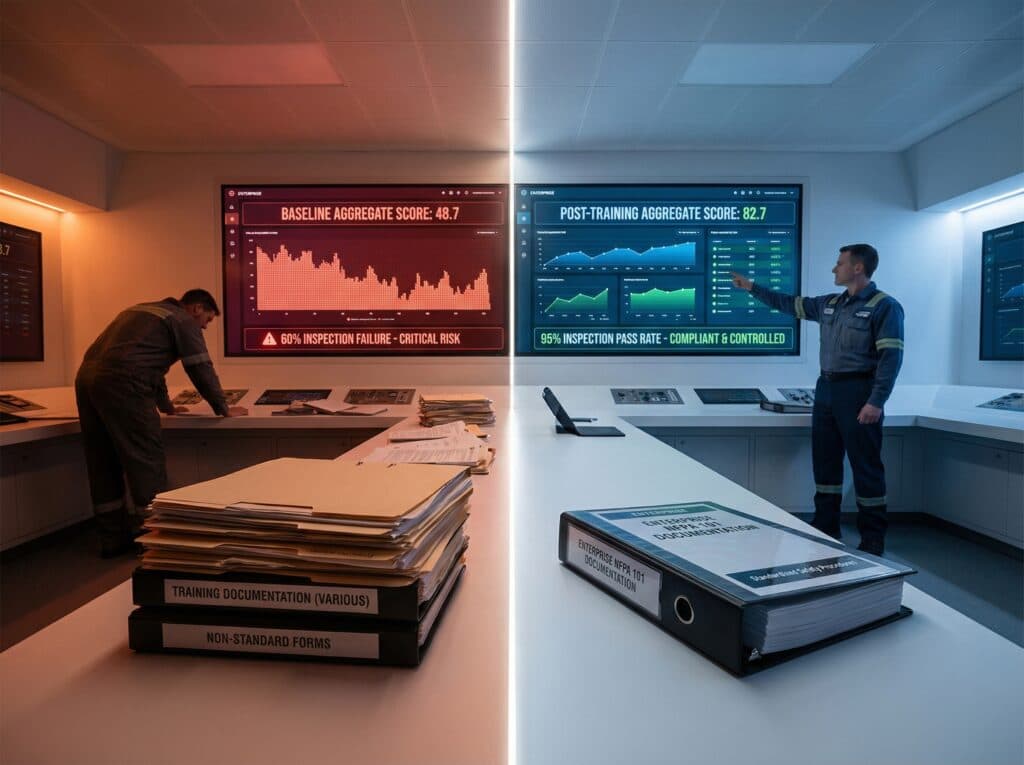
Every year, preventable fires cause injuries, property loss, and costly downtime. In most cases, the first people to respond are not firefighters—they’re employees. Fire safety training gives your team the knowledge and practical skills to recognize hazards, operate fire equipment, and follow the proper procedures until emergency responders arrive.
Training also helps businesses meet OSHA’s workplace safety standards and local fire code requirements for emergency preparedness.
Customized Training for Your Facility
No two facilities face the same risks. That’s why we tailor each program to your building type, occupancy, and industry regulations. Whether your site contains flammable materials, complex electrical systems, or kitchen and mechanical hazards, our trainers adapt the session to your real-world conditions.
Common training modules include:
- Fire behavior and hazard identification
- Equipment and extinguisher types
- Evacuation routes and accountability procedures
- Alarm response and communication
- Fire watch duties for construction or maintenance
Certification & Documentation
After each session, participants receive certificates of completion suitable for HR and safety records. We maintain digital documentation for audit readiness and can schedule annual refreshers or retraining as part of your ongoing compliance program.
Our instructors stay current with the latest NFPA and OSHA fire safety requirements, so your program always reflects the newest best practices.