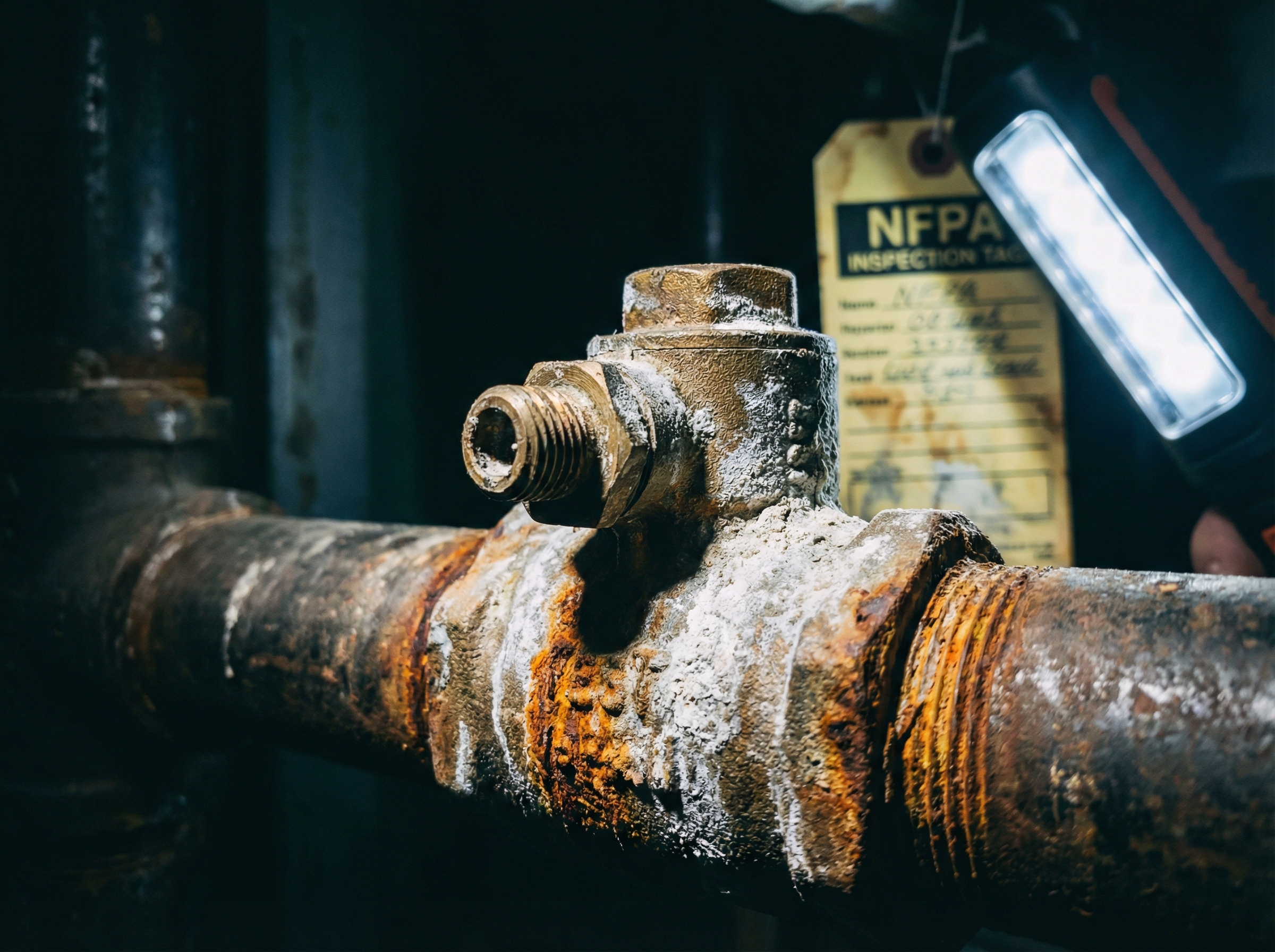
Question for facility teams: In a world of rising cyber threats, tighter interoperability needs, and ever more complex buildings, is your fire alarm system still “good enough”? The answer isn’t as simple as “addressable or conventional” anymore. Modern buildings demand systems that not only detect, alarm, and report, but also securely communicate, adapt to evolving codes, and integrate with broader life-safety and building management ecosystems. In 2025, the NFPA 72 standard reshapes expectations around cybersecurity, interoperability, and remote access—raising the stakes for choosing between addressable and conventional fire alarm systems.
This article dives deep into what distinguishes addressable from conventional fire alarm systems, why the 2025 NFPA 72 updates matter, and how to design, select, and implement a solution that aligns with safety, security, and business goals. We’ll also offer a practical decision framework, real-world considerations, and a clear path for upgrading or retrofitting. Along the way, you’ll see how the 48Fire Protection team can help you navigate compliance, risk, and operational efficiency—without compromising on protection.
—
The basics: what these terms mean in practice
Before weighing pros and cons, it’s essential to define the terms in practical, building-level terms.
- Addressable Fire Alarm System (AFAS): A networked system in which individual devices (smoke detectors, pull stations, notification devices, modules, etc.) have unique addresses on a digital communication bus. This allows precise identification of the device that detects an event, enabling targeted signaling, flexible zoning, and rich data for diagnostics, maintenance, and response. In an addressable system, events can be mapped to a digital fire model of the building, and intelligent devices can report life-safety data back to the fire alarm control panel (FACP) with granular detail.
- Conventional Fire Alarm System (CFAS): A traditional approach in which devices are grouped into system “zones,” and each zone shares a common signaling path. When an alarm occurs, only the zone is indicated—without device-level identification of the causative detector or device. Conventional systems can be simpler and less expensive up front, but they offer less precise fault isolation and more challenging maintenance in larger or complex facilities.
Key point: The choice isn’t just about price or legacy status; it’s about how you want to manage risk, maintenance, data, and interoperability in a 21st‑century building environment.
—
How addressable and conventional systems work in practice
Addressable Fire Alarm System (AFAS)
- Device-level identification: Any detector or device on the network has a unique address. A fault or alarm can be traced to a specific device, not just a zone.
- Intelligent signaling: The FACP processes event data and can provide more nuanced signaling, enabling features like adaptive response, reduced nuisance alarms, and targeted drill scenarios.
- Granular maintenance data: Fault history, device age, and sensitivity trends can be monitored remotely, enabling predictive maintenance and reduced downtime.
- Interoperability potential: AFAS lends itself to integration with building management systems (BMS), energy management, and emergency communications, especially when combined with modern fire control platforms.
Conventional Fire Alarm System (CFAS)
- Zone-based signaling: A fire event triggers a zone indicator on the panel. You know “which zone,” but not which device caused it.
- Simplicity and cost in some cases: For smaller facilities with straightforward layouts, CFAS can provide robust protection at a lower upfront cost and with simpler diagnostics.
- Maintenance considerations: While CFAS can be reliable, pinpointing a faulty device within a zone may require more testing, and upgrades can be more invasive if expansion is needed.
Table: Side-by-side, at-a-glance differences
| Feature | Addressable Fire Alarm System | Conventional Fire Alarm System |
|---|---|---|
| Device identification | Unique addresses per device | Zone-based signaling (no device-level ID) |
| Signaling granularity | Event-level data and device-level status | Zone-level status; less detail |
| Maintenance data | Rich telemetry, trend data, predictive maintenance | Basic fault indication, more reactive maintenance |
| Fault isolation | Quick pinpointing of specific devices | Requires zone-level investigation; slower fault isolation |
| System expansion | Scales with digitized networks; flexible reconfiguration | Expansion may require more wiring and panel changes |
| Integration readiness | Strong for BMS, ERCS/ERCES, cybersecurity features | Less straightforward for integration with modern digital ecosystems |
| Cybersecurity posture | Higher baseline due to networked devices and access paths | Traditionally less focus on network-level security |
> Citations and deeper reading about 2025 changes and cybersecurity implications:
> – The 2025 NFPA 72 edition adds Chapter 11 on cybersecurity with defined security levels and RAMO (remote access and management obligations) and reinforces ERCES integration. This is a fundamental shift for addressable, networked systems. [National Training Center]
> – Cybersecurity requirements in 2025 NFPA 72 establish enforceable, three-security-level interfaces for network-connected equipment, calling for stronger password policies, logging, and secured remote access. [Electrical Contractor Magazine]
> – The 2025 edition’s ERCES considerations tie in-building wireless fault signaling and integration with the main fire alarm framework, including RAMO support and secure pathways. [In-Building Wireless Solutions]
> – An overview of the NFPA 72 2025 edition and how it relates to the broader code ecosystem (including the official framing of changes to 72) [NFPA 72 Official Summary]
These references form the backdrop for why modern AFAS deployments emphasize cybersecurity, data-rich diagnostics, and interoperable signaling—especially in larger or more connected facilities.
—
Why the 2025 NFPA 72 changes matter for AFAS vs CFAS
The 2025 NFPA 72 edition isn’t merely a revision; it’s a reorientation toward a more integrated, secure, and data-enabled life-safety framework. The most consequential themes for you as a building owner, facility manager, or system designer include:
- Chapter 11: Cybersecurity requirements that establish enforceable security levels for interfaces to network-connected equipment. This directly affects addressable systems, which are inherently networked by design. Expect stronger password policies, event logging, access control, and more secured remote access. In other words, addressable systems—already more data-rich—must be designed with cybersecurity as a core attribute, not an afterthought.
- RAMO (Remote Access and Monitoring of Operations) and explicit requirements for secure remote management. This changes how you manage configuration, firmware updates, and diagnostics, with disciplined access control and traceability.
- ERCES (Emergency Communications and ECES) integration under the umbrella of the main fire alarm framework. ERCES is the in-building wireless signaling path used for emergency communications. The NFPA 72 2025 updates push tighter alignment between ERCES behavior and traditional detection signaling. This means your addressable networked devices must play nicely with in-building wireless signaling and fail-safe pathways.
- Pathway survivability and secure signaling: The updates emphasize reliable, survivable signaling paths for critical alarms, even in adverse conditions. That has direct implications for how you design, segment, and secure networks in AFAS deployments.
These changes aren’t cosmetic. They affect system architecture decisions (how devices are networked, how data is transmitted, and how access is controlled), procurement considerations (hardware with built-in cybersecurity features, secure remote management capabilities), and ongoing operations (audits, tests, and incident response planning). For CFAS, the cybersecurity posture might be less stringent simply because there are fewer networked components from the outset, but the NFPA 72 2025 shift still compels a re-examination of how conventional zones integrate into digital building ecosystems and how future upgrades will occur.
Key considerations for AFAS in the 2025 landscape:
- How many network pathways exist between devices, panels, and remote access points? Are those pathways protected by multi-factor authentication, encryption, and access controls?
- Do your devices support RAMO and secure remote management with logging and audit trails?
- Is ERCES integration explicitly tested and documented as part of commissioning and ongoing maintenance?
- Are there documented procedures for cybersecurity incident response, firmware updates, and baseline security configurations?
—
ERCES, in-building wireless, and interoperability: what you need to know
In-building wireless and Emergency Communications Enhancement Signaling (ERCES) are increasingly central to life-safety signaling strategy. The 2025 NFPA 72 edition expands considerations for ERCES in a way that makes them less of a bolt-on and more of a core component of the fire alarm architecture.
- ERCES integration: ERCES faults and signaling must be understood as part of the main fire alarm framework. If an ERCES fault occurs, the system must account for it within the FACP’s signaling logic. This provides a more unified approach to signaling that spans both conventional and addressable devices.
- RAMO support: RAMO capabilities are essential to ensure remote signaling and device-level status information remains trustworthy and secure, even when devices are interconnected across multiple networks or remote access points.
- Pathway survivability: The NFPA 72 updates stress secure, survivable pathways for signaling. In practical terms, this means that a well-designed AFAS will consider redundant paths, secure VPNs or encrypted channels, and robust device authentication to prevent spoofing or tampering.
For facility teams evaluating upgrades or new builds, ERCES and in-building wireless signaling shouldn’t be treated as “extras.” They should be embedded into the design brief from day one, with clear requirements for interoperability, testing, and ongoing maintenance.
Citations to explore these themes:
- The NFPA 72 2025 edition emphasizes ERCES integration and secure, interoperable signaling as part of the framework. [In-Building Wireless Solutions]
- Cybersecurity requirements in NFPA 72 2025 are designed to address networked interfaces and remote management. [Electrical Contractor Magazine]
- The National Training Center’s overview highlights the cybersecurity and RAMO aspects of NFPA 72-2025. [National Training Center]
- The broader NFPA 72 2025 context and the integration of signaling and ERCES considerations is documented in industry resources and code summaries. [NFPA 72 Official Summary]
—
Choosing between addressable and conventional: a practical decision framework
The decision framework for AFAS versus CFAS isn’t purely technical; it encompasses risk, operations, maintenance, and long-term adaptability. Here’s a practical approach you can apply:
1) Define your risk profile and life-safety goals
- How many occupants? What are the critical zones (hospitals, data centers, manufacturing lines, educational facilities)?
- Do you require rapid, device-level fault isolation for maintenance or downtime minimization?
- What level of cyber risk is acceptable, given your organization’s threat model and compliance posture?
2) Assess building complexity and scale
- Are you dealing with multiple floors, complex atria, or expansive campuses?
- Do you anticipate frequent changes in usage or space reconfiguration?
- Is integration with BMS, ERCS, or other security systems anticipated?
3) Evaluate lifecycle costs and maintenance
- Addressable systems often incur higher initial costs but can reduce long-term maintenance through targeted servicing and predictive maintenance.
- Conventional systems can be cost-efficient upfront but may incur higher labor costs for troubleshooting and expansion.
4) Consider interoperability and future-proofing
- Do you foresee adding ERCES, in-building wireless, or more sophisticated signaling and remote monitoring?
- Will the system need secure remote management, cloud-based dashboards, or mobile access to data?
5) Factor cybersecurity and regulatory alignment
- With NFPA 72:2025, what cybersecurity controls must be evident in your design, procurement, and operations?
- Are your devices capable of logging, user access controls, and secure firmware updates?
6) Decide on a phased approach
- For some facilities, a staged transition from conventional to addressable in phases (area-by-area) minimizes downtime and budget shocks.
- For others, a full system upgrade is warranted to meet current codes, cybersecurity expectations, and interoperability goals.
Practical takeaway: If you operate a complex, multi-zone facility with a need for precise fault isolation, data-driven maintenance, and future integration with ERCES, an addressable system—implemented with robust cybersecurity and RAMO—tends to align with long-term resilience. If your building is small, simple, and low-risk, a well-designed conventional system may remain viable—but you should still plan for future upgrades as you scale or as codes evolve.
—
Implementation: from assessment to commissioning
A robust implementation path reduces risk and ensures that the selected system actually delivers on its promises. Below is a practical, phased approach that blends best practices with NFPA 72 2025 considerations.
Phase 1: Discovery and requirements
- Conduct a comprehensive facility risk assessment, including occupancy types, egress paths, critical equipment, and alarm signaling expectations.
- Catalog all fire protection-related interfaces (ECCES/ERCES, BMS, access control, building automation, etc.).
- Define cybersecurity baseline: password policies, access controls, logging requirements, and remote management constraints.
Phase 2: System design and documentation
- For AFAS, map device addresses to zones (and zones to areas) with detailed 2D/3D models when possible.
- Specify communications architecture: network topology, segmenting critical devices, redundancy plans, and remote access controls.
- Define RAMO requirements and incident response procedures; plan for secure firmware management and patching.
Phase 3: Procurement and integration planning
- Select equipment with built-in cybersecurity features (e.g., secure boot, encrypted communication, audit logs).
- Ensure ERCES compatibility and tested pathways for any in-building wireless signaling components.
- Plan for future growth: modular panels, scalable device counts, and software that can handle additional devices without complete rework.
Phase 4: Construction and integration
- Carefully route wiring, network cables, and wireless access points to minimize interference and maximize reliability.
- Validate network security configurations and access controls upfront.
- Commission devices with a focus on device-level identification (addressable devices) and proper fault reporting.
Phase 5: Commissioning and acceptance
- Conduct functional testing, including simulated alarms, device-level fault localization, and signaling to remote monitoring platforms.
- Test ERCES signaling pathways and failover behavior under various fault conditions.
- Validate cybersecurity controls: password quality, authentication, logging, and secure remote access.
Phase 6: Ongoing operation and maintenance
- Implement a preventive maintenance schedule driven by device telemetry, lifecycle data, and NFPA 72 2025 recommendations.
- Maintain up-to-date firmware and security configurations; perform periodic cyber hygiene assessments.
- Document all changes, test results, and incident responses for audit readiness.
—
Maintenance, testing, and cybersecurity in daily operation
Maintenance is where the true value of an AFAS or CFAS design is realized. The 2025 NFPA 72 updates underscore continuous monitoring, secure remote management, and routine security audits as part of standard operations.
- Device-level diagnostics (AFAS): Use software dashboards that display device health, aging detectors, and calibration history. This supports predictive maintenance and reduces unexpected outages.
- Cybersecurity hygiene (AFAS CFAS): Ensure password rotation, MFA for remote access, event logging, and access control lists. Regularly review logs for anomalies and ensure secure firmware updates are applied promptly.
- ERCES and signaling testing: Periodically test ERCES pathways under varying occupancy and load conditions. Verify that emergency communication signaling remains intact even when the primary signaling path is compromised.
- Impairment and reporting timing: NFPA 72 2025 introduces tighter rules for impairment notification timing, reinforcing the need for robust monitoring and rapid detection of faults in networked systems. [National Training Center]
Effective maintenance also includes training for staff, contractors, and occupants so that everyone understands signaling, response protocols, and how cybersecurity safeguards function in practice.
—
Costs and return on investment: AFAS vs CFAS
Total cost of ownership (TCO) considerations for fire alarm systems are not just about the price tag of hardware. They include the cost of design, installation, commissioning, maintenance, and future upgrades.
- Initial installation costs: AFAS generally has higher upfront costs due to installation complexity, device density, and network infrastructure. CFAS can be cheaper upfront but may incur higher labor costs for fault isolation and future expansions.
- Maintenance and diagnostics: AFAS provides richer data, enabling remote diagnostics and predictive maintenance. This can reduce unplanned downtime and service calls but requires staff with the skills to interpret telemetry and manage cyber hygiene.
- Security-related costs: NFPA 72 2025 cybersecurity requirements can influence ongoing operating costs through password management, access control management, and remote access security. The investment in cybersecurity results in a safer, more resilient system.
- Lifecycle planning: AFAS tends to offer more flexibility for future upgrades, expansions, and integration with ERCES and BMS. That flexibility can lower long-term transition costs as needs evolve.
A practical ROI question: If your facility experiences frequent nuisance alarms, difficult fault isolation, or requires tight integration with life-safety signaling and building systems, AFAS can justify the higher upfront cost with lower life-cycle risk and faster fault resolution.
Citations for cybersecurity and NFPA 72 2025 changes you should consider in ROI planning:
- Cybersecurity requirements and three security levels for interfaces to network-connected equipment are central to NFPA 72 2025. [Electrical Contractor Magazine]
- RAMO and secure remote management implications are part of the 2025 framework and affect ongoing operating costs and governance. [National Training Center]
- ERCES integration considerations influence signaling architecture and long-term maintenance planning. [In-Building Wireless Solutions]
—
Real-world scenarios: when to consider upgrading or choosing AFAS
Scenario A: A medium-sized office campus with multiple wings and frequent reconfigurations
- Why AFAS makes sense: Device-level fault isolation speeds maintenance; flexible zoning supports changes without rewiring; strong data capabilities aid regulatory reporting and management.
- Cybersecurity considerations: RAMO support, secure remote access, and robust logging are essential.
Scenario B: A manufacturing facility with critical process control areas and high life-safety risk
- Why AFAS makes sense: Highly granular signaling and fast pinpointing of device faults reduce downtime and improve response times in complex environments.
- ERCES considerations: ERCES integration becomes crucial to support loudspeakers and communication pathways consistently on the manufacturing floor.
Scenario C: A small commercial storefront with a simple layout
- Why CFAS could suffice today: Lower upfront cost; simpler maintenance.
- Caveat: Codes and cybersecurity expectations evolve; plan for scalable upgrades in the coming years.
Scenario D: A healthcare facility or data center
- Why AFAS is often mandatory: High-risk occupancy, critical infrastructure, and interoperability with security, BMS, and emergency communications demand precise signaling, robust tamper resistance, and secure remote management.
The NFPA 72 2025 changes may push even smaller facilities toward AFAS or at least a more modular, upgrade-friendly approach, depending on risk tolerance, regulatory expectations, and the facility’s broader digital ecosystem. The key is to design for the future, not merely the present.
—
48Fire Protection: how we help you navigate AFAS vs CFAS
At 48Fire Protection, we bring a practical, results-driven approach to life-safety systems, with deep experience in both addressable and conventional fire alarm deployments, upgrades, and integrations. Our methodology blends code compliance, cybersecurity resilience, system performance, and lifecycle economics to deliver solutions that fit your building, risk profile, and budget.
What we offer:
- System design and risk assessment: We start with a thorough facility risk analysis, occupancy profiling, and egress modeling to determine the most appropriate architecture (AFAS vs CFAS) and the optimal level of networked integration.
- NFPA 72 2025 compliance strategy: We translate the updated code requirements (including Chapter 11 cybersecurity, RAMO, and ERCES considerations) into concrete design and procurement criteria, ensuring your system is future-proof and audit-ready.
- AFAS/CFAS migration planning: For facilities considering phased upgrades, we create detailed migration roadmaps with milestones, risk controls, and staging to minimize operational disruption.
- Cybersecurity-first design and implementation: We embed secure remote management, password policy implementation, event logging, and access control from day one, with a documented incident response plan.
- ERCES and in-building wireless integration: If your project requires ERCES signaling or in-building wireless signaling, we design pathways, redundancy, and testing protocols to ensure seamless performance and regulatory compliance.
- _comprehensive maintenance programs_: Our preventive maintenance plans combine device telemetry, life-cycle management, and NFPA 72 2025-aligned testing regimes to maximize reliability and reduce downtime.
- Commissioning, testing, and training: We conduct thorough commissioning that validates device addressing, fault isolation, signaling integrity, and cybersecurity controls, followed by occupant and operator training.
Why choose 48Fire Protection?
- Deep industry knowledge across AFAS and CFAS with a proven track record on complex campuses, healthcare facilities, and high-occupancy environments.
- A disciplined approach to cybersecurity, privacy, and data governance that aligns with NFPA 72 2025 and ERCES expectations.
- A bias toward practical, measurable results—reduction in downtime, faster fault resolution, and improved regulatory readiness.
If you’re weighing a design-for-upgrade project, or you’re upgrading an existing CFAS to an AFAS with ERCES integration, our team can tailor a solution that aligns with your risk tolerance, budget, and long-term goals.
—
Critical considerations: common pitfalls to avoid
- Underinvesting in cybersecurity for AFAS: The 2025 NFPA 72 changes emphasize secure interfaces and remote management. Skipping password policies, audit logs, or secure remote access invites risk and non-compliance.
- Treating ERCES as an afterthought: ERCES integration should be part of the design brief, not a retrofit after the fact. Ensure interoperable signaling paths and testing plans are in place from the start.
- Over-simplifying conventional upgrades: Even small CFAS upgrades should consider future AFAS compatibility and potential expansion needs to avoid a costly, mix-and-match retrofit later.
- Underestimating data needs: AFAS devices generate logs, status data, and health telemetry. Without proper data handling, insights are lost, and maintenance becomes reactive rather than predictive.
- Inadequate testing: Robust commissioning that probes device-level fault isolation, signaling paths, and cybersecurity controls is essential to ensure code compliance and operational reliability.
—
Quick-reference checklist: AFAS vs CFAS decision and implementation
- [ ] Define occupancy risk and critical zones
- [ ] Assess building complexity and future growth plans
- [ ] Evaluate ERCES and in-building wireless requirements
- [ ] Analyze cybersecurity requirements for remote access and device management
- [ ] Consider lifecycle cost and total cost of ownership
- [ ] Plan for phased implementation if needed
- [ ] Ensure robust commissioning and operator training
- [ ] Align procurement with NFPA 72 2025 requirements
- [ ] Prepare for ongoing audits and maintenance in line with chapter 11
—
Table: Quick decision matrix for AFAS vs CFAS
| Criterion | Addressable Fire Alarm System | Conventional Fire Alarm System |
|---|---|---|
| Granularity of signaling | High (device-level) | Moderate (zone-level) |
| Fault isolation speed | Fast (device-level) | Slower (zone-based) |
| Data and diagnostics | Rich telemetry, trends, analytics | Basic fault data |
| Interoperability with ERCES/BMS | Strong, designed for integration | Moderate, depends on architecture |
| Cybersecurity posture | Higher baseline due to networked devices | Lower baseline, higher risk if networks expand |
| Upfront cost | Higher | Lower |
| Long-term maintenance | Potentially lower with predictive maintenance | May require more manual fault hunts |
| Upgradeability | Highly scalable | More limited without major upgrades |
Cited context on security and 2025 code implications:
- NFPA 72 2025 cybersecurity updates and RAMO considerations. [National Training Center]
- Three security levels for network interfaces and enforceable cybersecurity measures. [Electrical Contractor Magazine]
- ERCES integration considerations and signaling alignment in the 2025 edition. [In-Building Wireless Solutions]
- General context and updates in NFPA 72 2025 from code summaries. [NFPA 72 Official Summary]
—
The bottom line: How to proceed
- If you’re starting from scratch, a modern AFAS with secure RAMO-enabled remote management and ERCES integration provides the most resilient, future-proof solution.
- If you’re upgrading an existing CFAS, plan a staged transition to AFAS elements to minimize disruption, while ensuring that cybersecurity, signaling interoperability, and data accessibility are priorities in the upgrade criteria.
- For facilities with specialized life-safety requirements (healthcare, data centers, critical infrastructure), AFAS with integrated ERCES and robust cyber controls is typically not optional but required to meet risk and regulatory expectations.
—
Final thoughts: embracing the future of fire alarm signaling
The fire protection landscape is evolving rapidly, driven by cybersecurity imperatives, the rise of ERCES and in-building wireless signaling, and the need for data-driven maintenance and operations. Addressable systems offer a path to more precise control, faster fault resolution, and better integration with modern building ecosystems. Conventional systems remain a viable choice in certain contexts, but even these facilities should anticipate future upgrades to align with NFPA 72 2025 requirements.
To stay ahead, build your plan around:
- A clear understanding of current and future signaling needs.
- A cybersecurity-first design mindset for any networked components.
- Thoughtful ERCES integration that aligns with your signaling strategy.
- A maintenance program that uses device telemetry and data to drive proactive service.
And when you’re ready to begin, the 48Fire Protection team is ready to help you translate these insights into a practical, compliant, and cost-effective solution tailored to your building and risk profile.
—
48Fire Protection services: a quick overview of what we bring to your project
- Fire alarm system design and code compliance (including NFPA 72 2025 alignment)
- AFAS and CFAS implementation, upgrade planning, and migration roadmaps
- ERCES and in-building wireless integration planning and testing
- Cybersecurity-focused design, secure remote management, and RAMO-enabled solutions
- Commissioning, validation testing, and operator training
- Maintenance programs, diagnostics, and predictive maintenance planning
- System modernization, retrofit, and expansion services
- Incident response and audit-ready documentation with ongoing support
If you’d like to explore upgrading your fire alarm system, or you’re planning a new build with modern signaling and cybersecurity requirements, we invite you to reach out to our team for a tailored assessment and roadmap.
—
Conclusion
Addressable vs Conventional is more than a debate about technology; it’s a question of resilience, risk management, and readiness for a code landscape that increasingly emphasizes cybersecurity, interoperability, and robust signaling. The NFPA 72 2025 edition ushers in a set of expectations that make device-level identification, secure remote management, and ERCES integration not optional but essential elements of a sound strategy. By combining careful planning, rigorous commissioning, and ongoing maintenance, you can ensure your fire alarm system not only meets today’s standards but remains adaptable for tomorrow’s challenges.