How Reinspections Work After a Failed Fire Inspection

Opening scene: A building’s quiet morning is interrupted by a knock. The fire marshal stands with a list of open items: doors that don’t swing properly, a strobe light that’s wrong in a stairwell, and a fire pump that’s sluggish to respond. The inspection report lists violations, and for the property manager it’s the moment of truth: can the team close the gaps in time to avoid penalties and, more importantly, ensure occupants stay safe? This is the moment when “fire reinspection” stops being an abstract concept and becomes a concrete, actionable plan.

This article pulls back the curtain on how reinspections work after a failed fire inspection. It explains what to expect, what costs may be involved, how jurisdictions differ, and the practical steps you can take to protect people and property while staying compliant with fire code violations. Whether you’re a facilities manager, building owner, or safety officer, you’ll walk away with a clear, repeatable process you can apply to any jurisdiction.

Table of contents

  • What happens after a failed fire inspection?
  • How the reinspection process works in practice
  • Jurisdictional snapshots: Berkeley, Seattle, and Bellevue
  • Step-by-step: turning a failed inspection into a pass
  • Pre-inspection readiness: essential checklists
  • Cost considerations and risk management
  • Documentation, communication, and recordkeeping
  • Timeline blueprint: a sample reinspection schedule
  • Common pitfalls to avoid
  • 48Fire Protection: how we help with fire inspection and reinspection
  • Conclusion and next steps
  • [Contact 48Fire Protection](/contact-us)

What happens after a failed fire inspection?

When a fire inspection reveals violations or noncompliant conditions, the clock starts ticking. The primary purpose of a reinspection is not punishment but remediation: the authorities want to see corrected conditions and proof that corrected actions were taken. The exact process, timeframes, and potential penalties can vary by jurisdiction, but there are common threads you can rely on across most cities:

  • You receive a detailed inspection report listing each violation, its severity, and any life-safety implications.
  • You are given a defined window to correct the violations. The size of the window depends on the jurisdiction and whether new violations appear during corrections.
  • A reinspection is scheduled to verify corrections. In some places this reinspection can be free on the first attempt, while in others it carries a fee or hourly rate.
  • If violations persist or new ones appear, authorities may impose fines, and in some cases, additional corrective events or enforcement actions could follow.
  • Documentation plays a critical role: proof of correction (photos, test results, service reports, permits) often needs to accompany your reinspection request.

The overarching aim is clear: restore compliance and reduce risk to occupants. From a business perspective, the faster you restore compliance, the sooner you reduce potential fines and the downtime that comes with a failed fire protection system.

Key citation from a city example:

  • In Berkeley, after violations are found, a first reinspection must occur 14 days later. If issues persist or new violations appear, a second 14-day correction window applies. Fines can reach up to $500 per day per violation. This means a single unresolved issue could escalate quickly in cost if not addressed promptly. [Fire Code Violations](https://berkeleyca.gov/city-services/report-pay/fire-code-violations)
  • In Seattle, the first reinspection is free, but subsequent reinspections incur fees, with violations potentially netting fines up to $1,000 per day. This creates an incentive to correct as thoroughly and rapidly as possible and to plan for the cost of additional site visits if corrections take longer. [Violations and Citations](https://seattle.gov/fire/business-services/code-compliance/violations-and-citations)
  • Bellevue adds a financial incentive to complete corrections efficiently by imposing reinspection fees for additional inspector visits when corrections aren’t completed. The Fire reinspection rate is $227 per hour (minimum one hour). This underscores the importance of accurate, timely remediation and thorough preparation for a reinspections process. [Inspection, Reinspection, Outside Normal Hours and Overtime Fees](https://bellevuewa.gov/city-government/departments/development/permits/permit-fees-payment/inspection-reinspection-outside-normal-hours-overtime-fees)

For a more general standard, industry guidelines emphasize that inspection, testing, and maintenance are ongoing responsibilities, and reinspections are a natural part of the lifecycle of a compliant building. NFPA standards also provide a framework for ongoing maintenance that supports reinspection readiness, which we discuss later in the article. [NFPA 25 – Standard for the Inspection, Testing, and Maintenance of Water-Based Fire Protection Systems](https://www.nfpa.org/codes-and-standards/list-of-codes-and-standards/detail?code=25)

How the reinspection process works in practice

While every jurisdiction has its own particularities, a typical reinspection flow looks like this:

  • Discover and document
  • The inspector documents violations with photos, notes, and references to the applicable code sections.
  • The report should clearly distinguish life-safety issues from operational deficiencies or cosmetic issues that do not pose immediate risk.
  • Prioritize corrections
  • Life-safety violations (e.g., impaired fire alarm notification, blocked egress, nonfunctional fire suppression) take precedence.
  • Less critical items may still be flagged and scheduled for correction within a longer timeframe, but the reinspection focuses on safety-critical items first.
  • Plan and execute
  • Facility teams create a corrective action plan that includes responsible parties, timelines, required permits, and verification steps (e.g., post-work tests, light tests, water flow tests).
  • Some corrections require third-party vendors (electrical contractors, fire protection contractors, mechanical teams), while others can be done in-house.
  • Documentation and proof
  • Gather all proof of correction: updated drawings, new test results, maintenance logs, equipment certification, work orders, and permit approvals.
  • Prepare to present the proof during the reinspection or submit it as part of the reinspection request.
  • Schedule the reinspection
  • Schedule with the local authority having jurisdiction (AHJ) and confirm the scope, date, and time.
  • If the reinspection is scheduled after-hours, weekends, or overtime, be mindful of any associated fees.
  • Reinspection day
  • Bring a complete set of documentation and proof of corrections for the inspector to review.
  • The inspector may re-test systems on-site or verify documentation off-site.
  • Post-reinspection actions
  • If the reinspection passes, you receive formal confirmation of compliance. If not, you’ll typically receive a new set of violations and a revised timeline for corrections.
  • In some jurisdictions, continued noncompliance can trigger penalties, enforcement actions, or even business operation limitations until corrections are demonstrated.

Key policy takeaways

  • Time windows matter. Missing a deadline can escalate fines or trigger additional reinspections.
  • Fines can accumulate quickly if you fail to correct violations or if new violations are identified during the reinspection process.
  • Documentation is not optional. The stronger your evidence of correction, the faster and more smoothly the reinspection can proceed.

Jurisdictional snapshots: Berkeley, Seattle, and Bellevue

To give you a practical sense of what reinspections can look like in the real world, here’s a snapshot of how three different cities handle reinspection processes, timelines, and costs. The goal is not to memorize every nuance, but to provide a realistic picture of what to expect and how to prepare.

Table: Reinspection landscape by city

City First reinspection timing Reinspection costs / fees Potential fines per day per violation Notable details
Berkeley First reinspection required 14 days after violations are found; second 14-day window if issues persist or if new violations appear Fines up to $500 per day per violation Up to $500/day/violation Two 14-day correction windows possible; focus on rapid remediation and documentation. [Fire Code Violations](https://berkeleyca.gov/city-services/report-pay/fire-code-violations)
Seattle First reinspection is free; subsequent reinspections incur fees; fines up to $1,000/day Fees for subsequent reinspections (e.g., Fire Marshal inspection) Up to $1,000/day Emphasizes cost savings on the first reinspection but significant penalties if violations persist. [Violations and Citations](https://seattle.gov/fire/business-services/code-compliance/violations-and-citations)
Bellevue Reinspection is charged for additional inspector visits when corrections aren’t completed; reinspection rate at $227/hour (minimum one hour) Hourly rate for reinspection visits Varies by violation; fines possible in some cases Highlights the cost of delays and repeated visits; planning and rapid remediation are critical. [Inspection, Reinspection, Outside Normal Hours and Overtime Fees](https://bellevuewa.gov/city-government/departments/development/permits/permit-fees-payment/inspection-reinspection-outside-normal-hours-overtime-fees)
  • The key takeaway from these examples is that the timeline and cost structure can be highly variable from one AHJ (authority having jurisdiction) to another, but the underlying risk is universal: extended noncompliance increases your exposure to fines, more reinspections, and greater disruption to operations.
  • It’s worth noting that NFPA standards influence best practices across jurisdictions. While local codes govern fines and timeframes, standards like NFPA 25 guide proper testing and maintenance of fire protection systems, which in turn supports smoother reinspections. See the NFPA reference here. [NFPA 25 – Standard for the Inspection, Testing, and Maintenance of Water-Based Fire Protection Systems](https://www.nfpa.org/codes-and-standards/list-of-codes-and-standards/detail?code=25)

Step-by-step: turning a failed inspection into a pass

If you’re facing a failed inspection, here is a practical, repeatable playbook you can apply. It’s designed to be concrete enough to implement immediately, yet flexible enough to adapt to different violations and jurisdictions.

1) Read and categorize the violations

  • Immediate life-safety issues (e.g., blocked egress, impaired fire alarm, nonfunctional sprinklers) require urgent action.
  • Equipment-related or documentation gaps (e.g., missing testing records, labeling issues) may fall into a shorter, but still critical, remediation window.
  • Cosmetic or administrative issues should be tracked and corrected, but won’t prevent a pass if life-safety items are resolved.

2) Assign ownership and establish a correction plan

  • Designate responsible parties (facilities manager, contractor, safety officer) and assign deadlines for each item.
  • Create a concise remediation plan with: item description, any required permits, required third-party contractors, responsible person, deadline, and verification method.

3) Gather and organize proof of correction

  • Gather pre-work condition photos, post-work test results, maintenance logs, equipment certifications, and permit approvals.
  • Ensure photos are timestamped and clearly labeled to match each violation.

4) Schedule the reinspection

  • Contact the AHJ to schedule the reinspection, confirm the scope, date, and any special attendance requirements by the inspector.
  • If necessary, arrange after-hours or weekend timing and be prepared to cover any applicable overtime or extra fee.

5) Execute the remediation plan

  • Prioritize life-safety items, performing essential repairs or testing first.
  • Document any temporary measures that protect occupants while full corrections are completed; for example, temporary fire watch during repairs.

6) Verify and test

  • Conduct your own internal verification tests before the official reinspection day.
  • For complex systems, arrange third-party verification (e.g., fire alarm integrity tests, fire pump tests, water flow checks) to ensure reliability.

7) Present the reinspection package

  • On the day of the reinspection, present a well-organized package with:
  • A clean list of all violations and corrections
  • Proof of correction (test reports, permits, maintenance records)
  • A summary of any temporary measures and deactivation schedules (if applicable)

8) Prepare for the possibility of another round

  • If the reinspection uncovers additional issues, have a plan to address them quickly.
  • In many jurisdictions, you’ll receive priority items to fix before the next inspection, so manage expectations with facility leadership.

What this looks like in practice: a quick example

A mid-sized commercial building in a city with a 14-day reinspection window discovers four violations on its initial inspection:

  • A nonfunctional fire alarm annunciator at the lobby.
  • A blocked egress path in a stairwell due to stored cleaning equipment.
  • Inadequate egress lighting in the stairwell.
  • Missing documentation for annual fire pump testing.

The team immediately categorizes the violations as life-safety issues (alarm and egress) and documentation gaps (testing records). They assign owners, acquire a permit for the lighting upgrade, bring in their fire protection contractor to repair the annunciator and lighting, refresh the stairwell egress with temporary lighting until permanent lighting passes testing, and compile the pump test reports.

Two weeks later, the reinspection is scheduled. They bring:

  • Updated annunciator test results
  • Photo evidence showing the cleared egress path and re-labeled stairwell
  • Pump test report and maintenance logs
  • A concise remediation map showing what was corrected and when

The reinspection passes, and the building avoids additional fines. The story above illustrates the core dynamic: a structured plan, fast action, and solid documentation can convert a failed inspection into a compliant pass in the face of real-world constraints.

Pre-inspection readiness: essential checklists

To minimize the chance of a failed reinspection, use these checklists as a pre-flight readiness kit. They help ensure you are addressing the most critical items first and have the right documentation on hand.

Life-safety core items checklist

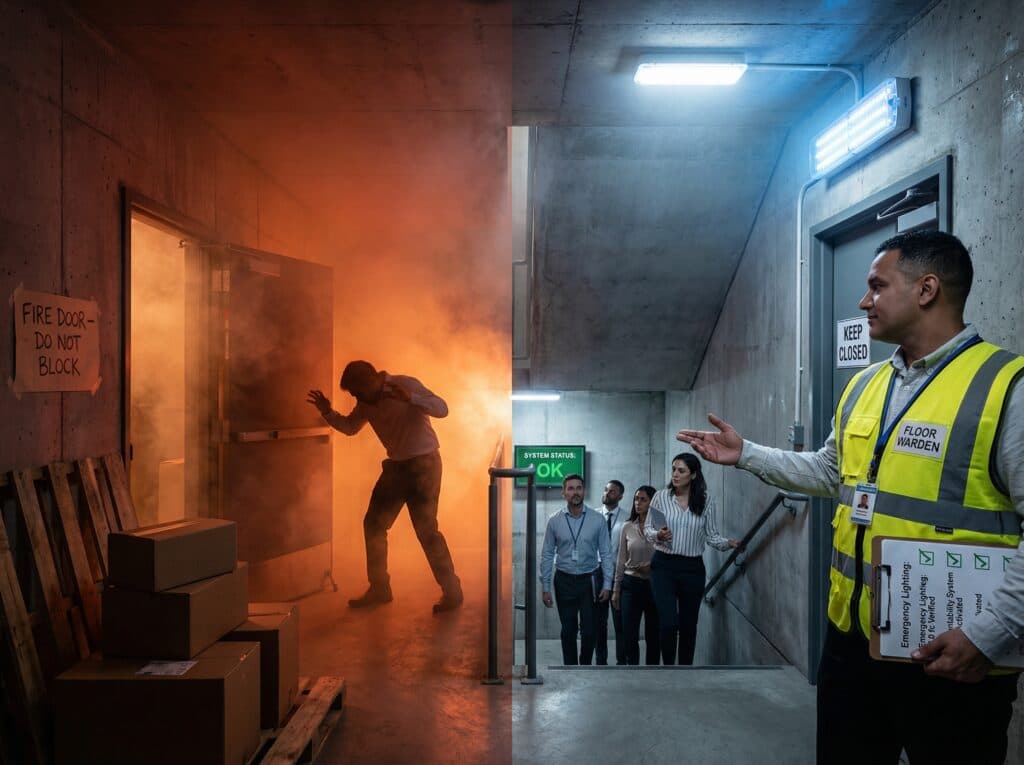
  • [ ] Ensure all exits are accessible and clearly marked; doors swing in the correct direction and are not blocked.
  • [ ] Fire alarm system: perform a full functional test, confirm annunciation, and verify integration with building automation.
  • [ ] Fire suppression: check hydraulic calculations and ensure sprinklers and standpipes have no obstructions; verify backflow prevention and water supply.
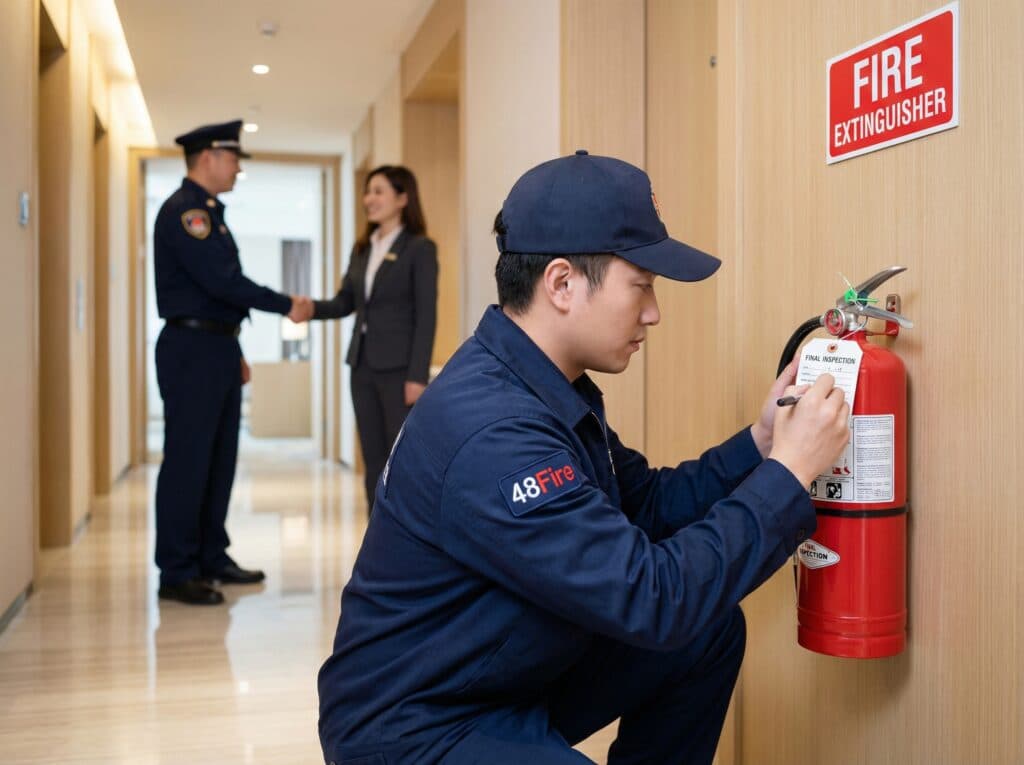
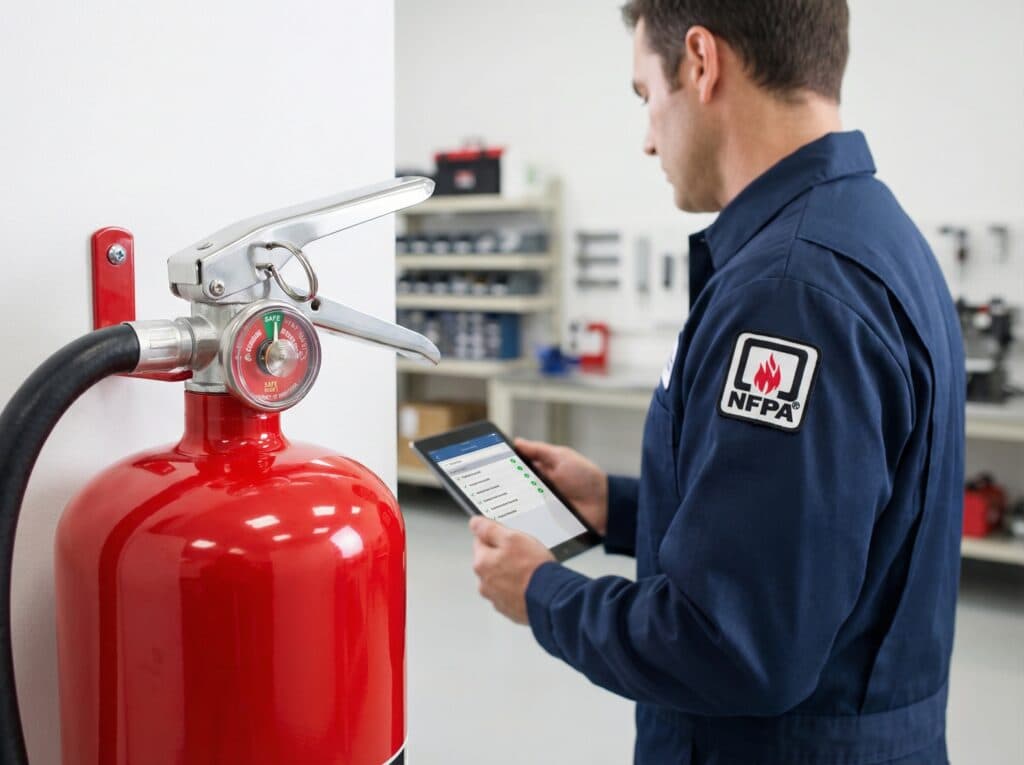
  • [ ] Fire extinguishers: verify servicing tags, accessibility, and proper placement; check pressure gauges.
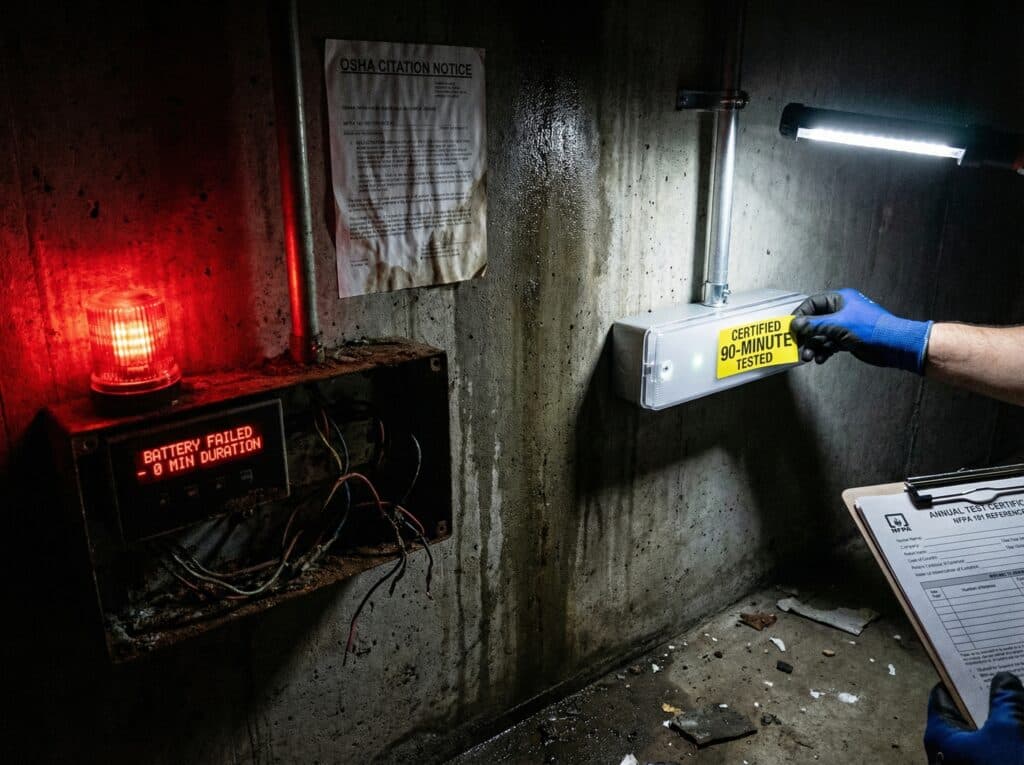
  • [ ] Smoke control and egress lighting: test emergency lighting and signage for visibility and reliability.
  • [ ] Fire safety plan: ensure plan is posted, updated, and accessible; confirm staff training and drills are current.

Documentation and proof checklist

  • [ ] Recent test reports for all life-safety systems (alarm, suppression, detection)
  • [ ] Maintenance logs for critical equipment
  • [ ] Permits for any modifications
  • [ ] Photos showing corrected conditions (with timestamps)
  • [ ] engraved labeling, schematics, and equipment inventories (as-built drawings)
  • [ ] A concise remediation map (what was corrected and when)

Communication and coordination checklist

  • [ ] Confirm reinspection date and time with AHJ; confirm the scope and access requirements.
  • [ ] Notify occupants and building users about the potential for temporary restrictions if necessary.
  • [ ] Prepare a single point of contact for the inspection day to avoid confusion and delays.
  • [ ] If you have multiple contractors, arrange a coordination meeting to align on access and safety protocols.

Operational readiness checklist (if ongoing or complex systems)

  • [ ] Schedule and complete required training for staff related to safety procedures and equipment handling.
  • [ ] Ensure spare parts and replacement components are on hand (batteries, fuzes, sensors, seals).
  • [ ] Confirm that temporary safety measures are in place (e.g., temporary lighting, barriers).

Cost considerations and risk management

The financial dimension of a failed inspection is often as important as the safety dimension. Costs arise from several sources:

  • Time-sensitive corrective work (labor and materials)
  • Third-party contractors for specialized systems
  • Reinspection fees from the AHJ (varies by city and may include hourly rates)
  • Possible fines per day per violation if corrections are late or incomplete
  • Operational downtime while corrections are being implemented

A few concrete notes to help with budgeting

  • In Seattle, the first reinspection is free, but subsequent reinspections incur fees; combined with fines that can reach up to $1,000 per day per violation, the math emphasizes rapid remediation. [Violations and Citations](https://seattle.gov/fire/business-services/code-compliance/violations-and-citations)
  • In Berkeley, expect a 14-day first reinspection window and a second 14-day window if issues persist or new violations appear; penalties can reach $500 per day per violation. [Fire Code Violations](https://berkeleyca.gov/city-services/report-pay/fire-code-violations)
  • In Bellevue, additional visits cost $227 per hour (minimum one hour); this can add up quickly with multiple rounds or complex systems. [Inspection, Reinspection, Outside Normal Hours and Overtime Fees](https://bellevuewa.gov/city-government/departments/development/permits/permit-fees-payment/inspection-reinspection-outside-normal-hours-overtime-fees)
  • NFPA standards provide the underpinning for best practices in inspection, testing, and maintenance, helping to structure remediation and reduce the risk of repeat violations. [NFPA 25 – Standard for the Inspection, Testing, and Maintenance of Water-Based Fire Protection Systems](https://www.nfpa.org/codes-and-standards/list-of-codes-and-standards/detail?code=25)

Cost table: rough guide for planning

Item Typical cost range Notes
First reinspection (free in some cities; fees in others) $0–a few hundred Depends on AHJ policies
Additional reinspections $100–$500 per inspection (varies) Seattle example: fee-based second reinspections
Hourly reinspection rate $227/hour (Bellevue) Minimum one hour
Fines (per day, per violation) $0–$1,000+ Cases vary by city and violation type
Third-party contractor work $75–$250/hour; materials as required Depends on scope (electrical, plumbing, alarm)
Permit or filing fees $50–$500+ Depending on jurisdiction and permit type

Documentation and communications: best practices

Clear, organized documentation reduces the time required for the reinspection and reduces the risk of missing critical items in the eyes of the AHJ.

  • Maintain a single source of truth: a digital folder (or a project management tool) with all inspections, test results, permits, photos, and correspondence.
  • Timestamp everything: ensure that photos and test results show dates and, if possible, locations within the facility.
  • Keep a summary map: a one-page remediation map that lists each violation, status, responsible party, and expected completion date. This is a powerful quick-reference tool for inspectors.
  • Communicate proactively: keep facility leadership informed of progress, potential delays, and any risk factors that could affect timelines.

Timeline blueprint: a sample reinspection schedule

Below is a practical six-week timeline that aligns with common reinspection windows in many jurisdictions. Adapt as needed for your AHJ’s expectations and any unique set of violations.

  • Week 0 (Day of inspection)
  • Receive violation report; categorize items; assign owners; set deadlines for each item.
  • Week 1–2
  • Start corrective actions; gather permits; schedule required third-party services.
  • Begin internal testing and documentation collection.
  • Week 3
  • Complete most critical life-safety corrections; begin verification tests; compile evidence.
  • Week 4
  • Complete remainder of corrections; finalize documentation; prepare remediation map.
  • Week 5
  • Schedule reinspection with AHJ; prepare staff for the inspection day.
  • Week 6
  • Reinspection occurs; if successful, receive formal confirmation of compliance; if not, receive list of remaining issues and plan for next steps.

Real-world guidance: best practices for reinspection success

  • Prioritize life-safety items above all else. If there’s any doubt about life safety, fix it first—even if it’s not the most visible item.
  • Don’t underestimate documentation. A well-documented correction plan can save days of back-and-forth with inspectors.
  • Use a systems-thinking approach. Often failures in one system cause cascading issues in another (e.g., a minor electrical fault affects alarm functionality).
  • Build redundancy into your remediation plan. If a single contractor is responsible for multiple items, you risk delays if that contractor is unavailable.
  • Prepare for after-hours needs. Some AHJs require access outside normal hours during reinspection, and overtime fees can apply.

Common pitfalls to avoid

  • Underestimating the time required to obtain permits or coordinate with third-party vendors.
  • Failing to test all life-safety systems after corrections; completed fixes aren’t necessarily verified until tested.
  • Submitting corrective documentation that is incomplete or inconsistent with the violations list.
  • Waiting to address issues that appear during the reinspection; addressing all items proactively reduces the risk of a second round.

48Fire Protection: how we help with fire inspection and reinspection

Near the end of a failed inspection, many teams ask: “Who can guide us through the reinspection maze?” 48Fire Protection offers end-to-end support designed to shorten the path from failure to compliance and minimize operational disruption.

What we offer

  • Pre-inspection readiness audits: a thorough review of your life-safety systems, documentation, labeling, and access issues to identify gaps before the AHJ arrives.
  • Corrective action planning and project management: we help you create a practical, prioritized remediation plan with realistic timelines and responsible parties.
  • System-specific testing and verification: our technicians perform functional testing of fire alarm, suppression, suppression water flow, and other critical systems to ensure readiness for reinspection.
  • Documentation services: we assemble and organize the required documentation, including test reports, maintenance logs, permits, and as-built drawings, with clear cross-references to the violations.
  • AHJ coordination and reinspection logistics: we handle scheduling, prepare the remediation map, and ensure you have the right documentation on hand for the inspector.
  • Temporary safety measures and staffing: if ongoing work affects operations, we provide guidance on temporary safety measures (e.g., fire watch) and staffing plans to maintain safety.
  • Training and staff readiness: we offer targeted training to ensure your team understands the reinspection process and how to sustain compliance going forward.
  • Maintenance programs and future-proofing: beyond the immediate reinspection, we help establish ongoing maintenance and testing programs aligned with NFPA standards to reduce future violations.

Why choose 48Fire Protection

  • Deep industry expertise: years of experience navigating the reinspection process across jurisdictions.
  • Transparent pricing and timelines: clear, documented plans with realistic timelines and cost estimates.
  • A focus on safety and compliance: our approach prioritizes occupant safety and enduring compliance rather than quick fixes.
  • A collaborative, hands-on approach: we work with your team to minimize disruption and keep you informed at every step.

Service highlights near the end of the article

  • Pre-inspection audits and remediation planning
  • Fire alarm, detection, suppression, and life-safety testing
  • Documentation management and AHJ liaison
  • Permit coordination and third-party coordination
  • Ongoing maintenance programs and NFPA-aligned compliance

[Contact 48Fire Protection](/contact-us)

If you’ve got a failed fire inspection on your hands, you don’t have to navigate the reinspection maze alone. 48Fire Protection can help you move from violation to verification with clarity, speed, and rigorous safety standards.

Conclusion: turning alarms into assurance

A failed fire inspection can feel like a setback, but it is, in reality, a critical moment to harden safety and strengthen compliance. The reinspection process is not a single moment of truth; it’s a structured workflow that, when applied correctly, minimizes risk to people and property and reduces the cost and disruption associated with noncompliance. The key to success is proactive planning, thorough documentation, and a disciplined approach to remediation.

Key reminders:

  • Start with the life-safety items and fix them first.
  • Gather robust proof of correction and organize it for quick access.
  • Understand the cost and time implications in your jurisdiction and plan accordingly.
  • Leverage professional partners who can bring expertise, efficiency, and peace of mind.

If you’re facing a failed fire inspection, or you want to prevent one from happening in the first place, consider partnering with 48Fire Protection. We’ll help you map the path from failure to compliance, with a focus on safety, reliability, and long-term resilience.

[Contact 48Fire Protection](/contact-us)

Related Posts

How Consistent Inspections Cut Fire Insurance Premiums

Consistent professional fire protection services reduce commercial property insurance premiums 8-22% through documented loss control programs. Facilities maintaining systematic quarterly inspections, annual certifications, and immediate deficiency correction earn superior fire protection credits. These credits average $3,400-14,800 in annual premium savings versus properties without documented loss control. Regular, professional services improve a facility’s overall risk profile, signaling to insurers a strong commitment to safety.

Read More »
Share the Post: